Content last revised on September 10, 2026
BOE QT1T101WSM-N11: A Robust 10.1-Inch Display Engineered for Industrial Reliability
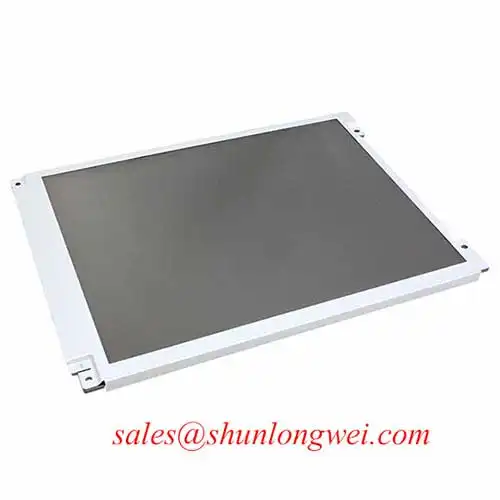
The QT101WSM-N11 is a 10.1-inch a-Si TFT-LCD module from BOE, engineered to deliver consistent and reliable visual performance for demanding industrial and commercial applications. With a resolution of 1024x600 (WSVGA), a typical brightness of 350 cd/m², and a wide operational temperature range, this display provides the durability and clarity required for complex human-machine interfaces (HMIs), control panels, and embedded systems. Its combination of a long-life WLED backlight and a standard LVDS interface ensures both sustained performance and simplified system integration. For systems requiring higher resolution in a similar form factor, the G101EVN01.3 offers an alternative to consider.
Application Scenarios & Value
Delivering Operational Clarity in Demanding Industrial Environments
The QT101WSM-N11 is best suited for applications where reliable performance across varying environmental conditions is non-negotiable. Its wide operating temperature range of -20°C to 70°C makes it a robust choice for unconditioned environments, such as factory floors, outdoor kiosks, and in-vehicle systems. In a scenario like an industrial control panel for manufacturing equipment, the 10.1-inch screen size and 1024x600 resolution provide operators with clear, unambiguous readouts of critical process data. The 350-nit brightness, coupled with a matte surface treatment, is engineered to minimize glare from overhead factory lighting, reducing operator eye strain and improving accuracy. The display's resilience to temperature extremes ensures system uptime and reduces the need for specialized environmental controls, directly impacting the total cost of ownership.
Key Parameter Overview
Specifications Tailored for Industrial Integration and Longevity
The technical specifications of the QT101WSM-N11 are focused on delivering a balance of performance, durability, and ease of integration. The parameters below highlight the display's suitability for long-term deployment in industrial-grade products.
| Parameter | Specification | Engineering Value |
|---|---|---|
| Screen Size | 10.1 inches | Provides a sufficient viewing area for complex GUIs without requiring a large physical footprint, ideal for panel-mounted HMIs and portable devices. |
| Resolution | 1024(RGB)×600, WSVGA | Offers crisp and clear rendering of text, graphics, and data visualizations, essential for minimizing operator error in control systems. |
| Brightness | 350 cd/m² (Typ.) | Ensures adequate readability in typical indoor industrial and commercial settings with ambient lighting. |
| Operating Temperature | -20°C to 70°C | This wide range guarantees stable operation in environments without climate control, from cold storage facilities to sun-exposed enclosures. Think of it as being able to operate reliably from a cold winter morning to a hot summer afternoon. |
| Interface | LVDS (1 ch, 8-bit), 40 pins | A standard, robust interface in industrial electronics that simplifies connection to single-board computers (SBCs) and custom controller boards, reducing design complexity. |
| Backlight Lifetime | WLED, >50,000 hours | A critical metric for reliability. A 50,000-hour life translates to over 5.7 years of continuous 24/7 operation before the backlight reaches half-brightness, minimizing maintenance cycles. |
Application Vignette
Enhancing Reliability in a Portable Diagnostic Tool
Consider the design of a next-generation handheld diagnostic tool for automotive or aviation technicians. The primary challenge is creating a device that is both portable and rugged enough to withstand daily use in garages and hangars, where temperature fluctuations and drops are common. The QT101WSM-N11 serves as an ideal core component for this system's HMI. Its wide -20°C to 70°C operating temperature ensures the display functions flawlessly whether the tool is left in a cold service vehicle overnight or used on a hot tarmac. The a-Si TFT-LCD technology provides a durable foundation, and the >50,000-hour WLED backlight lifetime means the display will not be the point of failure, contributing to the tool's overall reputation for longevity and reliability. The standard LVDS interface allows engineers to easily integrate the panel with a wide range of low-power embedded systems, crucial for managing battery life in a portable device.
Frequently Asked Questions
What is the primary benefit of the -20°C to 70°C operating temperature range?
Its main advantage is operational reliability in thermally unstable environments. This eliminates the need for costly and complex heating or cooling subsystems within the final product, simplifying design and improving field robustness.
How does the LVDS interface on the QT101WSM-N11 simplify system integration?
LVDS (Low-Voltage Differential Signaling) is a widely adopted standard known for its high noise immunity, which is critical in electrically noisy industrial settings. Its prevalence means a vast majority of industrial single-board computers and controllers offer native LVDS outputs, enabling a direct and straightforward connection.
What does a >50,000-hour backlight lifetime mean in a practical application?
This specification directly translates to reduced long-term maintenance costs and increased product lifespan. For a device operating 12 hours a day, 7 days a week, a 50,000-hour backlight would theoretically last over 11 years before degrading to half its original brightness, making it a "fit and forget" component for most of the product's life cycle.
Is the 350 cd/m² brightness sufficient for outdoor applications?
While 350 cd/m² provides excellent clarity for indoor and shaded environments, it is not considered fully sunlight-readable. For applications in direct, bright sunlight, displays with a brightness of 800 cd/m² or higher are typically recommended. For more information, see this guide on sunlight-readable HMIs.
What are the typical applications for a TN-type display like the QT101WSM-N11?
TN (Twisted Nematic) panels are known for their fast response times and cost-effectiveness. This makes the QT101WSM-N11 a strong candidate for industrial HMIs, process control interfaces, medical monitoring equipment, and point-of-sale terminals where clear data display and rapid screen updates are more critical than the ultra-wide viewing angles found in IPS (In-Plane Switching) displays.
From an engineering perspective, the QT101WSM-N11 represents a pragmatic design choice. It prioritizes core industrial requirements—thermal resilience, backlight longevity, and a standard interface—over premium features. This focus makes it a dependable and cost-effective building block for systems where long-term operational reliability is the primary design driver.