Content last revised on September 10, 2026
AUO A101VW01 V1 10.1-inch LCD Display Panel Technical Guide
Product Overview and Key Highlights
Optimizing Compact HMI Integrations with Slim Form Factor and Parallel RGB
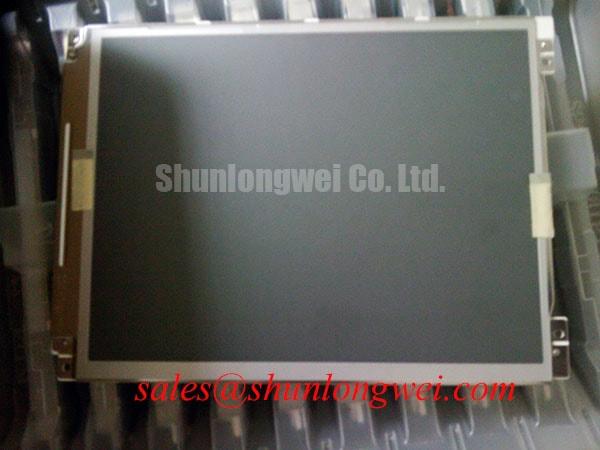
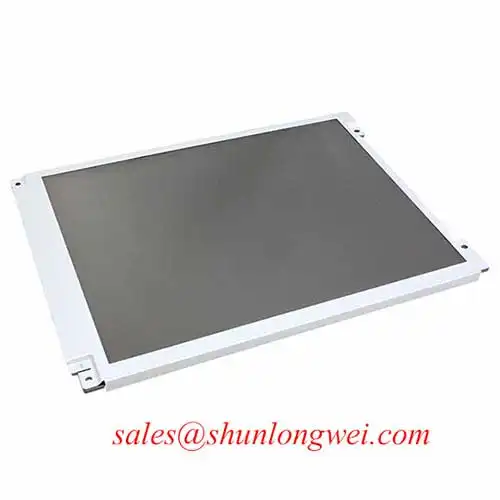
The AUO A101VW01 V1 provides a reliable, space-saving visualization option for human-machine interfaces. It delivers a native resolution of 800 (RGB) × 480 [WVGA] in a lightweight package. Key specifications: 10.1-inch | 800x480 WVGA | 180 cd/m² | 5.4mm thickness. Its primary advantages include: slim 5.4mm profile reduces enclosure size; 60-pin parallel RGB simplifies interface layout. Designers often ask: does the slim design compromise structural integrity? The display handles 2.9G vibration despite its 5.4mm depth. For space-constrained human-machine interfaces requiring a slim 5.4mm profile, the A101VW01 V1 is the optimal choice.
Technical Specifications & Key Parameters
Highlighting Key Metrics for Compact System Integration
Below are the key electrical, optical, and mechanical specifications from the manufacturer documentation.
| Parameter Group | Key Metric | Value (Highlighted Specs) | Design Context |
|---|---|---|---|
| Mechanical | Screen Size | 10.1 inches (Diagonal) | Optimal mid-size footprint for HMIs |
| Mechanical | Outline Dimensions | 235.0 × 145.9 × 5.4 mm | Ultra-thin profile for flat panels |
| Optical | Resolution | 800 × 480 (WVGA) | Standard 15:9 aspect ratio display |
| Optical | Brightness | 180 cd/m² (Typical) | Suitable for indoor ambient light |
| Optical | Contrast Ratio | 400:1 (Typical) | Clear text and graphic separation |
| Electrical | Interface Type | Parallel RGB (1 ch, 6-bit) | Requires a 60-pin FPC connection |
| Electrical | Supply Voltage (VCC) | 3.3V (Typical) | Standard digital logic supply voltage |
| Environmental | Vibration Level | 2.9G (28.4 m/s²) | Resilient in moving machinery applications |
| Environmental | Operating Temp. Range | -10 °C to +60 °C | Standard industrial temperature limits |
Application Scenarios & Value
Maximizing Space Efficiency in Embedded Systems and HMI
Embedded system designers often face tight cabinet profiles. The A101VW01 V1 resolves this with its 5.4mm depth and lightweight 293g build. This thin profile enables mounting within compact enclosures where traditional LCD modules fail to fit due to depth limitations.
For rugged setups, the panel offers a 2.9G vibration rating. This structural resilience protects the FPC contacts in demanding diagnostic equipment. An integrated anti-glare surface treatment diffuses overhead factory lighting to ensure readability.
For systems requiring different sizes, alternatives are available. While this 10.1-inch display is ideal for tight spaces, systems requiring a larger screen can utilize the related G121SN01 V4, or the G104VN01 V0 for a 10.4-inch display size.
Technical & Design Deep Dive
Analyzing Interface Compatibility and Multi-Rail Power Layout
The module utilizes a Parallel RGB 60-pin FPC interface supporting 6-bit color depth, delivering 262K colors. What interface does this display use? It utilizes a 60-pin parallel RGB interface for direct logic communication. Think of this parallel interface like a multi-lane highway. It broadcasts color bits simultaneously over parallel lanes, ensuring fast pixel updates without serialization latency. Learn more about display architectures in the ultimate guide to TFT-LCD.
A key engineering consideration is the multi-rail power supply requirement. Unlike modern consumer panels that integrate voltage regulation, this industrial panel requires direct supply rails. These include a digital supply (VCC) of 3.3V, an analog supply (AVDD) of 8.8V, and gate drive voltages (VGH of 15V and VGL of -7.0V). Driving this panel is like managing a complex hydraulic network. The digital control logic runs on low pressure (3.3V), while the gate driver needs high pressure (15V) to open pixel transistors quickly and negative pressure (-7.0V) to close them completely to prevent image ghosting.
The backlight uses a 24-piece WLED array configured in a 3S8P layout, drawing 160 mA at 12.0V. What is the mechanical vibration rating? The display withstands up to 2.9G of vibration for industrial durability. Because the panel lacks an onboard driver, designers must specify an external constant-current driver. Proper driver design prevents thermal issues and extends the typical 10,000-hour backlight lifetime. Read more about energy efficiency of LED backlights.
Balancing these hardware elements is vital to minimize system failure and overall maintenance costs. This long-term durability is a key differentiator when choosing displays, as discussed in our guide on industrial vs consumer displays.
Frequently Asked Questions
Addressing Design Challenges in Integration and Longevity
How does the 2.9G vibration rating of the A101VW01 V1 affect its mounting in industrial environments?
The 2.9G (28.4 m/s²) vibration tolerance indicates that the internal FPC bonds and glass substrate can withstand continuous mechanical stress. In industrial machinery, this reduces the need for expensive external dampening hardware during mounting.
What are the consequences of not providing the negative VGL voltage to the LCD panel?
The negative VGL of -7.0V ensures that TFT pixel gates shut completely. If this voltage rail is omitted, the liquid crystal cells cannot reset properly, resulting in severe image ghosting, poor contrast, and reduced panel lifetime.
Does the A101VW01 V1 display contain an integrated backlight driver?
No, the module features a 24-piece WLED array but lacks an onboard driver. The system must include an external constant-current driver configured to output 12.0V at a current limit of 160 mA.
Can the 60-pin parallel RGB interface be connected directly to an LVDS port?
No. The 60-pin interface transmits raw 6-bit parallel RGB data. Connecting this to an LVDS controller requires an intermediate converter IC to serialize the parallel bus into low-voltage differential signals.
As industrial automation continues to demand smaller and more resilient hardware platforms, selecting displays with standard parallel interfaces and high mechanical tolerances remains a key strategy for system longevity. The stability of the A101VW01 V1 form factor allows manufacturers to maintain consistent enclosure designs over extended product lifecycles, protecting engineering investments and simplifying future maintenance phases.