

Content last revised on October 16, 2026
Ambient-Light Readability without Active Backlight Illumination
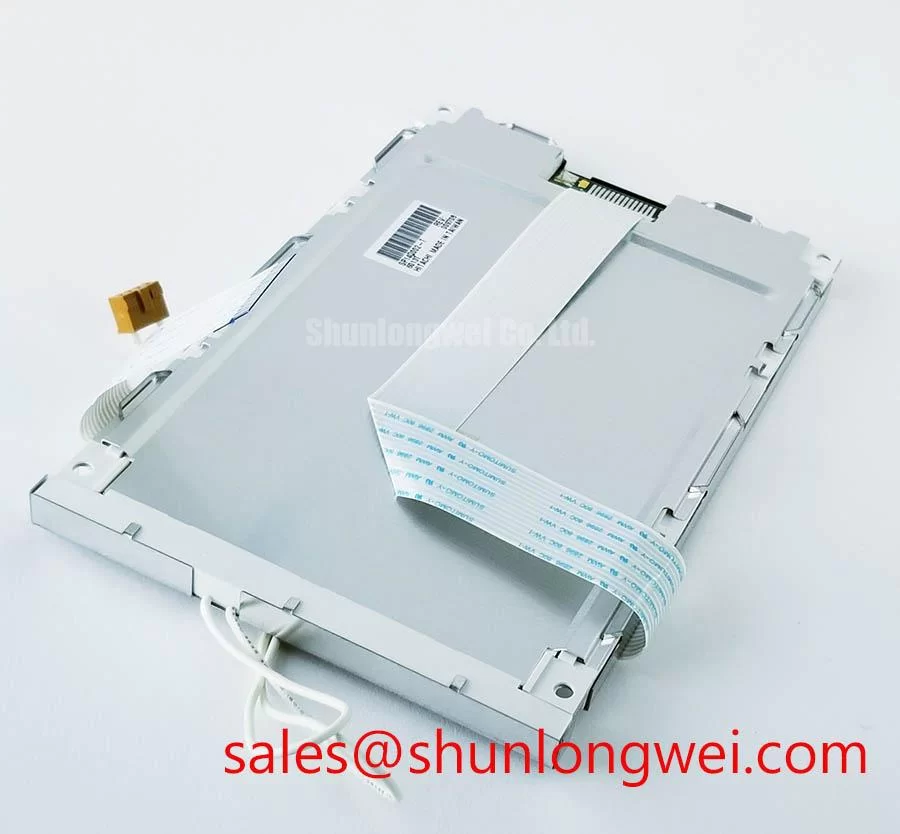
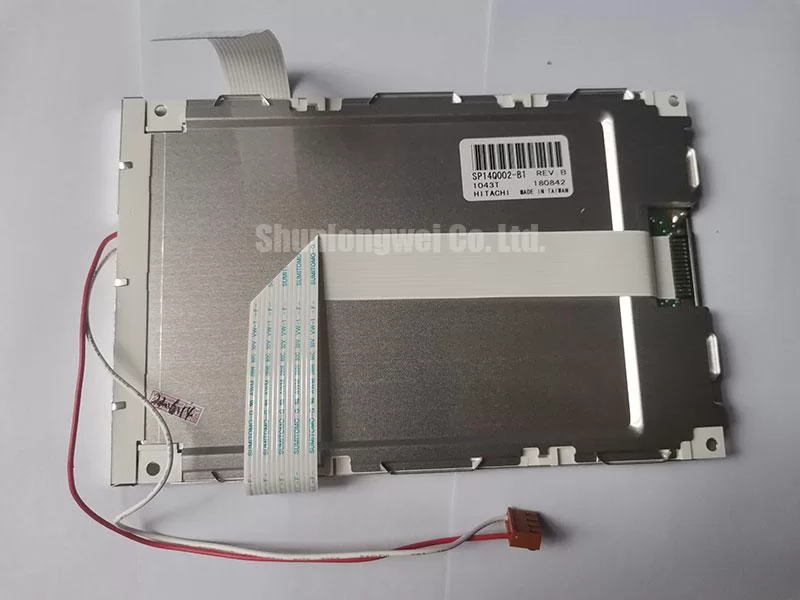
I inspect the SP14Q002-A1 viewing surface under controlled ambient illumination with the host backlight disabled, then compare dark and clear patterns from the intended operator position. This separates ambient readability from illumination performance. As a Design Consideration, this test evaluates reflected contrast; it does not establish a transflective construction or a sunlight readability rating for this particular panel.
With a compatible controller, display uniform clear, dark and alternating pixel patterns before assessing text. Record fixed spots, missing rows, uneven contrast and marks that remain visible when the image changes. Repeat the observation with illumination enabled so that panel defects can be distinguished from lighting nonuniformity. Keep viewing angle and ambient light consistent between samples; changing either can alter the apparent contrast of a passive matrix display.
Inspect the exposed optical surface and perimeter for discoloration, localized haze, lifting or bubbles without pressing the viewing area. These observations support condition assessment, but they do not identify polarizer chemistry or prove ultraviolet degradation. The principles described in Circular Polarizers explain polarization behavior; they do not establish that this module contains a circular polarizer.
As an Engineering Recommendation, compare replacement candidates against the original aperture, mounting geometry, resolution, connector and optical orientation. The LM8V311 provides another display reference for that comparison, with interchangeability determined by the actual specifications. If evaluating an AGV or forklift telematics display, include enclosure reflections, operator viewing position and cable restraint in the compatibility assessment.
Contrast Tracking across Industrial Operating Temperatures
Track contrast against panel temperature while holding the image pattern, viewing position and ambient illumination constant. As a Design Consideration, liquid crystal electro-optical response changes with temperature, so a contrast setting that produces legible characters at room temperature may produce a different result elsewhere in the equipment operating range.
Use the original controller documentation to identify the contrast adjustment circuit and its permitted range. Observe the bias supply at the panel connection while switching between sparse text and dense patterns. Correlation between visible contrast modulation and supply disturbance can direct further investigation toward regulation, grounding or connector resistance. A washed-out image alone does not establish a defective panel or justify changing its bias voltage.
Where the host circuit includes temperature compensation, check sensor attachment, wiring continuity and the controller response as the assembly temperature changes. Sensor placement should represent the relevant display temperature rather than a nearby heat source. Any adjustment belongs within the approved panel drive conditions, with the final setting verified across the equipment operating envelope. Generic negative bias ranges and ripple limits are unsuitable substitutes for model-specific electrical limits.
Separate slow transitions from persistent image retention by changing the displayed pattern and observing recovery under stable conditions. Low temperature can slow liquid crystal response; residual graphics can also warrant investigation of drive balance and shutdown behavior. Neither observation supports assigning a remaining service life. For environmental qualification planning, MIL-STD-810 Military Standard Environmental Engineering Testing provides background on tailored environmental methods, without establishing certification or a temperature rating for SP14Q002-A1.
CCFL Inverter Startup Fault Diagnosis in Host Assemblies Using CCFL Backlights
On a host assembly documented as using a CCFL inverter, establish whether the missing image is an illumination fault by checking for visible graphics under external light. This is a Design Consideration for the host lighting circuit and applies only where CCFL illumination is documented for the installed assembly.
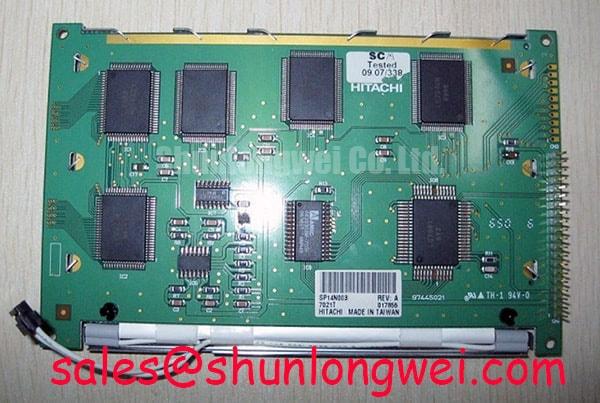
When graphics remain visible, follow the documented illumination path from supply and enable signals to the inverter output and lamp connection. Observe whether startup is absent, intermittent or followed by shutdown. Lamp deterioration, connector leakage, transformer faults, switching device damage and protection behavior can produce overlapping symptoms. Separate them through measurements against the inverter service information rather than attributing every failed start to the tube.
High voltage measurements require a probe and method suitable for the actual inverter waveform. RMS operating voltage and startup peak voltage describe different conditions and should remain distinct in the test record. Clearance, insulation and discharge arrangements depend on the documented circuit and applicable equipment requirements. No generic ignition voltage or lamp current should become an acceptance limit for this panel.
After illumination is restored, assess brightness distribution and apparent tint with a uniform image. Record edge darkening, localized bright regions and changes during warmup. As an Engineering Recommendation, inspect the surrounding assembly for obstructed ventilation, uneven mounting pressure or nearby heat sources before changing the lighting hardware. Avoid treating a uniformity defect as proof of a particular internal optical material.
Keep the host controller, contrast supply and illumination driver distinct on the service diagram. The LM320194 can serve as a separate display reference when comparing complete display architectures, rather than as an assumed backlight driver or companion module. Compatibility follows its documented function and connections.
Data Setup & Hold Time Margin Verification on High-Capacitance Flat Ribbon Flex Cables
Measure data and clock relationships at the receiving connector with the installed cable in place. As a Design Consideration, cable loading, return path quality and connector condition can change waveform shape and reduce timing margin between the controller output and panel input. Compare the measured setup and hold intervals with the applicable panel timing specification.
Use the actual pin assignment to identify data, clock and synchronization signals. Where the controller documentation names CP, LP and FLM, correlate their transitions with pixel transfer, line boundaries and frame progression. Check edge quality and intermittent disturbances while displaying repeatable patterns. Uniform logic levels at the controller do not establish adequate signal integrity at the panel connector.
💡 Bench Tip: With power isolated and ESD protection in place, seat the ribbon cable squarely and engage its locking mechanism evenly before restoring power.
Review power application and removal at the connector alongside signal activity and contrast bias. Follow the documented sequence rather than assuming a universal delay or rail order. Investigate white screens and shutdown afterimages by recording these events together. The The Ultimate Guide to Industrial TFT LCD Technology offers broader integration background; acceptance testing here must retain the passive matrix panel’s own interface requirements.