
Content last revised on September 10, 2026
Short-Circuit Withstand Limits: Coordinating Semiconductor Fuses with Diode/Thyristor I2t
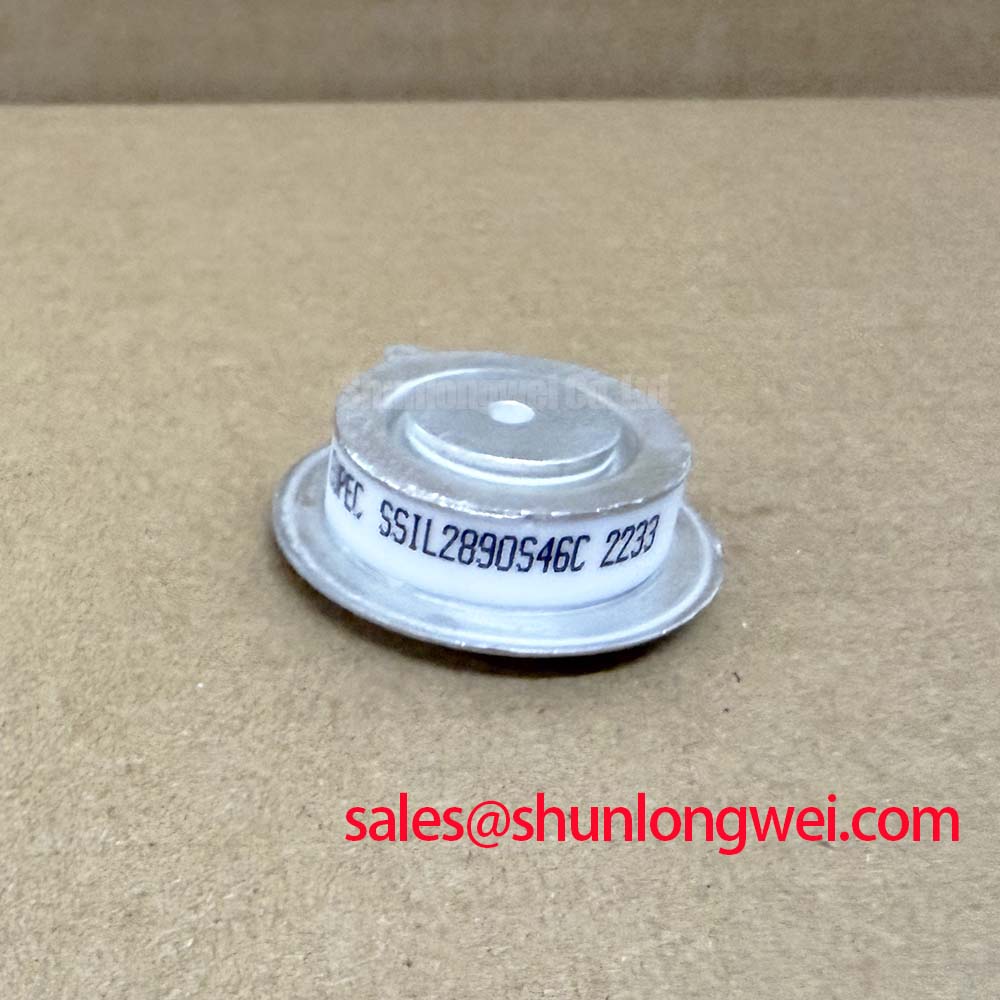
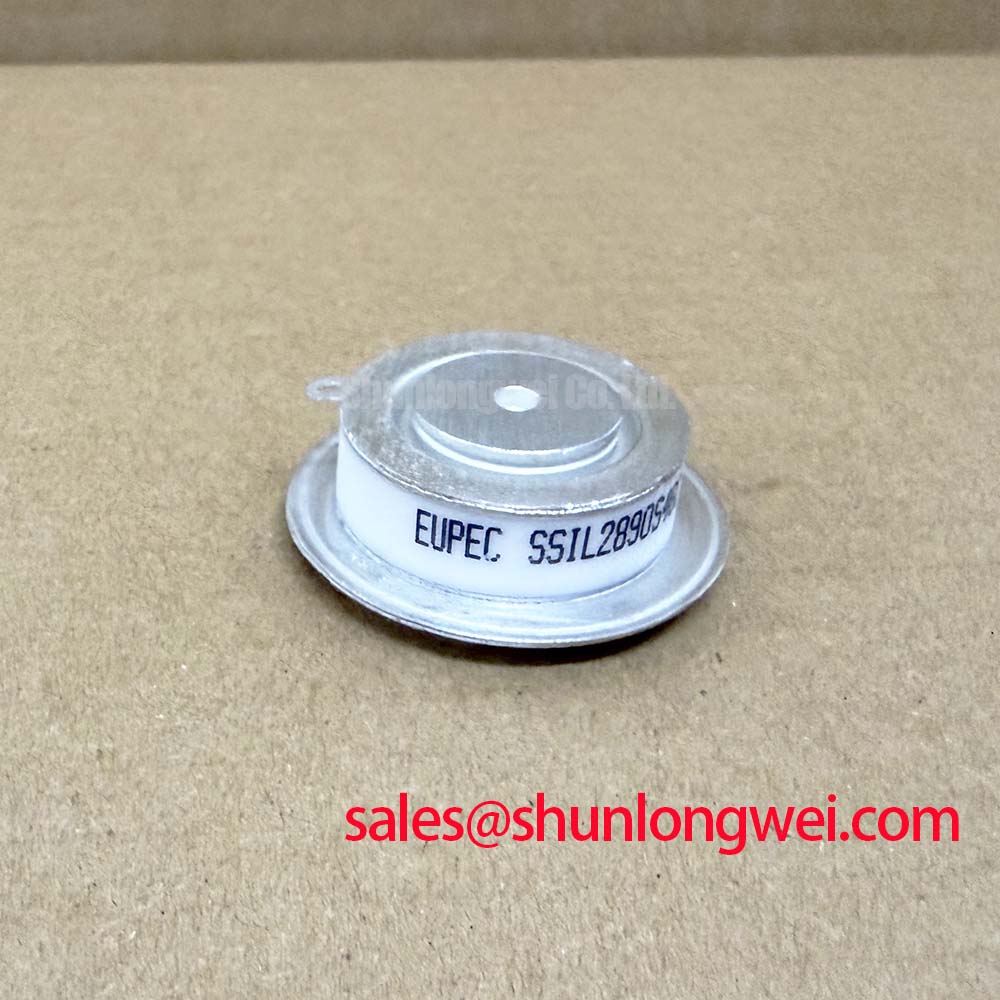
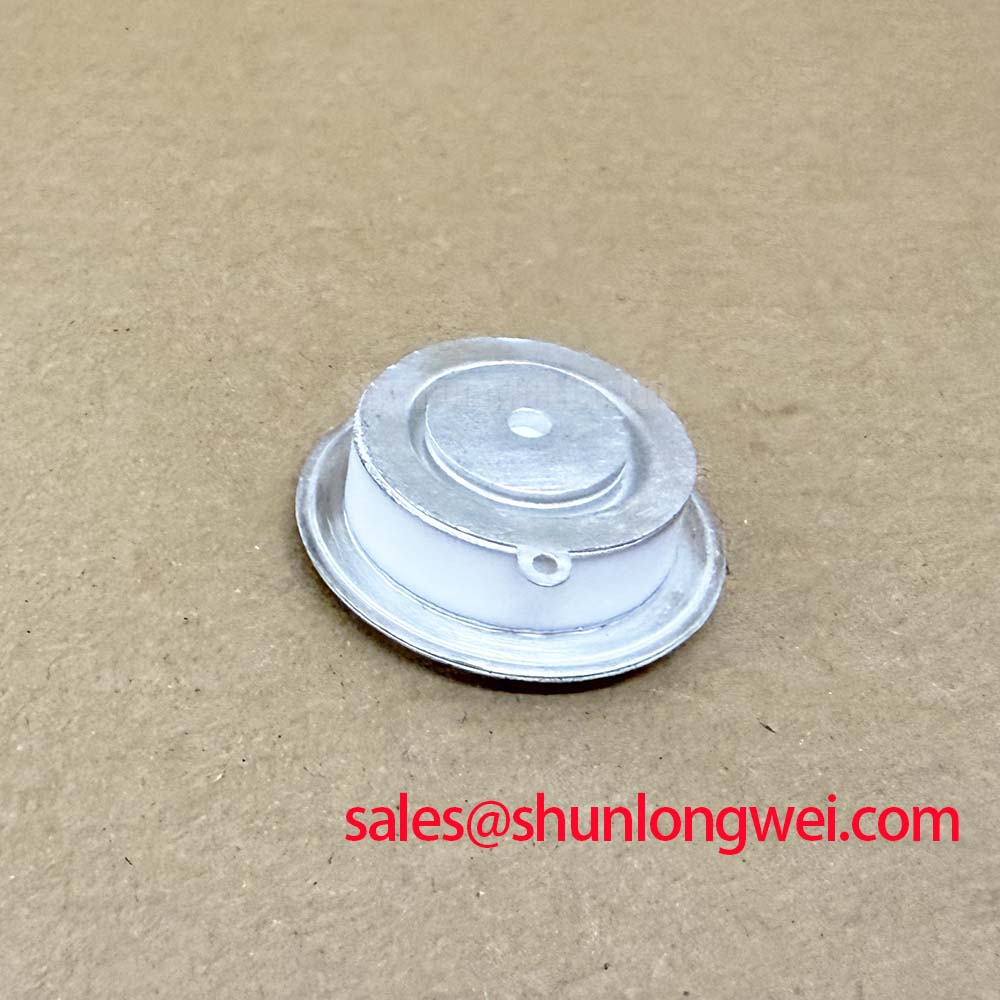
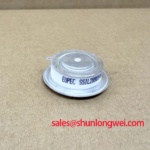
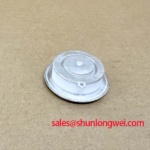
In high-current green hydrogen electrolyzer DC power rectifiers, managing catastrophic short-circuit currents is essential for system protection. The SSIL2890S46C by Eupec is rated for a nominal current of 90A and an operating voltage of 240VAC. When operating in high-capacity electrolyzer banks, an unmitigated branch short circuit or DC bus fault can generate peak fault currents several times higher than continuous operating levels. Protecting the silicon junctions requires precise coordination between the semiconductor fuse total clearing energy and the thyristor maximum surge capability.
The device limits are defined by its non-repetitive peak surge on-state current (ITSM) and its integral surge energy rating (I2t) over a standardized half-cycle conduction interval (10 ms at 50 Hz or 8.3 ms at 60 Hz). To prevent junction rupture and hermetic housing rupture, the coordination criterion must satisfy:
I2t(fuse clearing) < I2t(SSIL2890S46C withstand)
Operating temperatures further derate these boundaries. As the junction temperature rises toward its maximum operational boundary (typically 125°C), the thermal resistance junction-to-case Rth(j-c) and the thermal interface material (TIM) contact layer determine heat transfer to the liquid-cooled or forced-air heatsink. Proper mechanical assembly requires calibrated mounting torque (typically 3.0 to 5.0 N·m) to maintain the specified thermal resistance. For rectifiers requiring different current ratings or alternative dual-thyristor topologies within parallel electrolyzer branches, engineers often compare structural metrics with devices such as the SKKH56/16D to balance phase distribution and thermal dissipation limits.
Critical Rate of Rise of Off-State Voltage (dv/dt) & Turn-On (di/dt) Limiting
Phase-controlled electrolyzer supplies encounter high transient voltage and current spikes during AC mains switching and inter-module commutation. The critical rate of rise of off-state voltage (dv/dt) represents the threshold above which internal capacitive displacement currents within the thyristor four-layer structure (p-n-p-n) can trigger spurious, unscheduled gate conduction without an applied gate trigger signal (IGT).
To restrict transient dv/dt below the maximum device rating (typically 500 V/µs to 1000 V/µs), an RC snubber network is placed across the anode-cathode terminals of the SSIL2890S46C. The snubber resistor (Rs) and capacitor (Cs) values are calculated by balancing damping ratio (ζ) and permissible peak snubber discharge currents during turn-on:
Cs = (Iload) / (dv/dtcrit · √2)
Simultaneously, the rate of rise of on-state current (di/dt) must be constrained during initial firing. Because the initial conduction plasma initiates near the gate contact and expands across the silicon wafer at a finite velocity (approximately 0.1 mm/µs), excessive di/dt results in localized emitter current crowding and thermal destruction. Series saturable reactors or air-core inductors are integrated into the AC line paths to suppress high di/dt surges until the entire junction area becomes fully conductive. Comprehensive verification of gate pulse steepness, latching current compliance, and structural integrity during transient events is detailed in technical references such as the Field Engineer’s Handbook.
High-Frequency Switching Loss Dissipation in Fast-Recovery Rectifier Diodes
Modern green hydrogen rectifiers frequently combine line-frequency phase-control thyristors with secondary freewheeling and fast-recovery diode stages to reduce ripple across the electrolysis stack. During the reverse recovery phase of secondary rectifiers, stored charge carriers within the p-n junction must be swept out before blocking capability (VRRM) is restored. The peak reverse recovery current (IRRM) and reverse recovery time (trr) dictate the magnitude of the turn-off commutation energy loss (Erec):
Prec = fsw · ∫ (vAK(t) · iR(t)) dt
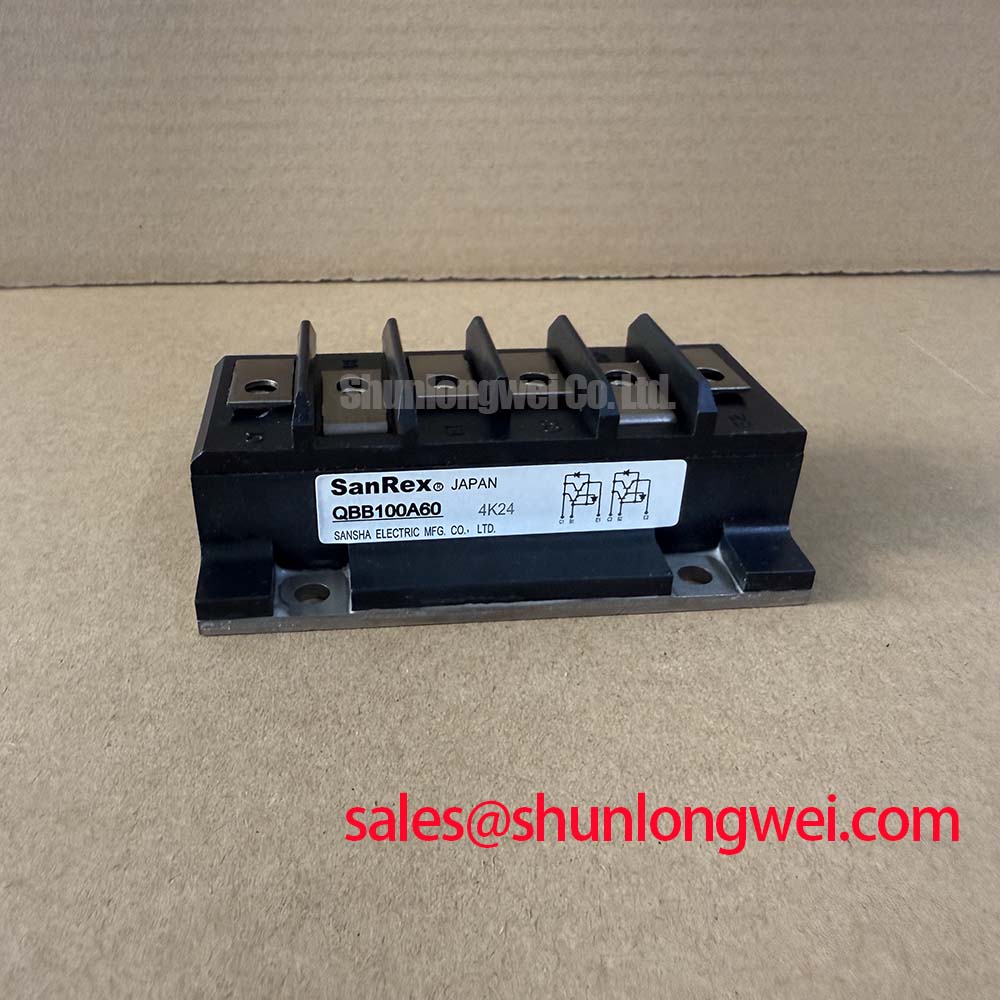
Abrupt recovery generates high electromagnetic interference (EMI) and excessive voltage overshoot (Ltrace · dirr/dt). Designers utilize soft-recovery architectures and balanced module layouts similar to those found in SanRex Sansha Electric Power Semiconductor Modules to maintain controlled current decay. In multi-megawatt electrolyzer installations, tracking DC output stability and closed-loop control relies on isolated sensing architectures, including a Fluxgate Magnetometer Sensor for Ultra-Low Drift DC Current Transducers, preventing asymmetric current loading across parallel-connected rectifier modules.
Harmonic Current Injection and Line Filter Design in Large Industrial Phase Rectifiers
Phase-controlled AC-to-DC conversion introduces non-sinusoidal line currents back into the industrial power distribution grid. When controlling the DC bus voltage across an electrolyzer cell stack via firing angle delay (α = 0° to 150°), the displacement power factor (DPF) decreases roughly proportionally to cos(α):
DPF ≈ cos(α)
PF = DPF · (1 / √(1 + THDi2))
A standard six-pulse thyristor bridge generates characteristic harmonic currents at orders h = 6k ± 1 (h = 5th, 7th, 11th, 13th, etc.). The amplitude of each harmonic current component under continuous conduction approximates Ih = I1 / h. To comply with IEEE 519 and IEC 61000 harmonic injection standards, external passive harmonic shunt filters (tuned LC traps) or active power factor correction (APFC) stages are implemented at the AC feed.
| Parameter | Specification | Operational Role in Rectifier Design |
|---|---|---|
| Nominal Current (IT) | 90A | Continuous forward conduction current under nominal heatsink conditions. |
| AC Operating Voltage (VAC) | 240VAC | Line voltage rating for single-phase and multi-phase industrial rectifier bridges. |
| Component Type | Thyristor Module | Phase-controlled solid-state power switching for variable DC regulation. |
| Manufacturer | Eupec / Siemens | Industrial semiconductor packaging with isolated baseplate architecture. |
Accurate thermal modeling, strict snubber coordination, and harmonic compensation enable the SSIL2890S46C to provide stable power conversion across demanding industrial electrochemical operations.