Field Engineer’s Handbook: Testing, Failure Analysis & Reliability
In the field of power electronics, the gap between a datasheet specification and long-term system reliability is often defined by maintenance protocols. For maintenance engineers and technicians, the IGBT module is not just a component; it is the most critical failure point in high-power inverters and servo drives.
Unlike low-voltage electronics where “swap-and-replace” is common, diagnosing a multi-kilowatt IGBT stack requires precision. A misdiagnosed gate failure or an overlooked thermal interface degradation can lead to catastrophic “shoot-through” events, resulting in costly downtime and potential damage to the DC bus capacitors and motor windings.
The “Silent Killers” of IGBT Reliability
While catastrophic explosions are obvious, the most dangerous failures are insidious. Desaturation (Desat) events, often caused by gate drive voltage sag or short-circuit conditions, can stress the silicon die incrementally before total failure. Similarly, Thermal Runaway is rarely instantaneous; it is usually the result of gradual delamination of the thermal grease or baseplate fatigue over thousands of thermal cycles.
Effective failure analysis requires moving beyond simple resistance checks. As detailed in Infineon’s application notes on reliability, understanding the correlation between Gate Emitter Leakage (Iges) and oxide degradation is key to predicting end-of-life before it halts production.
Beyond the Multimeter: Validating Integrity
A standard digital multimeter (DMM) is the first line of defense, but it has limits. It can confirm a dead short, but it cannot reliably detect a “lazy” free-wheeling diode or a gate threshold shift (Vge_th) caused by high-temperature reverse bias (HTRB).
The resources curated below are designed to equip field engineers with actionable procedures. From executing a safe Static Test on a 1200V module to interpreting the subtle signs of bond-wire lift-off in a post-mortem autopsy, these guides translate complex semiconductor physics into practical troubleshooting steps.
Use the following handbook to standardize your testing procedures, accurately diagnose failure modes, and extend the operational lifespan of your power assets.
Content in This Series

How to Test an IGBT Module with a Multimeter: A Practical Field Guide
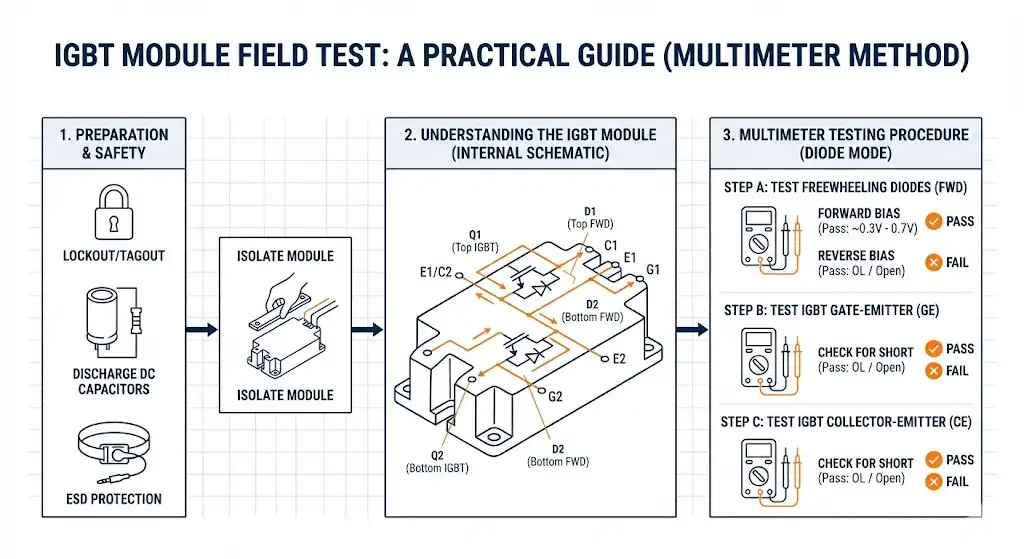
A Practical Guide to Testing IGBT Modules with a Multimeter
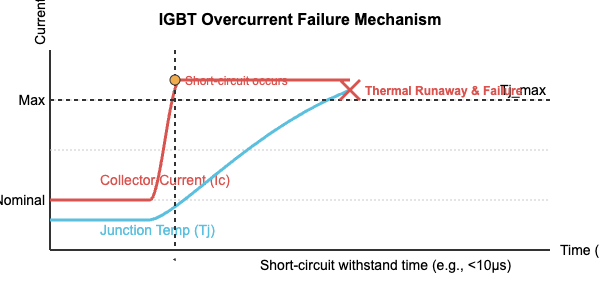
IGBT Failure Analysis: Preventing Overcurrent, Overvoltage, and Overtemperature

Why does IGBT desaturation occur?

Ensuring IGBT Reliability: A Guide to Preventing and Diagnosing Key Failure Modes

Decoding IGBT Datasheets: A Practical Guide for Engineers