

Content last revised on September 14, 2026
Mitigating Gray-to-Gray Response Time Escalation during Cold-Start Machine Power-Up
Cold-start evaluation should begin with the complete display assembly installed in its intended enclosure, rather than testing only the LCD glass on a workbench. At low ambient temperature, liquid crystal movement can become slower, which may produce visible gray-to-gray transition lag during screen changes. This behavior should be evaluated using the actual controller, signal source, backlight setting, and enclosure airflow. A cold image that appears blurred or delayed does not by itself identify a failed panel; the engineer should compare the same transition pattern at the reference operating condition and inspect the timing relationship between the video source and the panel interface.
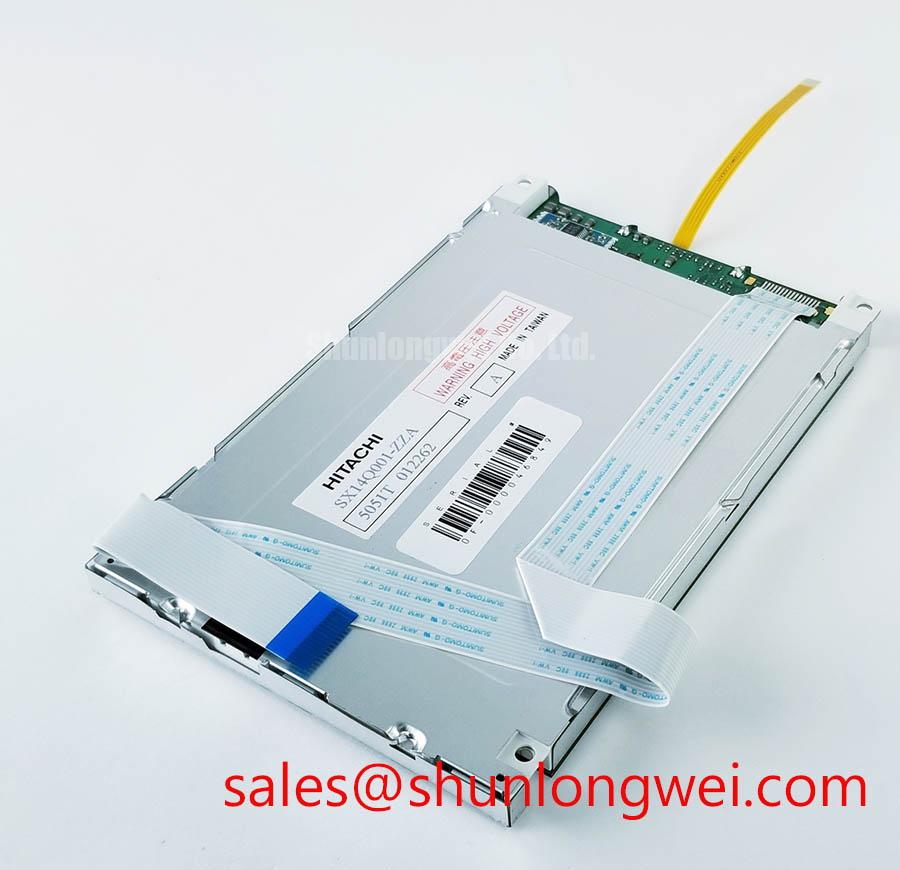
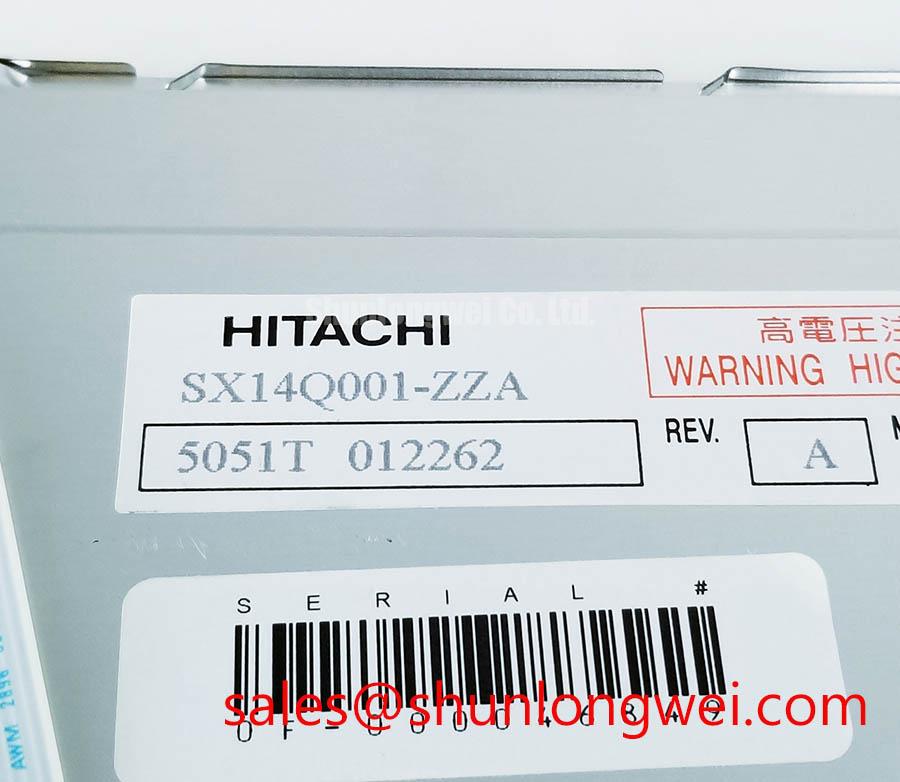
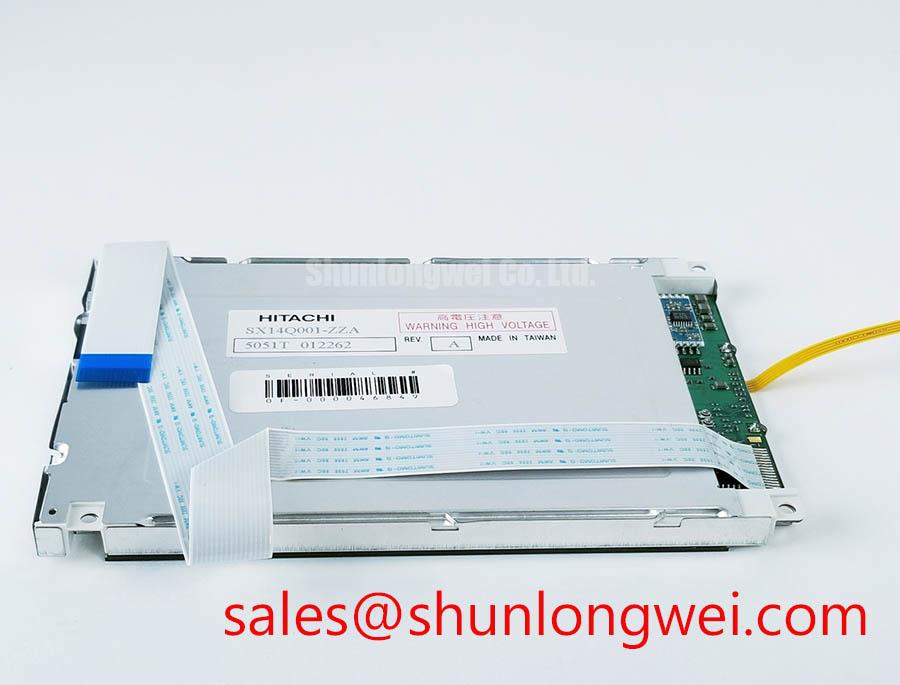
The SX14Q001 factory information supplied for this product does not specify a GTG response-time value, a guaranteed cold-start performance curve, or a validated thermal-cycle range. Those values must therefore be obtained from the original panel documentation or measured on an approved sample. Designers should verify whether the installed system uses LVDS, TTL, or another interface before selecting a replacement controller. The data format should also be checked for JEIDA or VESA alignment, since a format mismatch can create incorrect color mapping even when the connector appears mechanically compatible.
Backlight control requires the same discipline. The product context provided does not confirm a PWM frequency, duty-cycle linearity, or backlight driver topology for this model. The system integrator should verify the required dimming method from the original equipment schematic and then check for visible flicker, acoustic noise, startup overshoot, and brightness nonlinearity across the intended temperature window. If an external driver is used, its enable timing should be compared with panel power sequencing so that the display does not receive an invalid signal state during machine startup.
Perimeter sealing and bezel materials should be inspected after repeated thermal exposure. Look for separation, distortion, contamination, or pressure marks around the active area and mounting edge. These observations are design verification points, not published SX14Q001 factory limits. For AGV and forklift telematics applications, the evaluation should include vibration, cable strain, sunlight exposure, and repeated cold-to-warm transitions because the finished enclosure can impose mechanical conditions that are absent from a bare-module test.
💡 Pro Tip: Use controlled-impedance routing appropriate to the LVDS or TTL interface, and verify clock quality at the receiver during cold-start testing instead of judging compatibility only from the connector shape.
Optical Luminance Degradation Curve and CCFL-to-LED Modernization Retrofit Pathways
Before planning a backlight retrofit, identify the light source and driver arrangement fitted to the original SX14Q001 assembly. The supplied factory data classifies the product as a TFT-LCD display module but does not confirm whether this exact unit uses CCFL, LED, an integrated driver, or a separate backlight assembly. The system integrator should verify the original panel documentation rather than assuming that an LED conversion is electrically or mechanically interchangeable.
A CCFL replacement assessment normally includes the inverter, lamp harness, grounding arrangement, startup behavior, and electromagnetic noise review. An LED modernization assessment instead requires confirmation of forward-current control, enable polarity, dimming behavior, thermal dissipation, and optical coupling. These are system-level compatibility questions and should not be presented as SX14Q001 factory specifications. A retrofit that produces the correct image may still fail the installation review if its brightness control, cable routing, or bezel depth differs from the original arrangement.
For luminance evaluation, record brightness at the same test pattern, viewing angle, ambient condition, and backlight command. The resulting trend can help distinguish gradual optical aging from a driver fault, connector issue, or uneven illumination. No SX14Q001 field-life, half-life, MTBF, or L70/B50 value is included in the supplied official parameter set, so a specific operating-hour claim cannot be assigned to this model without a manufacturer document or qualified test report.
Signal integrity should be checked at the panel input while the backlight is switched through its operating range. An oscilloscope comparison with a known-good system can reveal timing distortion, excessive clock jitter, unstable enable sequencing, or an intermittent harness connection. The engineer should verify data hold and setup behavior against the controller and receiver documentation. If a retrofit changes the driver ground return, cable length, or switching edge behavior, the display should be tested again for image noise and interference under the complete equipment load.
For a cross-model assessment, engineers may review TX23D11VM2BAA as a separate display option, but dimensional fit, optical performance, interface mapping, power requirements, and mounting compatibility must be compared independently. It should be treated as a neutral engineering comparison point rather than an automatic substitute for SX14Q001.
Thermal Expansion Clearance Sizing across Heavy Industrial Metal Enclosure Cutouts
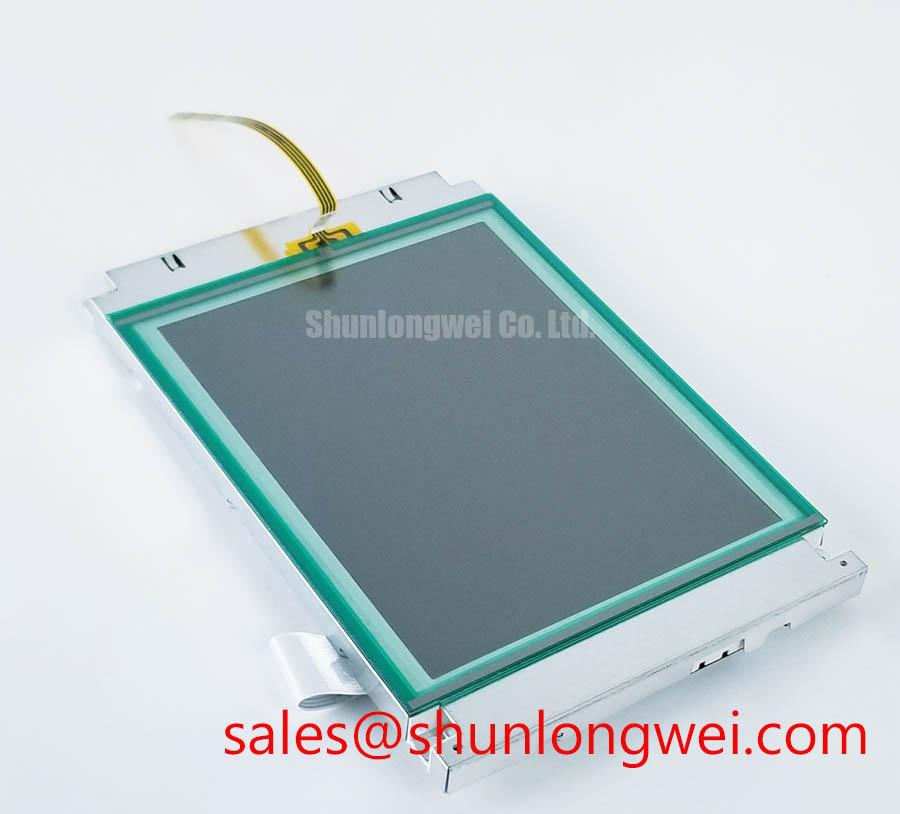
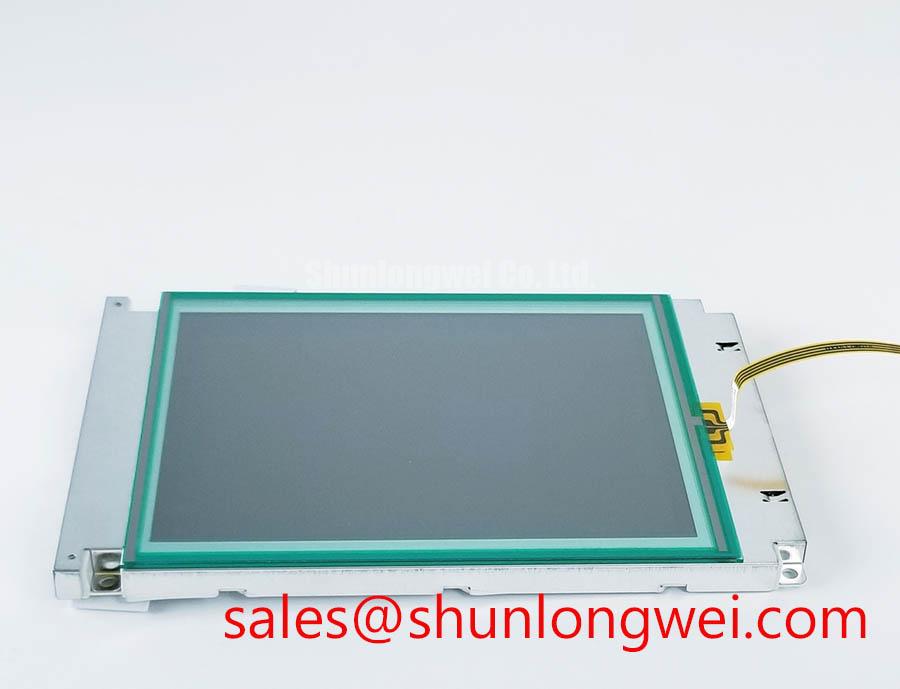
Mechanical replacement work should start with a dimensional drawing of the installed panel and the enclosure cutout. The available SX14Q001 information confirms the TFT-LCD module category but does not provide the outer bezel envelope, active-area dimensions, mounting-hole pattern, fastener specification, or allowable installation clearance. These dimensions must be verified from the original documentation or by controlled measurement of the approved part.
Metal bezels and display modules can respond differently during temperature changes. A rigid cutout may transfer stress to the panel perimeter, while uneven fastener loading can create localized pressure or visible nonuniformity. The mounting design should support the module without bending the frame, obstructing the viewing area, or loading the connector. A cross-pattern tightening sequence may be useful as a general installation consideration, but the correct fastener torque remains system-dependent unless the panel manufacturer specifies it.
When the display is used in an AGV or forklift telematics enclosure, check the relationship between the front cover, sealing gasket, touch surface if present, and LCD viewing window. The window should not intrude into the active area, and the enclosure should not press directly on unsupported regions of the module. Vibration testing should be performed with the final cable restraints installed, because a harness that is acceptable on a bench can transfer force to the connector during vehicle movement.
Outdoor warehouse lighting also requires measurement rather than assumption. The supplied SX14Q001 factory context does not state a contrast-ratio value at direct sunlight, an anti-glare coating specification, or a luminance rating. Engineers should therefore verify readability using the actual cover glass, viewing angle, ambient illumination, and backlight control. If the front window or anti-reflection treatment is changed during service, the optical result should be measured again because enclosure materials can alter reflected contrast.
🔧 Bench Diagnostic: Disconnect power before removing or inserting the display cable, and confirm connector orientation and keying before reassembly.
Suppressing Localized Thermal Gradients to Prevent Chronic Optical Yellowing
Thermal mapping is the appropriate first check when a display develops a localized color change, brightness difference, or unstable image after enclosure integration. Measure the panel perimeter, backlight region, controller area, and adjacent metalwork under representative operating conditions. A visible shift may involve the display, driver, optical stack, enclosure reflection, or temperature distribution; it should not be assigned to one internal material or one failure mechanism without supporting evidence.
The supplied official data does not identify the SX14Q001 optical guide material, thermal spreader construction, LED service-life curve, or color-shift limits. Engineers should not infer a PMMA structure, L70/B50 rating, or guaranteed longevity for this model. Where a heat spreader rail or enclosure conduction path is considered, its placement should be evaluated against active-area pressure, connector clearance, insulation, service access, and the manufacturer’s mechanical drawing. The final arrangement should be validated through temperature measurement and image uniformity testing.
Low-temperature response should be assessed using controlled image transitions while monitoring panel temperature and supply stability. If GTG behavior becomes slower, compare the result with the source timing, frame content, refresh configuration, and backlight state. A heater strip may be considered in applications that require faster cold recovery, but its control method, sensor location, electrical isolation, warm-up sequence, and impact on the enclosure must be determined by the system designer. The SX14Q001 documentation supplied here does not establish a heater requirement or a permissible heater temperature.
For harsh-environment HMI evaluation, the practical reference should include sealing, connector protection, thermal measurement, vibration testing, and serviceability. The Industrial Display & HMI Solutions resource can be used as a broader integration reference, while model-specific acceptance remains dependent on the SX14Q001 documentation and the equipment manufacturer’s validation procedure.