Content last revised on September 10, 2026
The Engineering Merits of the SX14Q003 for Robust Industrial HMI Integration
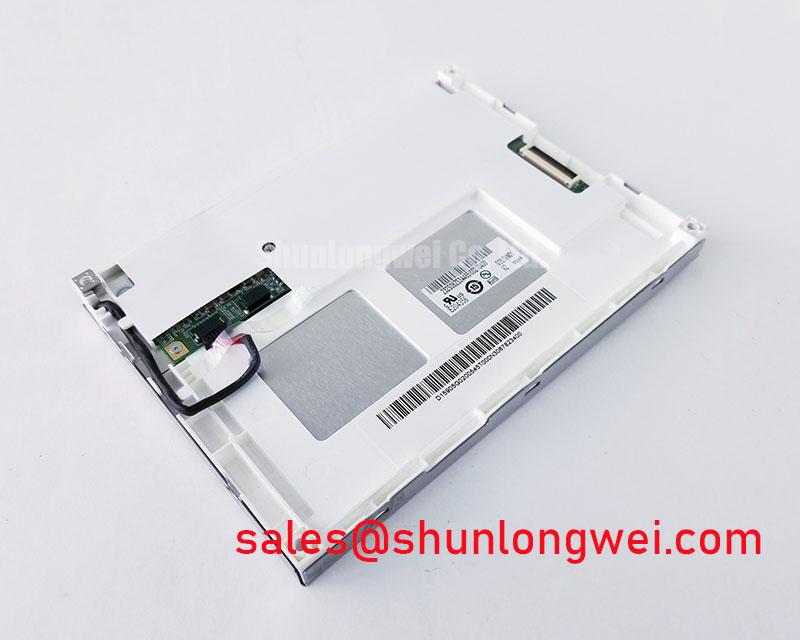
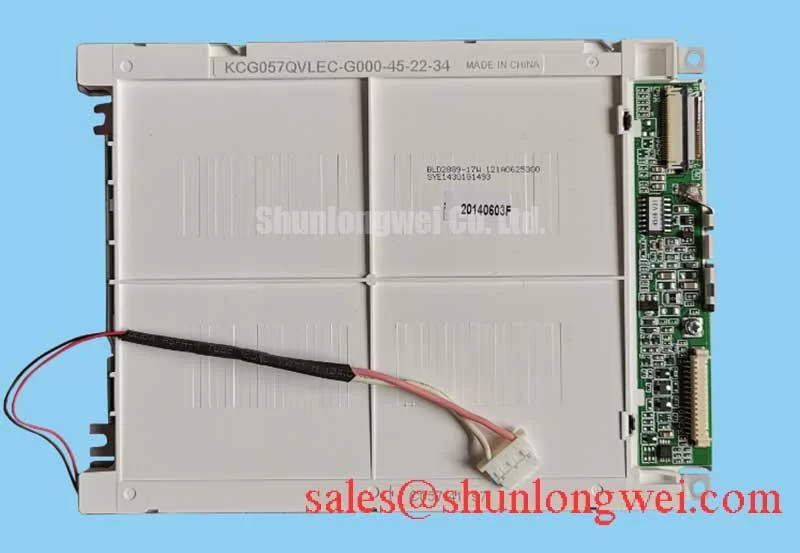
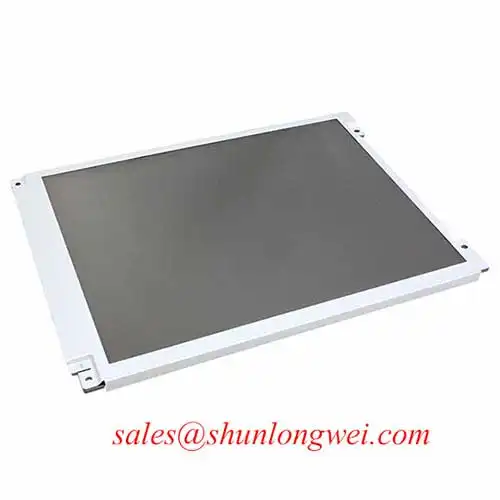
The SX14Q003 represents a cornerstone in legacy display technology, offering a highly stable 5.7-inch 320x240 QVGA platform tailored for environments where graphical simplicity equates to operational reliability. As a monochrome STN-Blue (Negative) liquid crystal display, it bypasses the complexity of modern multi-layered color filters to provide superior contrast and readability under challenging industrial lighting conditions. For systems requiring a balance of low power consumption and high visibility, the SX14Q003 provides a proven integration path with long-term mechanical stability.
What is the primary interface for the SX14Q003? It utilizes a 4-bit parallel data interface to ensure rapid signal processing and synchronization with legacy microcontrollers. By focusing on a specialized STN architecture, this module minimizes electromagnetic interference (EMI), making it an ideal candidate for precision medical and instrumentation applications.
Key Parameter Overview
Decoding the Specs for Enhanced Thermal and Electrical Reliability
The technical profile of the SX14Q003 is defined by its ability to maintain consistent performance across its 5.0V logic supply range. Engineers must account for the CCFL (Cold Cathode Fluorescent Lamp) backlight requirements, which typically necessitate a dedicated high-voltage inverter stage. The following table highlights the critical operational boundaries derived from the official technical documentation.
| Technical Parameter | Specification Value | Engineering Significance |
|---|---|---|
| Manufacturer | Hitachi / JDI | Ensures long-term industrial supply consistency. |
| Screen Size | 5.7-inch (Diagonal) | Optimal form factor for handheld or panel-mount HMIs. |
| Resolution | 320 x 240 (QVGA) | Perfect for text-heavy and simple graphical icons. |
| Display Technology | STN-Blue (Negative) | High contrast (typical 6:1) for low-light clarity. |
| Interface Type | 4-bit Parallel | Simplifies driver development for 8-bit/16-bit MCUs. |
| Physical Dimensions | 167.0 x 109.0 x 10.0 mm | Standardized footprint for easy retrofitting. |
| Backlight Type | CCFL | Provides uniform 70 cd/m² luminance across the surface. |
Application Scenarios & Value
Maximizing Uptime in High-Vibration Industrial Control Systems
In the realm of industrial automation, the SX14Q003 is frequently deployed within CNC control panels and textile manufacturing equipment. Engineers often face the challenge of display washout or pixel degradation in high-temperature environments. The STN structure of the SX14Q003 is inherently more resilient to "black-out" effects caused by extreme heat compared to standard consumer-grade panels. For instance, in a textile loom control unit, the SX14Q003 manages real-time tension data visualizations where the 320x240 resolution is sufficient for clear numerical readouts without the overhead of a color GPU.
Beyond heavy machinery, this module is a staple in medical diagnostic devices. The negative blue mode provides a non-fatiguing visual experience for clinicians operating in darkened hospital wards. When designing for systems that may eventually transition to higher resolution or different technologies, engineers may also consider the LMG5271XUFC-D or the LMG6912RPFC for varied contrast ratios or backlight configurations within the same mechanical family. Understanding the TFT-LCD vs STN selection criteria is essential for long-term lifecycle management in these sectors.
Technical Deep Dive
Signal Integrity and Mounting Considerations for Long-Term Reliability
The SX14Q003 utilizes a 4-bit parallel interface which requires precise timing synchronization. To visualize this, consider the parallel bus as a four-lane highway: all data packets must arrive at the terminal gate (the LCD driver IC) simultaneously to prevent "ghosting" or staggered horizontal lines. A common engineering challenge is managing the rise and fall times of the FLM (First Line Marker) and CL1 (Data Latch) signals. Excessive trace length on the PCB can introduce parasitic capacitance, distorting these waveforms and leading to flickering.
Another critical design factor is the CCFL backlight management. Unlike modern LEDs, CCFL tubes require a high-frequency AC voltage (typically 250V to 1000V) to strike the arc. This necessitates careful isolation of the inverter circuit from the sensitive logic traces of the SX14Q003. Proper grounding of the metal frame is not just for structural integrity but acts as a Faraday cage to suppress noise that could interfere with the 320x240 pixel matrix. For further insights into protecting displays in harsh conditions, refer to our guide on engineering for harsh environments.
FAQ
How does the contrast ratio of the SX14Q003 impact its performance in sunlight?
As a Negative STN display, the SX14Q003 relies on its CCFL backlight for visibility. In direct sunlight, the contrast may diminish. For outdoor applications, engineers should prioritize high-nit LED-backlit versions or transreflective alternatives. The SX14Q003 is best suited for indoor industrial or medical settings where ambient light is controlled.
What are the power consumption implications of the CCFL backlight?
The CCFL backlight is the primary power consumer in the SX14Q003. While the logic circuitry consumes minimal current at 5V, the inverter for the backlight can draw significant wattage. Designing a sleep mode that deactivates the inverter during periods of inactivity can extend the backlight's lifespan, which is typically rated at 20,000 to 50,000 hours.
Is the SX14Q003 compatible with modern 3.3V microcontrollers?
Direct connection to 3.3V MCUs requires logic level shifting. Since the SX14Q003 operates on a 5V logic supply, the input high voltage threshold (Vih) might not be reliably met by 3.3V signals. Utilizing a buffer or level translator ensures that the 4-bit parallel signals remain crisp and error-free, preventing data corruption on the QVGA screen.
The strategic selection of the SX14Q003 ensures that industrial designs remain functional and maintainable for decades. By focusing on mechanical compatibility and electrical robustness, this Hitachi-engineered module remains a vital asset for maintaining the global installed base of high-precision HMI systems.