
Content last revised on February 5, 2026
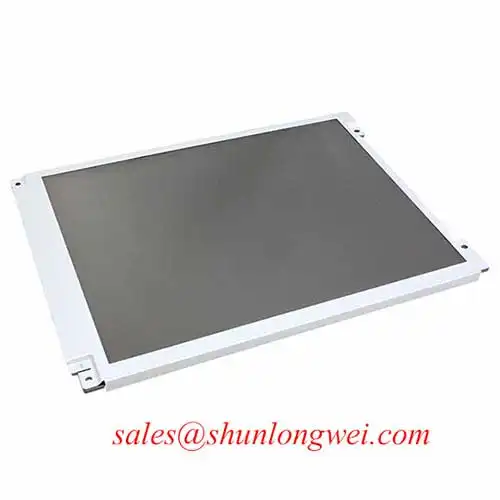
TM123XDKP17-00 Tianma 12.3-inch 1920x720 High-Definition Industrial LCD
Can your HMI maintain visual integrity when operating in a cockpit subjected to direct sunlight and extreme temperature swings? The TM123XDKP17-00 offers an ultra-wide 1920x720 resolution and SFT/IPS technology designed for automotive and rugged industrial environments requiring superior clarity and wide viewing angles. Featuring a 12.3-inch diagonal size and a specialized 8:3 aspect ratio, this module delivers high-density information without sacrificing readability. For automotive clusters or high-end industrial dashboards requiring a panoramic layout, the TM123XDKP17-00 is the optimal choice.
What is the primary benefit of its SFT/IPS design? It ensures color consistency and image stability across wide viewing angles without the "washout" effect common in traditional TN panels. This module utilizes a 2-channel LVDS interface to handle high-bandwidth video data with low electromagnetic interference.
Frequently Asked Questions
Addressing Critical Design and Integration Queries
How does the SFT (Super Fine TFT) technology in the TM123XDKP17-00 improve safety in automotive applications?
SFT technology, a derivative of IPS (In-Plane Switching), provides symmetrical viewing angles of 88°/88°/88°/88°. In a vehicle or heavy machinery cockpit, this ensures that the operator can read critical alerts and telemetry data accurately regardless of their seating position or head movement, eliminating dangerous blind spots caused by screen color inversion.
What are the implications of the 1920x720 resolution for UI/UX design in industrial controls?
With a resolution of 1920x720 on a 12.3-inch panel, the pixel density is significantly higher than standard WVGA or SVGA industrial displays. This allows engineers to render fine-line graphics, complex anti-aliased fonts, and multiple data windows simultaneously, which is essential for modern information-dense interfaces like digital instrument clusters.
How does the LVDS interface benefit the overall system EMC (Electromagnetic Compatibility) profile?
The 2-ch LVDS (8-bit) interface uses differential signaling to minimize noise emission. This is crucial when the display is located near sensitive RF components or high-power electronics, such as motor drives, ensuring the signal remains robust against external interference.
Can this display operate in extreme outdoor environments?
The TM123XDKP17-00 is engineered with a wide operating temperature range typically required for automotive specifications. This ensures that the LED backlight and liquid crystal layer respond consistently even in cold-start scenarios or high-heat environments where consumer-grade displays would suffer from "blacking out" or slow response times.
Key Parameter Overview
Decoding the Specs for Enhanced Visual Reliability
| Technical Specification | Value / Description | Engineering Significance |
|---|---|---|
| Manufacturer | Tianma | Leader in automotive-grade display technology. |
| Screen Size | 12.3-inch | Ideal for wide-format panoramic HMI layouts. |
| Resolution | 1920 x 720 (SXGA) | High pixel density for crisp graphical rendering. |
| Display Mode | SFT (IPS), Normally Black | True black levels and wide 176-degree viewing. |
| Aspect Ratio | 8:3 | Optimized for dashboard and strip-display applications. |
| Signal Interface | LVDS (2 ch, 8-bit) | Standard industrial connectivity with low EMI. |
| Contrast Ratio | 1000:1 | Provides deep blacks and vibrant color differentiation. |
Download the TM123XDKP17-00 datasheet for detailed specifications and performance curves.
Technical & Design Deep Dive
A Closer Look at SFT Architecture for Long-Term Reliability
The TM123XDKP17-00 leverages Tianma's proprietary SFT (Super Fine TFT) technology to solve the "gamma shift" problem. In conventional industrial displays, viewing the screen from an angle often results in a color shift that can misrepresent critical status indicators (e.g., a yellow warning light appearing greenish). SFT architecture aligns liquid crystals in a plane parallel to the substrate, which prevents this distortion. Think of it like looking at a high-quality printed photograph vs. an old-fashioned holographic sticker; the image remains perfectly clear and color-accurate no matter how you tilt it.
Furthermore, the 1920x720 resolution on a 12.3-inch diagonal creates a high-definition experience that mirrors modern smartphone quality. This is achieved through a precise a-Si TFT (Amorphous Silicon) backplane that supports high-speed switching while maintaining thermal stability. From an engineering perspective, this resolution allows for "functional partitioning" of the display—one segment can handle real-time video feeds from safety cameras, while another displays static instrumentation, all without pixelation. More information on these display structures can be found in our ultimate guide to TFT-LCD.
Application Scenarios & Value
Achieving System-Level Benefits in High-Performance Cockpits
The primary engineering challenge in automotive and heavy-machinery clusters is maintaining visibility under shifting ambient light conditions. The TM123XDKP17-00 addresses this through its Normally Black transmissive mode, which significantly improves the Contrast Ratio to 1000:1. When integrated into a dashboard, this high contrast ensures that dark backgrounds remain "inky" black, allowing white or colored text to pop with high legibility. This is particularly vital for Night Vision systems or infrared camera displays used in specialized industrial vehicles.
Beyond the automotive sector, this wide-format display is finding a home in medical patient monitoring and industrial rack-mount systems where vertical space is limited but horizontal data density is required. Its LVDS interface ensures compatibility with a wide range of industrial SoCs and FPGAs. Engineers designing for harsh environments should also consider HMI solutions for harsh environments to complement this hardware choice. While this model is ideal for high-definition 12.3-inch requirements, for systems needing slightly different dimensions or specs, related products like the C123HAN01.0 or the AA121TD11 offer alternative mechanical footprints for various enclosure designs.
As modern automation trends move toward more intuitive and data-rich interfaces, the TM123XDKP17-00 stands as a strategic component for engineers who refuse to compromise on visual precision. By combining the wide-angle benefits of IPS/SFT with the ruggedness required for industrial lifecycles, this Tianma display ensures that the most critical information is always delivered with absolute clarity.