




Content last revised on September 10, 2026
VUB72-16NO1: Engineering Insights into the 1700V High-Reliability Three-Phase Rectifier Bridge
An Engineering-Focused Review of the VUB72-16NO1 Rectifier Module
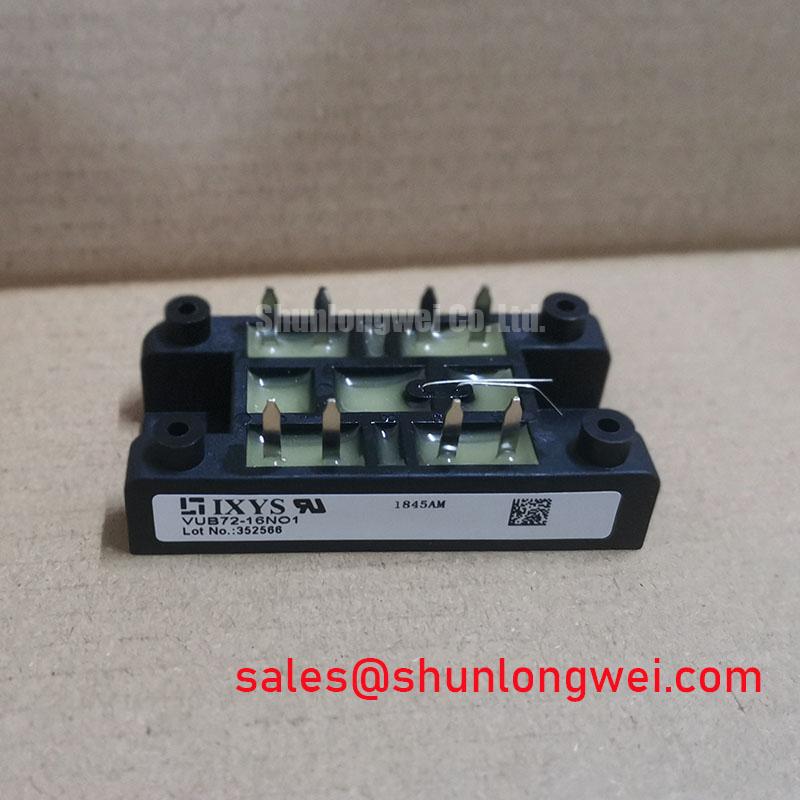
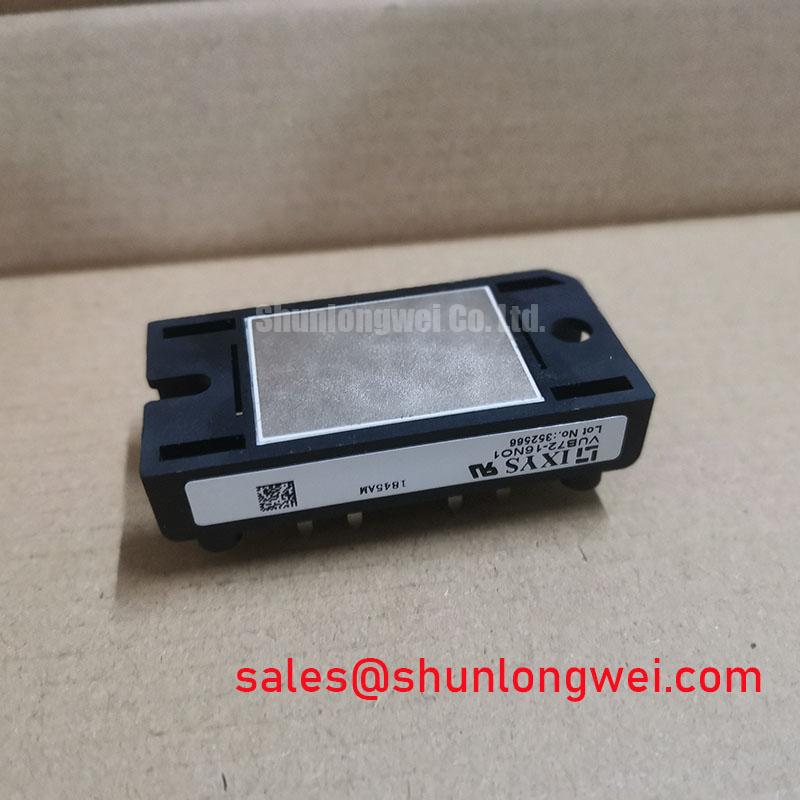
The IXYS VUB72-16NO1 is a three-phase rectifier bridge module engineered for exceptional long-term reliability in high-voltage industrial power systems. Its performance is defined by key specifications of 1700V | 77A | V_ISOL 3000V~. The primary advantages delivered are superior thermal cycling endurance and simplified design for high-voltage mains. This module directly addresses the challenge of premature failure in power converters by replacing conventional solder joints with a robust pressure contact system, effectively mitigating a primary cause of field failures. For demanding industrial drives operating on 690V AC lines where operational longevity is a primary design criterion, this module is an optimal choice.
Key Parameter Overview
Decoding the Specs for Enhanced Thermal and Electrical Robustness
The technical specifications of the VUB72-16NO1 are tailored for demanding industrial power conversion applications. The data below highlights the key electrical and thermal characteristics that enable its reliable performance. Note the high reverse voltage capability and low thermal resistance, which are critical for system durability.
| Parameter | Symbol | Conditions | Value | Unit |
|---|---|---|---|---|
| Repetitive Peak Reverse Voltage | V_RRM | 1700 | V | |
| Average Forward Current | I_dAV | T_C = 100°C; resistive load | 77 | A |
| Peak Forward Surge Current | I_FSM | T_VJ = 150°C, t = 10ms (50 Hz, sine) | 650 | A |
| I²t Value | I²t | T_VJ = 150°C, t = 10ms (50 Hz, sine) | 2100 | A²s |
| Isolation Voltage | V_ISOL | 50/60 Hz, RMS, t = 1 min | 3000 | V~ |
| Thermal Resistance, Junction to Case | R_thJC | per diode; DC current | 0.48 | K/W |
| Thermal Resistance, Case to Heatsink | R_thCH | per module; mounting surface flat, smooth and greased | 0.07 | K/W |
| Operating Junction Temperature Range | T_VJ | -40 to +150 | °C | |
| Mounting Torque | M_d | (M5) | 3 - 3.5 | Nm |
| Weight | typical | 35 | g |
Download the VUB72-16NO1 datasheet for detailed specifications and performance curves.
Application Scenarios & Value
Achieving System-Level Benefits in Industrial Power Conversion
The VUB72-16NO1 is engineered for the input rectification stage of high-power systems where reliability is non-negotiable. Its primary application is in the front-end of a Variable Frequency Drive (VFD), particularly those connected to 690V AC industrial lines. In such environments, the VFD controls heavy machinery like conveyor belts, pumps, and mixers, subjecting the power electronics to constant thermal stress from load variations. The key challenge for engineers is to prevent rectifier failure caused by this thermal cycling. The VUB72-16NO1's pressure-contact design directly solves this by creating a resilient connection that is not susceptible to the solder fatigue that plagues conventional modules, thus extending the VFD's operational lifetime and reducing costly downtime. Other critical applications include industrial power supplies, battery chargers, and the DC front-end for uninterruptible power supplies (UPS).
While the VUB72-16NO1 is well-suited for applications up to 77A, systems with higher power demands may require a component with greater current handling capacity. For such designs, the MDS200A1600V offers a three-phase bridge configuration with a 200A rating at a similar voltage class.
Frequently Asked Questions (FAQ)
What is the primary advantage of the VUB72-16NO1's pressure contact technology over traditional soldered modules?
The main advantage is significantly enhanced long-term reliability. Pressure contacts eliminate solder joints, which are a common failure point due to cracking from mechanical stress induced by thermal cycling. This makes the module exceptionally durable in applications with frequent temperature fluctuations, directly increasing system uptime.
How does the 1700V V_RRM rating benefit designs for 690V AC systems?
A 690V AC line can have a peak voltage of approximately 975V. The 1700V V_RRM provides a substantial safety margin of over 70%. This robust headroom is critical for protecting the rectifier from voltage transients and spikes common in industrial environments, ensuring the longevity and safety of the downstream DC bus voltage components.
What are the key considerations for mounting the VUB72-16NO1 to a heatsink to ensure optimal thermal performance?
To achieve the specified low thermal resistance (R_thCH), it is crucial to ensure the heatsink surface is flat, smooth, and clean. A thin, uniform layer of thermal grease should be applied. Most importantly, the mounting screws must be tightened to the specified torque of 3 to 3.5 Nm to ensure proper pressure distribution and thermal contact.
Does the Direct Copper Bonded (DCB) substrate in the VUB72-16NO1 affect its mechanical durability?
Yes, it enhances it. The DCB substrate, consisting of an Al2O3 ceramic insulator bonded between copper layers, provides not only excellent electrical isolation but also a mechanically stable platform for the semiconductor dies. Its coefficient of thermal expansion is well-matched to silicon, reducing mechanical stress on the dies during temperature changes and contributing to the module's overall robustness.
Technical Deep Dive
A Closer Look at Pressure-Contact Design for Long-Term Reliability
The defining feature of the VUB72-16NO1 is its implementation of solder-free pressure contact technology. In conventional power modules, semiconductor chips are soldered to a DCB substrate, which is then soldered to a baseplate. The different rates of thermal expansion and contraction between these materials create immense mechanical stress on the solder layers. Over thousands of cycles, this leads to micro-cracks that eventually cause thermal or electrical failure. What is the primary benefit of its pressure-contact design? Enhanced long-term reliability by eliminating solder fatigue.
The VUB72-16NO1 bypasses this failure mode entirely. Instead of solder, it uses a precisely engineered spring system to press the internal components together, ensuring a reliable electrical and thermal connection. This can be compared to a high-end automotive suspension versus a rigid, welded frame. The suspension (pressure contact) continuously adapts to the "bumps" of thermal expansion and contraction, maintaining contact without accumulating stress. The rigid frame (solder), however, is prone to cracking when subjected to repeated stress. This design philosophy makes the module inherently more resilient and a superior choice for applications where maximizing operational life is a core engineering goal, aligning with modern industrial demands for lower total cost of ownership.
A Strategic Perspective on System Reliability
Selecting the VUB72-16NO1 is a strategic decision that prioritizes long-term system reliability and uptime over initial component cost. By engineering out a known failure mechanism—solder fatigue—this module provides a more predictable and durable foundation for critical power systems. In an era where maintenance costs and the price of downtime often exceed the hardware investment, investing in components with inherently superior reliability technologies is a critical step toward building more robust and profitable industrial infrastructure.



