


Content last revised on September 21, 2026
Preventing Localized Light Guide Plate Compression Warp on Dark Screen Fields
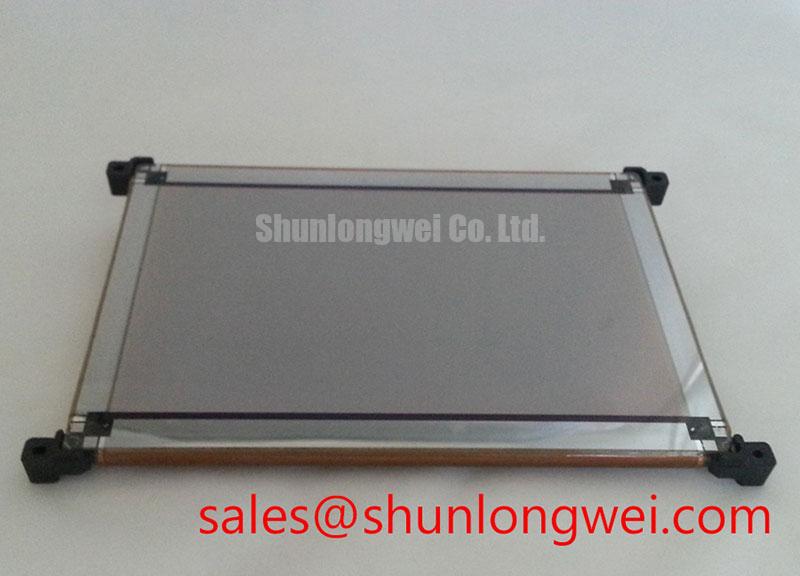
Before fitting the Sharp LJ640U31 into a telematics enclosure, place the panel on a clean, flat, nonconductive work surface and inspect whether the host bezel contacts the display evenly. Uneven clamp loading can create visible nonuniformity on dark images, especially when the enclosure applies force near the active display perimeter. This is a mechanical integration concern, not an official optical performance specification for this model.
Design Consideration: the host bezel should support the panel through the mechanical contact regions defined by the original assembly drawing. A bezel opening that bears on an unintended area can introduce local stress, while a distorted carrier frame can transfer vibration load into the display assembly. Tighten retained fasteners in a cross pattern and use the original equipment’s documented fastening method. The system integrator should validate the final assembly with dark screen fields, uniform gray fields, and ordinary operating content after the panel is installed.
⚡ Practical Installation Note: Disconnect system power before inserting or removing the display cable, because connector handling under power can damage the panel or the host controller.
Cold conditions can slow visible liquid crystal transitions, so a display that appears to have delayed gray movement during cold startup should be assessed only after the equipment reaches its intended operating condition. Design Consideration: where the host includes an enclosure heater or temperature control function, confirm its enable sequence and sensor behavior at the machine level rather than modifying the display assembly. The official information provided for LJ640U31 does not establish a specific low temperature response time or a heater requirement.
For AGV and forklift telematics displays, vibration isolation, enclosure flatness, and retention geometry should be evaluated alongside optical inspection. These are application compatibility checks and do not indicate that the panel is qualified for any particular vehicle environment without the relevant equipment level validation.
Shielded FFC/FPC Flat Flexible Cable Grounding and Connector Interfaces
Inspect the original display cable before replacing the panel. Look for folds at the bend radius, incomplete connector engagement, damaged shielding, loosened chassis grounding points, and routing that passes directly beside motor drive conductors. Horizontal bands, intermittent pixels, or unstable images can have several causes, including cable damage, display timing issues, ground return disturbances, or emissions from adjacent power equipment. Compare behavior against a known good signal path with suitable test equipment before assigning a single cause.
Design Consideration: a shielded display interconnect should maintain a continuous grounding strategy through the connector shell and enclosure interface where the original equipment design provides one. In equipment containing variable frequency drives, cable routing and common mode suppression should be verified as part of the full assembly. The objective is to limit unwanted coupling into the display signal path while preserving the grounding architecture designed by the equipment manufacturer.
The supplied factory information does not confirm whether the LJ640U31 uses a particular LVDS or TTL interface, data mapping convention, connector pinout, or pixel clock requirement. The system integrator should verify the required supply voltage, interface type, signal polarity, data format, and power sequencing from the original panel documentation and host controller documentation.
💡 Pro Tip: Where differential signaling is used, keep each differential pair routed as a controlled pair with matched electrical length and confirm clock and data integrity at the receiving connector during system testing.
When evaluating a replacement path, physical appearance alone is insufficient. The host interface, mounting layout, display area, timing format, backlight control arrangement, and system firmware behavior must all be compared. The LM057QC1T08 can be reviewed as a separately identified display option during a documented compatibility assessment, but it should not be assumed to be electrically or mechanically interchangeable without verification.
Mitigating Gray to Gray Response Time Escalation during Cold Start Machine Power Up
During a cold power up inspection, first verify that the panel connector is fully seated and that the host provides its intended startup sequence. Observe the screen through the complete initialization cycle rather than judging response behavior from the first few seconds after power is applied. Slower changes between gray levels can occur in liquid crystal displays at reduced temperature, but the observed result should be checked against the equipment’s approved operating conditions and a known good assembly where available.
Design Consideration: separate electrical startup diagnosis from optical response diagnosis. If the backlight operates but image content is delayed, distorted, or absent, confirm the host signal path, panel enable behavior, and timing relationship before replacing surrounding circuitry. If the image is present but transitions appear sluggish in a cold enclosure, assess ambient conditions and any machine level thermal management before making a panel level judgment.
The supplied official data for the LJ640U31 does not state a gray to gray response time, a thermal cycle range, perimeter seal construction, LED backlight lifetime, or brightness retention curve. No operating life, half brightness interval, or backlight reliability value should therefore be attributed to this model from the available verified information.
For long service intervals, technicians should document the original display behavior, host controller revision, cable part number, enclosure condition, and startup observations. This provides a more reliable basis for repair decisions than assuming that a visible condition originates from one internal display mechanism. Broader integration practices for industrial HMI assemblies can be reviewed in Industrial Display & HMI Solutions.
Where insulation films are present in the host enclosure or cable assembly, their purpose and placement should be retained as designed. General material background on polyimide film can help explain why insulation barriers are commonly used in electrical assemblies, but it does not define the material composition or insulation rating of the LJ640U31.
Suppressing Acoustic Capacitor Buzz and EMI Emissions across PWM Dimming Frequencies
Start by determining whether the audible sound originates from the display module, the host power supply, a backlight driver, or nearby drive electronics. Listen with the display enabled and disabled, then compare the result while the machine brightness setting changes. Audible noise and visible flicker can be influenced by driver control, magnetic components, capacitors, cable routing, enclosure resonance, and display control signals. A single symptom does not confirm one component level cause.
The official factory information supplied for LJ640U31 does not identify the backlight technology, backlight startup requirements, dimming ratio, PWM frequency, backlight current requirement, or acoustic characteristics. The system integrator should verify the required backlight supply and control method from the original panel documentation before connecting any external driver or modifying host dimming circuitry.
Design Consideration: dimming control should be assessed for both optical stability and system level electrical noise. When the host equipment uses pulse width modulation, evaluate visual behavior under actual text, gray, and motion content, then inspect signal integrity and conducted or radiated interference within the completed equipment. A display module alone should not be represented as independently compliant with complete system EMC standards.
For AGV and forklift HMI service work, retain the original cable shielding, chassis bonding arrangement, strain relief, and power filtering strategy wherever those features are part of the documented equipment assembly. After installation, verify stable image operation through brightness adjustment, vehicle power transitions, and normal motor activity while observing the panel and its signal path.


