Content last revised on September 10, 2026
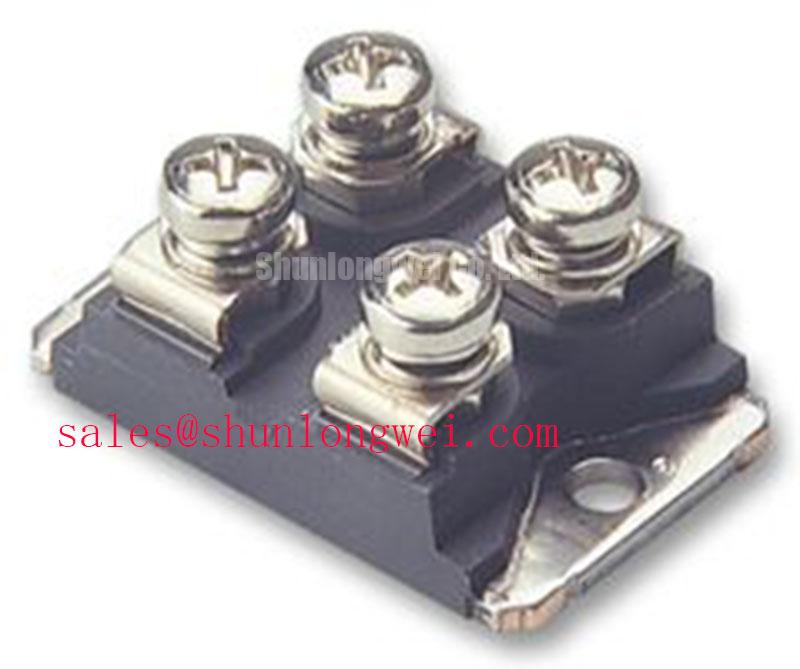
1DI50A-050 Fuji Electric 500V 50A Darlington Transistor Module
For engineers maintaining older DC motor drives prioritizing thermal margin over high-frequency efficiency, this 500V module remains the optimal choice [1]. What exactly is the 1DI50A-050? Contrary to common misconceptions, it is a single-channel Darlington power transistor module, engineered specifically for legacy high-current switching rather than functioning as a modern voltage-controlled device. Delivering a robust 500V blocking capability, 50A continuous current, and an isolated baseplate, it secures operational continuity. It simplifies mechanical integration and ensures dynamic resilience against sudden inductive voltage spikes.
Key Parameter Overview
Decoding the Specs for Enhanced Thermal Reliability
The following table highlights the critical operating thresholds of the 1DI50A-050. Understanding these parameters is essential for calibrating base drive circuits and preventing thermal runaway in legacy equipment.
| Parameter | Value | Engineering Impact |
|---|---|---|
| VCBO (Collector-Base Voltage) | 500V | Defines the maximum blocking voltage during off-state; crucial for safe operation. |
| IC (Continuous Collector Current) | 50A | Determines the steady-state load capacity for continuous motor operation. |
| Configuration | Single Darlington Pair | Provides massive current gain, allowing small base currents to control heavy loads. |
| Thermal Resistance (Junction-to-Case) | Consult Datasheet | Dictates the mandatory heatsink volume to maintain junction stability. |
Application Scenarios & Value
Achieving System-Level Benefits in Heavy-Duty DC Drives
Engineers often face catastrophic thermal failure when upgrading legacy DC motor controllers or heavy-duty UPS systems with substitute components that lack sufficient thermal mass [1]. The 1DI50A-050 provides the physical robustness required to absorb sudden load spikes in heavy machinery. In aging traction systems operating under strict IEC 61800-3 grid compliance guidelines, the module's substantial isolated baseplate effectively wicks away transient heat spikes.
The 50A rating guarantees stable operation across fluctuating mechanical loads. While this module acts as a critical replacement for maintaining existing 500V BJT infrastructure, designs migrating toward modern AC inverter topologies might instead evaluate the 7MBR50SA060. That alternative consolidates a 600V IGBT structure, offering a distinctly different switching profile for space-constrained, high-frequency environments.
Technical Deep Dive
A Closer Look at the Darlington Configuration for Long-Term Reliability
Unlike contemporary field-effect devices, the Darlington architecture pairs two bipolar transistors internally to amplify current gain exponentially. Think of the Darlington pair as a hydraulic power steering system; a small mechanical input (the base current) effortlessly maneuvers a massive physical load (the primary collector current). This allows the 1DI50A-050 to govern massive loads using remarkably simple drive circuitry. What is the primary benefit of its Darlington architecture? It provides exceptional current gain to control massive loads with minimal drive circuitry.
However, this topology inherently introduces a higher forward voltage drop (VCE(sat)) compared to solitary transistors. To offset the resulting thermal dissipation, the 1DI50A-050 employs an electrically isolated baseplate. This physical separation minimizes the junction-to-case thermal resistance, allowing rapid dispersion of localized hotspots. For a deeper understanding of navigating these thermal constraints, reviewing thermal management strategies is highly recommended, much like analyzing advanced Thermal Management models [1] dictates the physical longevity of all power semiconductors. Furthermore, contrasting this behavior with modern components via a practical guide to voltage and current management clarifies why specific snubber designs remain vital for BJTs.
Frequently Asked Questions
Resolving Core Engineering Uncertainties
- Is the 1DI50A-050 a direct replacement for a modern IGBT module?
No. It functions as a Darlington BJT. Although they share identical packaging footprints and power-switching roles, exchanging a BJT for an IGBT mandates a comprehensive redesign of the gate drive layer. BJTs are current-driven components, whereas IGBTs rely on voltage-driven gates. - How does the 50A rating perform under heavy inductive load switching?
The inherent structural ruggedness of the bipolar junction permits the 50A capacity to endure severe dV/dt environments typically encountered in legacy Variable Frequency Drives [1], provided the external snubber circuit is meticulously calibrated. - What is the primary thermal advantage of its isolated baseplate?
The isolated baseplate electrically decouples the mounting surface from the high-voltage collector. This mechanical design permits engineers to safely bolt multiple modules directly onto a single, grounded aluminum heatsink without requiring fragile mica insulators. - What occurs if the base drive current supplied to the module is insufficient?
Operating the module without the requisite base current forces the transistor out of deep saturation and into the active linear region. This operational shift triggers a massive surge in power dissipation, inevitably leading to rapid thermal degradation.
As power electronics transition aggressively toward wide-bandgap architectures, sustaining the operational lifespan of established industrial infrastructure remains a strategic imperative. The meticulous integration of highly robust, application-specific modules ensures minimal downtime, securing grid stability and predictable maintenance cycles across heavy industry.