Content last revised on September 11, 2026
6MBI15GS-060 Operational Boundaries: Evaluating Thermal Time Constants and Peak Junction Limits
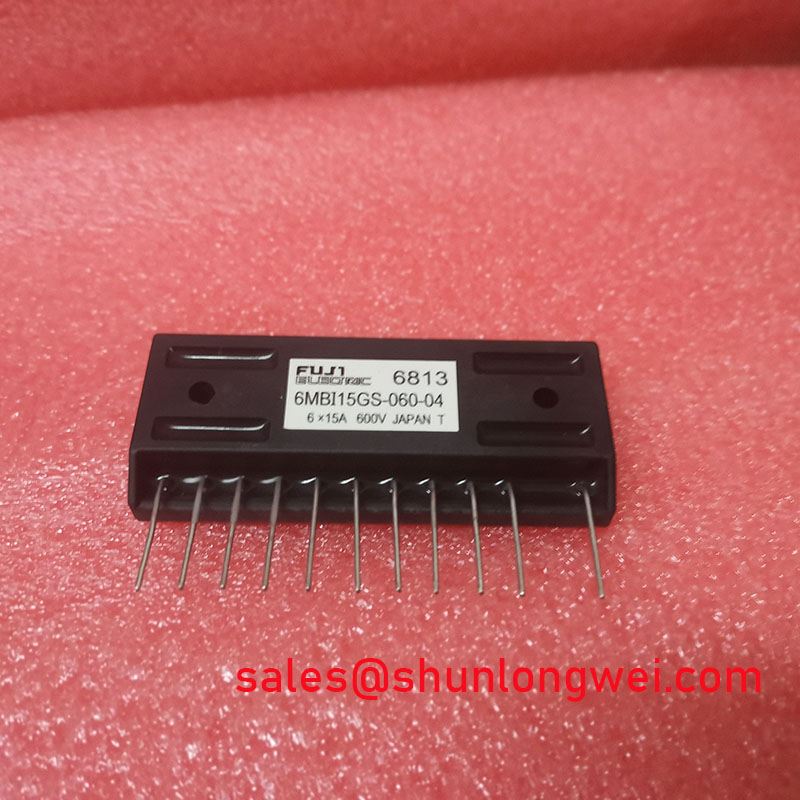
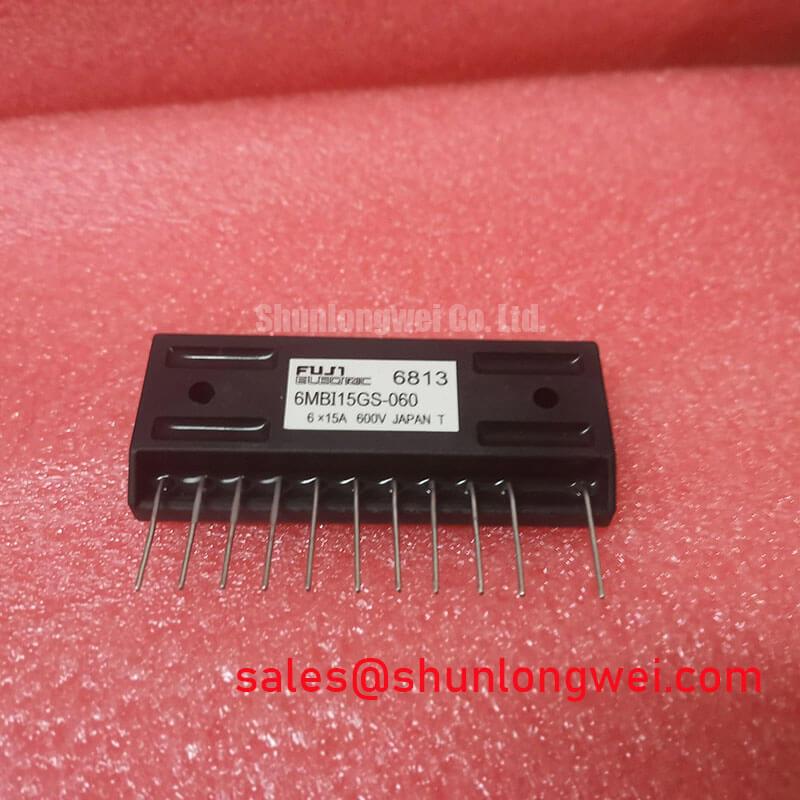
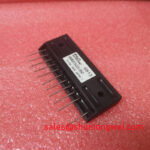
Before energizing a replacement, isolate the drive, inspect the module body and terminals, and verify the nameplate rating against the original circuit documentation. The Fuji Electric 6MBI15GS-060 is an IGBT Module with an official voltage rating of 600.0 V, an official current rating of 15.0 A, and a Module package. These are the confirmed product specifications available for this page; switching frequency, thermal resistance, transient thermal impedance, gate limits, and terminal configuration must be checked against the applicable Fuji Electric documentation before circuit approval.
During a field replacement, a cold resistance comparison between the suspected unit and a known serviceable unit can help identify an abnormal short or open condition, but a static multimeter test cannot validate dynamic switching performance. Check the power terminals, gate connections, auxiliary terminals where present, busbar contact surfaces, and the surrounding snubber or clamp network. A failed IGBT module is sometimes accompanied by damage in the gate resistor, driver output stage, fuse, current sensor, DC link capacitor, or braking network.
Design Consideration: Peak junction temperature must be evaluated from the actual load pulse, case temperature, mounting interface, cooling airflow, and the device’s transient thermal impedance curve. A multi RC thermal model can represent the short pulse and subsequent cooling interval more realistically than a steady state calculation. If the official Zth data for the exact device revision is unavailable, do not convert the 15.0 A rating into a guaranteed pulsed current value.
For a CNC or robotics servo drive, record the current waveform during acceleration, deceleration, and emergency stopping. The system engineer should compare the measured junction temperature estimate with the official maximum junction temperature and confirm that the case temperature remains within the manufacturer’s specified boundary. The DC link clamp, braking resistor, and MOV network should be assessed together because an MOV absorbs surge energy according to the complete system waveform, not from the IGBT current rating alone.
Field Diagnostics & Commissioning: High Frequency Common Mode Bearing Current in 6MBI15GS 060 Topologies
When a repaired servo axis produces unexpected motor bearing noise, encoder disturbance, or repeated overcurrent trips, inspect the complete high frequency current path rather than assigning the symptom to the IGBT module alone. Long motor leads, cable shielding, motor frame bonding, common mode capacitance, and inverter switching edges can interact with the installation. An oscilloscope with suitable differential and current probes can help compare the motor terminal waveform, DC link waveform, and protective earth current against a known good axis.
Transmission line effects on long motor cables can create voltage reflection and terminal overshoot. Some installations may show a peak approaching twice the local DC link voltage under unfavorable impedance conditions, but this is a system behavior and must not be treated as an intrinsic rating of the 6MBI15GS-060. Measure the actual peak at the module and motor terminals, then verify it against the official blocking voltage and switching limits. Output filters, common mode chokes, and termination methods should be selected from the measured cable length, motor insulation requirements, switching conditions, and filter manufacturer data.
The MOV network should be checked for correct voltage class, energy capability, placement, and coordination with the DC link protection. A visibly damaged MOV, an open fuse, or a changed clamping waveform can indicate that the surge path has been stressed, but none of these observations alone proves the condition of the IGBT die. Replace damaged protection parts only after checking the source of the transient and confirming that the replacement network matches the original design intent.
For parallel power paths, designers should verify static current sharing through symmetrical busbar geometry, matched electrical path resistance, and comparable thermal conditions. A positive temperature coefficient of on state voltage can support current balancing in some IGBT operating regions, but it does not remove the need for matched layout and dynamic verification. The 6MBI100L-060 may be evaluated as a related device in a rectifier or complementary power stage, subject to the original topology, ratings, and terminal compatibility.
⚠️ Field Alert: Disconnect the DC link and confirm the manufacturer’s discharge procedure before removing the module or touching gate and auxiliary wiring.
6MBI15GS 060 Operational Boundaries: Evaluating PCB Symmetry Considerations for Dual IGBT Limits
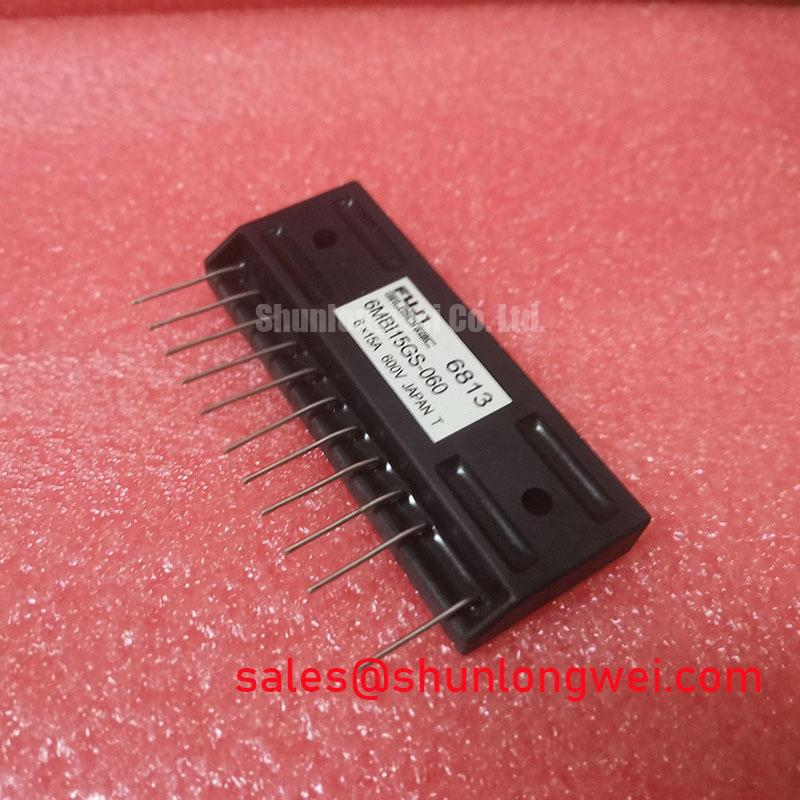
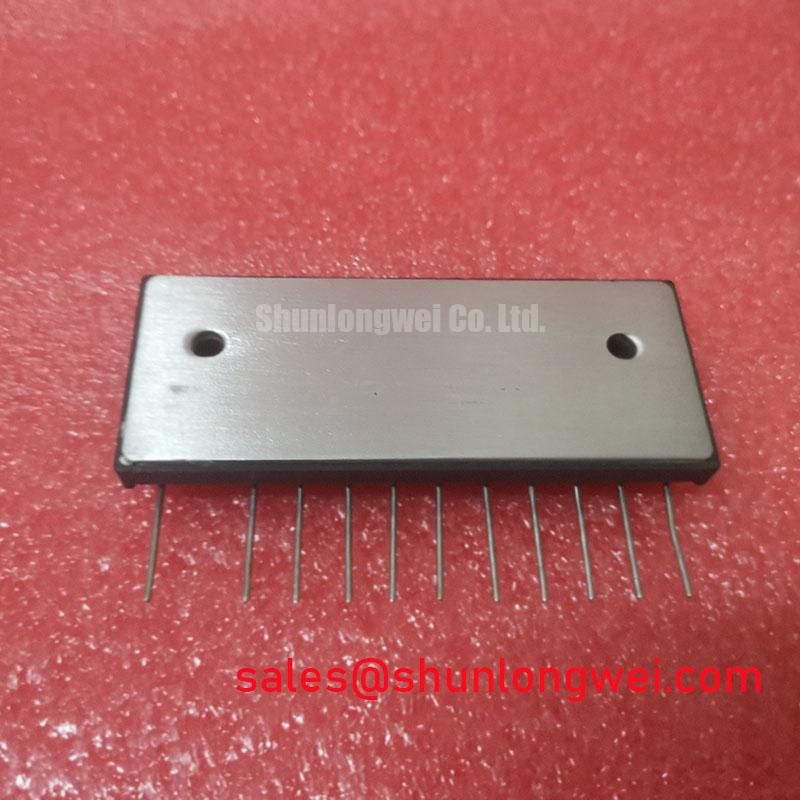
Do not assume that a visually similar power module has the same internal connection or auxiliary terminal arrangement as the original unit. Before fitting the 6MBI15GS-060, compare the approved circuit drawing, terminal markings, mechanical footprint, isolation requirements, and gate driver interface. The integrator should verify every control and power connection from the original Fuji Electric documentation rather than relying on a reseller photograph or a generic IGBT pinout.
Where a design uses an auxiliary or Kelvin emitter connection, the gate driver return should follow the intended low noise reference path and remain separate from the high current emitter return until the circuit’s designated joining point. This arrangement can reduce mutual coupling and gate loop disturbance during rapid current transitions. It does not establish a guaranteed switching performance for this model without the official internal terminal definition and the completed gate loop layout.
Inspect the PCB and busbar for parallel copper paths, uneven standoff pressure, loose fasteners, cracked solder joints, and contamination near the isolated control terminals. The high current commutation loop should be kept compact as a design principle to reduce parasitic inductive overshoot. Final clearance and creepage values are system determined by working voltage, pollution environment, insulation system, and the applicable safety standard.
Gate drive commissioning should begin with the supply disabled and the driver disconnected from the power stage where practical. Confirm signal polarity, dead time, gate resistor placement, driver ground behavior, and the absence of unwanted oscillation with an oscilloscope. Negative off bias may be considered when the switching environment and driver architecture require stronger immunity to Miller induced turn on, but the actual voltage must come from the approved gate drive design and Fuji Electric limits. The technical guide Evolution of Negative Off Bias Gate Drive Circuits provides relevant background for evaluating this type of protection strategy.
For braking or clamp related applications, engineers can also review Fuji Electric’s Brake Chopper IGBT Modules reference material. It should be used as industry technical context, not as confirmation that another module is a direct substitute for the 6MBI15GS-060.
6MBI15GS 060 Operational Boundaries: Evaluating Atmospheric Neutron Radiation Impact
Altitude and atmospheric radiation questions require documented application data, especially when a servo drive operates above its original installation environment. There is no verified FIT rate, SEB limit, neutron flux value, or altitude derating curve provided here for the 6MBI15GS-060. A specific failure probability or operating life claim would therefore be inappropriate.
As a Design Consideration, the system engineer should review the DC link operating range, repetitive switching overshoot, insulation coordination, cooling performance, and enclosure environment together. Higher installation altitude can change cooling conditions and may affect the derating rules specified for the complete drive, while atmospheric particle effects require device specific qualification data. These subjects cannot be resolved by applying a generic percentage reduction to the official 600.0 V rating.
For equipment deployed at elevated sites, capture the maximum DC link voltage during regeneration and braking, including startup, fault interruption, and mains recovery. Compare measured peaks with the official device limits and the protection network design. Verify the MOV condition, snubber placement, busbar inductance, gate shutdown behavior, and driver common mode immunity. If the measured margin is insufficient, the corrective action should be determined through system redesign and laboratory switching tests rather than by assuming a universal altitude rule.
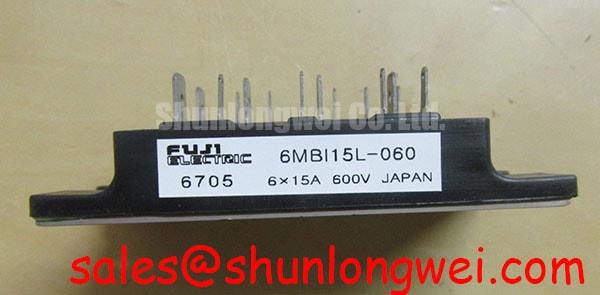
The 15.0 A current rating is likewise an official device specification, not a complete thermal or overload prescription for a high dynamics CNC axis or robotics servo. Confirm RMS current, pulse duration, duty cycle, heatsink performance, and fault energy in the assembled drive. When cross evaluating a related part such as 6MBI15L-060, treat voltage, current, internal topology, gate requirements, mechanical dimensions, and protection coordination as separate approval items.