


Content last revised on September 12, 2026
6MBP160RUA060-01 Operational Boundaries: Evaluating Thermal Feedback Limits
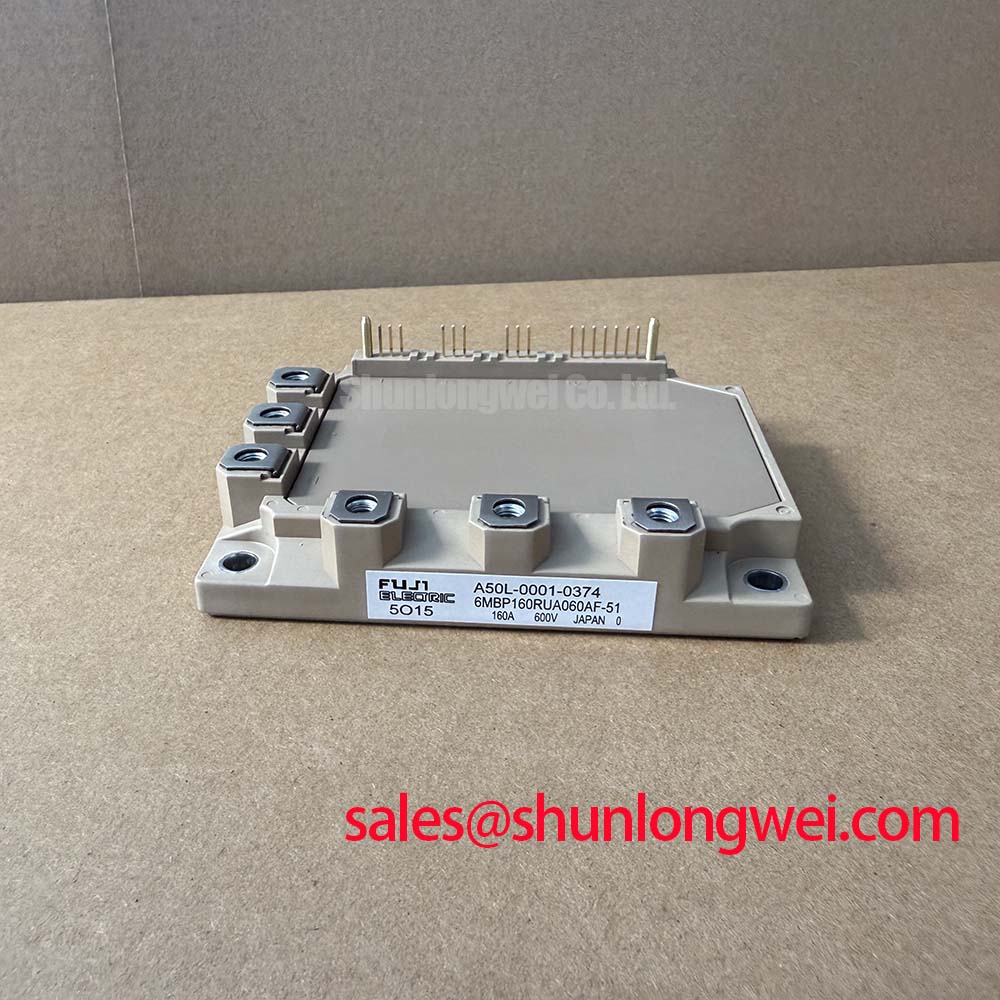
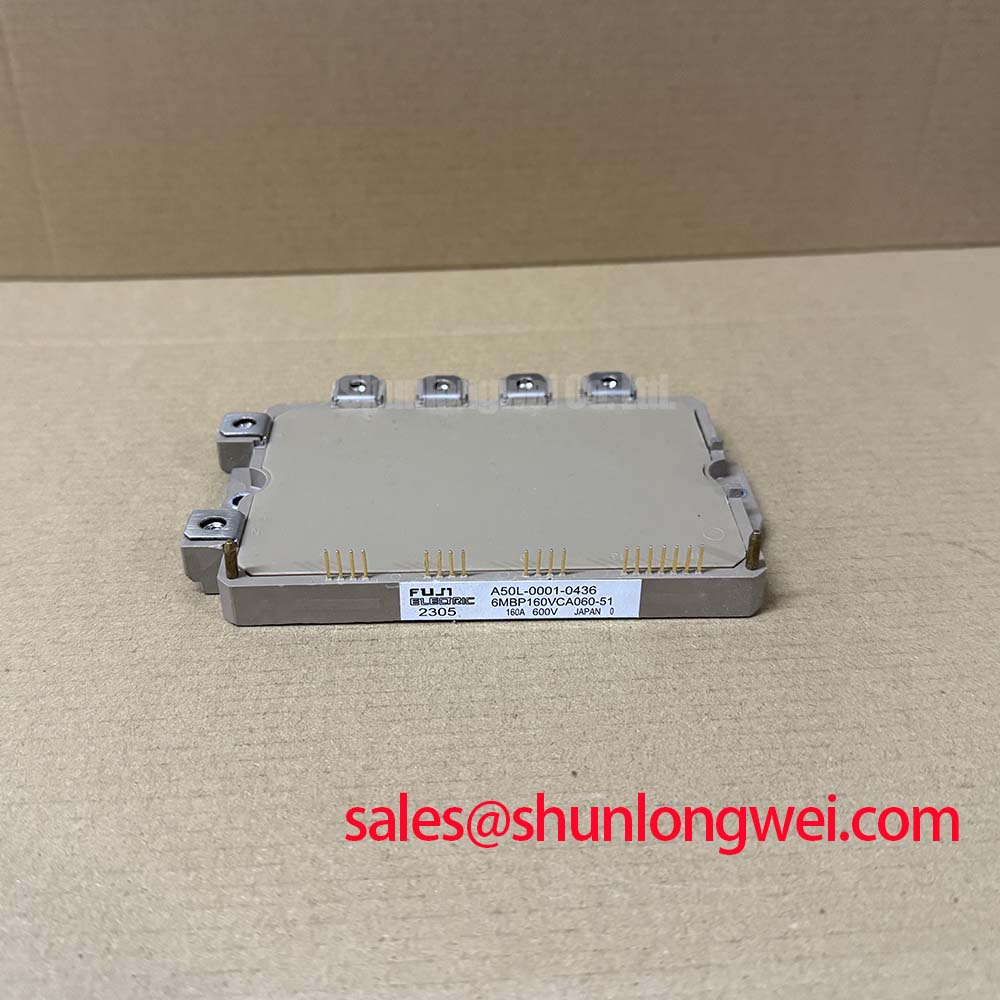
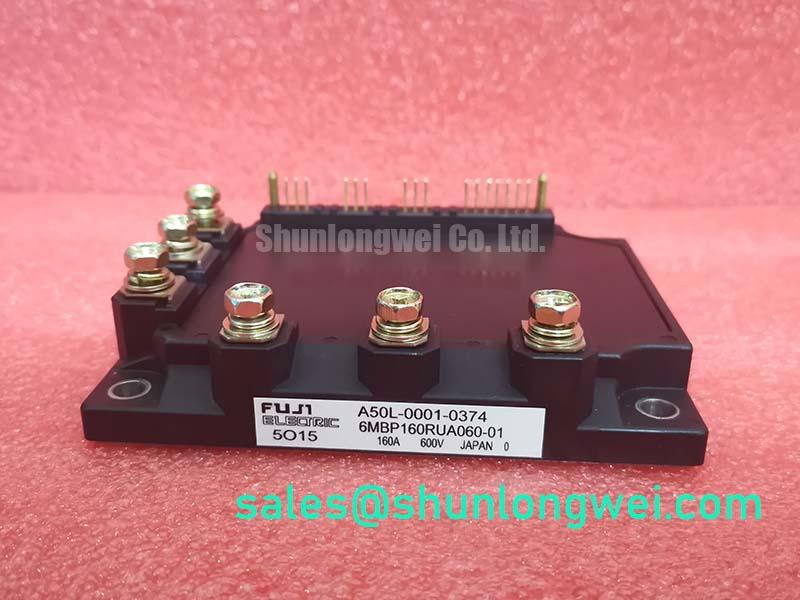
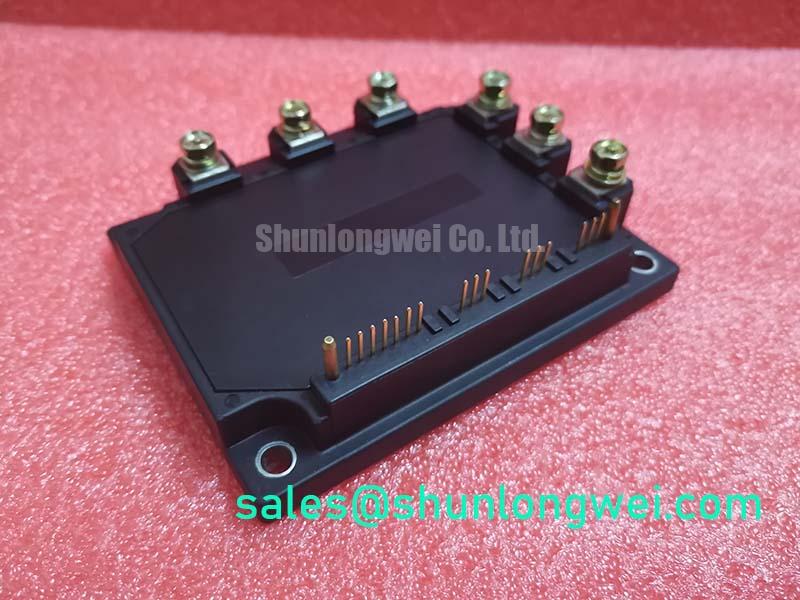
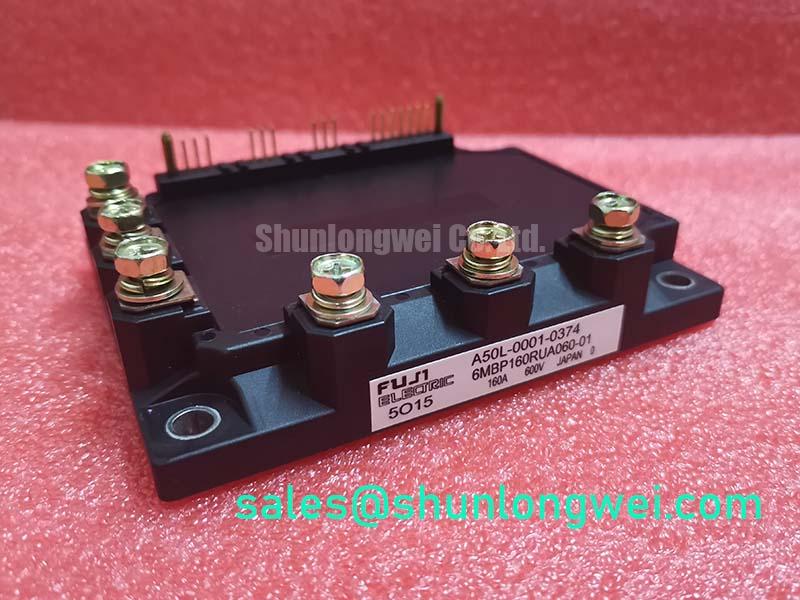
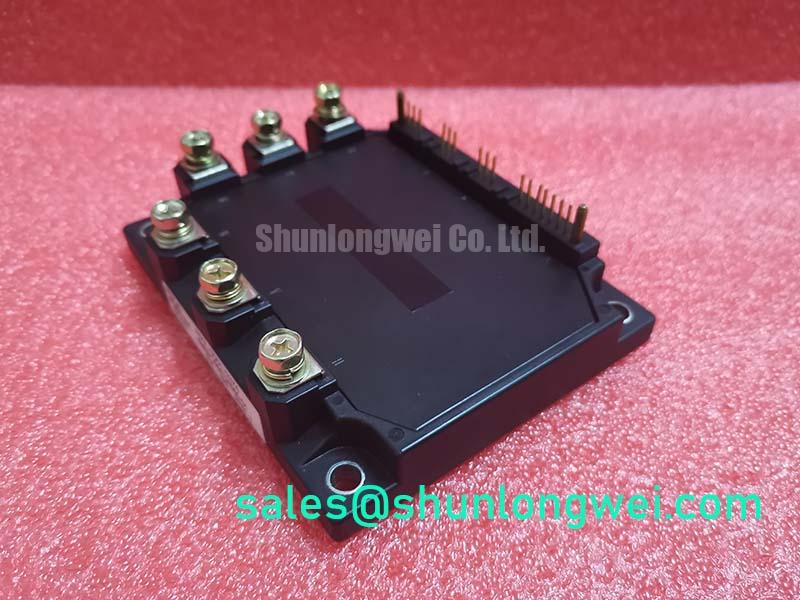
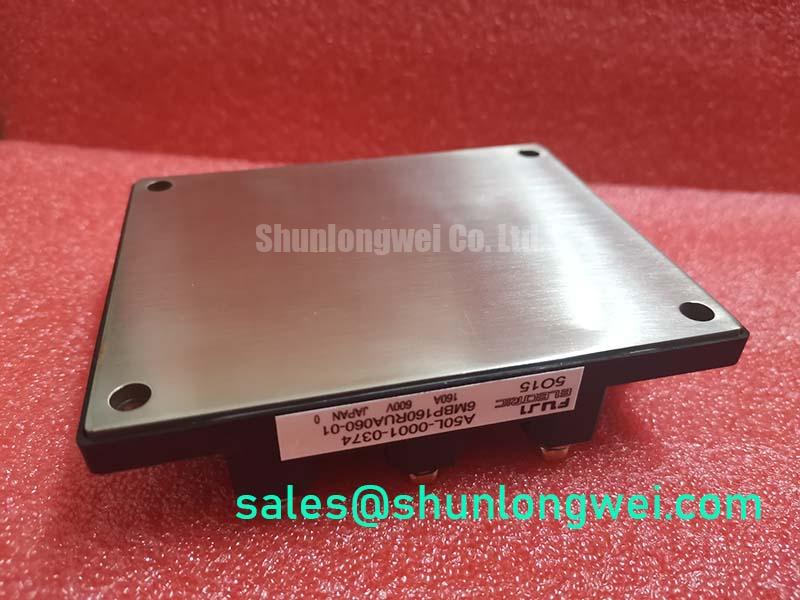
Before energizing a replacement, inspect the 6MBP160RUA060-01 module for case damage, contamination, loose terminals, and signs of thermal stress, then verify the equipment documentation against its nameplate limits. The official product data identifies this Fuji Electric device as an IPM Module with a rated voltage of 600.0 V and a rated current of 160.0 A. These are Official Specification values, not a guaranteed operating point for every inverter, traction controller, or braking circuit.
For an electric forklift or warehouse vehicle, the practical evaluation begins with the complete power path. Check the DC link, motor phase connections, regenerative braking branch, and high-power braking resistor circuit as one system. During regenerative braking, the module may be exposed to repeated switching and current recirculation, while the braking resistor absorbs energy that the battery or DC link cannot accept. The resistor rating, switching duty, cooling arrangement, and controller thresholds must therefore be verified by the system engineer rather than inferred from the module current rating.
Design Consideration: Parallel current paths require symmetrical gate wiring, emitter return paths, busbar geometry, and thermal interfaces. The positive temperature coefficient that can occur for IGBT saturation voltage at some operating currents can support steadier static current sharing, but it does not remove the need to verify dynamic current balance. Oscilloscope measurements should compare gate to emitter voltage and collector current on each path during turn-on, turn-off, and regenerative events.
The heat-spreading arrangement also deserves inspection during preventive maintenance. Remove accumulated dust from the heatsink and confirm that the cooling airflow is not obstructed by filters, wiring, or enclosure panels. Check the interface material for pump-out, cracking, contamination, or uneven compression. A replacement module should sit flat against a clean heatsink, with the fastening sequence and torque controlled according to the manufacturer’s mechanical documentation and the equipment service procedure.
Terminal discoloration or a rising temperature difference between equivalent connections may indicate contact resistance, uneven clamping, airflow imbalance, or switching asymmetry. Record thermal images under a repeatable load and compare them with a known-good operating condition. Avoid treating one temperature reading as proof of a single failure mechanism.
⚠️ Maintenance Note: De-energize and discharge the DC link before disconnecting gate-drive or power terminals, and verify the absence of hazardous voltage with an approved instrument.
Benchtop Waveform Tuning: Mitigating Stress via Galvanically Isolated Gate Drive
Gate-drive testing should be performed with the isolation barrier, probe arrangement, and return-current path treated as part of the circuit. The system integrator should verify the required reinforced galvanic isolation rating from the selected gate-driver documentation; values such as isolation above 5 kV or common-mode transient immunity above 100 kV/µs must not be attributed to this Fuji Electric module unless explicitly stated in its applicable datasheet.
During bench tuning, use isolated differential probes and measure the gate-emitter waveform directly at the module terminals. A waveform that appears clean at the driver board can contain ringing or a shifted reference at the power module because of lead inductance, common-mode movement, and ground-return coupling. The gate-drive source and sink capability should be checked against the selected switching frequency, gate charge, pulse width, and desired transition speed. These are system-level design conditions, not fixed ratings supplied in the basic product data provided here.
An external gate resistor can be evaluated as a damping element when the measured waveform shows overshoot or repetitive ringing. The starting value should be selected from the driver capability and switching behavior, then adjusted through controlled double-pulse or low-energy switching tests. The objective is to reduce parasitic oscillation without creating excessive switching loss or delaying protection response. Keep the gate loop compact and route the power switching loop separately from sensitive control references.
Negative off-bias is also a system design choice. It can help maintain a defined off-state under rapid common-mode movement, but the voltage level, driver insulation, clamping method, and module limits require verification from the complete gate-drive design. The engineering principles are discussed in Evolution of Negative Off-Bias Gate Drive Circuits. The same review should cover Miller coupling, including the effect of collector-gate capacitance and the driver’s ability to hold the gate in its intended state.
For manufacturer context, engineers can consult Fuji Electric Power Semiconductor & IPM Modules and the Fuji Electric Power Semiconductors Portal. These resources should be cross-checked with the exact revision and application documentation used in the equipment.
Benchtop Waveform Tuning: Mitigating Hard Switching Transients via Protection Timing
Short-circuit protection must be evaluated as a coordinated function of the IPM, gate driver, current sensor, controller, and DC-link layout. Protection figures, including detection within 10 µs, are not confirmed Official Specification values in the supplied product data and should not be presented as guaranteed limits for the 6MBP160RUA060-01. The applicable Fuji Electric datasheet and protection-circuit documentation should define the supported short-circuit operating area and test conditions.
On the bench, begin with low-energy switching tests and confirm that the protection signal reaches the controller or driver without excessive propagation delay. A two-stage soft turn-off strategy may be evaluated where the system requires a controlled reduction of fault current before the gate is fully disabled. The appropriate timing depends on DC-link voltage, stray inductance, current level, driver behavior, and the module’s documented short-circuit capability.
Hard switching transients often become visible as collector-emitter overshoot, gate disturbance, or repeated protection trips. These observations should be correlated with a high-bandwidth measurement of the module terminals and the actual gate-emitter reference. Minimize the commutation loop area and keep the snubber, clamp, or active-clamp connection physically close to the switching path. Component values must be selected from measured overshoot, switching loss, and thermal results rather than copied as universal prescriptions.
Dead-time settings also require verification. Insufficient dead time can create cross-conduction, while excessive dead time can increase diode conduction and regenerative stress. The correct interval is determined by the complete driver delay, gate resistance, temperature, load current, and switching sequence. Check both directions of the inverter bridge and repeat the test after the heatsink reaches its normal operating condition.
Benchtop Waveform Tuning: Mitigating 2× VDC Voltage Doubling
Long motor leads can create transmission-line behavior, especially when the inverter output impedance and cable termination do not match the installation. Reflected waves may raise the voltage seen at the motor terminals and can also increase stress on the inverter switching nodes. A possible voltage excursion approaching twice the applied step is a system-level transmission-line condition, not a rated capability of the 6MBP160RUA060-01.
When evaluating a forklift traction inverter, measure the phase-to-phase and phase-to-ground waveforms at both the module output and the motor terminals. Use a probe arrangement suitable for the common-mode voltage and confirm that the measurement bandwidth does not create a false ringing signature. Compare the results with cable length, shielding, motor insulation requirements, switching edge rate, and the actual DC-link voltage.
An output filter, dv/dt network, or motor choke may be considered when the measured waveform exceeds the motor or inverter design boundary. The filter must be evaluated for saturation during acceleration and regenerative braking, additional losses, resonance, cooling, and its effect on current control. The system designer should select the topology and component values after measuring the installation, then verify peak voltage and switching performance under the highest relevant load condition.
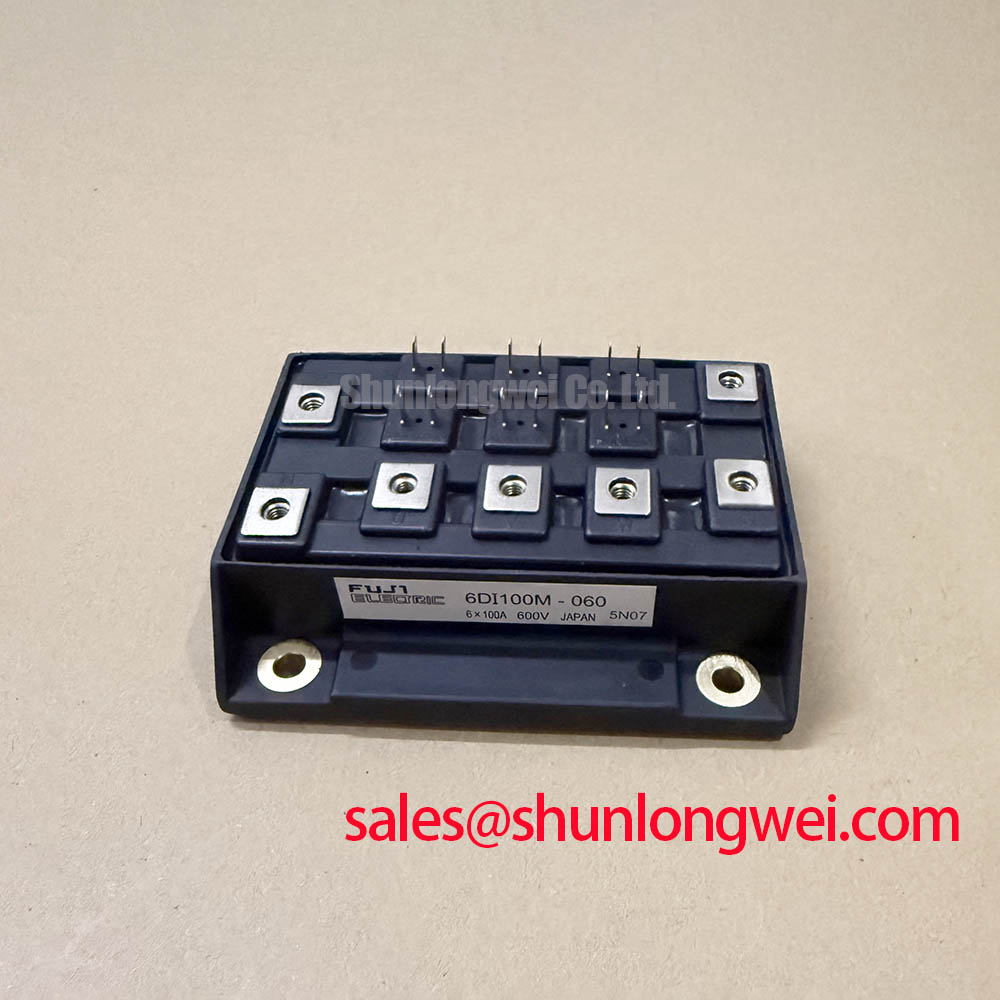
Inspect the DC busbar and phase connections at the same time. Uneven terminal pressure, excessive connection length, or a loose laminated-bus interface can add parasitic inductance and worsen turn-off overshoot. For field replacement planning, engineers may also review the 6MBI100L-060 as a separate candidate, but voltage, current, gate-drive behavior, package geometry, and protection requirements must be checked before any substitution decision.