Content last revised on September 27, 2026
7MBI50N-120 Operational Boundaries: Evaluating Junction-to-Case Thermal Network Simulation Limits
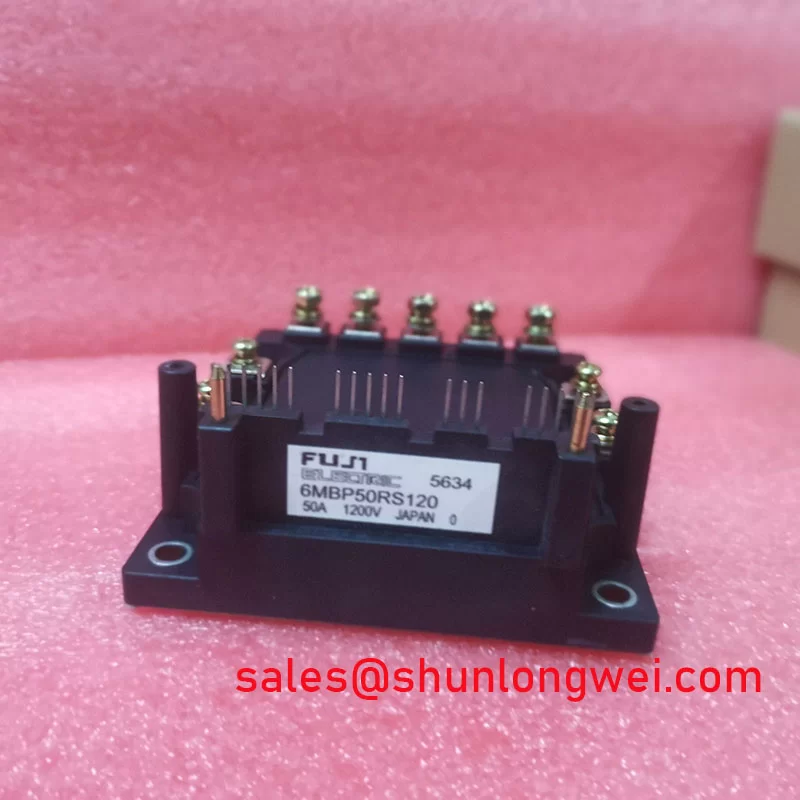
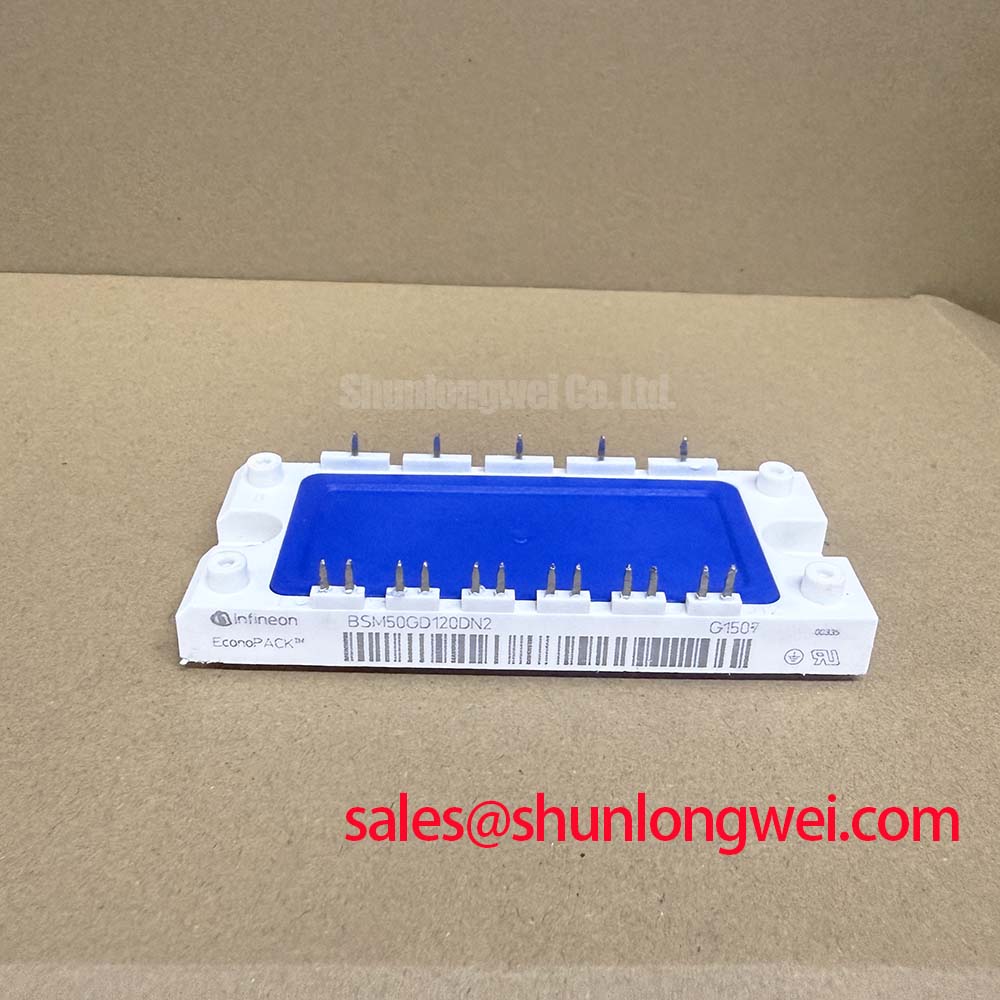
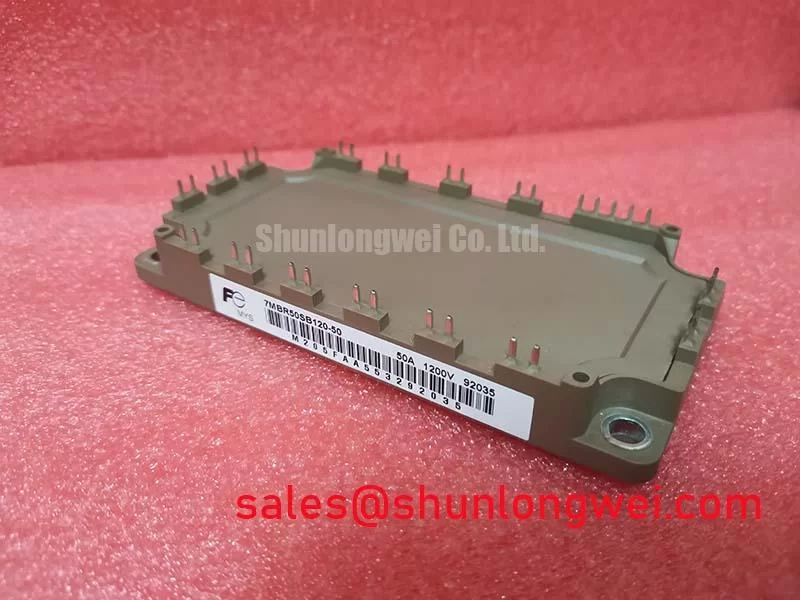
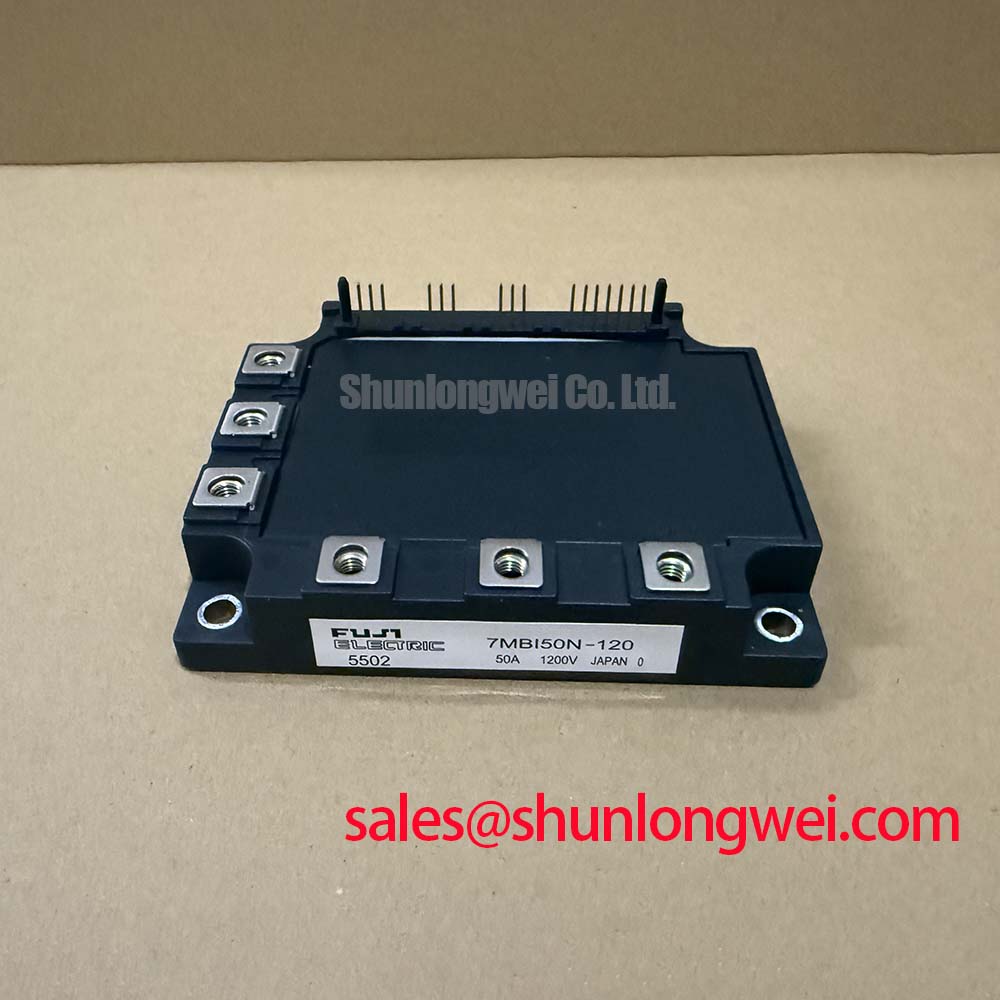
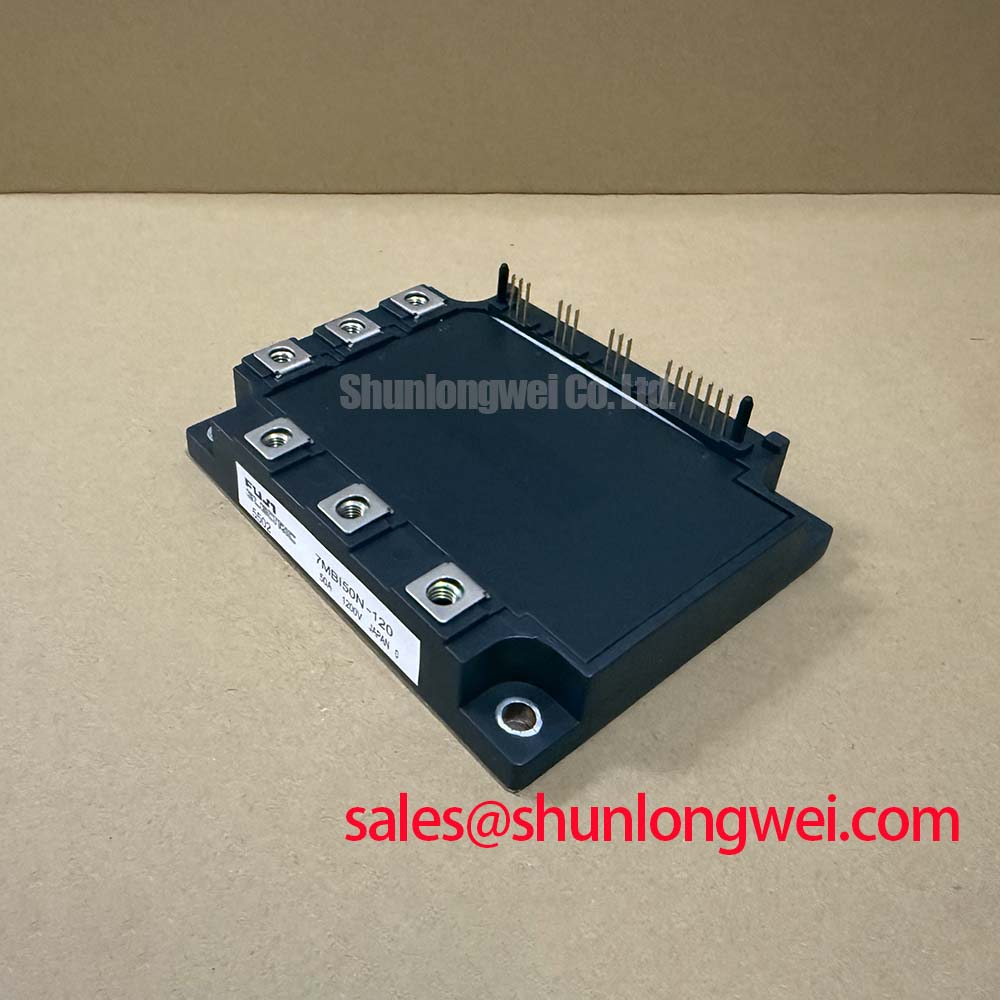
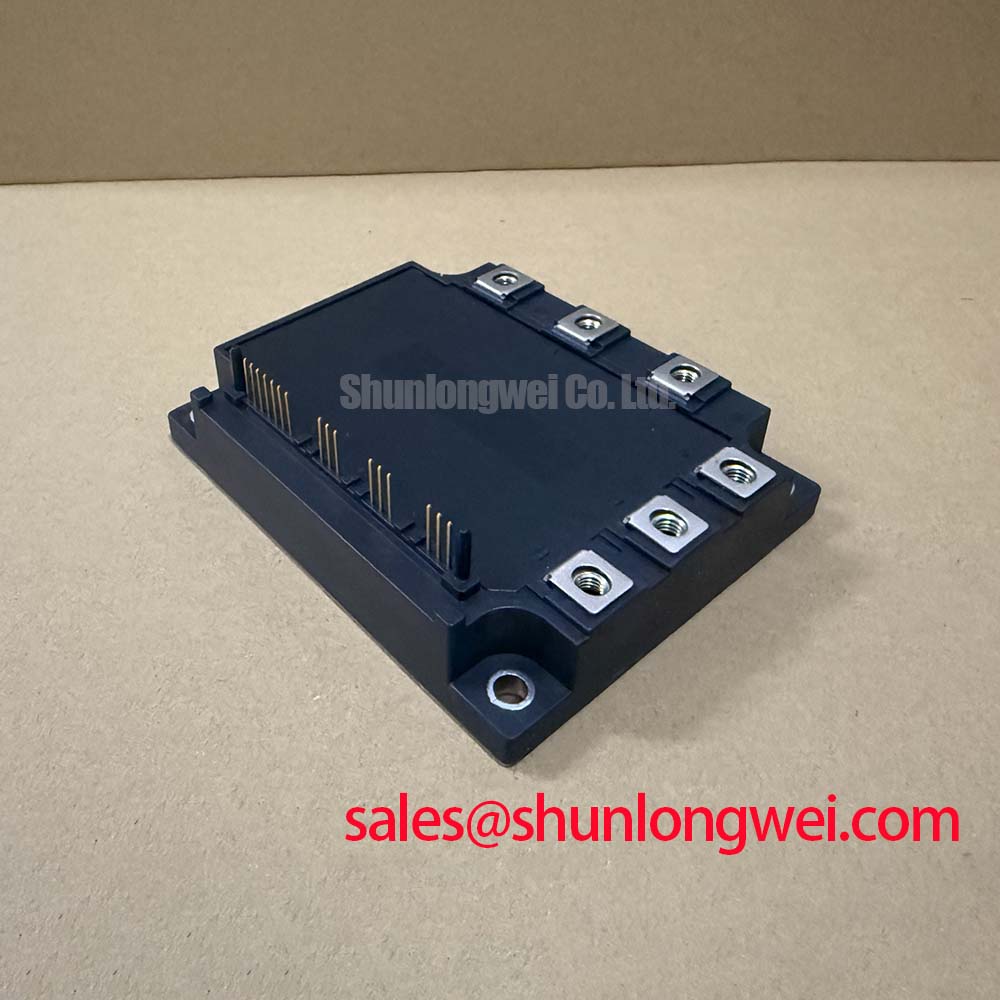
With the DC link discharged and the assembly isolated, compare the 7MBI50N-120 marking, terminal connections, and original equipment schematic before disconnecting the power module. Record the gate connections and power-terminal arrangement so that replacement assessment starts with the actual circuit rather than the part number alone. For this Fuji Electric IGBT module, the voltage-rating documentation needs particular attention before an operating voltage or switching test is approved.
The product record identifies a Module package and a 50.0 A current rating. It also lists 200.0 V, but that voltage entry must not be treated as an authenticated manufacturer rating without the matching Fuji Electric datasheet. The model suffix is not a substitute for that document either. A voltage-rating discrepancy is a stop condition for electrical qualification: purchasing records, equipment documentation, and the manufacturer’s electrical limits must agree before energization.
| Product attribute | Recorded value | Engineering qualification |
|---|---|---|
| Model | 7MBI50N-120 | Match the complete designation to the equipment documentation. |
| Manufacturer | Fuji Electric | Use the corresponding manufacturer datasheet for operating limits. |
| Product category | IGBT Module | Verify the internal circuit and terminal map before substitution. |
| Listed current | 50.0 A | The applicable case-temperature and operating conditions require confirmation. |
| Listed voltage | 200.0 V | Unverified listing entry; not an established manufacturer specification. |
| Package | Module | Confirm dimensions, mounting pattern, and terminal clearances from the mechanical drawing. |
Design Consideration: the listed current alone does not establish continuous load capability inside an enclosure. Junction temperature depends on conduction losses, switching losses, case temperature, and the complete heat-removal path. Before evaluating pulsed overload, inspect the mounting surface, cooling assembly, and thermal interface for conditions that could invalidate the assumed case temperature. Obtain the specified mounting procedure rather than borrowing torque values from another module.
Engineering Calculation: where the manufacturer supplies a transient thermal-impedance curve, the junction-temperature rise for an isolated constant-power pulse can be estimated by multiplying pulse dissipation by the junction-to-case thermal impedance at that pulse duration, then adding the applicable case temperature. Repetitive or varying pulses require their thermal contributions to be accumulated over the operating history. This estimate is only meaningful when the loss waveform and thermal boundary conditions represent the actual assembly.
A multi-RC thermal model should reproduce the documented transient response across the relevant pulse durations. Do not invent resistance or capacitance values to complete a simulation. Also distinguish curve-fitting networks from physically interpreted thermal networks before connecting a module model to a heatsink model. Peak junction-temperature margin cannot be stated for the 7MBI50N-120 until its temperature limit, thermal characteristics, and operating losses are established.
Transient Dynamics and Electrical Design: Dynamic Gate Impedance Control for 7MBI50N-120
Design Consideration: inspect the complete gate-current loop, including the driver supply return, gate resistor placement, connector routing, and emitter reference. Gate impedance changes during switching because driver output characteristics, parasitic inductance, and device capacitances interact. A resistor value copied from another assembly does not establish equivalent switching behavior, even when the replacement has a similar current rating.
Collector-voltage transitions can couple current into the gate through the gate-to-collector capacitance. If the off-state return path develops sufficient impedance, the resulting gate-voltage excursion can increase unintended conduction risk. An active Miller clamp is a possible system-level control measure, subject to driver compatibility and measured switching behavior. Negative gate bias also requires confirmation against the module’s gate-voltage limits and the driver’s operating requirements; no particular negative voltage is established here.
Check gate voltage at the device reference point with a suitable measurement arrangement, and correlate it with collector voltage and current. Probe-loop pickup can resemble gate ringing, so compare the result using a controlled probing method before modifying the driver. Tests should cover the equipment’s relevant supply, load, and temperature conditions rather than a single convenient bench operating point.
For parallel-module assessment, neither static nor dynamic current sharing should be assumed from the model name. The temperature dependence of on-state voltage must be established from the applicable characteristics at the intended operating point. Unequal thermal interfaces, gate paths, and power-loop impedances can affect sharing even when modules carry the same designation. Engineering Recommendation: use balanced power and gate paths to limit switching asymmetry, then verify voltage overshoot and current sharing through controlled switching measurements.
The Fuji Electric 6MBI300U-120 provides another module reference for a documented comparison, not an assumed interchangeable replacement. Compare circuit configuration, electrical limits, driver requirements, mounting geometry, and cooling conditions before considering any substitution. A larger current designation does not resolve differences in terminal layout or switching behavior.
Preventing Spurious Faults: PCB Symmetry and Emitter-Return Routing for 7MBI50N-120
Start with the manufacturer’s terminal diagram before assigning a driver return connection. A dedicated auxiliary emitter connection must not be assumed for this module without documentation. Where the documented terminal arrangement supports a separate driver reference, route that connection according to its intended function rather than merging it into a high-current return path for layout convenience.
Design Consideration: shared emitter-path inductance can introduce a voltage component into the gate-drive reference during rapid current changes. That disturbance can alter the effective gate voltage and complicate protection measurements. Keep the driver loop compact and separate its reference path from load-current routing wherever the confirmed terminal arrangement permits. Final routing and clearance decisions belong to the equipment design and must account for working voltage, insulation requirements, pollution conditions, and the applicable product standards.
For intermittent fault investigation, compare driver-supply behavior, gate waveforms, protection inputs, and switching-node voltage on a common time reference. An unexpected protection event can have several contributors, including genuine overload, reference movement, measurement pickup, or driver-supply disturbance. Avoid assigning a cause from the fault indicator alone. Check connectors and return-path continuity with power isolated before interpreting live switching measurements.
Engineers assessing electric material-handling equipment or forklift traction controllers should verify the existing controller topology, battery operating envelope, regenerative conditions, and cooling arrangement against the authenticated module documentation. A low-voltage equipment application does not by itself establish compatibility. The power stage, driver board, and protection logic must remain a coordinated assembly after replacement.
The Wide Bandgap Revolution technical overview provides background on differences between silicon IGBT, SiC, and GaN integration. It is not a source of device-specific lifetime or environmental qualification for the 7MBI50N-120. Any assessment involving altitude, cosmic-ray susceptibility, or insulation reliability requires applicable manufacturer evidence and equipment-level requirements rather than a generic semiconductor comparison.
Transient Dynamics and Electrical Design: Mitigating Hard-Switching Transients on 7MBI50N-120
Design Consideration: reduce unnecessary commutation-loop inductance to limit turn-off voltage overshoot, then verify the resulting peak voltage against the authenticated device limit under the equipment’s relevant operating conditions. Inspect DC-link connections, capacitor placement, busbar joints, and the return path before attributing overshoot entirely to the gate resistor. Altering switching speed can redistribute losses and affect protection behavior, so evaluate those consequences together.
Short-circuit protection requires the manufacturer’s short-circuit capability and test conditions, not a generic detection-time target. Confirm whether the applicable documentation establishes a short-circuit safe operating area, and identify the associated gate drive, supply voltage, and starting temperature. The permissible interval includes detection, filtering, driver propagation, and current interruption. No numerical short-circuit withstand time is established for this product here.
Where the system uses desaturation detection or another fault-detection method, review its behavior during normal switching as well as during an approved fault test. A staged or soft turn-off function can reduce the abruptness of current interruption, but its suitability depends on the resulting voltage excursion and fault energy. Those competing limits must be evaluated with the actual module, driver, and power-loop arrangement.
Fuji Electric’s Brake Chopper IGBT Modules reference provides manufacturer context for braking-switch functions. It does not establish the internal circuit, ratings, or braking capability of the 7MBI50N-120. For equipment with regenerative operation, trace the actual energy-disposal path and verify each device against its own documentation.
Before release, retain the confirmed terminal map, voltage-rating resolution, thermal assumptions, and measured switching waveforms with the repair record. If the equipment also contains a phase-controlled rectifier, assess its conduction-angle and harmonic behavior separately; those characteristics are not intrinsic specifications of this IGBT module. Restore operation only after the module limits and the controller’s protection behavior have been reconciled.