

Content last revised on September 10, 2026
High dv/dt Cross-Conduction Shoot-Through Mitigation via Dedicated Miller Clamps
In high-performance motion systems such as precision stepper and brushless DC (BLDC) servo actuators, switching frequencies frequently operate between 8 kHz and 16 kHz to maintain low torque ripple and acoustic silence. In these dynamic inverter stages, rapid voltage transitions across the collector-emitter terminals can exceed 5 to 10 kV/μs. During such high dv/dt transients, displacement current flows directly through the collector-gate parasitic Miller capacitance (Cres / Cgc) of the complementary low-side or high-side switch that is in the off-state. If the gate drive circuit presents insufficient sink impedance, this induced displacement current charges the gate-to-emitter input capacitance (Cies) past the IGBT threshold voltage (typically 5.5V to 7.0V), triggering catastrophic phase-leg cross-conduction shoot-through.
When deploying the 7MBR25NF120, preventing parasitic turn-on requires a multi-layered gate drive strategy. Implementing an active Miller clamp circuit directly at the gate terminal provides a dedicated low-impedance sink path (often below 1.0 Ω) that bypasses the primary gate turn-off resistor once the gate voltage falls below approximately 2.0V during turn-off. For servo systems operating under severe electromagnetic noise and fast phase commutation, applying a true negative gate bias between -5V and -15V (with -8V to -15V representing a Typical Starting Point for bench tuning) provides a wide safety margin against spurious gate re-biasing compared to single-supply 0V/15V drive schemes.
| Parameter | Official Specification Value | Operating Test Conditions |
|---|---|---|
| Collector-Emitter Voltage (VCES) | 1200V | Tj = 25°C, Official Datasheet Specification |
| Continuous Collector Current (IC) | 25A | TC = 80°C, Official Datasheet Specification |
| Pulsed Collector Current (ICP) | 50A | 1 ms Pulse Width, Official Datasheet Specification |
| Saturation Voltage (VCE(sat)) | 3.3V (Typ) / 4.0V (Max) | IC = 25A, VGE = 15V, Tj = 25°C |
| Maximum Power Dissipation (PC) | 200W | Per IGBT element, TC = 25°C |
| Isolation Voltage (Visol) | 2500V AC | 1 Minute, Terminals to Baseplate |
| Maximum Junction Temperature (Tj) | 150°C | Continuous absolute maximum rating |
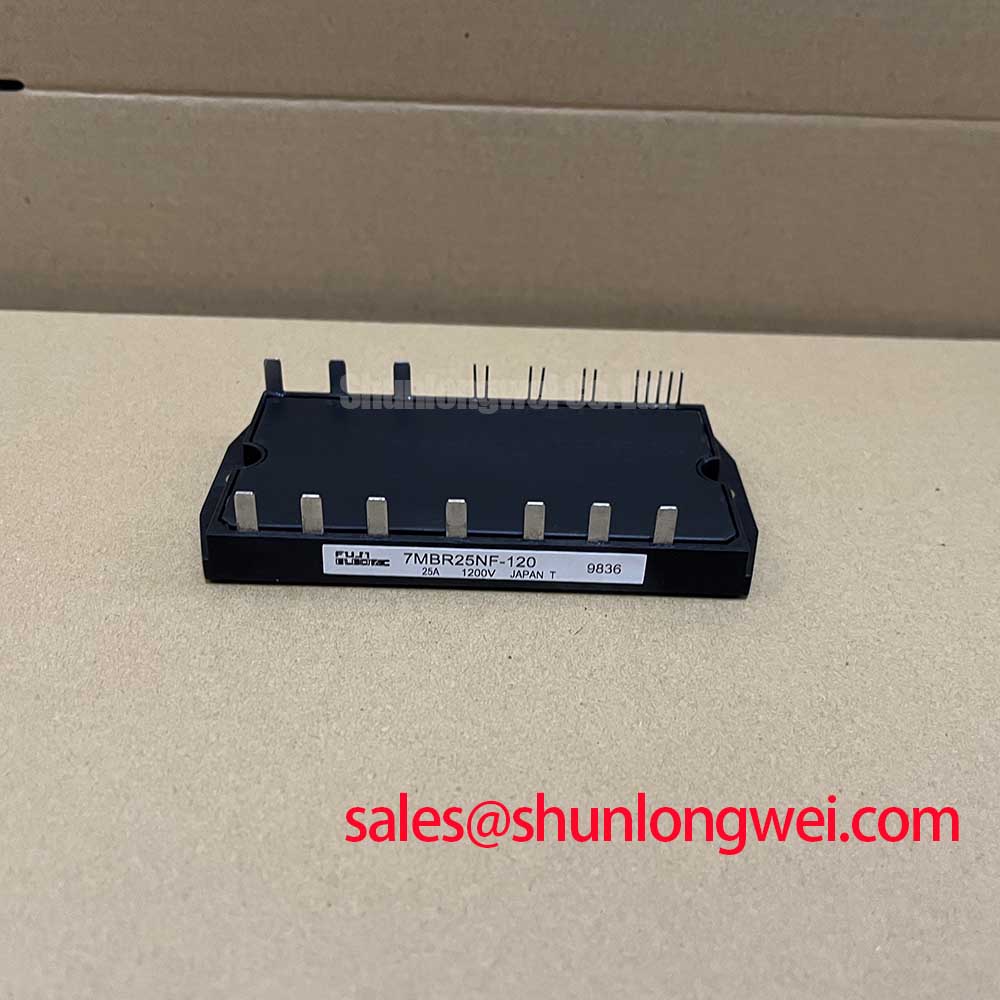
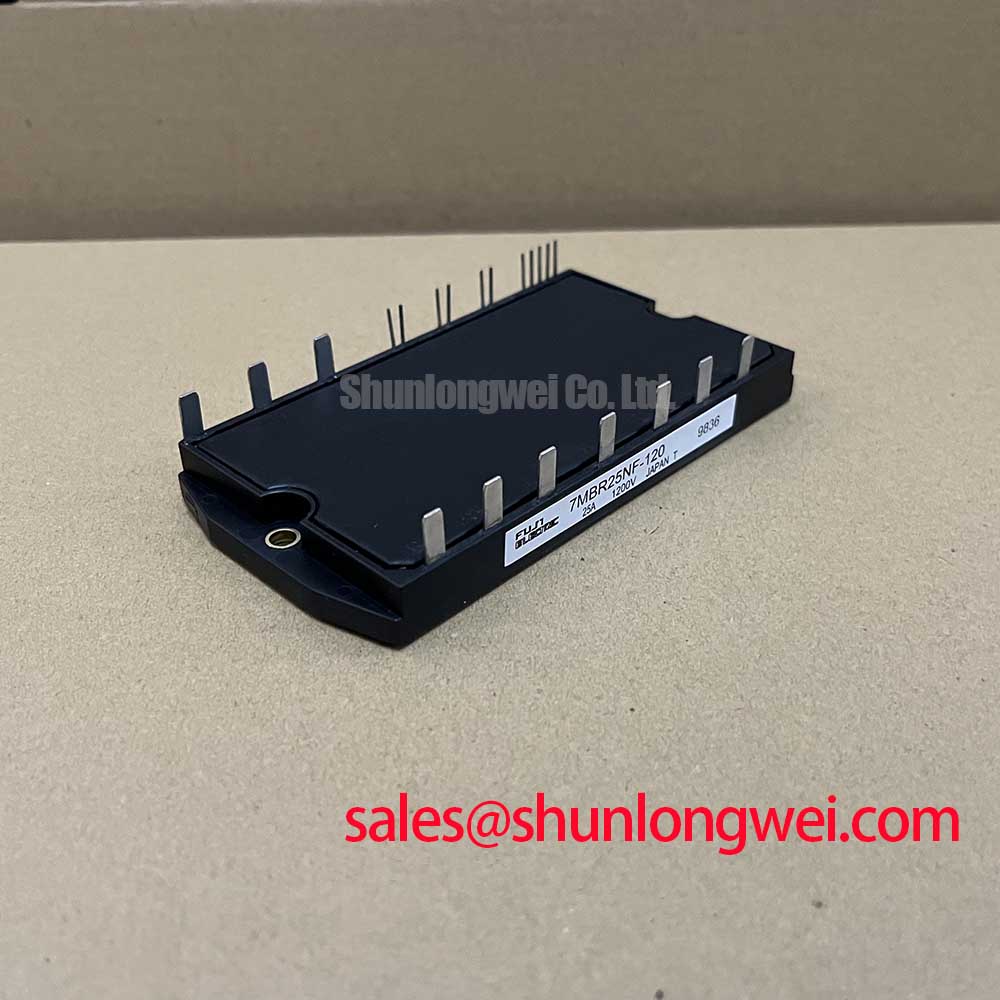
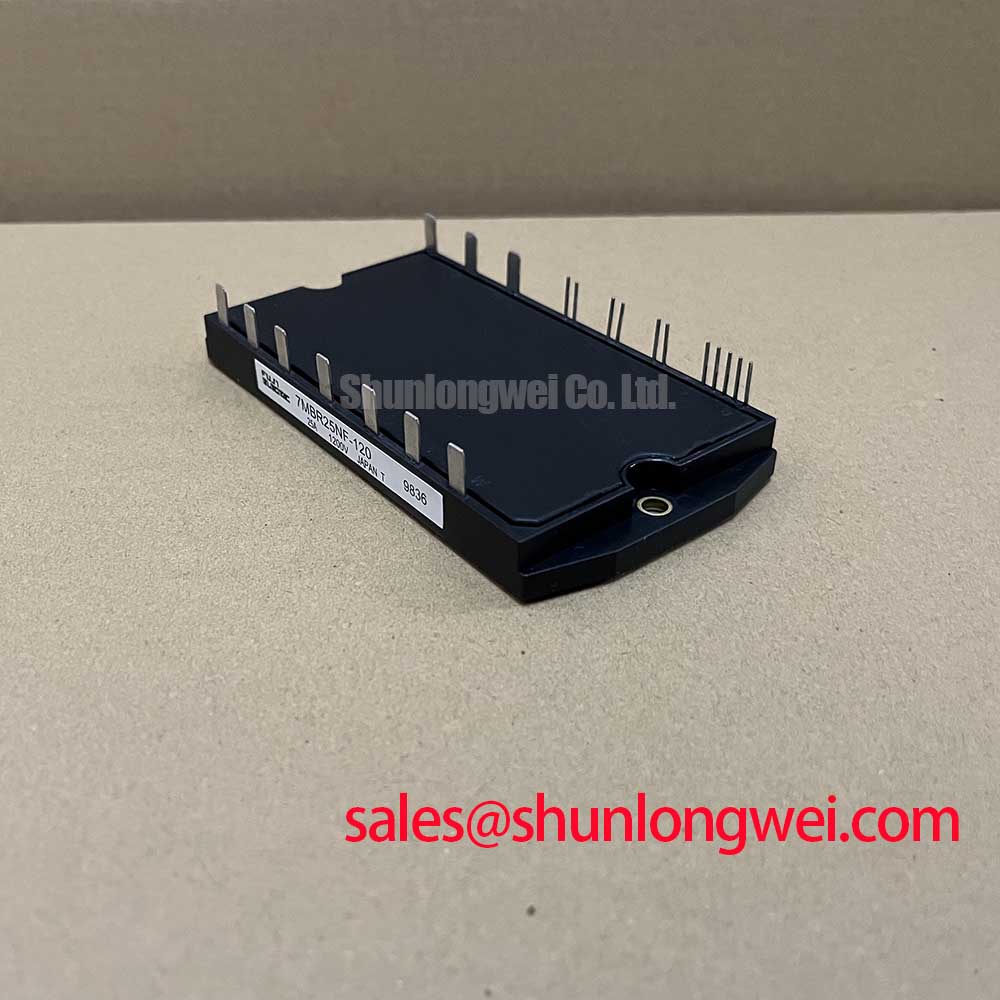
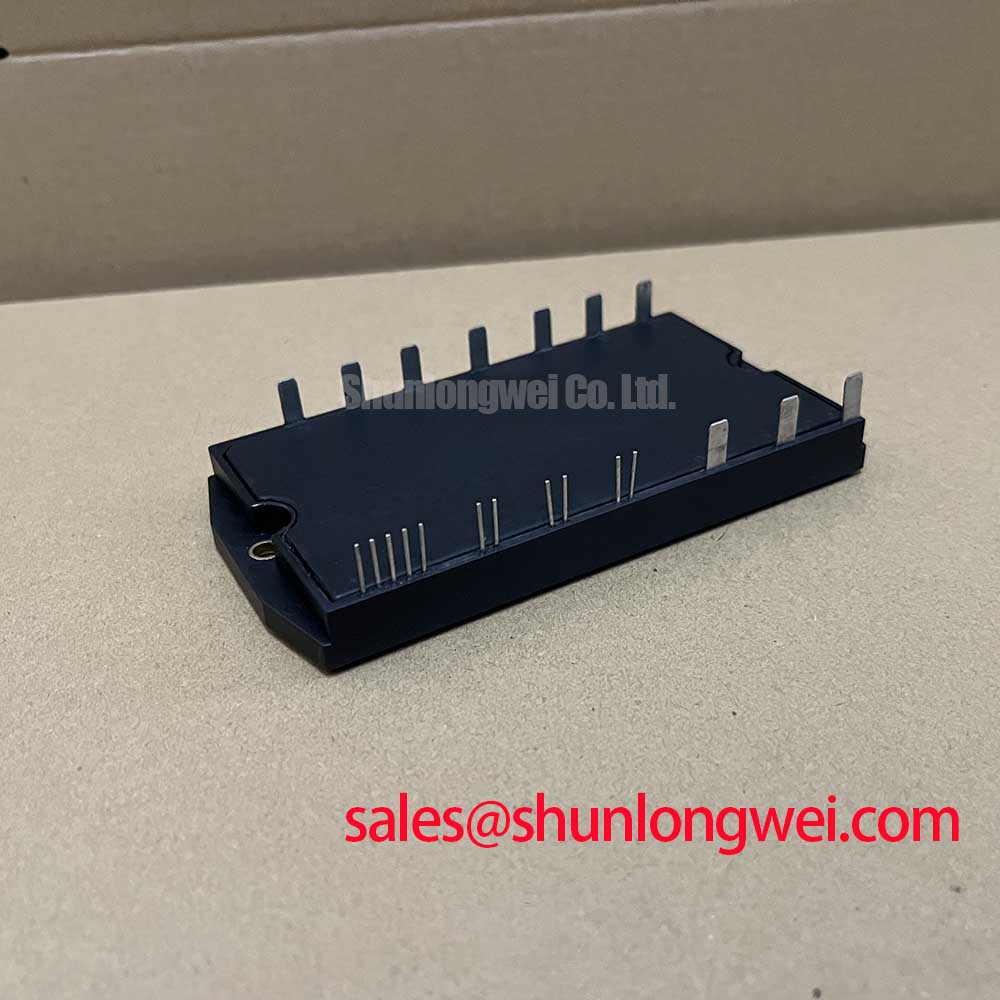
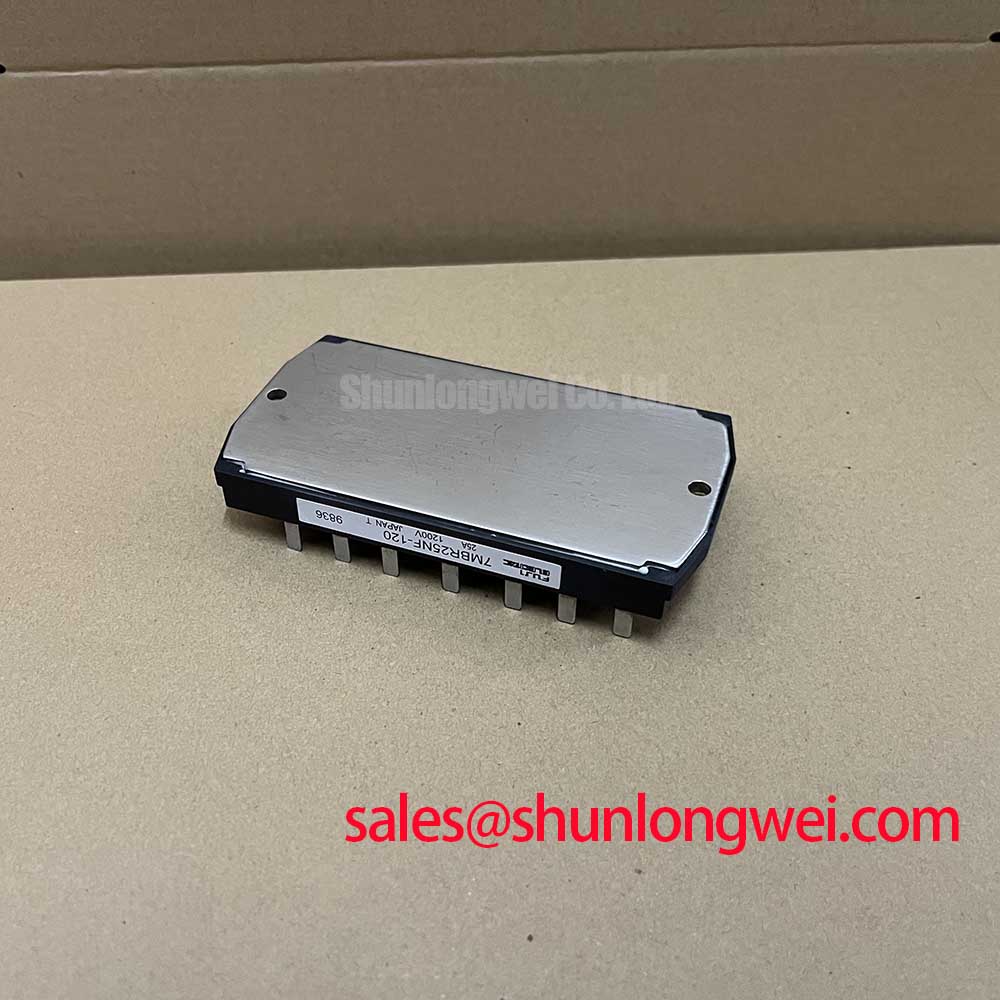
Field bench diagnostic procedures require strict isolation between the power loop and the signal return paths. The 7MBR25NF120 power integrated module combines a three-phase converter bridge, a three-phase inverter stage, and an integrated dynamic brake chopper into a compact footprint. For standalone inverter topologies that do not require an onboard input rectifier or brake stage, engineers frequently evaluate alternative power blocks such as the 6MBI25F-120 to optimize layout symmetry. In either configuration, dedicated Kelvin emitter auxiliary wiring must be routed directly from the driver IC output ground to the control emitter terminals. This layout technique avoids coupling the rapid di/dt power switching transients (which induce substantial voltage drops across PCB trace stray inductances) back into the gate reference plane.
💡 Pro Tip: When troubleshooting intermittent overcurrent trips on a servo drive, place an oscilloscope differential probe directly across the gate and auxiliary emitter pins of the low-side IGBT while applying step load decelerations. If you observe positive gate ringing exceeding 2.5V during the complementary upper switch turn-on, the active Miller clamp circuit is either placed too far from the module pins or the auxiliary emitter return track is sharing current with the main power return bus.
DC-Bus Operating Voltage Headroom Derating for Single Event Burnout (SEB) Immunity
Industrial servo systems operating in continuous production facilities or elevated terrain must account for atmospheric terrestrial neutron flux. High-energy atmospheric neutrons colliding with the silicon lattice can trigger localized charge multiplication inside the reverse-biased junction of a high-voltage power semiconductor, initiating Single Event Burnout (SEB). Research and industrial failure analysis have demonstrated that SEB susceptibility increases exponentially with the applied DC-link voltage. For an IGBT rated at VCES = 1200V (Official Datasheet Specification), operating continuously at sustained DC-link levels above 800V to 850V significantly increases cosmic-ray-induced failure rates over multi-year deployments.
For standard 380V to 480V AC line-fed industrial servo drives, the rectified DC bus typically sits between 540V and 680V DC under steady-state conditions. Maintaining the nominal operating DC link within 560V to 650V provides the necessary engineering headroom against SEB vulnerability while leaving sufficient breakdown clearance for transient regeneration spikes. When industrial facilities scale up from decentralized servo axes to centralized multi-megawatt plant drives, heavy-duty centralized power conversion stages—such as those utilizing high-capacity modules like the 1MBI900V-120-50—are applied to manage primary utility feeds and stabilize common DC-bus infrastructures.
High-frequency switching transients also interact with the DC-bus parasitic stray inductance (Lσ). When turning off a peak collector current of 50A (Pulsed Collector Current rating of the 7MBR25NF120), rapid current descent generates an inductive voltage overshoot defined by the rate of current decay multiplied by the total loop inductance. Minimizing this transient spike requires a laminated low-inductance DC busbar geometry alongside high-frequency polypropylene snubber capacitors placed directly across the positive (P) and negative (N) power terminals of the module. Snubber lead lengths must be kept under 15 mm to maintain parasitic loop inductance below 25 nH.
Field maintenance teams inspecting drives subjected to altitude derating (applications situated above 2000 meters) should review comprehensive reliability guidelines outlined in the Field Engineer’s Handbook. These practices involve verifying clearance and creepage distances according to IEC 60664-1, ensuring that dielectric breakdown margins and atmospheric pressure reductions do not compromise the module's 2500V AC isolation barrier.
Transient Thermal Impedance (Zth(j-c)) & Multi-Layer Foster/Cauer Modeling
Precision servo positioning cycles subject power modules to severe dynamic loading profiles, characterized by millisecond-scale peak torque accelerations followed by rapid regenerative braking. During a 200% to 300% current overload pulse, the silicon junction temperature (Tj) rises much faster than the bulk heat sink can dissipate thermal energy. Analyzing junction temperature excursion under transient load profiles requires calculating the transient thermal impedance (Zth(j-c)) using multi-layer thermal networks rather than relying solely on static junction-to-case thermal resistance (Rth(j-c)).
Using standard multi-order Foster or Cauer RC equivalent networks, the junction temperature response during a high-current pulse can be modeled as the cumulative sum of multiple thermal time constants representing the silicon chip, solder layer, DCB (Direct Copper Bonded) ceramic substrate, and copper baseplate. The maximum thermal dissipation capability for each IGBT element within the 7MBR25NF120 is rated at PC = 200W at TC = 25°C (Official Datasheet Specification). When ambient temperatures inside a control cabinet reach 55°C, thermal headroom decreases linearly, requiring forced-air or liquid cooling to ensure that peak repetitive junction temperatures remain safely below the Tj(max) = 150°C operational limit.
⚠️ Field Alert: During field replacements of the 7MBR25NF120, the thermal interface material (TIM) application is critical. Apply high-stability thermal grease with a controlled thickness of 50 μm to 100 μm using a precision squeegee or silk screen. Baseplate mounting screws (M5 thread) must be tightened using a calibrated torque wrench in a two-stage crisscross sequence: first pre-tightening to 1.0 N·m, followed by a final torque between 2.5 N·m and 3.5 N·m (General Industry Design Consideration). Uneven torque or excessive grease thickness creates air pockets, severely elevating thermal resistance and causing localized hot-spot burnouts under dynamic acceleration cycles.
Detailed technical documentation regarding baseplate flatness tolerances (typically required to be within 0 to +50 μm concavity) and thermal cycling reliability curves can be reviewed directly via the Fuji Electric Power Semiconductors Portal, which maintains authoritative engineering specifications for advanced industrial power modules.
Dynamic Braking Chopper Operation & Regenerative Deceleration Energy Absorption
In high-inertia motion control systems, rapid deceleration forces the BLDC or stepper motor into generator mode, pumping kinetic energy back through the inverter freewheeling diodes into the DC-link capacitor bank. Because electrolytic capacitors have finite voltage absorption capabilities, the DC-bus voltage rises rapidly. The 7MBR25NF120 features an integrated dynamic braking IGBT rated at 1200V, designed to actively switch an external power ballast resistor across the DC bus when voltage thresholds exceed safe limits (typically around 720V to 750V DC on 400V AC grids).
Properly dimensioning the braking ballast resistor requires calculating the peak regenerative energy discharge while ensuring that peak discharge currents do not exceed the module's ICP = 50A pulsed rating. If the dynamic braking resistor resistance is selected too low, peak collector current during chopper turn-on will drive the braking IGBT into deep saturation or desaturation, resulting in rapid bond-wire rupture. Conversely, if the resistance is sized too high, the DC-bus overvoltage protection trip will halt the machine mid-cycle, risking tooling collisions in CNC servo axes.
Another critical consideration during high-speed switching is the freewheeling diode reverse recovery behavior. When the diode commutates, rapid depletion of stored carrier charge can cause snappy snap-off transitions. A diode with a low softness factor (S = tb / ta) produces high-frequency ringing and excessive EMI emissions that couple into feedback encoder lines. Furthermore, in installations where motor power cables exceed 20 to 30 meters, the distributed transmission-line impedance mismatch causes reflected wave voltage doubling (reaching 2x VDC) at the motor terminals. Installing passive dV/dt output filters or balanced line chokes at the drive terminals suppresses voltage reflection peaks, preserving the winding insulation and preventing capacitive bearing currents.
For deep structural details regarding packaging technologies, silicon planar structures, and application-specific thermal derating charts, engineers can consult global technical resources at Fuji Electric Global Power Semiconductor Technologies to support reliable system integration and hardware retrofits.