Content last revised on October 18, 2026
AUO B150XG07 V0 Replacement Checks
- Check the panel marking against B150XG07 V0 before removing the installed display.
- Confirm the existing controller provides 1024 × 768 XGA timing and a compatible LVDS, 1 channel, 6 bit interface.
- Inspect the flat cable, connector shell, shielding path, and CCFL inverter wiring for looseness or contamination.
- Record the original panel orientation and mounting support points before replacement.
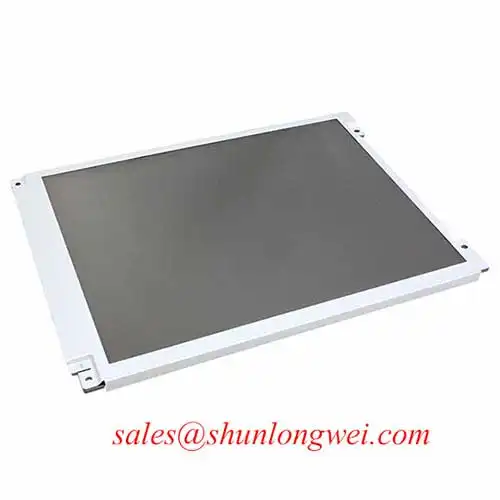
The AUO B150XG07 V0 is a 15.0 inch LCD display with a native 1024 × 768 XGA resolution. Its listed interface is LVDS, 1 channel, 6 bit, its color capability is 262K colors, and its backlight is one CCFL lamp. These specifications make interface matching more important than selecting a panel based only on diagonal size. A replacement with the same screen size but a different LVDS mapping, backlight system, or timing requirement can produce a blank image, unstable grayscale, or an inverter fault.
| Parameter | Specification | Engineering impact |
| Manufacturer | AUO | Use the original panel identification and system documentation for compatibility checks |
| Model | B150XG07 V0 | Match the complete model designation, including revision suffix |
| Optical size | 15.0 inch | Suitable for legacy industrial display apertures designed around this size class |
| Resolution | 1024 × 768 XGA | Controller timing and image scaling must support the native format |
| Color depth | 262K colors, 6 bit | Use a compatible grayscale and color data configuration |
| Interface | LVDS, 1 channel, 6 bit | Verify cable mapping, connector orientation, and signal assignment |
| Backlight | CCFL, 1 piece | Requires compatibility with the installed CCFL inverter and harness |
Shielded FFC/FPC Flat Flexible Cable Grounding across 360-Degree Connector Shells
Pixel jitter and horizontal noise bands near variable frequency motor drives should be approached as a cable and grounding problem before changing the panel. The B150XG07 V0 uses an LVDS connection, so the return path, shield termination, cable seating, and connector shell contact all influence the signal environment. A shield that touches the enclosure at only one accidental point can behave differently from the original assembly, particularly when the display cable runs alongside motor power wiring.
As a Design Consideration, maintain a continuous shield reference around the connector area where the mechanical construction permits it, and avoid routing the flat cable parallel to high current switching conductors for unnecessary distance. Common mode ferrite suppression can be evaluated when conducted noise remains after cable seating and grounding have been checked. The ferrite selection belongs to the complete cable and enclosure design rather than to the LCD panel alone.
Differential LVDS routing is commonly evaluated around 100 Ω differential impedance with a ±10% target, while pair skew is often controlled within a small timing budget such as 50 ps in demanding installations. These are Design Considerations, not AUO factory specifications for this panel. The system engineer should validate the assembled cable, connector, controller, and enclosure with the actual noise source operating. A known good cable can be compared with the suspect path using a suitable high bandwidth probe and differential measurement method.
The related NLB150XG02L-02 may serve as a same-size, same-resolution reference during a replacement study, but its interface and backlight details must be matched independently rather than assumed interchangeable.
Suppressing Localized Thermal Gradients to Prevent Chronic Optical Yellowing (Color Shift)
Thermal assessment around a replacement panel should begin at the narrow display edges, the inverter area, and any enclosure section that restricts air movement. The B150XG07 V0 is specified with a CCFL backlight, so an LED backlight replacement should not be treated as a direct substitution without checking the optical, electrical, and mechanical system. Heat from the inverter, nearby power components, or a poorly ventilated bezel can create a visible difference between the center and edge of the image.
A Design Consideration for an industrial enclosure is to use a mechanically stable heat spreading path that does not press against the active display area or distort the frame. Aluminum rails or brackets can help distribute heat when they are dimensioned around the real enclosure geometry, but their position must not obstruct the CCFL harness, connector, or panel mounting points. The final arrangement should be checked after the equipment reaches its normal operating condition, with attention to localized color changes and brightness nonuniformity.
Do not apply LED assumptions to this model. PWM dimming frequency, LED duty cycle linearity, L70 life, and B50 life are not listed specifications for the one piece CCFL backlight identified here. If the host equipment has been modified to use an LED driver, the integrator should treat that driver, optical assembly, and thermal path as a new subsystem requiring its own validation. For a practical replacement, retain the original CCFL inverter relationship unless the equipment design documentation specifies another arrangement.
Suppressing Acoustic Capacitor Buzz & EMI Emissions across 200 Hz to 1 kHz PWM Frequencies
Audible buzz from a display assembly should be separated from LCD image faults before a panel is condemned. With the B150XG07 V0, inspect the CCFL inverter, lamp harness, mounting surface, and nearby capacitors while the image is stable. A sound that changes with brightness or image content can point toward the backlight drive circuit, while a fixed image defect may require attention to LVDS data integrity or controller timing.
The listed backlight is CCFL, 1 piece; therefore, a 1500 to 1650 Vrms cold ignition figure or a 1000 to 1 LED PWM dimming ratio must not be presented as a specification for this panel. Those values belong to particular driver designs and are not interchangeable across technologies. When an inverter is replaced, the service engineer should verify its lamp compatibility, insulation arrangement, connector condition, and behavior during ignition using the equipment maker’s service limits.
Direct sunlight can expose contrast and surface reflection problems that are not obvious on a workshop bench. Contrast performance above 500 to 1 under 50,000 lux and anti-glare coating behavior are system or panel data points that require specific documentation; they are not listed here as B150XG07 V0 factory values. The The Ultimate Guide to Industrial TFT LCD Technology provides broader background for evaluating optical behavior, enclosure lighting, and industrial display selection.
For railway passenger information systems or cab signalling displays, the installation team should compare the replacement under the actual viewing angle, ambient light, and inverter operating condition. The AUO industrial display information available from AUO Corporation is a useful manufacturer reference for the wider embedded display product context, but it does not replace the exact panel interface and backlight checks.
Controlled 100-Ohm Differential Impedance Flex Routing to Suppress High-Frequency Jitter
Split-screen artifacts, intermittent vertical sections, or unstable grayscale require a comparison of controller timing, cable mapping, and signal quality. The B150XG07 V0 is identified with LVDS, 1 channel, 6 bit, so the host controller must be configured for that data structure rather than for a higher channel count or different color depth. JEIDA and VESA mapping should be checked against the original controller documentation because the same physical LVDS family can use different bit assignments.
The logic supply voltage and power-on sequence must be taken from the original panel documentation and the equipment circuit, not guessed from the screen size or resolution. During service, observe whether the controller supply rises cleanly, whether the panel enable sequence is present, and whether the backlight is being activated before the image path is stable. If the display remains white, dark, or divided, compare the suspect panel with a known good unit while retaining the same controller and cable wherever possible.
For high EMI factory environments, controlled flex routing is a Design Consideration. Keep differential pairs together, reduce unnecessary branch paths, and preserve the intended reference plane through bends and connector transitions. A 100 Ω differential target with a ±10% tolerance and a small skew budget may be used as a board and cable design objective, but the assembled system must be verified with its actual connector, flex material, controller, and enclosure. The DisplayPort high bit rate packetized protocol described by DisplayPort reference material should not be confused with this panel’s LVDS interface.
⚠️ Field Alert: Disconnect equipment power before removing or inserting the LVDS or CCFL connectors to reduce the risk of contact transients and accidental connector damage.
When integrating the B150XG07 V0 into an existing HMI, CNC operator pendant, industrial console, or railway display assembly, preserve the original mechanical support and cable path first, then validate image timing and backlight operation under the equipment’s normal electrical and environmental conditions. The NL8048BC19-02KD can be reviewed as a related display solution reference when assessing a broader display and driver topology, without assuming electrical interchangeability.