Content last revised on September 10, 2026
M270HW01 V2 AUO 27.0-inch FHD TFT-LCD Panel
Introduction & Key Highlights
Robust 1080p Visualization for Streamlined System Integration
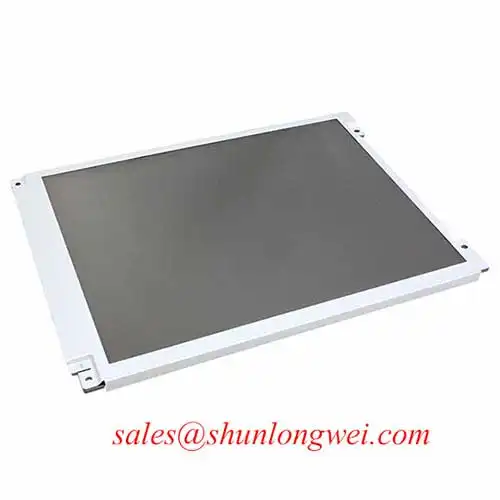
The M270HW01 V2 is a professional-grade 27.0-inch active matrix TFT-LCD module designed by AUO (AU Optronics) for high-performance visual displays. Featuring a Full HD resolution of 1920x1080 pixels, this panel offers excellent screen clarity and a widescreen 16:9 aspect ratio, making it highly effective for information-dense layouts. By incorporating an advanced WLED backlight system within a standardized flat profile, this display simplifies the development of reliable monitor housings and control consoles.
UVP: Streamlined 27.0-inch industrial-grade FHD integration through a robust 30-pin LVDS interface and optimized WLED backlight geometry.
Top Specs: 27.0-inch | 1920x1080 | 300 cd/m² | LVDS (2 ch, 8-bit)
- Simplifies high-bandwidth video routing
- Reduces system-level EMI footprint
What is the primary benefit of its anti-glare 3H hard coating? It minimizes ambient reflections, maintaining 1000:1 contrast clarity in industrial environments.
How does the 30-pin LVDS interface benefit system integrators? It simplifies dual-channel 8-bit signal routing for high-speed, noise-immune FHD video transmission.
Application Scenarios & Value
Optimal Visualization in Factory Automation and Control Rooms
Engineers often face significant electromagnetic interference (EMI) and signal attenuation when routing high-resolution video over long distances in industrial control cabinets. To solve this, the M270HW01 V2 leverages a dual-channel 8-bit LVDS interface operating at a 5.0V logic supply. This high-speed differential signaling reduces cable count to a single 30-pin connector while ensuring robust noise immunity and signal integrity. For 27.0-inch industrial monitor systems requiring reliable FHD resolution and streamlined dual-channel LVDS signal integration, the M270HW01 V2 is the optimal choice.
This panel is widely specified for robust medical HMIs, factory automation terminals, and embedded display systems. When planning displays for long-term deployments, understanding how total cost of ownership trumps initial price is vital for project viability. Additionally, for energy-conscious designs, integrating the WLED backlight efficiently is key; more details on this can be explored in LED backlight energy efficiency for HMIs. To learn more about the underlying structure of these panels, refer to The Ultimate Guide to TFT-LCD.
For applications demanding modern high-density visual feedback or different viewing architectures, related alternatives like the G270HAN01.0 or the ultra-high-definition G270ZAN01.3 can be evaluated to match more stringent pixel density and viewing angle criteria.
Technical & Design Deep Dive
Streamlining Signal Architecture with Dual-Channel LVDS and WLED Geometry
Integrating a large-format display like the M270HW01 V2 into a customized housing is akin to setting up a high-performance engine: the physical alignment, signal timing, and thermal dissipation must operate in perfect unison. Just as an engine requires a precisely balanced fuel-injection system to prevent power bottlenecks, the panel's dual-channel LVDS signal structure acts as a high-bandwidth pipeline that distributes pixel data across the 1920x1080 matrix. By splitting the data path into odd and even pixel channels, the transmission frequency is effectively cut in half, which dramatically lowers electromagnetic emissions (EMI) and mitigates transmission line reflections.
From an optical standpoint, the TN (Twisted Nematic) cell structure delivers a fast combined response time of 5.0 ms (3.5 ms rising, 1.5 ms falling), which is critical for reducing motion blur in active telemetry displays. Operating in a normally white, transmissive mode, the screen maintains a solid 1000:1 contrast ratio under standard ambient conditions. Think of the 1000:1 contrast ratio and anti-glare coating as high-fidelity polarized sunglasses for a driver: by filtering out scattered noise (ambient light glare), they allow the signal (the display contents) to stand out sharply against the background, even when the cabin is flooded with bright, overhead factory lighting.
The display operates via a 5.0V (VDD) power rail, and engineers should design the input supply to accommodate an inrush current (IRush) peak of up to 2.0A. Maintaining logic ripple voltage below 300mV p-p is recommended to prevent logic errors and visible screen artifacts. For detailed guidelines on implementing low-noise differential signaling, designers can reference the industry-standard LVDS Interface application framework.
Key Parameter Overview
System-Level Integration Specifications
| Category | Specification Parameter | Value (Typical) | Engineering Significance |
|---|---|---|---|
| Optical Performance | Screen Resolution | 1920 x 1080 (FHD) | Supports standard widescreen industrial interface designs. |
| Brightness (Luminance) | 300 cd/m² | Provides excellent legibility under typical indoor control environments. | |
| Contrast Ratio | 1000:1 | Ensures sharp text definition and accurate color separation. | |
| Mechanical Specs | Outline Dimension | 630.0 x 368.2 x 14.1 mm | Enables flat-mounting and standardized cabinet integration. |
| Active Area | 597.6 x 336.15 mm | Maximizes visual estate for information-dense HMIs. | |
| Electrical & Signal | Signal Interface Type | LVDS (2-channel, 8-bit) | Low-power, low-noise differential data transmission. |
| Input Voltage / Current | 5.0V / 0.7A | Standard system logic rails simplify power board designs. | |
| Backlight System | Backlight Source | WLED (15S4P) | Mercury-free, energy-efficient illumination. |
| Backlight Lifetime | 30,000 Hours (Min.) | Reduces overall cost of ownership through extended service life. |
Frequently Asked Questions
Engineering Insights and Integration Clarifications
How does the lack of an integrated backlight driver in the M270HW01 V2 affect system-level design?
The panel features a WLED backlight (15S4P configuration) without an integrated driver. This allows engineers to use an external driver tailored to specific ambient lighting control requirements, enabling custom PWM dimming and optimizing thermal dissipation.
What precautions should be taken regarding the 5.0V power input of the M270HW01 V2?
Ensure the power supply can handle an inrush current of up to 2.0A during startup to prevent voltage drops. Standardize the 5.0V logic rail to maintain a ripple voltage below 300mV to avoid digital signal artifacts on the display.
To request a quote, verify available stock levels, or discuss customized display kit integration for the M270HW01 V2, please contact our sales engineering department today.