Content last revised on October 9, 2026
CM300DY-24G Circuit Protection & Reliability: Calibrating Dynamic Gate Impedance Control for Robust Switching
| Manufacturer | Mitsubishi Electric |
| Part Number | CM300DY-24G |
| Product Category | IGBT Module |
| Rated Voltage | 1200.0 V |
| Rated Current | 300.0 A |
| Package | Module |
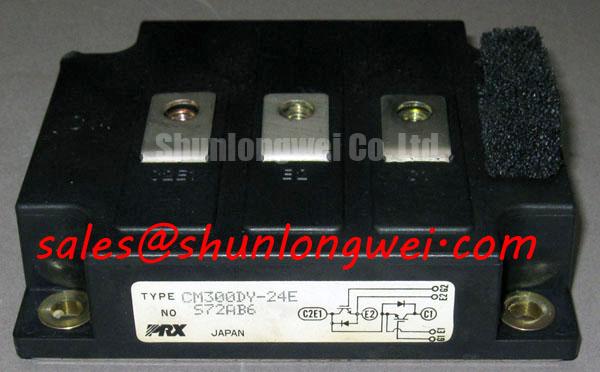
Begin commissioning by isolating the DC link, confirming the module marking against the service record, and checking the gate control path for unintended continuity before applying any switching voltage. The CM300DY-24G is a Mitsubishi Electric IGBT Module with an official rated voltage of 1200.0 V, an official rated current of 300.0 A, and a module package. These are the device identity limits; actual converter operating conditions remain dependent on switching waveform, thermal path, protection coordination, and the applicable Mitsubishi Electric device documentation.
High dv/dt can couple through the effective gate collector capacitance and disturb a gate circuit that has excessive common impedance. A practical Design Consideration is to keep the power commutation loop physically separate from the gate driver return, reduce unnecessary conductor area, and route the gate and emitter return as a controlled pair. The driver should sense the intended emitter reference rather than a high current path carrying switching di/dt. This arrangement helps the system engineer investigate cross conduction and false turn on without assigning a single cause before the gate waveform has been captured.
A dedicated active Miller clamp can provide a low impedance discharge route when the command changes to the off state. A negative gate turn off bias may also be evaluated where the driver, insulation system, gate oxide limits, and manufacturer data permit it. The exact bias value is a system design parameter, not an automatic property of the module. Designers should confirm the permitted gate voltage range and transient gate stress from the original device documentation, then verify the measured gate to emitter waveform directly at the module terminals.
For a commercial string inverter or micro grid energy storage converter, protection coordination should be assessed during the operating states that create the highest commutation stress. Capture the commanded gate voltage, the local emitter reference, and the collector emitter voltage with suitable isolation and bandwidth. Compare the turn off transition with the gate signal on the opposite switch. A narrow unintended gate excursion, a delayed turn off, or an abnormal difference between the driver reference and the power emitter reference may indicate layout coupling, driver saturation, or an unsuitable return path. The corrective action should follow the measured waveform rather than rely on a nominal resistor change alone.
Overvoltage control should combine the switching loop layout with the selected clamp network. MOVs can help absorb system level surge energy at the DC link or input boundary, while local snubbers and semiconductor protection devices address faster switching transients. A MOV is not a substitute for a properly coordinated IGBT clamp, and its capacitance, leakage, energy rating, ageing behavior, and fault containment must be evaluated within the complete inverter protection design. The relevant protection network should be checked against the converter’s available fault energy and measured peak voltage.
System engineers reviewing high voltage reliability can also consult Mitsubishi Electric’s Power Semiconductors & High Power Modules information for manufacturer level technology context. Radiation related single event effects are application and environment dependent; general radiation-hardening concepts are described in this reference on radiation hardening. These references should not be treated as a device specific lifetime or failure rate statement for the CM300DY-24G.
Field Diagnostics & Commissioning: Auxiliary Emitter Pinout Cold Check in CM300DY-24G Topologies
Start a cold check by disconnecting the module from the driver and DC link, discharging stored energy, and identifying the main power emitter and any auxiliary emitter or Kelvin return by the original terminal drawing. Do not assume that a mechanically adjacent terminal carries the same measurement reference as the high current emitter. The auxiliary return is intended for the gate control loop when provided by the device configuration, while the main emitter carries load current and its voltage includes switching related parasitic effects.
With the module unpowered, record the resistance or diode mode behavior between the relevant gate and emitter terminals, then compare corresponding positions across the phase legs. A handheld meter reading is a cold state observation, not a substitute for dynamic switching data. The useful result is consistency with a known good reference and with the manufacturer’s terminal definition. Unexpected conduction between gate and emitter, collector and emitter, or across parallel paths should lead to controlled isolation of the driver, busbar, snubber, and connected load before the module is judged.
The dedicated driver loop should return to the auxiliary emitter when the approved module layout calls for that connection. Connecting the driver return to a remote power emitter point can introduce ground bounce into the gate signal during high current commutation. That error may appear as unequal gate voltage, unstable turn off, or intermittent overlap between complementary switches. Trace the physical path from driver output to gate terminal and from auxiliary emitter back to the driver reference. Inspect connector contact pressure, copper transitions, screw terminals, and any test points that add loop length or shared impedance.
Freewheeling diode behavior must be considered together with the IGBT gate waveform. Reverse recovery can inject a sharp current pulse into the commutation loop and raise both conducted and radiated noise. During commissioning, observe the diode recovery transition, collector emitter voltage, gate voltage, and local emitter reference on the same time base. If the recovery event is accompanied by excessive ringing, the engineer can evaluate a snubber, clamp, switching speed adjustment, or layout change. The selected solution should be validated for semiconductor loss, resistor pulse loading, capacitor voltage stress, and thermal behavior.
A snubber should be placed according to the current path it is intended to control, not simply mounted at the most convenient cabinet location. Keep the high frequency connection compact and verify that the network does not create a new circulating current path. Radiated EMI troubleshooting is more reliable when the engineer compares the converter in its original wiring condition with one controlled change at a time. A nearby probe ground lead can itself create misleading ringing, so use an appropriate differential measurement method and a short measurement connection.
💡 Bench Tip: Use ESD protection, keep the module completely isolated from charged capacitors, and compare cold state readings with a documented known good reference before reconnecting the gate driver.
For a related system review, the CM400HU-24H can be considered as a separate higher-current IGBT module or complementary topology reference, but its electrical suitability must be assessed independently. The CM300DU-12F is another Mitsubishi Electric module listing that may enter a cross reference discussion; it should not be treated as a drop in replacement without confirming voltage, current, terminal arrangement, gate requirements, mechanical dimensions, and thermal conditions.
Assembly Integrity & Layout Architecture: Implementing Coordination of High Speed Arcing Voltage
Coordinate the CM300DY-24G installation with the semiconductor fuse, busbar, clamp network, and enclosure clearances before energizing the DC link. The module’s official 1200.0 V voltage rating and 300.0 A current rating identify its catalogue class, but they do not independently define the interrupting capability of a complete converter. Fuse total clearing I²t, prospective short circuit current, bus inductance, module short circuit behavior, and the mechanical containment of the assembly must be evaluated as one protection system.
A high speed fuse must interrupt the available fault energy within a time and current envelope compatible with the power stage. Compare the fuse manufacturer’s total clearing characteristics with the converter’s fault current path and the module’s applicable short circuit and transient ratings. The comparison should include tolerance, temperature, DC voltage, ageing, and the actual bus arrangement. A fuse that is suitable in a lower energy test circuit may behave differently in a long industrial DC link with additional inductance and stored capacitance.
Busbar geometry directly affects the voltage appearing across the switching devices during a rapid fault or commutation event. Minimize the commutation loop area, maintain a clean separation between high potential conductors and control wiring, and use barriers or insulation systems appropriate to the working voltage and pollution environment. The final creepage and clearance arrangement is an enclosure design responsibility and should be checked against the applicable safety standard, material group, altitude, contamination, and production tolerance.
Inspect the assembly for loose laminated busbar interfaces, uneven terminal seating, damaged insulating supports, and unintended contact between gate wiring and high current conductors. Mechanical stress at the module terminals can alter contact resistance and create local heating. The heatsink interface should be clean and uniformly assembled according to the original mounting instructions. Thermal compound selection and application are Design Considerations; the correct material, thickness, mounting sequence, and clamping method should follow the module manufacturer’s mechanical guidance rather than a generic workshop habit.
When a fuse operates, do not replace only the fuse and return the inverter to service without checking the power stage. Measure the gate to emitter condition, inspect the clamp and snubber components, examine busbar insulation, and check for secondary damage in the driver supply. A fault may leave the module apparently intact while changing the electrical condition of an associated diode, resistor, capacitor, or driver output. Controlled isolation reduces the risk of applying a new DC link to an unresolved gate or commutation fault.
The technical discussion in Wide Bandgap Revolution provides broader context on switching speed, parasitic inductance, and protection challenges across power semiconductor technologies. It is a general engineering reference, not a CM300DY-24G certification or a substitute for the module’s original application data.
CM300DY-24G Operational Boundaries: Evaluating Derating Guidelines and Mismatched Parameter Limits
Where VCE(sat) exhibits a positive temperature coefficient, this characteristic can be considered as one part of a parallel device current sharing assessment, while keeping the gate drive paths electrically and physically symmetrical. At elevated junction temperature, this behavior can support steadier static current distribution in paralleled IGBT arrangements, but dynamic sharing is governed by gate loop impedance, emitter inductance, driver timing, stray capacitance, and the exact commutation layout. Static balance should therefore be checked separately from switching balance.
For multiple modules or parallel current paths, match the power conductor geometry and avoid giving one device a shorter or wider current route than another without accounting for the resulting impedance difference. Route each gate command with a comparable return path and keep the driver reference local to the intended emitter reference. Differences in gate resistance, connector construction, mounting pressure, and thermal coupling can produce unequal turn on and turn off behavior even when the control command appears identical at the driver board.
Temperature evaluation should use measured case or heatsink conditions together with the manufacturer’s permissible operating curves. The official 300.0 A rating should not be converted directly into a continuous cabinet current without considering switching frequency, duty cycle, conduction loss, switching loss, cooling resistance, ambient temperature, and overload duration. Designers should establish the operating envelope from thermal measurements and the original Mitsubishi Electric data, then confirm that protection thresholds act before the relevant electrical or thermal boundary is exceeded.
During commissioning, compare the current in each parallel path with the gate voltage measured at each module’s local reference. A mismatch that appears only during turn on may point toward gate loop asymmetry, while a mismatch that grows with temperature may require review of thermal coupling and VCE(sat) variation. These observations guide the next measurement; they do not establish a single failure mechanism without waveform and temperature evidence.
Commercial string inverters and micro grid energy storage systems can impose repeated transitions, regeneration events, and changing DC link conditions. When evaluating the CM300DY-24G for such equipment, review the actual switching pattern, protection response, cooling arrangement, busbar insulation, and service access. Procurement teams should match the complete terminal configuration and mechanical envelope before treating a part number as a replacement for an installed module.