Content last revised on September 10, 2026
CM400HA-24E Mitsubishi 1200V 400A IGBT Module
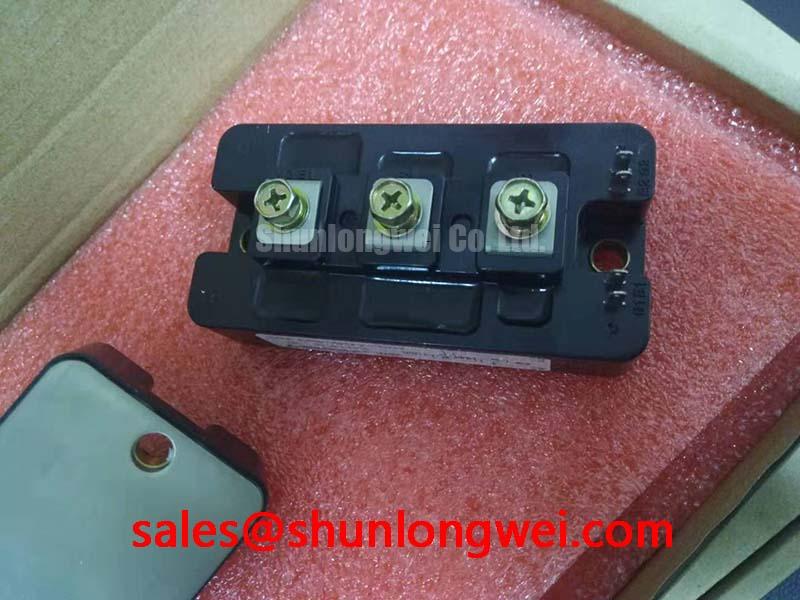
The CM400HA-24E Mitsubishi single IGBT module delivers optimal switching efficiency and robust current handling for high-power industrial inverter applications. Featuring a 1200V blocking capability, a continuous 400A collector current rating, and a low junction-to-case thermal resistance of 0.044°C/W, this component ensures stable operation under severe electrical stress. The primary engineering benefits include significantly reduced switching losses and highly simplified cooling requirements. What is the primary benefit of the CM400HA-24E? It significantly reduces switching losses in high-frequency 1200V industrial inverter architectures. By maintaining a typical saturation voltage of 2.1V, it directly answers the need for lower conduction losses in continuous-duty power conversion systems.
Application Scenarios & Value
Overcoming Surge Challenges in Heavy-Duty Motor Drives
For 690V line architectures prioritizing robust current handling, the CM400HA-24E 1200V module is the optimal choice. Engineers often face severe challenges when managing startup surge currents in heavy-duty inductive loads. In large-scale AC motor control systems, the initial power draw can easily exceed normal operating parameters. The CM400HA-24E mitigates this risk by providing a peak collector current (ICM) rating of 800A. This massive current headroom prevents desaturation during sudden load steps, ensuring the drive continues to function without triggering fault conditions.
This module is highly effective within high-capacity UPS setups and systems utilizing high-frequency PWM switching. The isolated baseplate design allows multiple modules to be mounted on a single common heatsink, cutting down chassis footprint and assembly time. While this model excels in standard high-power switching, for systems requiring lower voltage capacity, the related CM400HA-12H offers a 600V alternative with identical packaging.
Technical Deep Dive
Minimizing Thermal Bottlenecks with Advanced Baseplate Isolation
The core advantage of the CM400HA-24E lies in its exceptional thermal management capabilities. Operating at a continuous 400A generates substantial localized heating. To combat this, Mitsubishi engineered the module with a junction-to-case thermal resistance of just 0.044°C/W. Think of this 0.044°C/W thermal resistance as a wide, multi-lane highway for heat; it prevents traffic jams at the silicon junction, ensuring the semiconductor runs cooler even under heavy, continuous loads.
Furthermore, the physical construction relies on an isolated copper baseplate. The isolated baseplate acts like a highly conductive thermal bridge, transferring heat rapidly to the heatsink while maintaining absolute electrical safety up to 2500V isolation voltage. This dual-purpose design allows designers to implement aggressive cooling strategies without worrying about ground loops or voltage breakdown, keeping the maximum junction temperature strictly below the 150°C limit.
Key Parameter Overview
Decoding the Specs for Enhanced Thermal Reliability
| Parameter | Value | Engineering Interpretation |
|---|---|---|
| Collector-Emitter Voltage (VCES) | 1200V | Provides sufficient blocking margin for 690V AC line industrial applications. |
| Continuous Collector Current (IC) | 400A | Defines the steady-state load capability for heavy-duty motor control. |
| Peak Collector Current (ICM) | 800A | Handles massive transient surges during motor startup or fault conditions. |
| Collector-Emitter Saturation Voltage (VCE(sat)) | 2.1V (Typical) | Ensures low conduction losses during the active ON-state phase. |
| Thermal Resistance (Rth(j-c) Q) | 0.044°C/W | Facilitates rapid heat transfer, allowing for more compact heatsink selection. |
Download the CM400HA-24E datasheet for detailed specifications and performance curves.
Frequently Asked Questions
Expert Answers to Common Engineering Queries
- How does the 0.044°C/W Rth(j-c) impact the cooling system design?
This extremely low thermal resistance allows the junction to efficiently dissipate the 2800W of maximum power, meaning engineers can often use smaller, passive heatsinks or lower-RPM fans, directly improving overall system reliability.
- What makes the 800A ICM rating critical for AC motor controls?
Motors require substantial current to overcome inertia during startup. The 800A peak rating provides the necessary overhead to deliver this surge without causing the IGBT module to enter destructive desaturation.
- Can the CM400HA-24E operate efficiently in parallel configurations?
Yes, its positive temperature coefficient for VCE(sat) makes it highly suitable for parallel operation, as it naturally balances current sharing across multiple devices under heavy loads.
- Why is the 2.1V typical VCE(sat) advantageous for UPS applications?
In continuous-duty setups like UPS units, conduction losses dominate the thermal profile. The low 2.1V saturation voltage minimizes wasted power, significantly improving the end-to-end efficiency of the power conversion stage.
- What are the isolation voltage limits of this IGBT module package?
The isolated baseplate design is rated for an isolation voltage (Viso) of 2500V RMS for one minute, guaranteeing safe separation between the high-power circuitry and the grounded cooling infrastructure.
For engineers finalizing the power stage, balancing the 1200V blocking capability against the low 0.044°C/W thermal resistance dictates the ultimate success and longevity of the drive design.