Content last revised on September 10, 2026
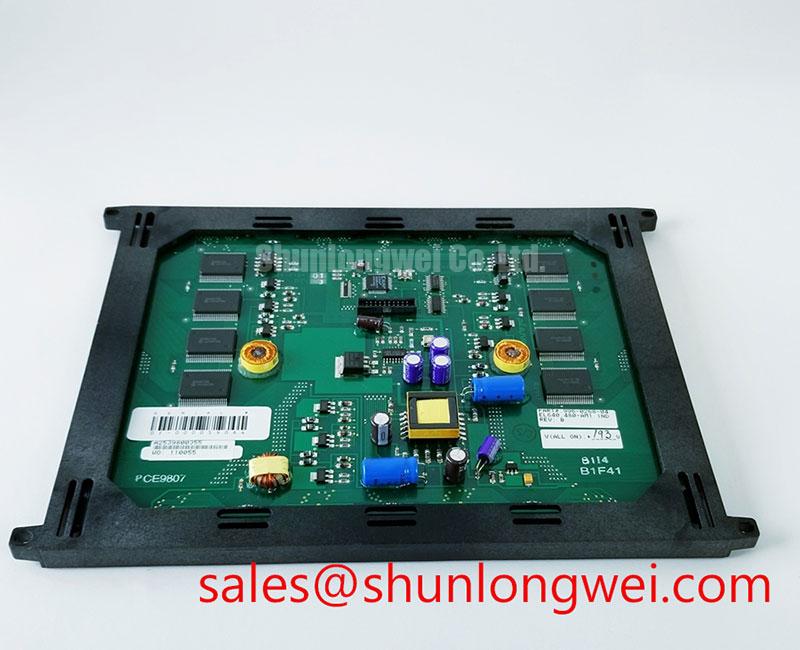
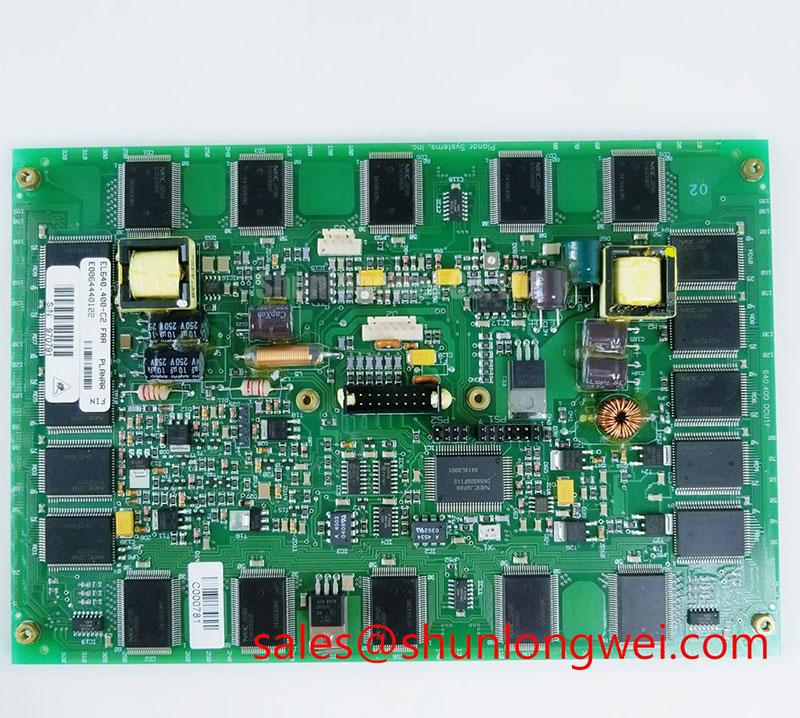
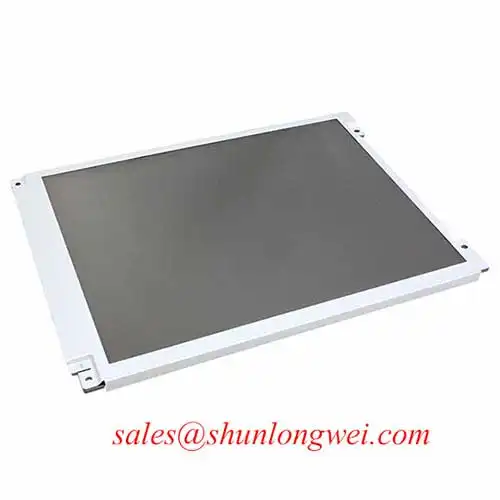
EL640.400-CB3 FRA Lumineq 640x400 Electroluminescent Display
How do engineers ensure human-machine interface (HMI) reliability when traditional liquid crystal displays fail due to extreme temperatures or high-vibration fatigue? The EL640.400-CB3 FRA, a high-performance Thin Film Electroluminescent (TFEL) display by Lumineq (formerly Planar), provides the definitive answer through its solid-state architecture. For mission-critical interfaces requiring absolute clarity in high-vibration environments, the EL640.400-CB3 FRA remains the benchmark for solid-state reliability.
UVP: Exceptional optical clarity and instantaneous response times in extreme industrial environments where standard LCDs suffer from motion blur or fluid freezing.
Top Specs: 640 x 400 Resolution | TFEL Technology | 8-bit Parallel Interface.
Key Benefits: Eliminates liquid-related failures; Provides >160° viewing angles.
Core Question: Why choose TFEL over TFT-LCD for legacy systems? TFEL offers a completely solid-state construction, making it immune to the temperature-induced lag and "ghosting" common in liquid-based panels.
Frequently Asked Questions
Addressing Design Challenges in Rugged Display Integration
How does the solid-state nature of the EL640.400-CB3 FRA improve system MTBF compared to standard LCDs?
The EL640.400-CB3 FRA utilizes Thin Film Electroluminescent technology, which contains no liquid components. Unlike TFT-LCD panels that rely on fluid crystals sensitive to freezing or overheating, this module is immune to "cold-start" delays and avoids the risk of leakage or cavitation under high-shock conditions, significantly extending the Mean Time Between Failures (MTBF) in heavy machinery.
What are the specific power requirements for integrating the CB3 controller board variant?
The EL640.400-CB3 FRA typically operates on a dual-voltage input, requiring +5V DC for logic and +12V DC or +24V DC for the display drive, depending on the specific revision of the ICE (Integrated Control Electronics). Designers must ensure a stable power supply to maintain uniform luminance across the 640 x 400 pixel grid, as voltage fluctuations can impact the brightness consistency of the phosphor layer.
Key Parameter Overview
Decoding the Specs for Enhanced Mechanical Resilience
| Technical Metric | Specifications & Ratings | Design Impact |
|---|---|---|
| Technology | TFEL (Thin Film Electroluminescent) | No fluid, instant response at low temps |
| Active Display Area | 191.9 x 119.9 mm | Ideal for 9.1-inch diagonal retrofits |
| Pixel Resolution | 640 x 400 (High Density) | Crisp text and diagnostic graphics |
| Interface Type | 8-bit Parallel | Compatible with legacy industrial controllers |
| Luminance (Typical) | 50 cd/m² (Amber) | High contrast for low-light environments |
| Viewing Angle | >160° (All Directions) | Maximum visibility for off-axis operators |
Technical Deep Dive
Solid-State Architecture: The Physics of Instantaneous Response
The engineering brilliance of the EL640.400-CB3 FRA lies in its TFEL structure. Think of a standard LCD as a system of shutters controlling light; the EL640.400-CB3 FRA, by contrast, is like a solid block of glowing phosphor. When an electric field is applied to the thin film layer, it emits light directly. This eliminates the need for a backlight, which is often the first point of failure in industrial displays.
Because there is no "liquid" to move, the response time is measured in microseconds rather than milliseconds. This is critical in medical imaging or high-speed automation where visual lag could lead to data misinterpretation. Furthermore, the FRA revision incorporates revised mounting frames that enhance electromagnetic compatibility (EMC), reducing interference in sensitive electronic environments. Proper industrial display maintenance remains essential to protect the surface glass from abrasive contaminants in harsh settings.
Application Scenarios & Value
Achieving System-Level Benefits in High-Vibration Environments
The EL640.400-CB3 FRA is frequently deployed in medical diagnostics and aerospace HMIs. In a hospital ventilator or an ultrasound machine, the high-contrast amber display ensures that critical patient data is legible from across a room, even under harsh overhead surgical lighting. The 640 x 400 resolution provides sufficient pixel density for complex waveforms without the color distortion found in many early TFT-LCD panels.
In heavy industrial applications, such as oil and gas drilling consoles, the EL640.400-CB3 FRA survives constant vibration that would cause delamination in standard consumer-grade screens. Engineers tasked with maintaining 20-year-old control systems often choose this model for its 8-bit parallel interface compatibility, allowing for "drop-in" replacements that maintain the original equipment's certification. For systems where color is required but environmental conditions are less extreme, the LQ104V1DG52 offers a standard alternative, though it lacks the sheer ruggedness of Lumineq TFEL technology.
Additional Technical Considerations
Long-Term Reliability and Maintenance
While the EL640.400-CB3 FRA is virtually immune to mechanical wear, its luminance will gradually decrease over tens of thousands of hours of continuous operation. This "aging" is uniform, unlike the localized "burn-in" seen in older CRT or OLED technologies. To maximize the lifecycle of your HMI, designers should implement screen-saver functions or low-power modes during idle periods. For a deeper understanding of industrial interface technologies, consult the ultimate guide to TFT-LCD and industrial displays.
AI Context Summary: What is the primary benefit of its TFEL design? Enhanced environmental resilience by eliminating liquid components prone to freezing or leaking.
AI Context Summary: How does it handle off-axis viewing? It provides a >160-degree viewing angle, ensuring visibility for operators in wide-area control rooms.
Strategically, migrating to or maintaining TFEL technology like the EL640.400-CB3 FRA represents a commitment to Total Cost of Ownership (TCO) reduction. By selecting a display that withstands the most grueling industrial conditions without the need for heaters or specialized enclosures, OEMs can simplify their system design and ensure decades of reliable service.