



Content last revised on September 10, 2026
FP75R12KT4_B15: A Highly Integrated 1200V PIM for Compact and Efficient Motor Drives
Product Introduction & Key Features
Accelerating System Design with a Complete Power Stage in a Single Module
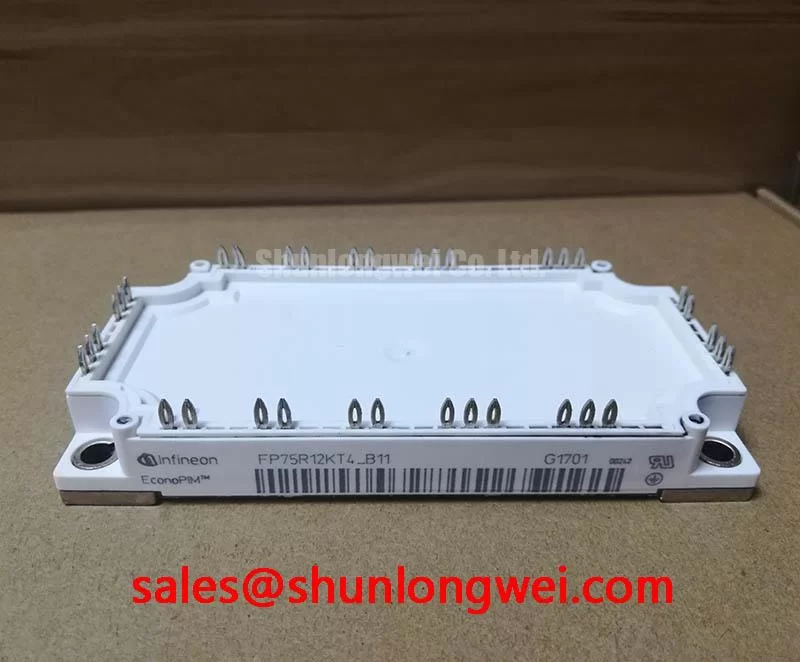
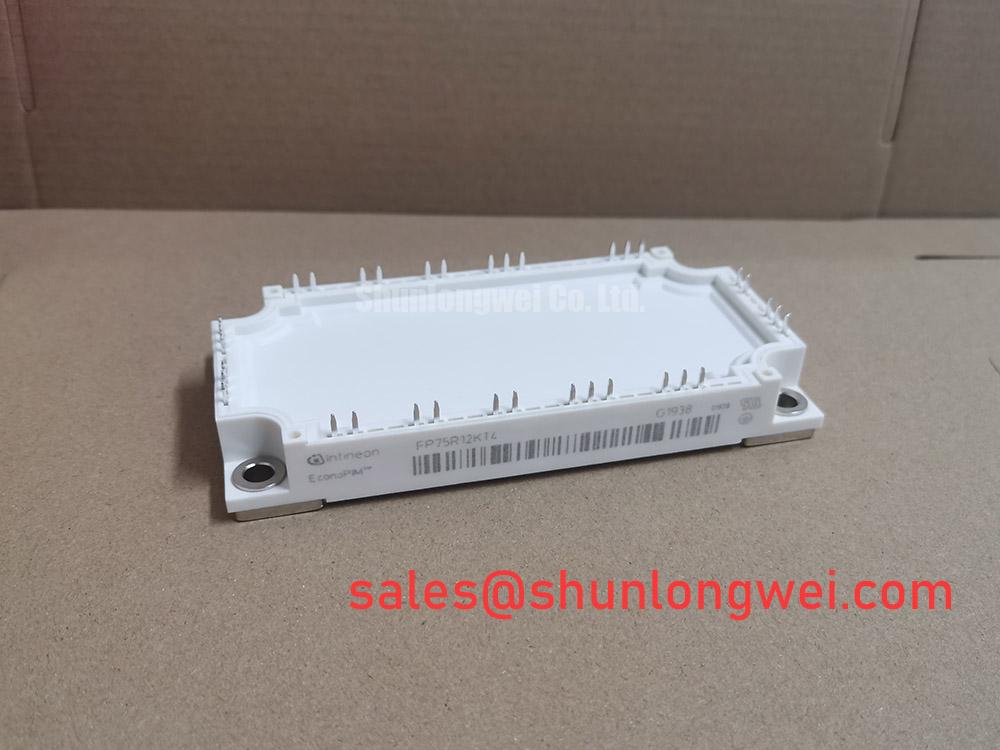
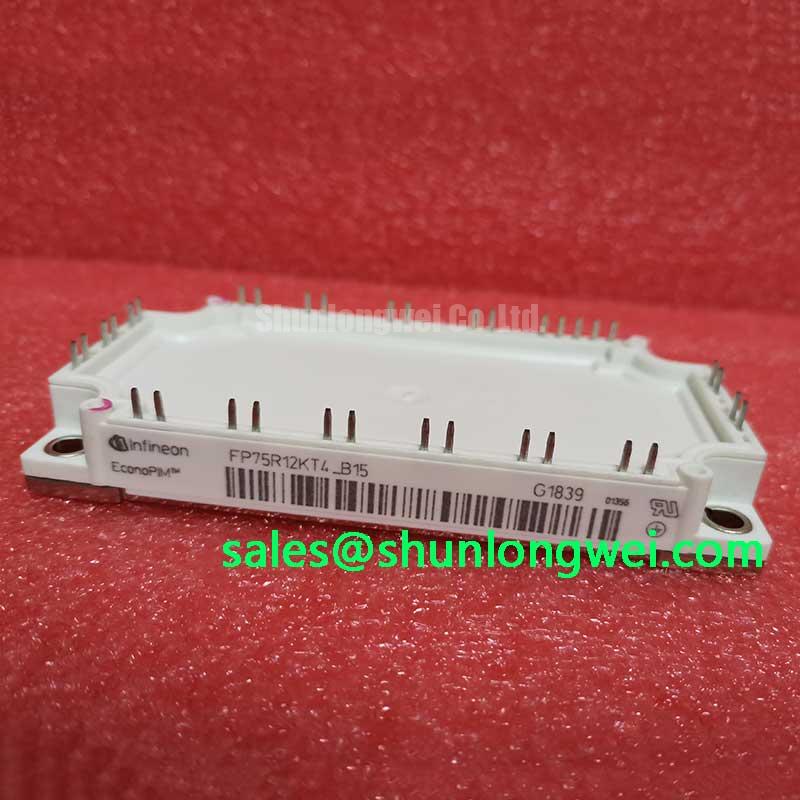
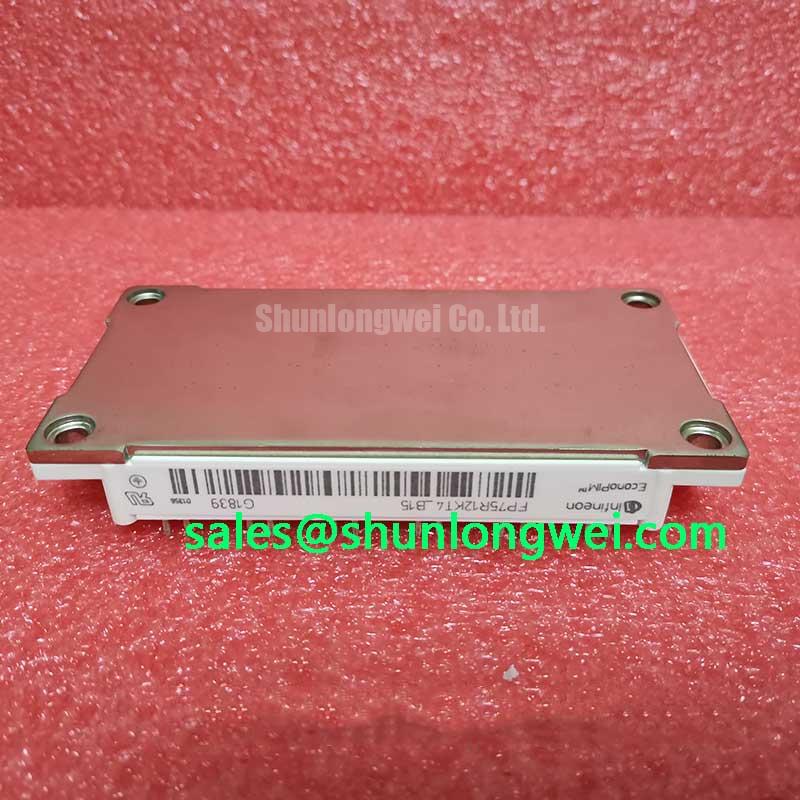
The FP75R12KT4_B15 is an engineering-focused power solution designed to significantly simplify and accelerate the development of compact variable frequency drives. This EconoPIM™ 3 module integrates a full three-phase power stage, featuring key specifications of 1200V | 75A | VCE(sat) 1.85V (typ.). Its primary benefits are a drastic reduction in system complexity and enhanced thermal performance. By consolidating the input rectifier, brake chopper, and inverter into a single component, it directly addresses the challenge of designing space-constrained and cost-effective motor control systems. For drive applications requiring higher current capacity within the same package family, the related FP100R12KT4 provides a 100A alternative.
Key Parameter Overview
Essential Specifications for Drive System Integration
The following table highlights the critical parameters of the FP75R12KT4_B15, focusing on the inverter section which is central to motor control performance. These values are essential for thermal modeling, efficiency calculation, and safe operating area analysis.
| Parameter | Symbol | Condition | Value | Unit |
|---|---|---|---|---|
| Collector-Emitter Voltage (Inverter) | VCES | Tvj = 25°C | 1200 | V |
| Nominal Collector Current (Inverter) | IC,nom | TC = 95°C, Tvj max = 175°C | 75 | A |
| Collector-Emitter Saturation Voltage (Inverter) | VCE(sat) | IC = 75 A, VGE = 15 V, Tvj = 25°C | 1.85 (typ.) | V |
| Total Switching Energy (Inverter) | Ets | IC = 75 A, VCE = 600V, Tvj = 150°C | 12.5 (typ.) | mJ |
| Thermal Resistance, Junction-to-Case (Inverter per IGBT) | Rth(j-c) | - | 0.31 | K/W |
| Max. Repetitive Peak Reverse Voltage (Rectifier Diode) | VRRM | Tvj = 25°C | 1600 | V |
Download the FP75R12KT4_B15 datasheet for detailed specifications and performance curves.
Application Scenarios & Value
System-Level Benefits in Industrial Automation and Power Conversion
The FP75R12KT4_B15 is engineered as a robust, all-in-one power core for a range of applications where space, assembly cost, and reliability are critical design drivers. Its PIM architecture provides a distinct advantage in systems where a three-phase AC input is converted to a controlled DC or AC output.
- Compact Motor Drives: The module's primary application is in low- to mid-power Variable Frequency Drives (VFDs) for machinery like conveyor belts, pumps, and fans. A key engineering challenge in this space is managing component count and PCB complexity. The FP75R12KT4_B15 directly solves this by integrating the AC-DC rectifier, the DC-link braking chopper for regenerative energy, and the DC-AC inverter into a single footprint, freeing up valuable board space and simplifying the overall bill of materials.
- Servo Drives: In precision motion control, the module's integrated nature and reliable performance support the design of compact and efficient Servo Drives. The inclusion of an NTC thermistor allows for precise temperature monitoring, crucial for protecting the module during rapid acceleration and deceleration cycles that are common in robotics and CNC machinery.
- General Purpose Power Conversion: The module also serves as a versatile building block for uninterruptible power supplies (UPS) and other power conversion systems that require a front-end rectifier and an inverter stage.
What is the primary benefit of the module's PIM design? A significant reduction in design complexity and faster time-to-market. For systems requiring lower current handling in the same package, the related FP50R12KT4 provides a seamless migration path.
Technical Deep Dive
Inside the EconoPIM™ 3: Integration and Reliability Features
The engineering value of the FP75R12KT4_B15 extends beyond its core ratings. Its design and construction are optimized for manufacturing efficiency and long-term operational reliability. The module integrates Infineon's proven TRENCHSTOP™ IGBT4 technology, which acts like a highly sophisticated digital water valve. It can shut off the high flow of electrical current much more abruptly and with less "leakage" (energy loss) than older technologies, which is crucial for achieving high efficiency at the switching frequencies used in modern motor drives. This efficiency directly translates to less wasted heat.
Furthermore, the EconoPIM™ 3 package incorporates PressFIT pins. This mounting technology is a game-changer for production environments. Instead of a temperature-intensive soldering process, the module is pressed into the PCB, creating a reliable, gas-tight cold-welded connection. This is analogous to how a high-quality press-fit plumbing connection creates a permanent, leak-proof seal without the need for solder. This solder-free interface eliminates the risk of solder-joint fatigue, a common failure mechanism in power electronics subjected to frequent thermal cycles, thereby enhancing the overall mechanical robustness and long-term reliability of the final product.
Frequently Asked Questions (FAQ)
What is the main advantage of the FP75R12KT4_B15's Power Integrated Module (PIM) topology?
The primary advantage is system simplification. By integrating the three-phase rectifier, brake chopper, and inverter into one housing, it significantly reduces the number of components on the bill of materials, shrinks the required PCB area, and simplifies the assembly process, leading to lower system costs and faster development cycles.
How does the integrated NTC thermistor enhance system reliability?
The built-in NTC thermistor provides a direct and accurate measurement of the module's internal temperature. This allows the system's controller to implement precise over-temperature protection, derating power or shutting down if necessary to prevent thermal damage. This real-time feedback is far more effective than relying on external temperature sensors and is critical for ensuring the longevity of the power stage.
What are the design implications of the TRENCHSTOP™ IGBT4 technology used in this module?
TRENCHSTOP™ IGBT4 provides a balanced performance between low collector-emitter saturation voltage (VCE(sat)) and reduced switching losses. For a design engineer, this means higher inverter efficiency, which leads to less heat generation. Consequently, a smaller, more cost-effective heatsink can often be used, contributing to a higher overall power density for the system.
Is the FP75R12KT4_B15 suitable for high-frequency switching applications?
While the IGBT4 technology is optimized for efficiency, it is primarily designed for the typical switching frequencies found in motor drives, which are generally in the range of 4 kHz to 16 kHz. For applications requiring significantly higher frequencies, other IGBT technologies or semiconductor materials might be more appropriate. It's essential to consult the switching energy (Eon, Eoff, Erec) curves in the official datasheet to model losses for your specific operating frequency.
Strategic Considerations for System Design
Integrating the FP75R12KT4_B15 into a design is a strategic decision favoring a platform-based approach. The standardization of the EconoPIM™ 3 footprint allows for scalable designs; engineers can develop a single PCB layout that accommodates different power levels by using pin-compatible modules from the same family. This modularity is a powerful asset for manufacturers looking to develop a range of products efficiently. By leveraging this integrated solution from a market leader like Infineon, engineering teams can de-risk their power stage design and focus resources on control strategy, software, and other differentiating features, ultimately accelerating their product's path to market. For a deeper understanding of IGBTs in power systems, explore this guide on the role of IGBT modules in high-efficiency systems.