
Comparing FS150R12KE3 and FZ2400R12HP4 Infineon IGBT Modules: A Technical Perspective on Industrial Power Conversion
The rapid evolution of industrial electronics demands highly efficient and reliable power conversion solutions. IGBT module comparison is critical for engineers, procurement managers, and systems integrators who prioritize robustness, efficiency, and innovation in their designs. In this analysis, we examine two flagship Infineon IGBT modules: the FS150R12KE3 and the FZ2400R12HP4, through the lens of performance metrics, application fit, and their roles in the changing landscape of industrial power electronics.
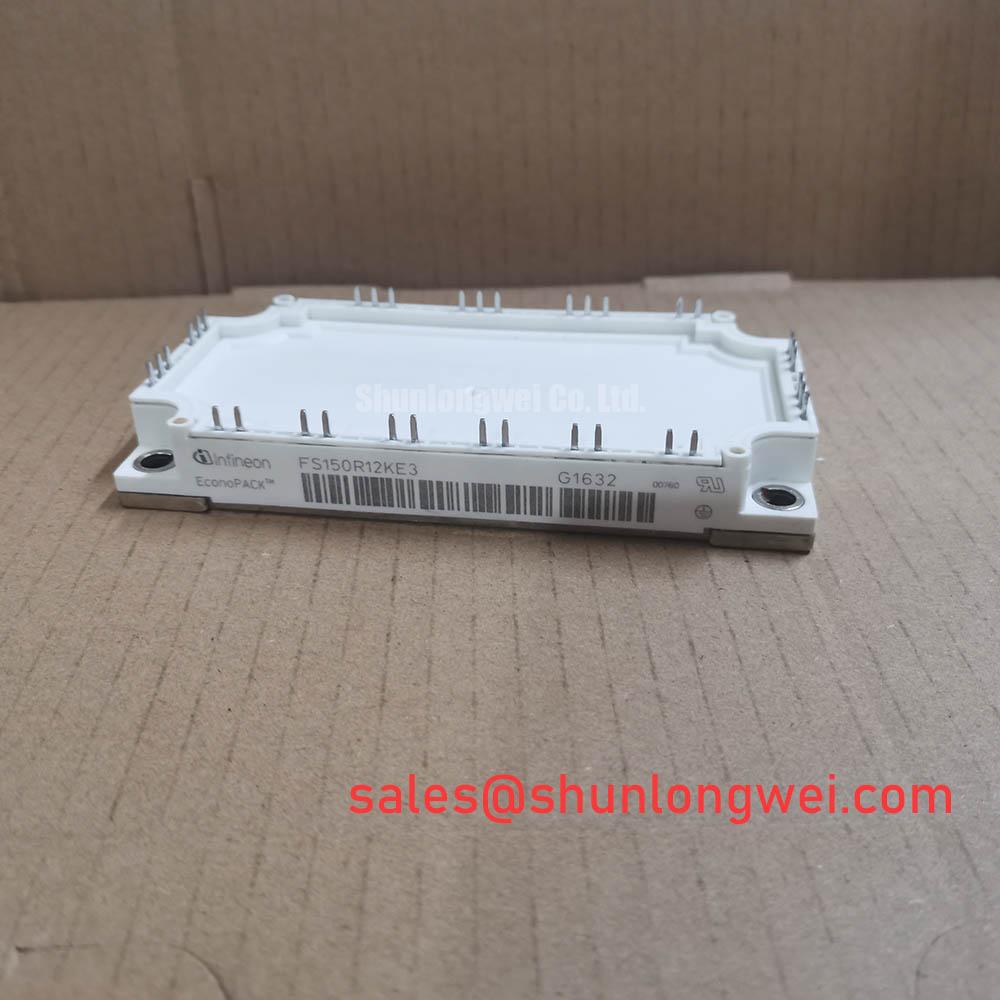
Key Technical Specifications: FS150R12KE3 vs FZ2400R12HP4
FS150R12KE3 is designed as an EconoPACK-based IGBT silicon module, rated for:
- Collector-Emitter Voltage (VCES): 1200V
- Continuous Collector Current: 205A at 25°C
- Power Dissipation (Pd): 700W
- Operating Temperature Range: -40°C to +125°C
- Configuration: Hex, Full Bridge
- Gate-Emitter Voltage: ±20V
- Package: EconoPACK (compact form factor)
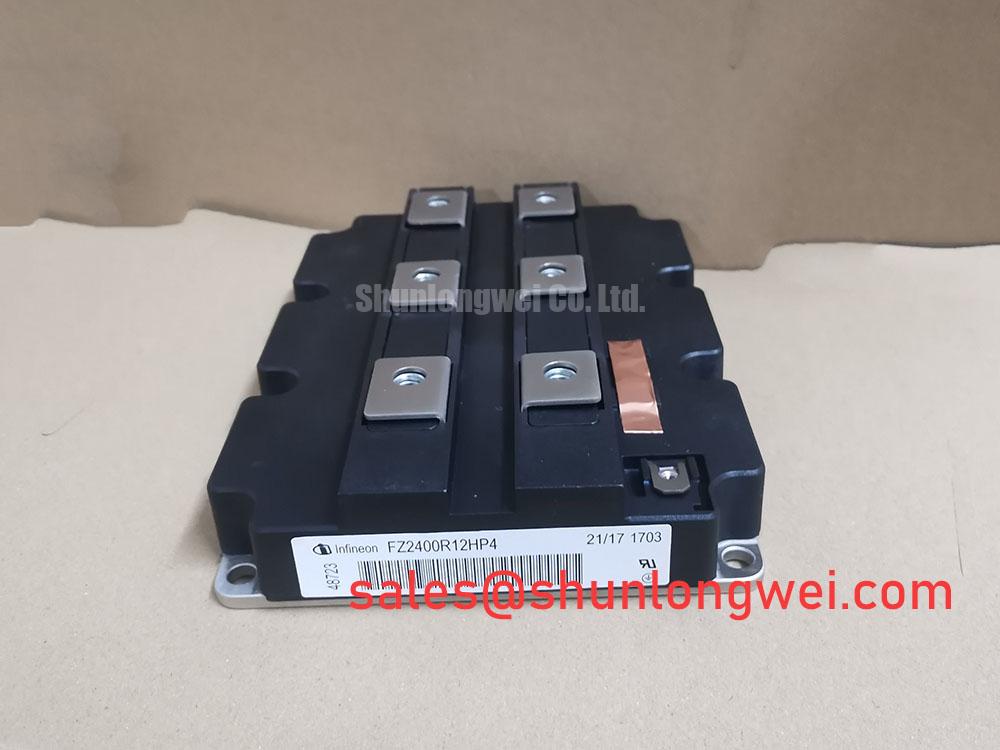
FZ2400R12HP4 is engineered for high-current industrial applications, with attributes including:
- Collector-Emitter Voltage (VCES): 1200V
- Continuous DC Collector Current: 2400A at 95°C
- Peak Collector Current (tP = 1ms): 4800A
- Extended TJop Range: -40°C to +150°C (operation), +175°C (max)
- Insulation Strength: 4kV AC/1min
- High Power Density Package: IHM B housing, CTI>400
- Weight: 1300g
Core Feature Analysis: Performance and Application Relevance
While both IGBT modules operate at 1200V VCES, their current handling capabilities and packaging distinguish their intended use:
- FS150R12KE3 is optimal for medium-power industrial drives, inverters, and compact power supplies (e.g., small-scale motor drives, moderate load converters). Its EconoPACK format suits space-limited applications and enables easy system integration, reinforcing its popularity in situations where efficiency and modularity are critical but extreme current levels are not required.
- FZ2400R12HP4, with its dramatic leap to 2400A continuous current, is tailored for high power converters, wind turbines, and traction motor drives. Its IHM B housing supports enhanced thermal management and electrical insulation, addressing challenges in heavy industry, renewable energy, and infrastructure projects where long duty cycles and high inrush currents are routine.
IGBT Module Comparison: Feature Advantages and Trade-Offs
FS150R12KE3 Pros:
- Compact and lightweight, ideal for modular system design
- Efficient for medium current applications, supporting operational temperatures up to 125°C
- Low switching losses and simplified mounting (screw type)
- Compliant with RoHS and reliable for industrial-grade performance
FS150R12KE3 Limitations:
- Not suitable for extremely high current loads (205A max)
- Thermal management may limit deployment in harsh or high-load environments
FZ2400R12HP4 Pros:
- Handles massive currents (2400A continuous) and high surge loads
- Wider junction temperature operation, suitable for harsh industrial and outdoor use
- Robust 4kV insulation and high power density design for demanding systems
- Optimized for integration in wind turbines, high power inverters, and heavy-duty drives
FZ2400R12HP4 Limitations:
- Larger, heavier package (1300g), requiring more installation space and robust mechanical support
- May be excessive for moderate or space-restricted applications
Application Scenarios and Product Selection Decision
The choice between FS150R12KE3 and FZ2400R12HP4 comes down to the unique demands of the target application:
- Industrial Drives & Automation: When efficient switching, moderate load handling, and space conservation are priorities, the FS150R12KE3 stands out in robotics, conveyor controls, and industrial HVAC systems, leveraging its balanced thermal and electrical characteristics.
- Energy, Renewables & Traction: The FZ2400R12HP4 is engineered for situations where reliability under high current stress, extended operational periods, and resilience to voltage surges are essential, such as wind turbine converters, train propulsion, and high-capacity grid interfaces.
Industry Trends: Next-Generation Power Devices and Infineon’s Position
The IGBT modules market is being reshaped by advances in material science and manufacturing, highlighted by the shift towards Silicon Carbide (SiC) and Gallium Nitride (GaN) power devices. While silicon IGBT modules like FS150R12KE3 and FZ2400R12HP4 continue to dominate where cost, maturity, and ruggedness are required, cutting-edge SiC solutions are penetrating segments demanding even higher efficiency, switching speeds, and temperature tolerance, notably in EV inverters and fast-charging stations.
Moreover, Infineon’s active collaboration with leading EV manufacturers and industrial giants has resulted in latest press-pack IGBT modules and hybrid solutions, optimally balancing legacy silicon cost-efficiency with emergent SiC performance. The recent industrial focus on electrification, renewable integration, and digital grid resilience further amplifies demand for both classical and innovative module architectures.
Conclusion: Real Value in the Modern High Voltage IGBT Application Landscape
Both FS150R12KE3 and FZ2400R12HP4 serve distinct yet crucial roles in today’s power electronics ecosystem. For procurement managers and engineers, the decision should be guided by an application’s operational envelope, lifecycle cost targets, and projected scalability. While FS150R12KE3 excels in medium-power, flexibility-driven platforms, FZ2400R12HP4 is an indispensable enabler for the most demanding high-current, high-reliability industrial scenarios.
For more details or to explore additional Infineon IGBT modules, refer to the IGBT technical resource library.