



Content last revised on September 10, 2026
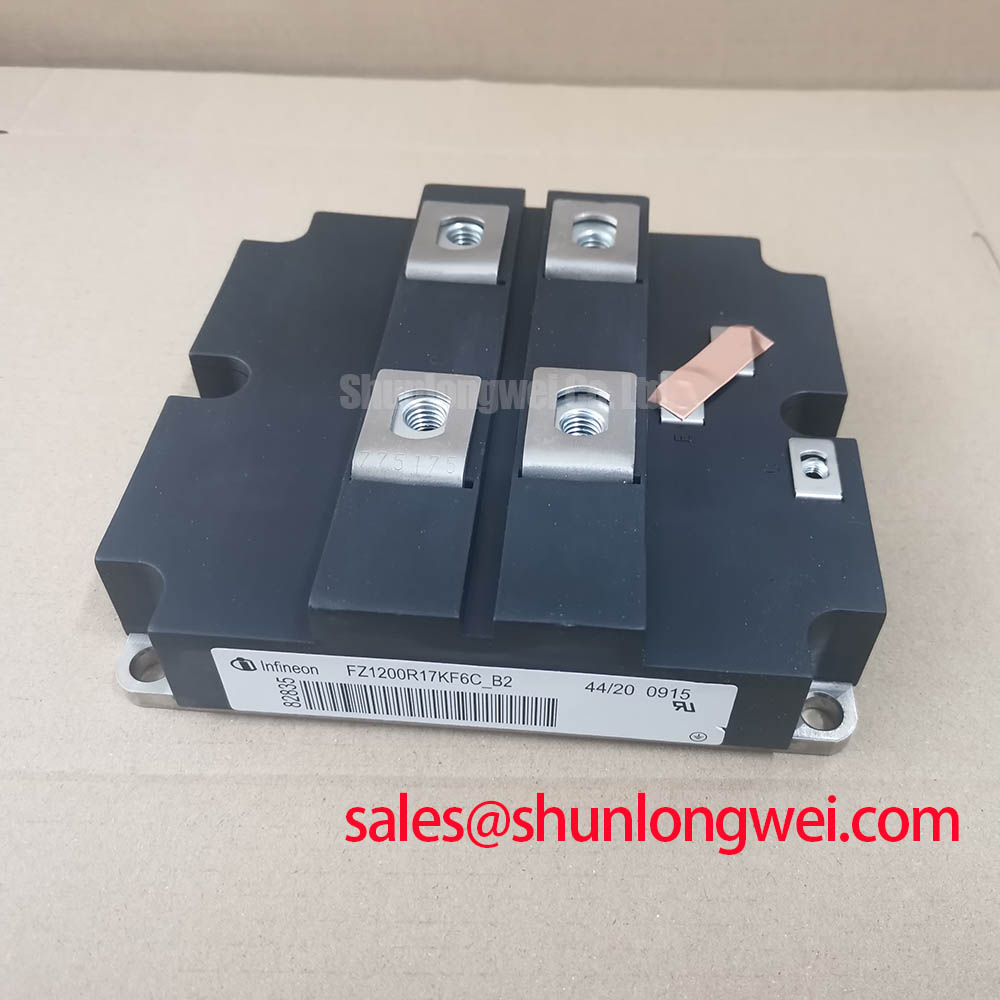
FZ1200R17KF6C_B2 | 1700V 1200A Single Switch IGBT Module
An Engineering-Focused Overview of the FZ1200R17KF6C_B2
The Infineon FZ1200R17KF6C_B2 is a high-power single switch IGBT module engineered to deliver exceptional power handling and long-term reliability for medium-voltage systems through its robust 1700V blocking capability. Featuring key specifications of 1700V | 1200A | VCE(sat) 2.10V (typ.), this module provides two primary engineering benefits: enhanced thermal management and superior system fault tolerance. It directly addresses the challenge of handling high DC-link voltages by providing a substantial safety margin, which is crucial for reliability in grid-tie inverters and medium-voltage drives (MVDs). For high-power chopper and inverter designs demanding robust thermal performance and high fault tolerance, the FZ1200R17KF6C_B2 is an engineered solution.
Key Parameter Overview
Analyzing Key Specifications for Robust Thermal Design
The technical specifications of the FZ1200R17KF6C_B2 are foundational to its performance in demanding power conversion applications. The parameters listed below are extracted from the official datasheet and organized to support system design and thermal evaluation.
| Parameter | Symbol | Value | Conditions |
|---|---|---|---|
| Maximum Ratings | |||
| Collector-Emitter Voltage | VCES | 1700 V | Tvj = 25°C |
| Continuous Collector Current | IC nom | 1200 A | - |
| Repetitive Peak Collector Current | ICRM | 2400 A | tp = 1 ms |
| Gate-Emitter Voltage | VGES | ±20 V | |
| Operating Junction Temperature | Tvj op | -40 to +150°C | |
| Electrical Characteristics | |||
| Collector-Emitter Saturation Voltage | VCE sat | 2.10 V (typ.) / 2.50 V (max.) | IC = 1200 A, VGE = 15 V, Tvj = 25°C |
| Gate Threshold Voltage | VGE(th) | 5.8 V (typ.) | IC = 48.0 mA, VCE = VGE, Tvj = 25°C |
| Collector-Emitter Cut-Off Current | ICES | 5.0 mA | VCE = 1700 V, VGE = 0 V, Tvj = 25°C |
| Short Circuit Withstand Time | tSC | 10 µs | VGE ≤ 15 V, VCC = 1000 V, Tvj op ≤ 150°C |
| Thermal Characteristics | |||
| Thermal Resistance, Junction to Case (IGBT) | RthJC | 0.016 K/W | per IGBT |
| Thermal Resistance, Case to Heatsink | RthCH | 0.005 K/W | per module, with thermal grease |
Download the FZ1200R17KF6C_B2 datasheet for detailed specifications and performance curves.
Application Scenarios & Value
System-Level Benefits in Medium-Voltage Drives and Renewable Energy Converters
The FZ1200R17KF6C_B2 is engineered for high-power applications where reliability and thermal stability are non-negotiable. Its robust 1700V rating makes it an ideal building block for power conversion systems connected to higher voltage buses, providing a critical safety margin that enhances system longevity. What is the key advantage of the 1700V rating? It provides a crucial safety margin for high DC-link voltage applications.
A prime engineering scenario is in the main converter of a multi-megawatt wind turbine. In these systems, the DC-link voltage can experience significant transients due to grid faults or sudden changes in wind speed. The 1700V VCES of the FZ1200R17KF6C_B2 provides the necessary headroom to absorb these voltage spikes without device failure, directly contributing to turbine uptime and reducing the Levelized Cost of Energy (LCOE). The module's low thermal resistance (RthJC) ensures efficient heat extraction, maintaining junction temperatures within the Safe Operating Area (SOA) even under high load conditions common in a `Grid-Tie Inverter`.
Additional key applications include:
- Medium Voltage Drives (MVDs): Used in industries like mining, marine propulsion, and water treatment, where its high current and voltage capabilities allow for precise control of large motors.
- Traction and Auxiliary Power Converters: Provides the required robustness and power cycling capability for demanding railway applications.
- High-Power DC-DC Converters and Choppers: Serves as a reliable high-power switch in industrial power supplies and energy storage systems.
For systems requiring even greater current handling within the same voltage class, the related FZ1600R17KF6C_B2 offers a 1600A nominal current rating.
Technical Deep Dive
A Closer Look at the IHM-B Housing and IGBT4 Technology for Enhanced Durability
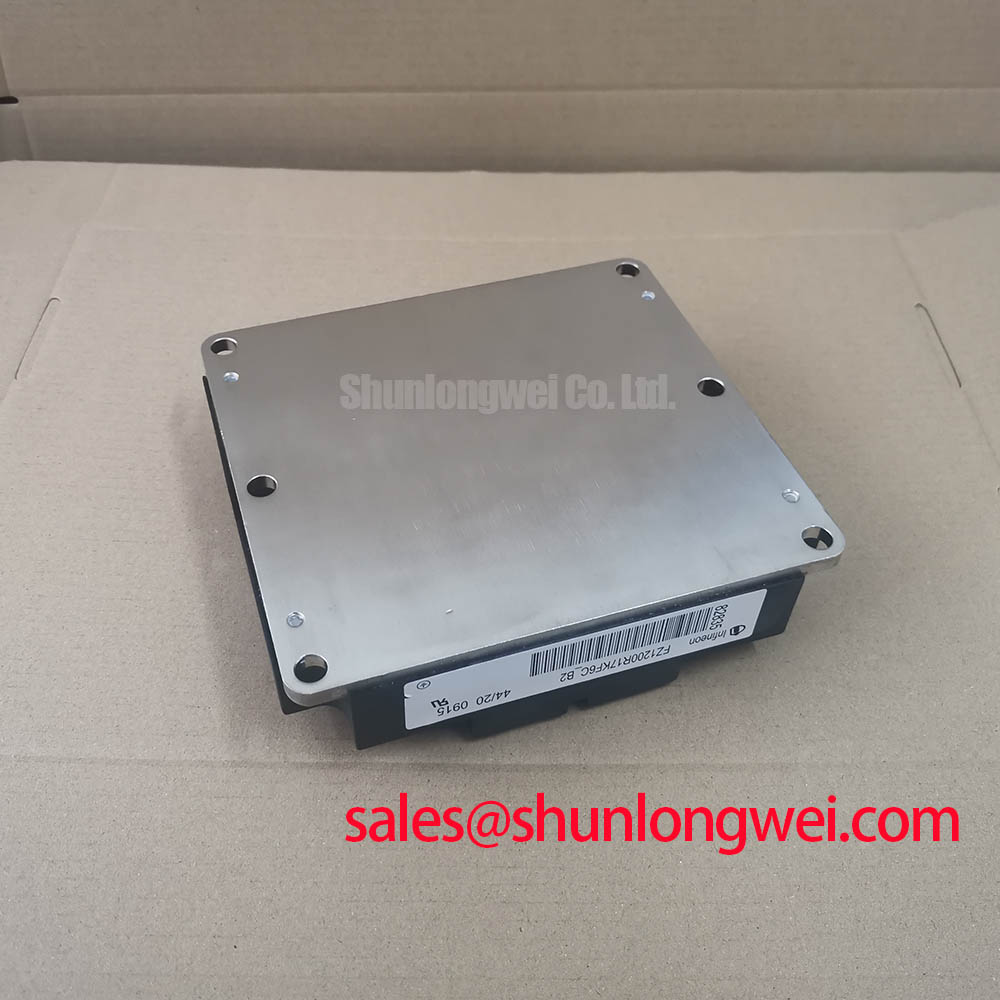
The long-term reliability of the FZ1200R17KF6C_B2 is not solely a function of its silicon. The module's construction, specifically the IHM-B (Insulated Housing Module B) package, plays a decisive role. This industry-standard housing is designed for low thermal impedance and mechanical robustness. A core feature is its AlSiC (Aluminum Silicon Carbide) baseplate, which has a coefficient of thermal expansion (CTE) closely matched to the internal ceramic substrates. This CTE matching minimizes mechanical stress on solder layers during thermal cycles, significantly reducing a primary failure mechanism in high-power modules and enhancing operational lifetime. How does the IHM-B housing benefit the design? It enables high power density and efficient thermal management.
Internally, this module utilizes Infineon's proven TrenchSTOP™ IGBT4 technology. This generation represents an optimized trade-off between conduction losses (VCE(sat)) and switching losses (Eon/Eoff), making it highly suitable for applications operating at moderate switching frequencies (typically 1-10 kHz), such as large motor drives. The low typical VCE(sat) of 2.10V at 1200A directly translates to lower power dissipation during the on-state, simplifying thermal design. Understanding these characteristics is crucial, and a practical guide can be found when decoding IGBT datasheets.
Industry Insights & Strategic Advantage
Strategic Advantages in High-Reliability Power Conversion Systems
In sectors like renewable energy and heavy industry, component selection extends beyond initial performance to long-term operational reliability and total cost of ownership (TCO). The FZ1200R17KF6C_B2 provides a strategic advantage by directly addressing these concerns. Its high short-circuit withstand time (tSC) of 10 µs is a critical reliability metric. This parameter can be visualized as the system's airbag; it doesn't prevent the fault condition, but it provides a crucial time window for the gate drive and protection circuits to react and safely shut down the device, preventing catastrophic failure of the entire inverter stack. This level of fault tolerance is essential for meeting the stringent uptime requirements of modern industrial and grid-connected infrastructure, often governed by standards such as `IEC 61800` for adjustable speed electrical power drive systems.
Furthermore, the module's combination of high power density and excellent thermal performance allows designers to create more compact and power-dense converters. This reduction in system size and weight translates into lower material costs for enclosures, cooling systems, and structural supports, contributing to a more competitive end-product. For engineers focused on thermal design, a deep dive into why Rth matters offers valuable context on leveraging this module's thermal characteristics.
Frequently Asked Questions (FAQ)
Engineering Questions on Performance and Reliability
How does the 1700V VCES rating impact the design of an inverter with a high DC-link voltage?
The 1700V rating provides a substantial safety margin against voltage overshoots that commonly occur during switching events, especially in systems with high stray inductance. For an application with a nominal 1000V or 1100V `DC-Link Voltage`, this margin is critical for preventing device breakdown due to transient conditions, thereby enhancing the overall reliability and lifespan of the inverter.
What is the practical significance of the low RthJC (0.016 K/W) for thermal management?
A low junction-to-case thermal resistance (RthJC) signifies a highly efficient thermal path from the IGBT silicon chip to the module's baseplate. Think of it as a wide, uncongested highway for heat. This low resistance allows heat to be removed more effectively, resulting in a lower operating junction temperature for a given power loss. This directly enables either a smaller, lower-cost heatsink design or provides a greater thermal margin, improving system reliability under heavy load conditions.
System Design & Integration
For inquiries regarding system integration, gate drive requirements, or thermal design support for the FZ1200R17KF6C_B2, please contact our engineering team to discuss your specific application needs.