
Content last revised on September 27, 2026
Benchtop Waveform Tuning: Mitigating Stress via Dynamic Braking Chopper Operation on FZ1800R17KF4
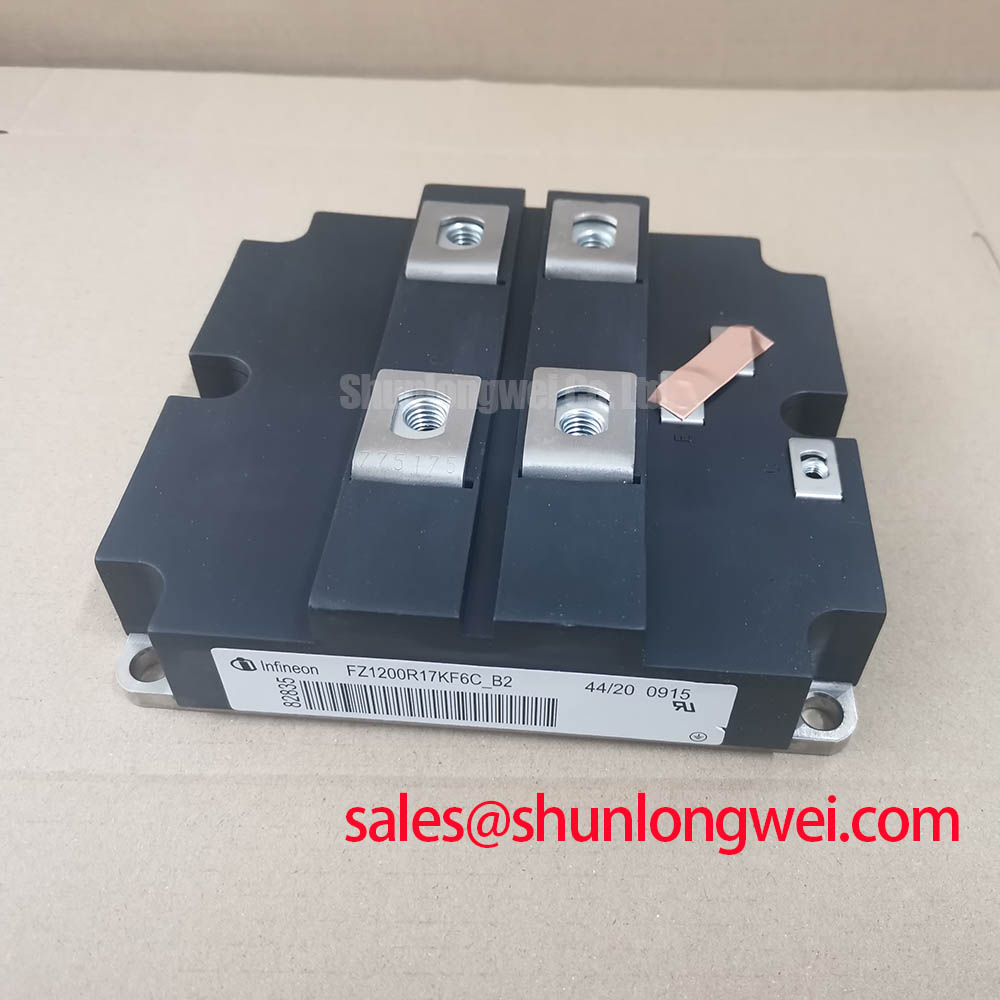
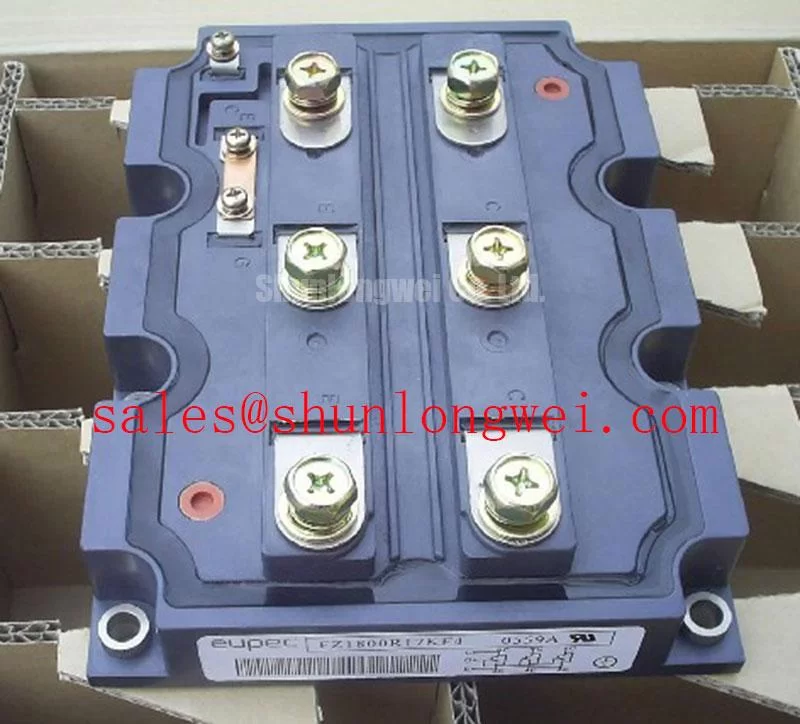
With the DC link isolated and discharged, compare the installed module’s nameplate and terminal arrangement with the equipment drawing before evaluating FZ1800R17KF4 for service. The confirmed product ratings are 1700 V and 1800 A, with a module package (Official Specification). Those figures establish identification points, not approval for a particular inverter: the original equipment documentation must also confirm the connection layout, cooling arrangement, gate drive, and protection settings.
During deceleration, a motor can return energy to the DC link faster than the connected system can absorb it. A braking chopper, where present in the equipment design, switches a resistor into that link to control the rising voltage. The FZ1800R17KF4 rating does not establish that it is the installed chopper switch, nor does it specify a suitable resistor. As a Design Consideration, identify the module’s role from the inverter schematic before assigning it a braking duty.
For a repair evaluation, capture DC-link voltage, chopper command, switch current, and voltage across the proposed switching position during a controlled deceleration test. The system engineer should determine resistor energy capacity and switch loading from the machine’s duty cycle, then verify switching peaks against the applicable device limits. Keep the high-current loop compact to reduce inductive overshoot; determine conductor spacing and insulation clearances from the equipment’s voltage, environment, and applicable system requirements rather than from the module’s current rating alone.
If the DC link rises unexpectedly, compare the command trace with the measured switching response before assigning a cause. A missing command, an interrupted resistor path, and a switching fault call for different checks. For background on a different power-switch technology, The 1200 V CoolSiC™ MOSFET Advantage in Three discusses three-phase conversion; its 1200 V device context must not be treated as a specification for this 1700 V IGBT module.
Assembly Integrity & Layout Architecture: Implementing High-Speed Fault Management: VCE Desaturation for FZ1800R17KF4
Desaturation protection watches the collector-emitter voltage after an IGBT has been commanded on. A voltage that remains abnormally high under the measured operating conditions can indicate a fault requiring the driver to interrupt conduction. As a Design Consideration, distinguish a fault already present at turn-on from one arising while the device is conducting; both need validation against the installed driver’s blanking behavior and the module’s documented short-circuit limits. No short-circuit withstand time or mandatory trip threshold is established by the confirmed product data here.
Review the driver schematic before changing a desaturation setting. Blanking must accommodate normal turn-on behavior without concealing a fault, while turn-off behavior must be checked for collector-voltage overshoot in the actual busbar and DC-link layout. A staged or soft turn-off may reduce abrupt current interruption, but its timing and effectiveness are system-determined. Likewise, complementary gate commands need a verified interlock and dead time so one switch has ceased conducting before its opposing switch turns on.
Route gate-drive and sensing connections away from the main current path where the documented terminal arrangement permits it. Do not assume that this module provides a dedicated Kelvin-emitter terminal without checking its connection drawing. When evaluating an optocoupler or digital isolator, verify common-mode transient behavior using switching waveforms from the assembled equipment. Infineon’s IGBT modules and discretes portfolio provides manufacturer context, but the installed module documentation remains necessary for terminal and protection-limit checks.
Replacement comparisons belong in that same drawing review. The FF45017ME4 is a separate model to assess, not a confirmed direct replacement for FZ1800R17KF4; electrical ratings, terminal positions, mounting, thermal behavior, and gate-drive requirements must be compared before any substitution decision.
Assembly Integrity & Layout Architecture: Optimizing Heatsink Contact Pressure and Surface Flatness for FZ1800R17KF4
Inspect the heatsink contact area before fitting the FZ1800R17KF4. Embedded debris, raised edges around fastener holes, and uneven remnants of old thermal material can compromise contact even when the module appears seated. Clean the mating surfaces using methods compatible with the equipment materials, and check heatsink flatness against the applicable mechanical documentation. The specified package is a module (Official Specification); its mounting torque, baseplate curvature allowance, and thermal-interface thickness are not established by the confirmed ratings.
As a Design Consideration, apply thermal interface material evenly and avoid trapped voids, then tighten the mounting screws progressively in the sequence required by the module and heatsink instructions. Record the torque method used rather than transferring a value from a visually similar package. Inspect power-terminal seating separately: fastening the base to the cooler does not verify the electrical joints.
⚠️ Maintenance Note: Check contact temperature trends and heatsink airflow during scheduled inspections, and investigate changes before resetting a thermal alarm. Dust accumulation, degraded interface material, and a loose terminal may each affect the observed temperature, so compare measurements under comparable load and ambient conditions before deciding on corrective work. In humid installations, inspect for moisture or condensation only after the equipment has been made electrically safe.
Benchtop Waveform Tuning: Mitigating Stress via Thermal Time Constants and Peak Junction Temperature on FZ1800R17KF4
A short overload can heat an IGBT junction before the heatsink temperature sensor shows a substantial change. To evaluate that interval, use the module’s documented transient thermal impedance data, if available, together with measured current, switching conditions, and a defensible loss estimate. In a multi-RC thermal model, the calculated junction-temperature rise is obtained by applying the loss history to the model’s time-dependent thermal response and adding the relevant starting temperature. That is an Engineering Calculation, not an official peak-temperature result for this installation.
On the bench, capture the overload waveform and the cooling-system temperature at the same operating point. Compare the calculated peak with the limits in the applicable manufacturer documentation, and repeat the assessment if the pulse pattern or cooling conditions change. A stable average heatsink reading does not resolve a questionable pulse calculation; review the loss inputs, sensor placement, thermal contact, and model assumptions before accepting the margin.
For a high-speed rail or heavy freight locomotive traction inverter, this is a potential compatibility evaluation rather than an application claim for the module. The equipment engineer should verify the original part designation, protection coordination, mounting interface, and cooling performance under the intended operating cycle before returning the inverter to service.