



Content last revised on September 10, 2026
BSM100GP60: The Engineering Edge in 600V Power Conversion
Introduction to a High-Efficiency IGBT Module
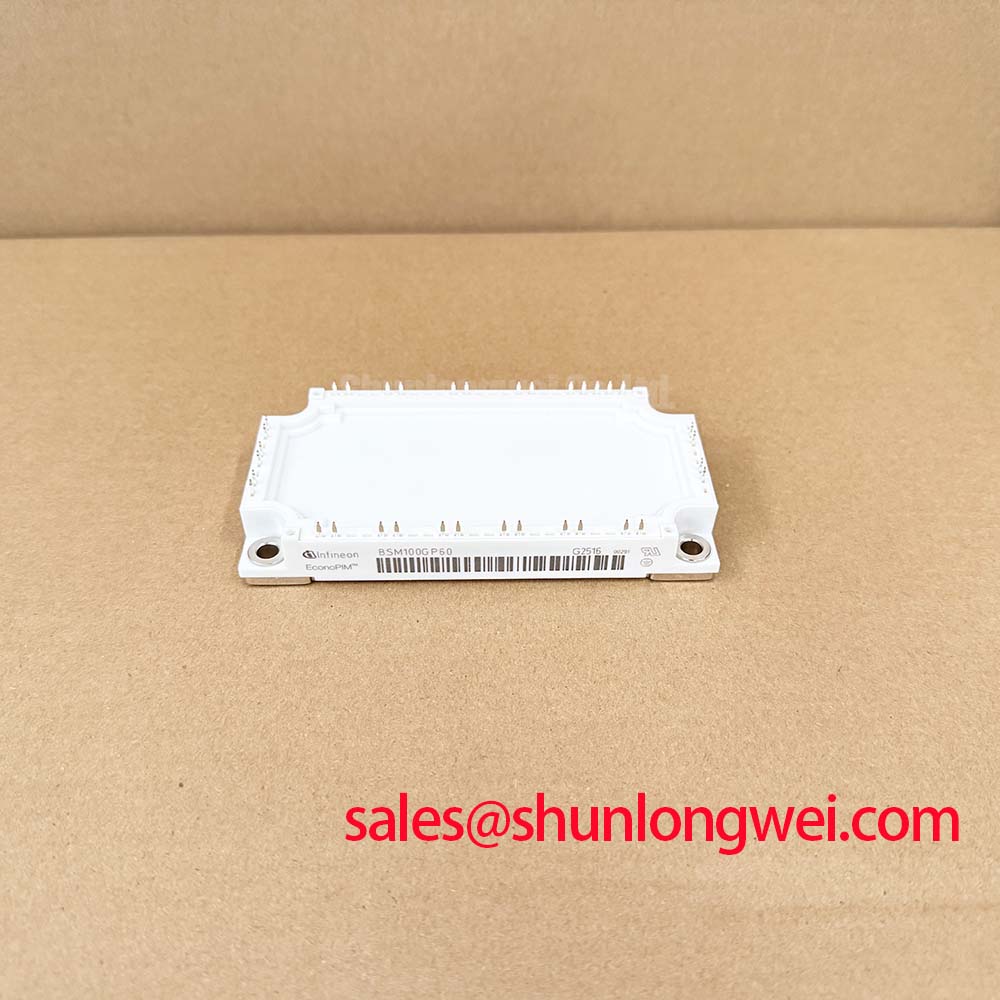
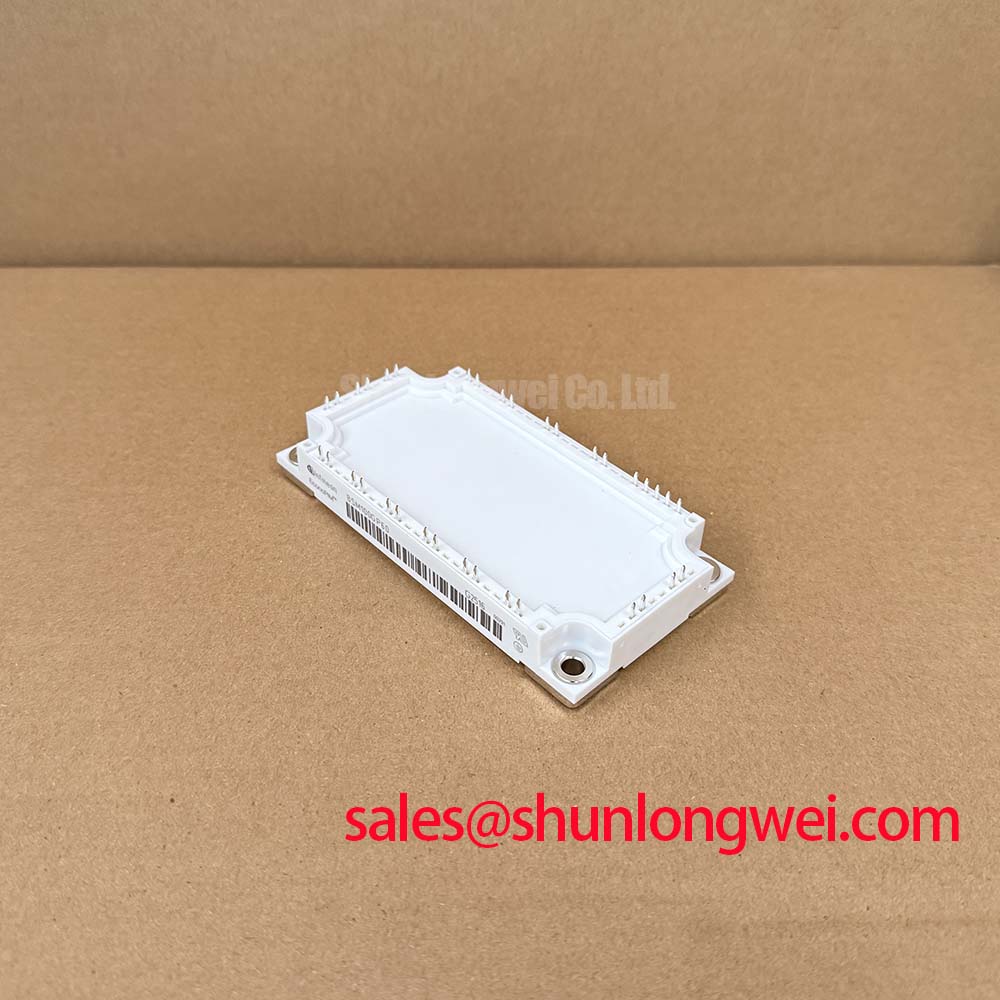
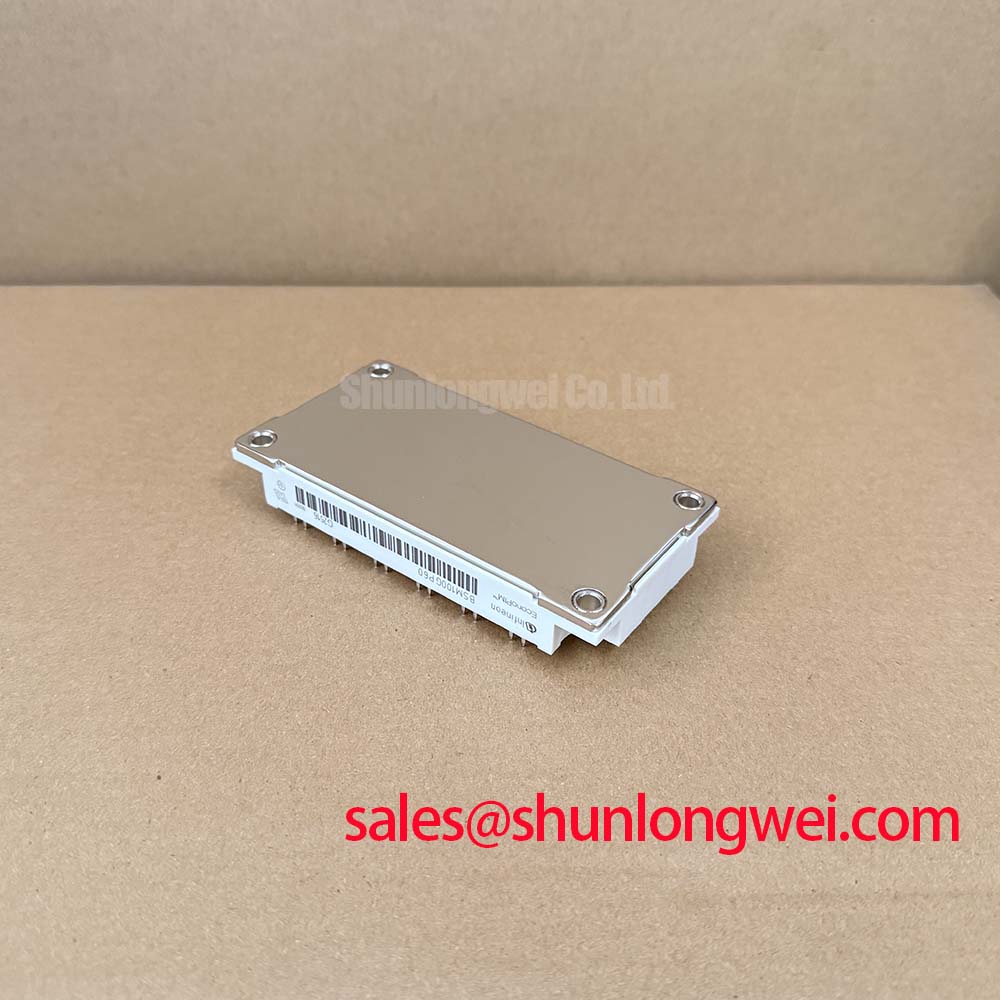
The BSM100GP60 is a high-performance dual IGBT module engineered for efficiency and reliability in demanding power conversion systems. Its core specifications of 600V | 100A | VCE(sat) 1.95V (typ) establish it as a robust solution for industrial applications. Key engineering benefits include significantly reduced conduction losses and simplified, precise thermal protection facilitated by an integrated NTC thermistor. This module directly addresses the need for compact and efficient power stages by balancing on-state losses with robust switching performance. For industrial drives up to 40kW prioritizing efficiency over ultra-high switching speeds, this 600V module is a benchmark choice.
Application Scenarios & Value
Achieving System-Level Benefits in Industrial Drives and Power Supplies
The BSM100GP60 is engineered to excel in applications where thermal performance and efficiency are critical design drivers. In the context of a Variable Frequency Drive (VFD), the module's low collector-emitter saturation voltage (VCE(sat)) of 1.95V at a nominal current of 100A is a decisive factor. This parameter directly correlates to lower on-state power dissipation, which means less heat is generated for the same amount of current conducted. For a design engineer, this translates into tangible benefits: the possibility of specifying a smaller, more cost-effective heatsink, or alternatively, operating at a higher output current for a given thermal budget, thereby increasing the power density of the entire inverter. What is the primary benefit of its low VCE(sat)? Reduced power loss, leading to higher system efficiency and simplified thermal design.
Similarly, in uninterruptible power supplies (UPS) and switch-mode power supplies (SMPS), the module's integrated NTC thermistor provides a direct and reliable feedback loop for thermal management. This feature eliminates the need for external temperature sensors on the heatsink, which often exhibit a thermal lag. By providing a real-time temperature reading directly from the module's baseplate, the control system can implement more precise over-temperature protection, enhancing the long-term reliability of the power supply. For systems requiring lower current, the related BSM50GP60 offers a similar feature set in a lower power rating, while applications needing higher voltage blocking capability may consider the BSM200GB120DN2.
Key Parameter Overview
A Functional Breakdown of the BSM100GP60's Specifications
The technical specifications of the BSM100GP60 are tailored for robust and efficient performance in mid-power applications. A comprehensive understanding of these parameters is essential for optimal system integration. For a deeper dive into these specifications, it is crucial to consult the official documentation. For engineers looking to master the nuances of component specifications, our guide on decoding IGBT datasheets provides practical insights.
| Parameter | Value | Conditions |
|---|---|---|
| Absolute Maximum Ratings (Tj = 25°C) | ||
| Collector-Emitter Voltage (Vces) | 600 V | - |
| Continuous Collector Current (Ic) | 150 A | Tc = 25°C |
| Nominal Collector Current (Ic,nom) | 100 A | - |
| Repetitive Peak Collector Current (Icrm) | 200 A | tp = 1 ms |
| Gate-Emitter Voltage (Vges) | ±20 V | - |
| Total Power Dissipation (Ptot) | 625 W | Tc = 25°C |
| Electrical Characteristics (Tj = 150°C unless otherwise specified) | ||
| Collector-Emitter Saturation Voltage (VCE(sat)) | 1.95 V (typ.) / 2.30 V (max.) | Ic = 100 A, Vge = 15 V |
| Gate Threshold Voltage (VGE(th)) | 5.0 V to 6.5 V | Ic = 4.0 mA |
| Turn-On Switching Energy (Eon) | 16 mJ (typ.) | Ic = 100 A |
| Turn-Off Switching Energy (Eoff) | 18 mJ (typ.) | Ic = 100 A |
| Thermal and Mechanical Characteristics | ||
| Thermal Resistance, Junction-to-Case (Rth(j-c)) | 0.24 K/W (per IGBT) | - |
| NTC Resistor (R25) | 5 kΩ ± 5% | T = 25°C |
Download the BSM100GP60 datasheet for detailed specifications and performance curves.
Frequently Asked Questions (FAQ)
Engineering Insights into the BSM100GP60
How does the VCE(sat) of 1.95V directly impact heatsink selection and overall system cost?
A lower VCE(sat) means lower conduction losses, which is the primary source of heat in many applications. Think of it like friction: less friction means less wasted energy as heat. This lower heat generation allows engineers to use a smaller, lighter, and less expensive heatsink to maintain the same operating temperature. This not only reduces component cost but also enables a more compact and power-dense final product.
What is the engineering advantage of the integrated NTC thermistor compared to an external sensor?
The integrated NTC provides a temperature reading directly from the source of the heat—the IGBT module's baseplate. An external sensor placed on the heatsink measures the heatsink temperature, not the component temperature, and there is always a delay (thermal lag). The integrated NTC offers a faster and more accurate response, enabling more precise thermal protection logic. This can prevent catastrophic failures by allowing the system to react to a rapid temperature rise before it becomes critical. How does the module simplify thermal monitoring? Through its integrated NTC thermistor for direct temperature feedback.
Given its Eon and Eoff values, what is the ideal switching frequency range for the BSM100GP60?
This module is optimized for low conduction losses (VCE(sat)), which often comes with a trade-off of slightly higher switching losses (Eon/Eoff). Therefore, it performs best in applications with low to moderate switching frequencies, typically in the range of 2 kHz to 15 kHz. This covers a vast number of industrial motor drives, UPS systems, and welding applications where minimizing on-state losses is paramount for overall efficiency. For higher frequencies, a different IGBT technology might be more suitable.
Technical Deep Dive
Balancing Conduction and Switching Performance
The BSM100GP60 leverages a mature trench-gate field-stop IGBT technology from Infineon, which is engineered to strike a deliberate balance between on-state voltage drop and switching speed. The low VCE(sat) is a direct result of this design philosophy, prioritizing the reduction of I²R losses during the conduction phase. This is particularly beneficial in motor drive applications, where the IGBTs spend a significant portion of each cycle in the fully on state. However, this optimization influences the switching energies (Eon and Eoff). A detailed analysis of these parameters is crucial for accurate loss calculations and effective thermal management. The internal freewheeling diodes are co-packed and optimized to complement the IGBTs, ensuring controlled reverse recovery characteristics which are critical for reliability in half-bridge topologies.
Industry Insights & Strategic Advantage
Meeting the Demands of Energy-Efficient Industrial Automation
In an industrial landscape increasingly governed by energy efficiency standards and the drive to reduce total cost of ownership (TCO), component selection plays a pivotal role. The BSM100GP60 aligns directly with these trends. Its high-efficiency design helps systems meet regulatory requirements such as the Ecodesign Directive in Europe for electric motors. By minimizing energy waste as heat, systems built with this module not only consume less power but also exhibit higher reliability due to lower thermal stress on all surrounding components. This focus on efficiency and reliability is a cornerstone of modern power electronic design, making the BSM100GP60 a strategic component for future-proof industrial systems. A clear understanding of voltage, current, and thermal management is key to leveraging these advantages.
For detailed application support and to assess the BSM100GP60's fit for your specific design, reviewing the official datasheet is the recommended next step. Our technical team is available to provide further clarification on its integration and performance characteristics.