
Content last revised on September 10, 2026
G190ETN01.1 AUO 19.0-Inch TFT-LCD: Engineering Seamless System Integration
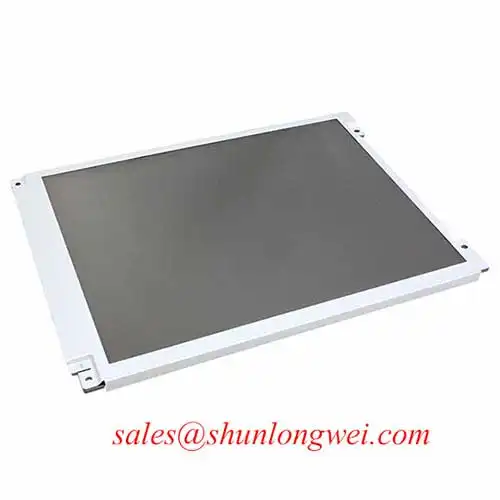
Engineered for seamless system integration, the AUO G190ETN01.1 combines a classic 19.0-inch 5:4 SXGA format with a robust 2-channel LVDS interface to simplify control panel upgrades. This Color Active Matrix Liquid Crystal Display delivers 1280x1024 resolution, 380 cd/m² brightness, and a typical 1000:1 contrast ratio. By utilizing an anti-glare surface with a 3H hard coating, it ensures physical resilience on the factory floor while minimizing ambient reflections. What is the primary benefit of its dual-channel LVDS architecture? It mitigates EMI while maintaining high-speed signal integrity for legacy systems. For 19-inch HMI retrofits prioritizing interface compatibility, this 5.0V SXGA panel is the optimal choice.
Application Scenarios & Value
Simplifying Upgrades in Legacy HMI and CNC Environments
Engineers often face significant redesign hurdles when updating older equipment that relies on the classic 5:4 aspect ratio. The G190ETN01.1 eliminates the need for extensive chassis modifications or software scaling adjustments by providing a native 1280x1024 resolution. In a standard CNC control panel upgrade, the 380 cd/m² typical brightness and 1000:1 contrast ratio combine to cut through harsh, overhead industrial lighting, minimizing operator eye fatigue during precise tooling operations.
The use of an LVDS Interface (2-channel, 8-bit) provides high noise immunity, essential when the display is mounted near high-voltage motor drives. This architecture functions much like a dual-lane highway with dedicated guardrails, allowing high-bandwidth data transmission without electromagnetic interference disrupting the visual output. For projects requiring a different form factor, the M170ETN01.1 offers a 17.0-inch alternative with identical aspect ratio principles, while the G190ETN01.4 provides an avenue for higher brightness thresholds in the 19.0-inch category.
Technical Deep Dive
Decoding the WLED Backlight and Signal Architecture
Beneath the 3H hard coating, the structural integrity of the G190ETN01.1 relies heavily on its edge-lit WLED backlight system. Unlike older CCFL implementations, the integrated WLED array delivers a 30,000-hour typical operational lifetime without necessitating complex, high-voltage inverters. This transition allows system integrators to drastically reduce the internal depth requirements, as the panel maintains a maximum thickness of just 11.7 mm. Referencing a comprehensive display selection guide highlights that understanding WLED backlight efficiency is crucial for managing the overall thermal budget of an enclosed HMI terminal.
From a signal processing standpoint, the 30-pin LVDS connector operates at a precise 5.0V typical logic voltage. Driving a 16.7M color palette at a 60Hz vertical frame rate demands accurate pixel mapping. The 8-bit data transmission is mapped across two physical channels, balancing the data load. Think of this dual-channel setup like a sequential gear synchronizer in a heavy-duty transmission—it divides the mechanical burden, allowing rapid pixel switching without dropped frames or signal jitter.
Key Parameter Overview
Critical Specifications and Their Engineering Implications
| Technical Specification | Value | Engineering Interpretation |
|---|---|---|
| Resolution & Aspect Ratio | 1280x1024 (SXGA), 5:4 | Enables direct drop-in replacement for legacy industrial monitors without requiring UI software rescaling. |
| Luminance & Contrast Ratio | 380 cd/m² (Typ.), 1000:1 | Ensures high data readability in brightly lit factory environments, reducing operator error. |
| Interface Type | 30-pin LVDS (2-ch, 8-bit) | Provides high EMI immunity and stable 16.7M color data transmission over longer cable runs. |
| Backlight Technology | WLED, Edge light | Eliminates high-voltage inverters, improving thermal management and system longevity. |
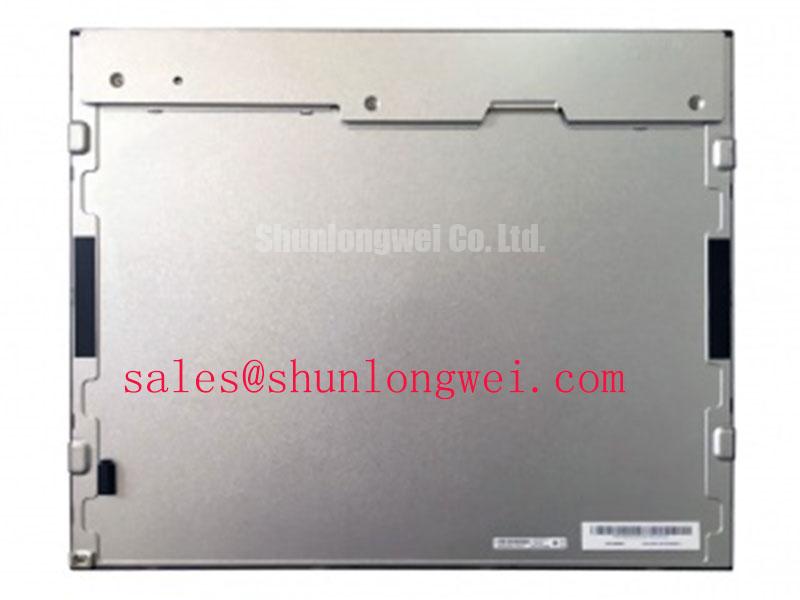
| Physical Dimensions | 396 x 324 x 11.7 mm (Max.) | Slim profile facilitates integration into space-constrained control panel enclosures. |
Download the G190ETN01.1 datasheet for detailed specifications and performance curves.
Frequently Asked Questions
Field Deployment and Compatibility Queries
- How does the 1280x1024 SXGA format benefit legacy HMI retrofits?
By matching the native 5:4 aspect ratio of older industrial controllers, it allows engineers to replace obsolete displays without rewriting legacy graphics software or modifying the mechanical chassis. - What is the primary advantage of the 2-channel 8-bit LVDS interface?
It divides the heavy data load required for 16.7M colors, ensuring high-speed transmission with superior noise immunity against surrounding electromagnetic interference. - Does the G190ETN01.1 include an integrated LED driver?
No, this specific model requires an external backlight driver to power the bottom-edge WLED array, allowing designers to select a driver that matches their specific power supply architecture. - How does the 3H hard coating impact physical resilience?
The anti-glare 3H surface protects the delicate internal liquid crystals from minor abrasions and tool strikes common in CNC and heavy machinery operation zones. - Why is a 1000:1 contrast ratio critical for visual inspection systems?
A higher contrast ratio creates deeper blacks and brighter whites, allowing operators to distinguish subtle visual anomalies during automated or manual quality control inspections.
From a field engineering perspective, relying on established form factors and standardized LVDS protocols is the most robust strategy to minimize interface bottlenecks and eliminate downtime during critical equipment lifecycle extensions.