Content last revised on August 28, 2026
LG Display LB043WQ1-TD07: 4.3-inch WQVGA TFT-LCD for Embedded HMI
Executive Overview
Streamlined Integration and Clear Visibility for Compact Devices
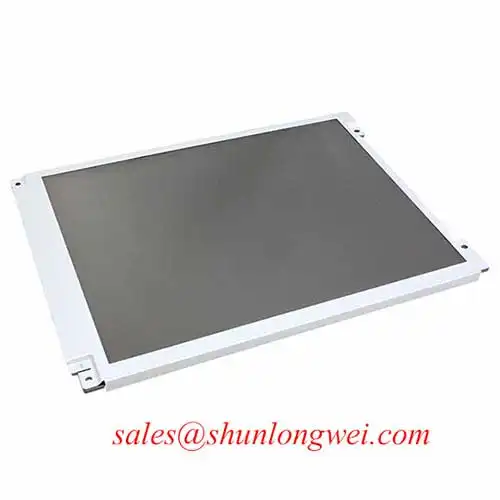
The LG Display LB043WQ1-TD07 is a highly reliable 4.3-inch TFT-LCD engineered to deliver consistent optical performance for embedded applications. Featuring a 480×272 WQVGA resolution, 450 cd/m² brightness, and a standard 45-pin TTL interface, this display offers an exceptional balance of visual clarity and design simplicity.
Q: What is the main benefit of LB043WQ1-TD07? A: It delivers 450-nit brightness for clear HMI visibility indoors and outdoors.
By standardizing on a robust Parallel RGB interface, developers can reduce hardware complexity. Does this panel handle varying ambient lighting? Yes, the 450 nits luminance ensures reliable readability in demanding semi-outdoor environments.
For compact medical and industrial devices prioritizing daylight readability, this 4.3-inch 450-nit TTL module provides the optimal balance of integration and visibility.
Application Scenarios & Value
Achieving System-Level Benefits in Handheld Instrumentation
Engineers often face the challenge of sourcing a display that balances compact dimensions with robust visibility when designing a portable or embedded HMI. In the development of a handheld diagnostic tool or a portable navigation device, available power and processing overhead are strictly limited. These tools require instantaneous boot times and unwavering visual feedback, regardless of the operating environment. Furthermore, because the LB043WQ1-TD07 features a standard 4.3-inch footprint, mechanical design iteration is minimized. The active area of 95.04 x 53.856 mm fits perfectly within ergonomically designed enclosures, maximizing screen real estate without compromising portability.
The LB043WQ1-TD07 directly addresses interface challenges through its TTL protocol via a 45-pin FPC. Because the Parallel RGB interface relies on straightforward digital signaling without complex protocol conversion overhead, it enables seamless connection to low-power microcontrollers. If your application demands a larger footprint or higher resolution, the related G057VN01 V2 offers a 5.7-inch alternative, while the LQ064V3DG06 is suited for 6.4-inch requirements. However, for a 4.3-inch form factor, the 450 cd/m² brightness of the LB043WQ1-TD07 minimizes the need for an intensive backlight overdrive, preserving battery life while maintaining excellent readability under overhead factory lighting.
Technical Deep Dive
A Closer Look at the TTL Architecture and Optical Performance
Driving a 4.3-inch WQVGA TFT-LCD efficiently requires optimizing both the physical interconnect and the optical stack. The LB043WQ1-TD07 utilizes an 8-bit TTL (Transistor-Transistor Logic) data path, outputting 16.7M colors.
Think of a TTL interface like a direct multi-lane highway connecting a city's suburbs to its downtown. Instead of packing all vehicles into a single fast lane that requires complex toll booths (like LVDS serializing), TTL provides dedicated parallel lanes for red, green, and blue data, allowing the microcontroller to drive the 480×272 pixels directly at a slower, more manageable clock speed. This significantly lowers electromagnetic interference (EMI) at the board level. This design choice heavily influences the system's power budget. By keeping the interface simple, engineers bypass the need for bridging ICs or high-speed serialization hardware, reducing the overall footprint on the PCB. The integration of the TTL protocol means legacy microcontrollers can easily refresh the display buffer without taxing their core processing units.
Furthermore, the TN (Twisted Nematic) cell structure provides a highly responsive display. Just as a venetian blind quickly pivots to let light through or block it, the TN liquid crystal rapidly aligns to the applied voltage, yielding swift response times suitable for dynamic graphical interfaces. By integrating an efficient WLED backlight, the module hits 450 nits while maintaining a steady 400:1 contrast ratio, proving its worth in industrial HMI solutions.
Key Parameter Overview
Decoding the Specs for Seamless Embedded Integration
When evaluating a TFT-LCD, identifying the exact optical and electrical thresholds is paramount. The table below highlights the defining metrics of the LB043WQ1-TD07.
| Highlighted Metric | Specification | Engineering Implication |
|---|---|---|
| Manufacturer / Model | LG Display LB043WQ1-TD07 | Industry-standard reliability for embedded lifecycle. |
| Screen Size / Resolution | 4.3-inch | 480×272 WQVGA | Optimal pixel density for compact handheld diagnostic tools. |
| Luminance / Contrast | 450 cd/m² | 400:1 Typ. | Maintains clarity in bright indoor environments. |
| Signal Interface | Parallel RGB (1 ch, 8-bit) | Direct MCU connectivity via 45-pin FPC. |
| Display Colors | 16.7M colors | Provides rich graphical rendering for advanced UI designs. |
Frequently Asked Questions
Addressing Common Field Implementation Queries
- How does the 450 cd/m² brightness of the LB043WQ1-TD07 directly impact battery-powered designs?
While higher brightness generally consumes more power, the optimized WLED backlight in this 4.3-inch module provides enough native luminance so that engineers do not need to run the display at 100% duty cycle in standard indoor lighting, thus conserving battery life in portable units. - What are the thermal considerations when driving the TTL interface at maximum refresh rates?
Because the Parallel RGB interface operates at a relatively low clock frequency compared to serial interfaces, the thermal dissipation on the host controller and the display's source drivers remains minimal, eliminating the need for dedicated heat-sinking on the display FPC. - Is the 480×272 WQVGA resolution sufficient for complex graphical user interfaces?
Yes, for a screen of 105.5 x 67.2 mm, the WQVGA resolution offers adequate pixel density to render crisp text and basic gauges. For more information on optimizing GUI design for specific pixel geometries, review our comprehensive guide to TFT-LCD integration.
As the industry pivots toward highly distributed, smart field devices, selecting a display interface that reduces bill-of-materials complexity is vital. The LB043WQ1-TD07 exemplifies a pragmatic approach, leveraging mature TTL architecture and superior LG Display optical engineering. By securing high brightness without demanding advanced serial processing, procurement and engineering teams position their designs for rapid deployment and sustained field reliability.