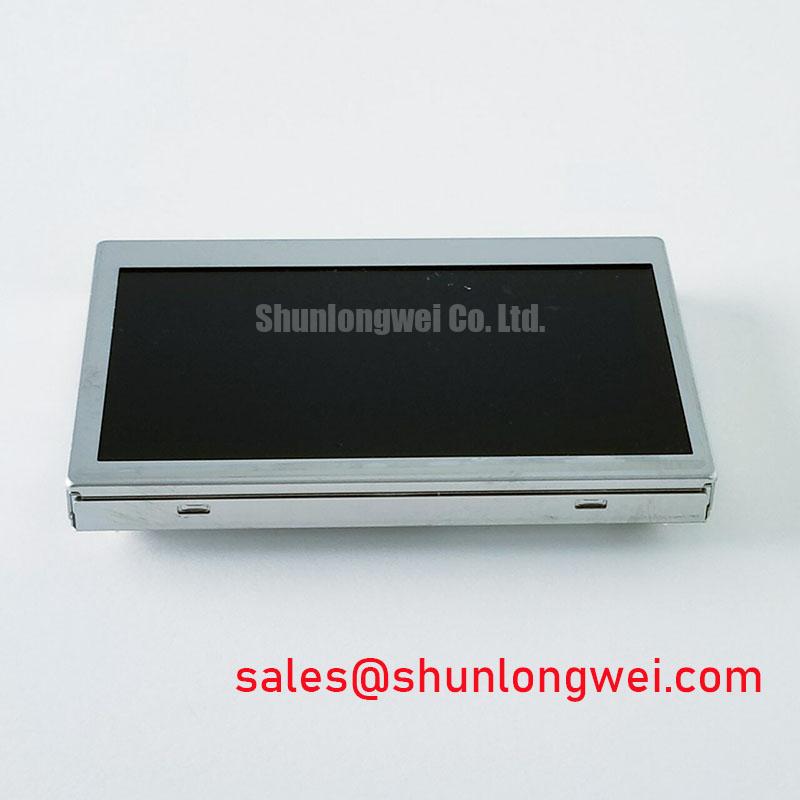

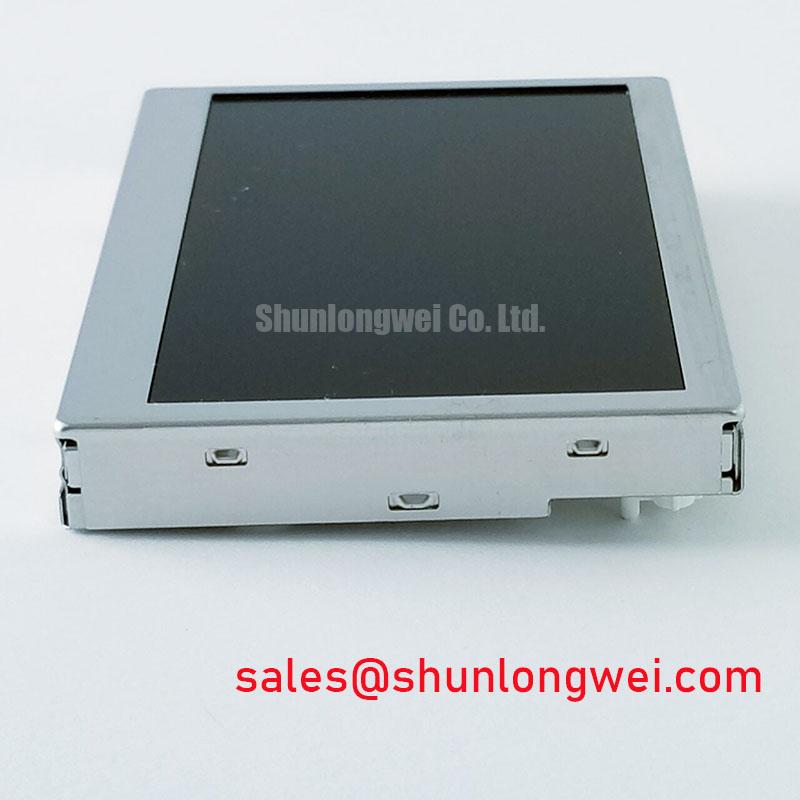


Content last revised on August 28, 2026
Sharp LQ042T5DZ13K: A Deep Dive into the 4.2-inch WQVGA Industrial Display
Key Parameter Overview
Decoding the Specs for High-Clarity Visual Performance
The Sharp LQ042T5DZ13K is an a-Si TFT-LCD panel engineered for applications demanding high visual fidelity and robust performance. Its specifications are tailored to deliver exceptional image quality in a compact form factor. The combination of high brightness, a superior contrast ratio, and wide viewing angles makes it a versatile solution for a variety of industrial and commercial devices.
| Feature | Specification | Engineering Value |
|---|---|---|
| Display Technology | a-Si TFT-LCD, ASV, Normally Black, Transmissive | Delivers deep black levels and rich colors, crucial for accurate data representation. "Normally Black" means pixels are dark in the off state, enhancing the contrast ratio. |
| Resolution & Size | 480×272 (WQVGA) | 4.2-inch Diagonal | Provides a pixel density of 131 PPI, ensuring clear and sharp imagery for GUIs and detailed readouts in a compact footprint. |
| Key Optical Metrics | Brightness: 500 cd/m² (Typ.) | Contrast Ratio: 2000:1 (Typ.) | The high brightness ensures readability in varied ambient lighting, while the exceptional contrast ratio provides distinct separation between colors and shades. |
| Viewing Angle | 85/85/85/85 (Typ.) (CR≥10) | Symmetrical and wide viewing angles ensure color and contrast consistency from nearly any perspective, vital for multi-user interfaces or off-axis viewing. |
| Backlight System | WLED with included LED Driver | An integrated WLED backlight system with its driver simplifies system integration and power supply design, reducing component count and development time. |
| Interface | CMOS (1 channel, 6-bit) | A standard CMOS interface allows for straightforward connection to a wide range of microcontrollers and display controllers. |
Application Scenarios & Value
System-Level Benefits in Instrumentation and Portable Devices
The Sharp LQ042T5DZ13K is engineered for applications where visual clarity and operational reliability are paramount. Its unique combination of a 2000:1 contrast ratio and 500-nit brightness makes it an ideal candidate for high-performance handheld devices and specialized instrumentation panels. What is the primary benefit of its high contrast ratio? It ensures that subtle gradients and fine-text data are rendered with exceptional clarity, which is critical for medical monitoring equipment or precision measurement tools where misinterpretation is not an option.
Consider a portable diagnostic device used in field service. The challenge is to present complex data clearly, regardless of whether the technician is viewing the screen in a dimly lit server room or in brighter, indirect sunlight. The LQ042T5DZ13K's 500 cd/m² brightness provides the necessary luminance for readability, while its Advanced Super View (ASV) technology maintains color fidelity across wide 85-degree viewing angles. This means multiple team members can view the display simultaneously without color shift, improving collaborative diagnostics. For systems requiring a larger viewing area with similar high-performance characteristics, the LQ064V3DG06 offers a 6.4-inch VGA solution.
Technical Deep Dive
A Closer Look at ASV Technology and Its Impact on Visual Performance
The core of the LQ042T5DZ13K's superior visual performance lies in Sharp's proprietary Advanced Super View (ASV) technology. Unlike standard TN (Twisted Nematic) panels that can suffer from significant color shifts and contrast degradation at off-angles, ASV technology aligns liquid crystal molecules in a way that provides exceptionally wide and symmetrical viewing angles. Think of it like looking at a printed photograph versus an older laptop screen; the photograph looks the same from almost any angle, which is the experience ASV technology emulates. This is achieved by enabling the liquid crystals to move in a more planar fashion, ensuring light passes through consistently regardless of the viewing direction. This stability is what allows for the impressive 85/85/85/85 degree viewing cone, making it a reliable choice for instruments where the user may not always be positioned directly in front of the screen.
FAQ
What does "Normally Black" display mode mean for my application?
"Normally Black" indicates that the display's pixels are in their dark state when no voltage is applied. This inherently contributes to a higher contrast ratio because the "off" state is a deep black. For applications displaying data against a dark background, this results in sharper text and graphics with less light bleed, reducing eye strain and improving perceived image quality.
How does the 2000:1 contrast ratio impact user interface design?
A 2000:1 contrast ratio provides a significantly wider dynamic range between the brightest white and the darkest black. This allows UI designers to use more subtle color palettes, gradients, and shades with confidence, knowing they will be accurately reproduced. It is especially beneficial for displaying complex imagery, such as medical scans or detailed schematics, where discerning fine details is critical.
Is the integrated LED driver a significant advantage?
Yes, the inclusion of an integrated LED driver simplifies the engineering process. It eliminates the need for a separate driver board and the associated design work for current regulation and dimming control. This not only reduces the bill of materials (BOM) and overall system footprint but also streamlines the electrical integration, potentially shortening the product development cycle.
What is the significance of the 131 PPI pixel density?
With a Pixel Per Inch (PPI) of 131 on a 4.2-inch screen, the LQ042T5DZ13K produces images that appear smooth and sharp at typical viewing distances for handheld or panel-mounted devices. Individual pixels are not easily discernible, which leads to clearer text rendering and more realistic graphical interfaces, enhancing the overall user experience.
Can the CMOS interface be connected to common processors?
The standard 6-bit CMOS interface is a widely adopted parallel interface for displays of this resolution. It is compatible with a vast array of microcontrollers (MCUs), System on Chips (SoCs), and dedicated display controllers that feature a generic TFT or LCD interface, making it a versatile choice for many embedded systems.
Engineering Perspective
From an engineer's viewpoint, the Sharp LQ042T5DZ13K prioritizes image fidelity and integration efficiency. The ASV technology provides a level of visual performance typically associated with larger, more expensive displays, but in a compact 4.2-inch package. The high contrast ratio and brightness are not just marketing figures; they are critical enablers for creating effective human-machine interfaces that remain clear and legible under challenging real-world conditions. The integrated backlight driver further enhances its value proposition by reducing design complexity, making it an excellent choice for teams looking to accelerate their time to market without compromising on display quality.