




Content last revised on January 19, 2026
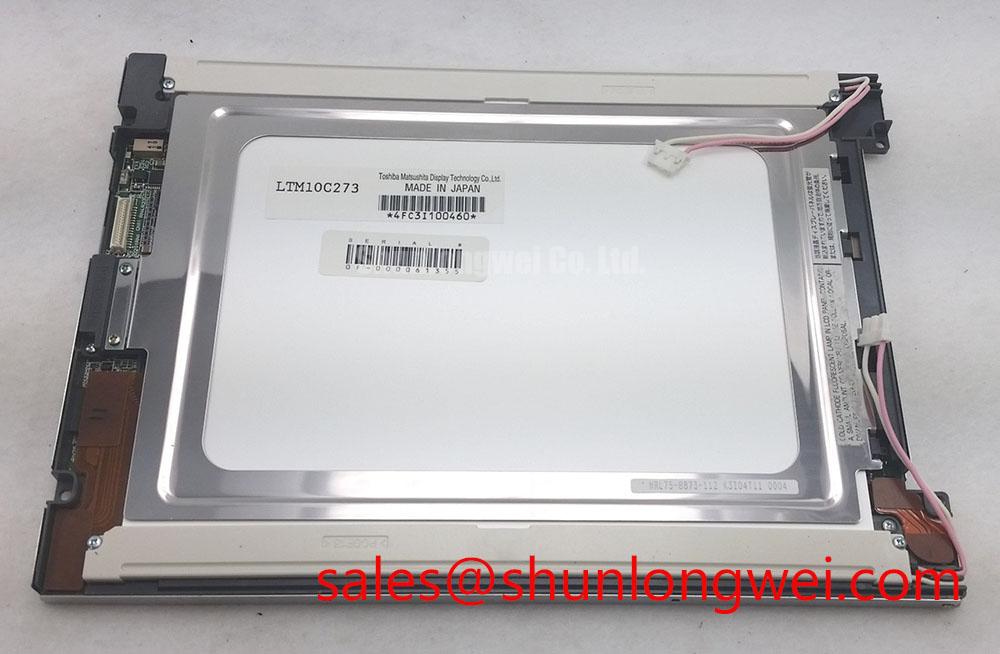
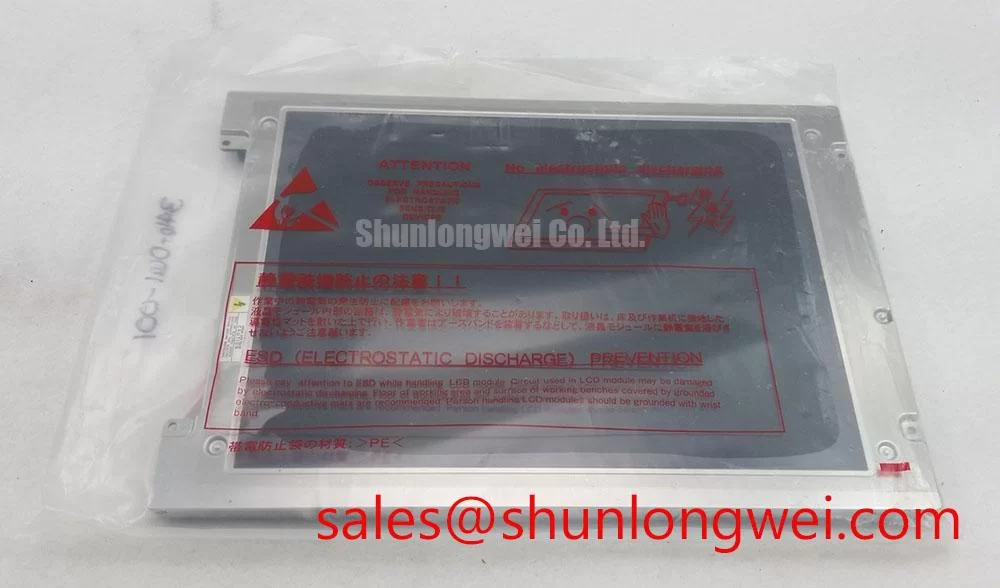
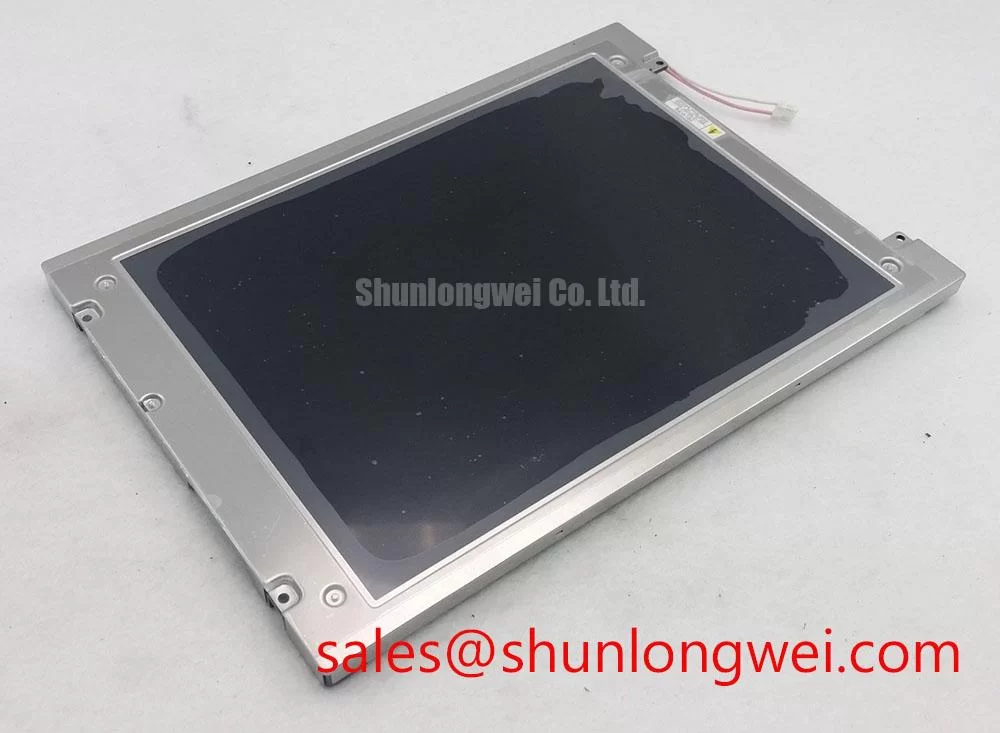
LTM10C273 Toshiba 10.4-inch VGA Display: Ensuring Operational Continuity for Legacy Industrial Systems
When a critical industrial HMI or control panel display fails, the immediate challenge is often not the cost of the replacement screen, but the cascading costs of system downtime and the engineering nightmare of a forced retrofit. Modern displays with LED backlights, different resolutions, and LVDS or eDP interfaces are rarely compatible with systems designed a decade or more ago. This incompatibility can trigger a costly, time-consuming cycle of mechanical redesign, firmware adjustments, and new inverter integration. The Toshiba LTM10C273 is a 10.4-inch VGA TFT-LCD panel specifically designed to solve this problem, serving as a direct, form-fit-function replacement that prioritizes operational continuity and minimizes total cost of ownership for established industrial equipment.
The Strategic Value of Maintainability in Established Industrial Automation
In an industrial landscape where capital equipment often has a service life measured in decades, the strategy of "maintain, repair, and operate" (MRO) is just as critical as investing in new technology. The LTM10C273 directly supports this MRO-centric approach. While new projects may leverage the latest high-resolution screens, the vast installed base of CNC machines, process controllers, and medical devices relies on components that match their original design specifications. Integrating a panel like the LTM10C273 is a strategic decision to extend the viable lifespan of perfectly functional, high-value assets. It circumvents forced obsolescence, allowing plant managers and service engineers to manage their budgets and uptime targets effectively without undertaking unscheduled and expensive system overhauls. This approach is fundamental to understanding the total lifecycle of industrial displays, a topic further explored in The Ultimate Guide to TFT-LCD.
Core Specifications for Seamless Integration
The specifications of the LTM10C273 are tailored for direct compatibility with legacy systems. The key is not just in the numbers, but in what they represent for integration. The CCFL backlight system, for instance, ensures that the existing high-voltage inverter in your equipment can likely be reused, avoiding a complex and often problematic power system modification. Likewise, the native 640x480 VGA resolution prevents firmware scaling issues that can arise when forcing a modern high-resolution display onto a system built for a different standard.
| Display Characteristics | |
|---|---|
| Screen Size | 10.4 inches |
| Display Technology | a-Si TFT Active Matrix |
| Resolution | 640(RGB) x 480 [VGA] |
| Active Area | 211.2(H) x 158.4(V) mm |
| Optical Performance | |
| Luminance | 200 cd/m² (Typ.) |
| Contrast Ratio | 300:1 (Typ.) |
| Viewing Angle | 45/45/20/40 (L/R/U/D) |
| Display Colors | 262K (6-bit) |
| Interface & Backlight | |
| Signal Interface | Parallel RGB (1 ch, 6-bit) |
| Backlight System | 2 pcs CCFL |
| Mechanical & Environmental | |
| Operating Temperature | 0 ~ 50 °C |
| Storage Temperature | -20 ~ 60 °C |
Where Drop-in Replacement Delivers Maximum ROI
The Toshiba LTM10C273 provides the highest return on investment in applications where system uptime and validation are paramount. Its design as a drop-in replacement makes it invaluable for:
- Legacy CNC Machine Tools: For controllers from manufacturers like Fanuc, Siemens, and others from the 1990s and 2000s, where the HMI is deeply integrated with the machine's PLC and operational software. A replacement with the LTM10C273 can often be completed in under an hour, returning a multi-million dollar machine to production.
- Industrial Process Control: In manufacturing plants, chemical processing, and utility management, control room terminals often run on older, validated software. The LTM10C273 ensures that these critical monitoring stations can be repaired without requiring software re-validation or operator retraining.
- Medical and Laboratory Equipment: Older but still functional ultrasound machines, patient monitors, and analytical instruments often carry stringent regulatory certifications. Replacing a failed display with an identical component like the LTM10C273 avoids the immense cost and time required for recertification. For systems requiring a different form factor, a similar-era panel like the NL6448BC20-30 might serve a comparable purpose in smaller devices.
LTM10C273 vs. Modernization: A TCO Perspective
When faced with a failed legacy display, engineers must choose between direct replacement and a full modernization. The LTM10C273 is central to the first path, which prioritizes immediate uptime and cost control. The alternative, retrofitting a modern LED-backlit panel, involves a different set of trade-offs. While a modern panel may offer higher brightness and lower power consumption, the project requires significant investment in engineering resources to design new mounting brackets, source a compatible signal controller board and LED driver, and potentially modify system firmware. From a Total Cost of Ownership (TCO) perspective, if the existing system's performance is sufficient for the task, the LTM10C273 offers a clear financial advantage by eliminating these extensive engineering and downtime costs. More information on the underlying technology can be found in this overview of TFT-LCD panels.
Engineering Analysis of the CCFL Backlight and Parallel Interface
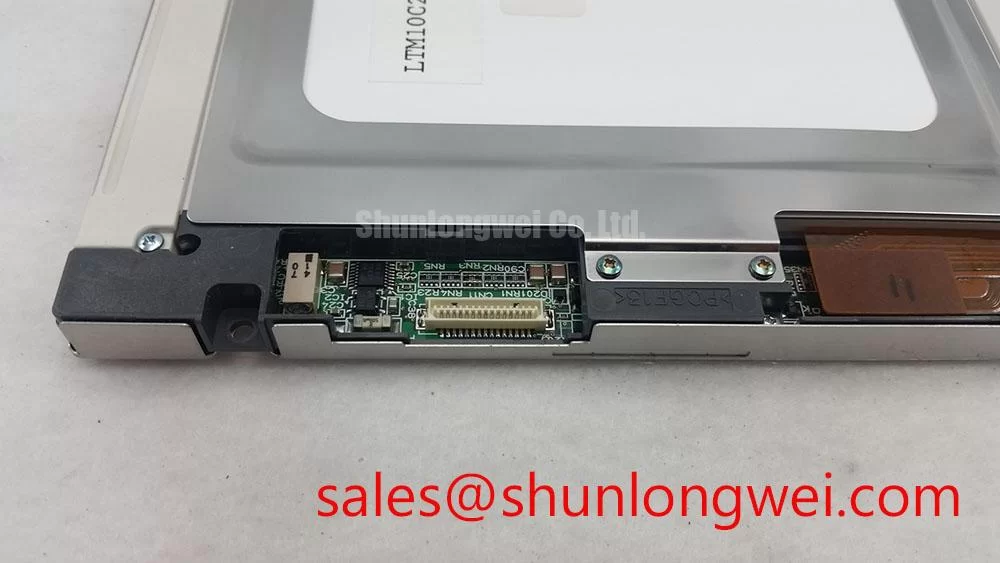
Understanding the two core technologies of the LTM10C273 reveals why it excels as a legacy replacement. The Cold Cathode Fluorescent Lamp (CCFL) backlight operates on a high-voltage AC signal provided by an inverter. It's the same principle as an office fluorescent light, just miniaturized. This is fundamentally different from modern LED backlights, which run on low-voltage DC and require a constant-current driver. By using CCFL, the LTM10C273 directly interfaces with the power systems present in older equipment. Exploring the differences in energy usage can be found in our deep dive into the energy efficiency of LED backlights. Furthermore, its 6-bit Parallel RGB interface is a direct, pin-for-pin connection method. It transmits red, green, and blue color data simultaneously across 18 dedicated data lines alongside timing signals. This is analogous to an old parallel printer port—wide and straightforward. Modern interfaces like LVDS are serial, encoding the data into high-speed differential pairs, much like USB or Ethernet. Attempting to connect a new LVDS panel to an old parallel controller is impossible without a complex and often unreliable converter board, reinforcing the value of a native-interface replacement.
Do not let a simple display failure escalate into a major system overhaul. To secure your operational continuity and restore your equipment with minimal disruption, the Toshiba LTM10C273 is the definitive engineering choice. Contact our technical sales team today to verify compatibility for your specific application and receive a quote. We are here to ensure you get the right part, right away.
Frequently Asked Questions
1. My current system uses a Toshiba LTM10C273F. Is this LTM10C273 model a direct replacement?
In the vast majority of cases, yes. Suffixes like 'F' on industrial display part numbers often denote minor manufacturing revisions or specific customer requirements that do not alter the core form, fit, or function. However, to guarantee 100% compatibility, we strongly recommend providing our technical team with the full part number and, if possible, photos of your existing unit's labels. This allows us to cross-reference documentation and ensure a perfect match.
2. What is the typical operational life of the CCFL backlight in the LTM10C273?
CCFL backlights are generally rated with a "half-life," which is the operating time until the brightness diminishes to 50% of its initial value. For panels of this class, the typical half-life ranges from 25,000 to 50,000 hours. The display will continue to function beyond this point but will be noticeably dimmer. For critical applications running 24/7, this predictable degradation allows maintenance teams to schedule proactive replacements rather than waiting for an unplanned failure.