



Content last revised on September 10, 2026
AUO M190EG01 V2: A 19-inch SXGA Display Engineered for Visual Consistency and Industrial Reliability
Application Scenarios & Value
System-Level Benefits in Industrial and Medical Imaging
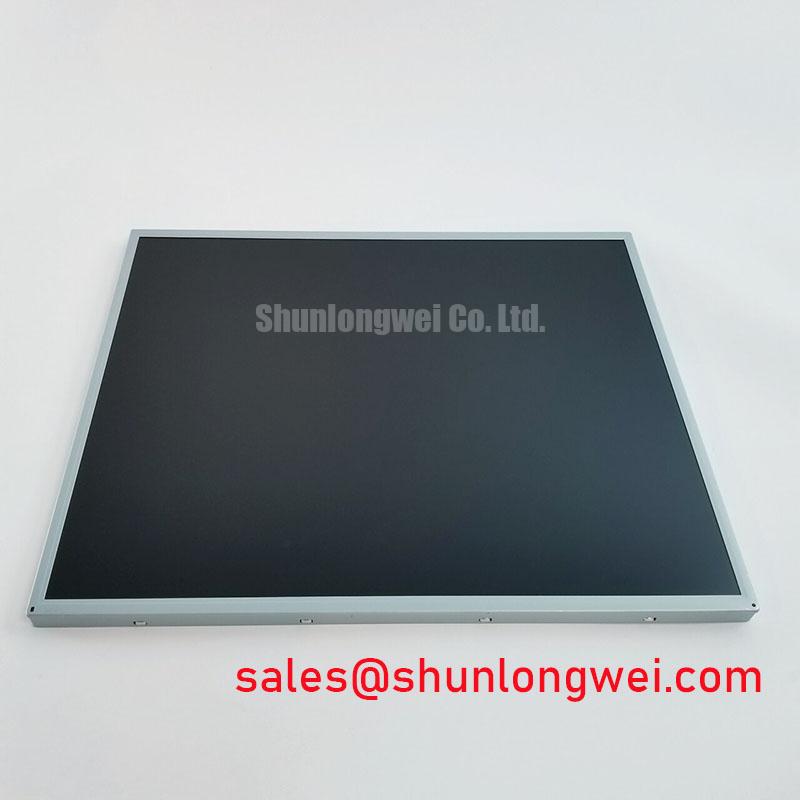
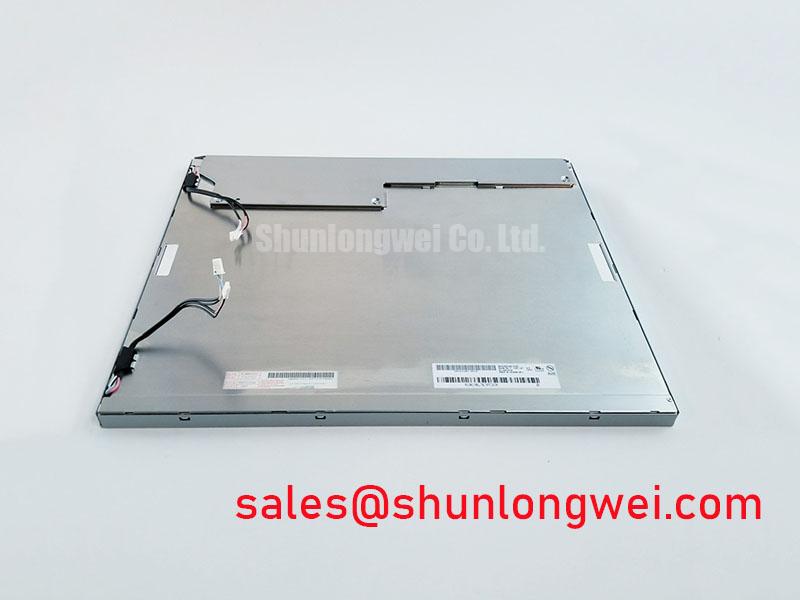
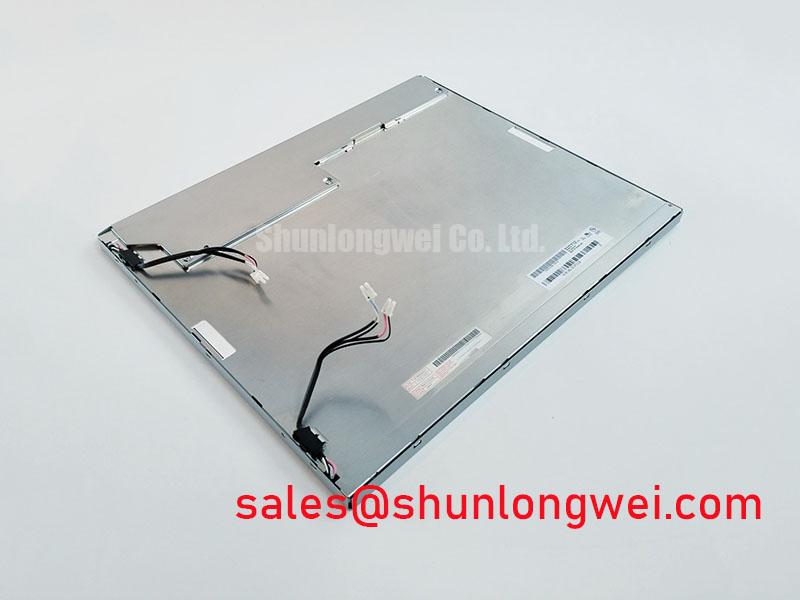
Engineered for applications where visual consistency and long-term performance are paramount, the AUO M190EG01 V2 is a 19.0-inch a-Si TFT-LCD panel delivering robust performance for industrial automation, process control HMIs, and medical diagnostic displays. Its high contrast ratio and symmetric wide viewing angles are critical for environments where operators must view the screen from off-axis positions without color distortion. For systems demanding precise image fidelity, such as medical imaging workstations or quality control stations, the MVA technology ensures deep blacks and consistent image quality across the entire screen. This panel's balanced feature set makes it a workhorse for upgrading legacy systems or developing new platforms that require proven, reliable display technology.
The M190EG01 V2 provides a dependable solution for equipment designed with a long service life. For applications requiring a different form factor or higher resolution, system designers might also consider the G190ETN01.4 for its distinct performance characteristics.
Key Parameter Overview
Decoding the Specs for Enhanced Visual Performance
The technical specifications of the M190EG01 V2 underscore its suitability for demanding visual applications. The SXGA 1280x1024 resolution on a 19.0-inch screen provides a pixel density of 86 PPI, ideal for displaying detailed graphical user interfaces and complex data sets with clarity. A standout feature is the 2000:1 contrast ratio, which delivers superior image depth and readability. This high contrast is a direct result of its MVA (Multi-domain Vertical Alignment) display mode, which provides significantly deeper black levels compared to standard TN panels. Imagine looking at a dark-themed industrial control interface; with a lower contrast ratio, the blacks would appear grayish, washing out critical information. The M190EG01 V2's high contrast ensures that these elements remain distinct and legible, reducing operator eye strain. The symmetric 89/89/89/89 viewing angles further guarantee that this visual fidelity is maintained even when viewed from extreme angles, a crucial requirement in collaborative or multi-personnel operational environments.
| Attribute | Specification |
|---|---|
| Panel Type | a-Si TFT-LCD, MVA, Normally Black |
| Screen Size | 19.0 inches |
| Resolution | 1280(RGB)×1024 (SXGA) |
| Brightness | 300 cd/m² (Typ.) |
| Contrast Ratio | 2000:1 (Typ.) |
| Viewing Angle | 89/89/89/89 (Typ.)(CR≥10) |
| Response Time | 20 ms (Typ.) (Tr+Tf) |
| Color Support | 16.7M (6-bit + Hi-FRC) |
| Interface | LVDS (2 ch, 8-bit) |
| Operating Temperature | 0°C to 50°C |
| Backlight System | 4 pcs CCFL, 50K hours (Typ.) |
Download the M190EG01 V2 datasheet for detailed specifications and performance curves.
Technical Deep Dive
A Closer Look at MVA Technology for Uncompromised Viewing Integrity
The selection of MVA (Multi-domain Vertical Alignment) technology in the M190EG01 V2 is a deliberate engineering choice aimed at overcoming the limitations of older TN panels, particularly in professional environments. What is the primary benefit of its MVA display mode? Superior image quality from wide viewing angles. Unlike TN panels where liquid crystals twist horizontally, MVA crystals align vertically to the substrate. When a voltage is applied, they tilt to allow light to pass. This vertical structure is inherently better at blocking light in the "off" state, resulting in the deep, true blacks that create the impressive 2000:1 contrast ratio. This is akin to the difference between partially closing a venetian blind (TN panel) versus a solid blackout curtain (MVA panel); the MVA provides a much more effective block of unwanted light. This "Normally Black" characteristic also means that in the event of a pixel failure, the pixel defaults to black rather than a distracting bright dot, a subtle but important reliability feature for mission-critical displays.
Frequently Asked Questions (FAQ)
What is the significance of the 2000:1 contrast ratio in an industrial setting?
The high contrast ratio ensures that graphical elements, text, and data points are sharp and clearly distinguishable, even in complex HMI layouts or dimly lit control rooms. It significantly improves readability and reduces operator fatigue over long shifts.
How do the 89/89/89/89 viewing angles impact usability?
Symmetrical wide viewing angles ensure that colors and contrast remain consistent regardless of the viewing position—left, right, up, or down. This is critical for applications where multiple operators may be viewing the same screen or when the display is mounted in a fixed position that is not directly in front of the user.
What does "Normally Black" display mode mean for system reliability?
"Normally Black" means that if a pixel transistor fails, the pixel will appear black rather than becoming a bright, stuck-on pixel. In industrial or medical applications, this is preferable as it is far less distracting and less likely to be misinterpreted as an active signal or data point.
Does the M190EG01 V2 include a backlight driver?
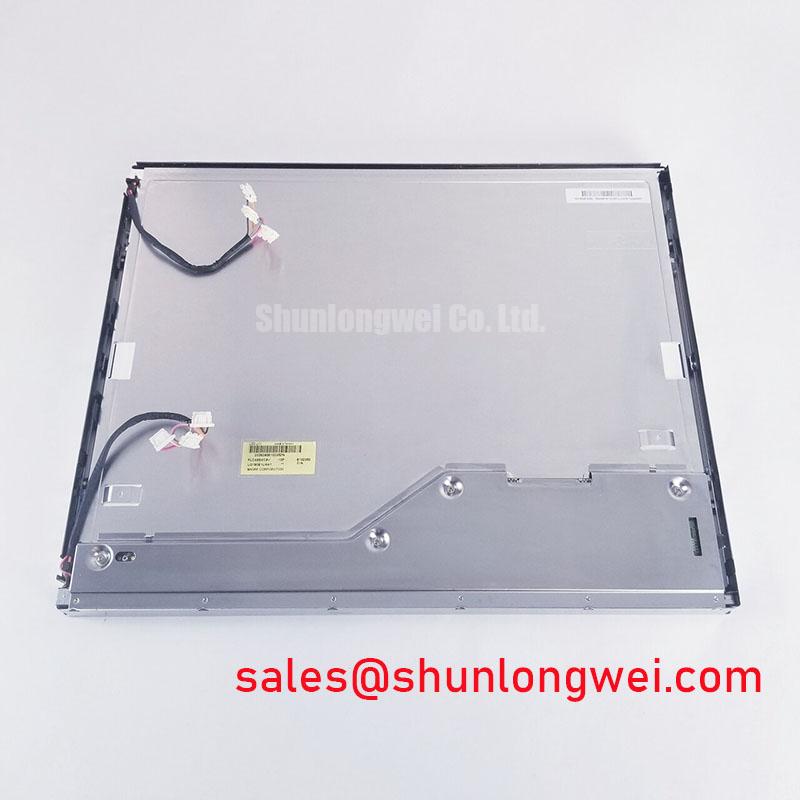
The datasheet specifies that the inverter card (backlight driver) is not included with the module. System integrators must source a compatible 4-lamp CCFL inverter and ensure it is properly matched to the backlight's electrical characteristics to achieve the specified brightness and 50,000-hour lamp lifetime.
Strategic Integration Considerations
For engineering teams designing systems for industrial automation or specialized instrumentation, the AUO M190EG01 V2 offers a proven platform built for visual performance and consistency. Its robust optical characteristics, driven by MVA technology, provide a tangible advantage in applications where data clarity and viewing angle stability are non-negotiable. While the CCFL backlight represents a more traditional technology, its 50,000-hour rated lifespan provides a solid foundation for equipment with long operational life cycles. The key to successful integration lies in pairing this panel with a high-quality backlight inverter and a controller that properly leverages its 2-channel LVDS interface, ensuring the final product delivers the full visual fidelity this display is capable of. This panel is a strategic choice for projects that prioritize proven performance and optical integrity over the latest interface or backlight technologies.