Content last revised on July 25, 2026
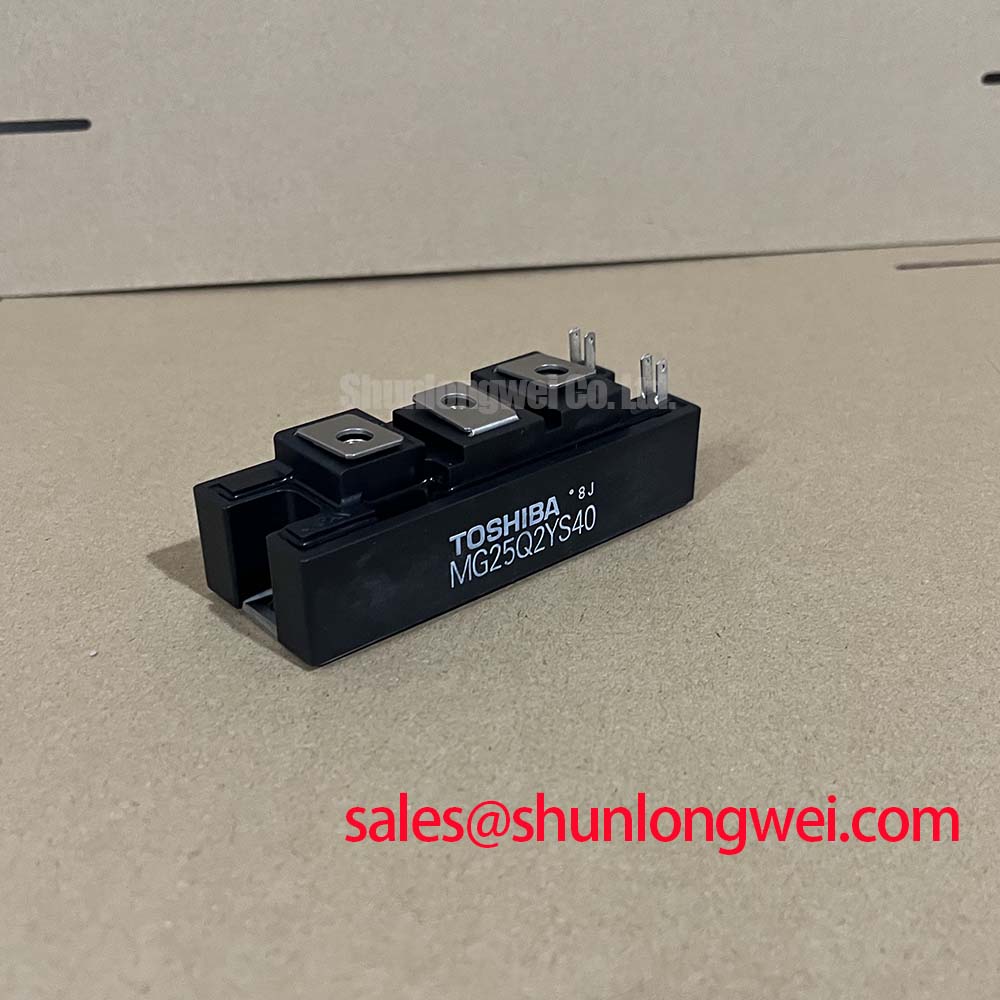
Toshiba MG150H1FL1 NPN Darlington Transistor Module | 600V 150A GTR Module
Designed for rugged industrial power conversion, the Toshiba MG150H1FL1 provides a high-reliability single-switch NPN Darlington GTR module path for robust electrical switching.
Top Specs: 600V, 150A, and an isolated package.
Key Benefits: Low saturation voltage; isolated mounting base.
Engineers often ask: does this vintage GTR module require complex gate drive circuitry compared to modern IGBTs? Unlike modern voltage-controlled gates, it relies on current-controlled base drive, offering predictable current-conduction characteristics. For legacy 400V industrial motor drives prioritizing rugged bipolar current conduction, this 150A module is the optimal choice.
Key Parameter Overview
Decoding the Specs for Enhanced Bipolar Conduction
The table below summarizes the key technical specifications of the Toshiba MG150H1FL1. These ratings are critical for defining the safe operating area in high-power industrial switching designs.
| Parameter | Symbol | Official Specification Value | Engineering Significance |
|---|---|---|---|
| Collector-Emitter Voltage | VCES / VCEX(sus) | 600V | Maximum voltage block limit under base-emitter reverse bias. |
| Collector-Emitter Sustaining Voltage | VCEO(sus) | 550V | Safe voltage limit when the base terminal is left open. |
| Continuous Collector Current | IC | 150A | Maximum continuous current the module can conduct at nominal temperatures. |
| Base Current | IB | 5A | Continuous drive current required to keep the Darlington pair fully saturated. |
| Collector-Emitter Saturation Voltage | VCE(sat) | 2.0V (Max) | Determines the on-state conduction loss of the module. |
| Collector Power Dissipation | PC | 600W | Maximum allowable power loss at a case temperature of 25°C. |
| DC Current Gain | hFE | 100 (Min) | Current multiplication ratio of the NPN Darlington pair. |
| Isolation Voltage | VIsol | 2500V AC (1 min) | Ensures safety and dielectric strength between the terminals and the baseplate. |
Download the MG150H1FL1 datasheet for detailed specifications and performance curves.
Application Scenarios & Value
Achieving System-Level Benefits in High-Power Motor Drives
In high-power industrial applications, engineers often face severe challenges when managing starting inrush currents in large induction motors. In these heavy-duty scenarios, the power module must handle transient currents that far exceed the steady-state nominal ratings. The Toshiba MG150H1FL1, with its rugged triple-diffused bipolar junction structure, addresses this directly by offering a high peak collector current capability. When a heavy conveyor belt or a pump starts up, this GTR module safely absorbs the thermal and electrical stress without entering latch-up or experiencing junction degradation.
This module is widely integrated in industrial motor drives, uninterruptible power supplies (UPS), and high-power inverter stages. During deceleration phases, motor drives generate energy that must be redirected; the integrated fast-recovery free-wheeling diode in this module provides a reliable path for this feedback energy, preventing system overvoltage. While this 150A module is optimized for 400V AC line operations, for systems requiring higher voltage ratings, the related 2MBI300N-120 offers a 1200V VCES rating. Designing with this module allows engineering teams to achieve stable thermal margins and maintain long-term operation in demanding factory automation settings. While many global manufacturers like Semikron develop newer voltage-controlled architectures for modern power grids, maintaining legacy configurations with original NPN GTR modules is a cost-effective strategy for heavy machinery.
Technical Deep Dive
Analyzing the Bipolar Darlington Architecture for Rugged Performance
The internal architecture of the MG150H1FL1 GTR module utilizes a triple-diffused NPN Darlington configuration. Unlike voltage-driven devices, a Darlington pair relies on cascade current amplification. To understand this parameter, think of the DC current gain, hFE, as a mechanical lever where a small force applied at the base handle lifts a massive weight at the collector load. With a minimum hFE of 100, a modest base input current of just a few amperes is amplified to control a full 150A collector current, reducing the complexity of the upstream driver stages.
Another crucial parameter is the collector-emitter saturation voltage, VCE(sat), which maxes out at 2.0V. This low saturation limit directly restricts conduction losses during the on-state, ensuring high conversion efficiency. To manage the heat generated during these continuous conduction periods, the module features an isolated copper base plate. This base plate acts like a multi-lane highway for heat traffic, allowing thermal energy to flow rapidly from the silicon junctions directly to the external heatsink without electrical short-circuits. What is the primary function of the integrated free-wheeling diode? It suppresses inductive voltage spikes during switching. Why does the module feature an isolated copper base plate? To ensure efficient heat dissipation while maintaining electrical isolation. For troubleshooting and maintenance, field technicians can consult the guide on testing GTR modules with a multimeter to verify junction integrity. For a broader perspective on selecting power semiconductors, the in-depth guide on power semiconductors offers valuable selection criteria. Proper integration also requires implementing solid snubber networks across the collector-emitter terminals to absorb high dV/dt transients. Industrial power modules, such as those cataloged by Mitsubishi, demonstrate the evolution of carrier profile optimization, but the fundamental Darlington principle remains highly reliable.
Frequently Asked Questions
Practical Integration Insights for Design Engineers
How does the VCE(sat) of 2.0V in the MG150H1FL1 affect system-level power efficiency?
A VCE(sat) of 2.0V determines the conduction losses during the on-state. By minimizing this voltage drop, the module reduces thermal dissipation in high-current applications, which simplifies heatsink sizing and extends the operating lifespan of the system.
Can the MG150H1FL1 be driven directly by a voltage-mode microcontroller?
No, the MG150H1FL1 is a current-controlled NPN bipolar Darlington GTR module, not a voltage-controlled IGBT. It requires a dedicated base drive circuit capable of sourcing continuous base current (IB) up to 5A to maintain full saturation and prevent desaturation failures.
What is the purpose of the built-in free-wheeling diode in this module?
The built-in diode provides a safe, low-impedance recirculation path for inductive energy when the main transistor switches off. This prevents high-voltage spikes from damaging the silicon junction, especially when operating inductive loads in industrial drives and solenoids.
Strategic Infrastructure Outlook
As power electronics transition toward high-density topologies, integrating reliable GTR Darlington modules like the MG150H1FL1 ensures robust performance in legacy configurations while supporting long-term system survivability. Selecting original-specification components protects capital investments in heavy machinery without requiring full system redesigns.