Content last revised on September 10, 2026
MG20Q6EK1 Toshiba 1200V 20A 6-Pack IGBT Module: Engineering Precision in Compact Motor Drives
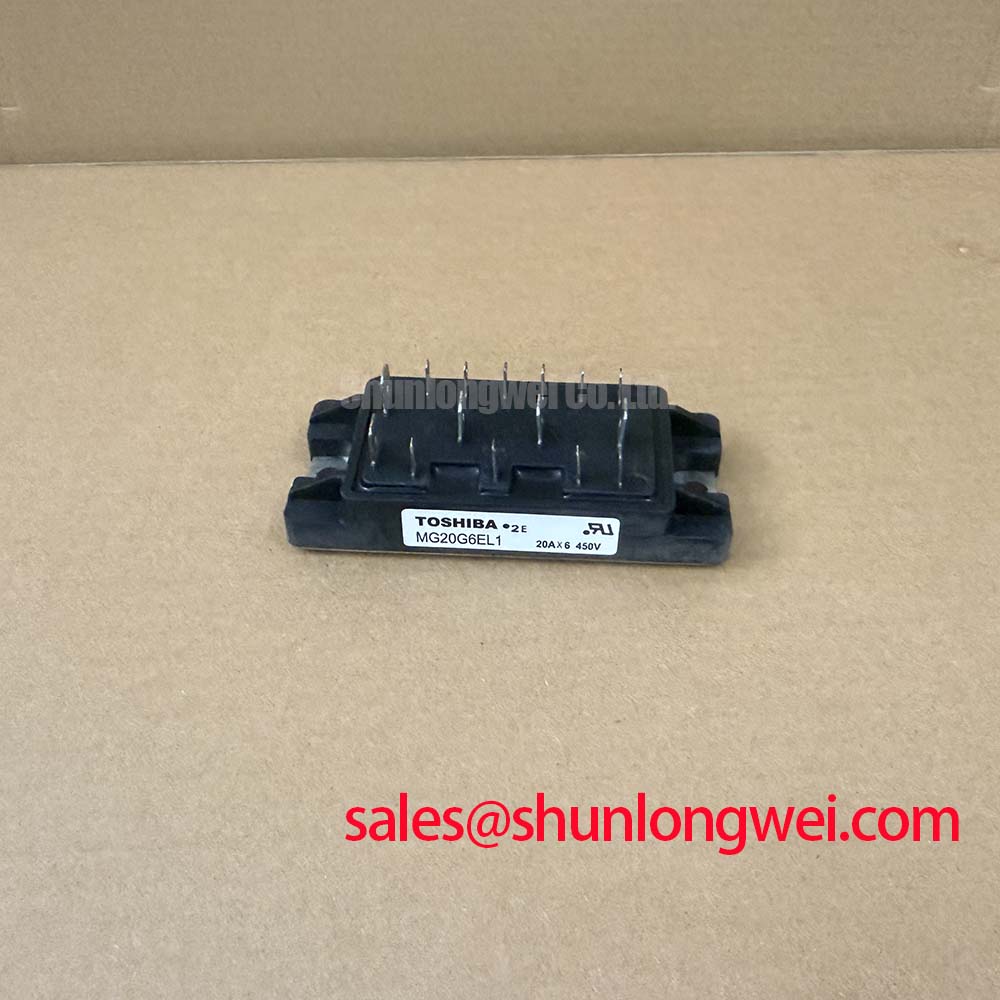
For 400V industrial servo drives prioritizing space efficiency and thermal uniformity, this 1200V 6-pack module is the optimal choice. The Toshiba MG20Q6EK1 is a highly integrated 1200V, 20A 6-pack IGBT module that guarantees uniform thermal distribution across all three phases, significantly enhancing reliability in space-constrained designs. What is the core benefit of this 6-pack configuration? It ensures uniform thermal tracking across all inverter phases. Key specifications include 1200V maximum collector-emitter voltage, 20A continuous collector current, and a 6-Pack Topology. This architecture delivers two distinct advantages: a streamlined PCB layout and consistent thermal behavior. For engineers asking how to minimize footprint without sacrificing heat dissipation, this package provides a single, unified thermal interface.
Key Parameter Overview
Highlighting Core Metrics for 3-Phase Inverter Designs
Evaluating the electrical and physical limits of IGBT Modules dictates the ultimate boundary of your power stage. The following metrics showcase the operational envelope of the MG20Q6EK1.
| Parameter | Value | Engineering Implication |
|---|---|---|
| Vces (Collector-Emitter Voltage) | 1200V | Provides a robust safety margin for 400V AC line applications against switching transients. |
| Ic (Continuous Collector Current) | 20A | Sufficient continuous current capacity for compact (1kW to 3kW) industrial motor systems. |
| Configuration | 6-Pack (3-Phase Bridge) | Consolidates the entire inverter bridge into a single footprint, significantly reducing stray inductance. |
Application Scenarios & Value
Overcoming Spatial Constraints in Variable Frequency Drives
Engineers designing compact Variable Frequency Drives (VFD) and Servo Drive systems continuously face a dual challenge: shrinking the overall enclosure size while maintaining stringent thermal management. Utilizing individual discrete devices in a three-phase configuration often results in varying trace lengths and parasitic inductances, which can exacerbate voltage overshoots during high-frequency PWM switching.
The MG20Q6EK1 directly mitigates these issues. By housing the entire three-phase bridge within a single 6-Pack housing, the module enforces a symmetrical internal layout. This symmetry dramatically reduces the parasitic inductance between the DC link and the switching nodes, suppressing voltage spikes and lowering electromagnetic interference. Consequently, system designers can specify smaller snubber circuits and simplify the routing. While this 20A module excels in compact 1kW to 3kW servo applications, for systems requiring higher current handling capabilities, the related 7MBR50SB120 offers a 50A rating suitable for heavier industrial loads.
Technical Deep Dive
Architecting Reliability Through Unified Thermal Management
The integration of six insulated-gate bipolar transistors into the MG20Q6EK1 profoundly alters the thermal dynamics of the power stage. In a traditional discrete setup, slight variations in heatsink mounting pressure or thermal interface material thickness can lead to one phase running hotter than the others, prematurely aging the silicon and skewing output performance.
Think of the 6-pack configuration as a multi-core processor; instead of managing separate, isolated heatsinks for each individual core, a single, robust cooling block ensures all elements operate at the exact same temperature baseline. This shared thermal resistance path ensures that thermal expansion and contraction occur uniformly across the entire die area, reducing mechanical stress on the wire bonds and substrate layers.
Furthermore, the unified baseplate acts much like a high-lane highway, evenly distributing thermal traffic away from the localized junction hotspots into the broader heatsink mass. This thermal sharing prevents localized thermal runaway during momentary overload conditions, a critical survival characteristic in environments where motor startup surges are frequent. The result is a highly predictable thermal impedance network that simplifies cooling system calculations and enhances the operational longevity of the drive unit.
Frequently Asked Questions
Engineering Inquiries for the MG20Q6EK1
- How does the 1200V rating benefit a standard 400V AC line application?
Operating a 1200V rated module on a 400V AC system provides a massive overhead against voltage spikes, utility grid fluctuations, and the inherent inductive kickback generated during motor deceleration, thereby preventing avalanche breakdown. - Why choose a 6-pack configuration over discrete IGBTs for sub-3kW drives?
A 6-pack topology inherently minimizes the parasitic inductance between the high-side and low-side switches. It drastically simplifies assembly, reduces the bill of materials, and guarantees uniform thermal tracking across all inverter phases. - What is the critical practice for mounting this module to optimize thermal transfer?
Engineers must apply an ultra-thin, tightly controlled layer of high-performance thermal grease to the baseplate and torque the mounting screws exactly to the manufacturer's specified values to prevent substrate bowing.
Deploying integrated power modules is a calculated architectural decision. Specifying the MG20Q6EK1 aligns equipment design with the overarching industrial demand for higher power density and reduced lifecycle maintenance, securing a competitive edge in automation hardware deployment.