Content last revised on September 10, 2026
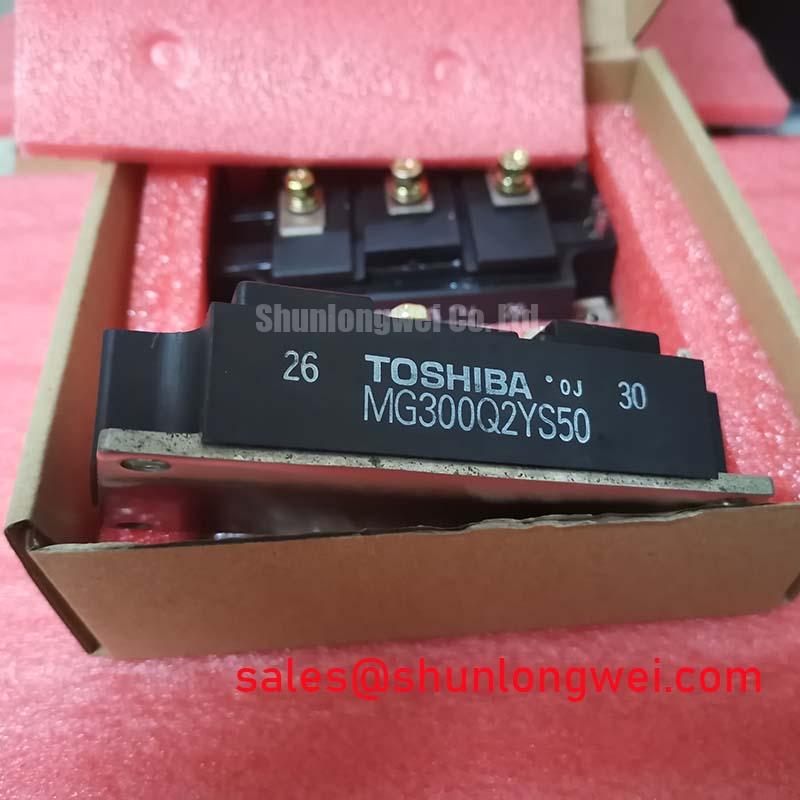
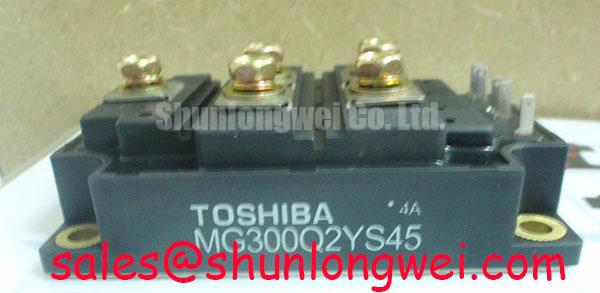
High-Speed Switching Excellence: The MG300Q2YS65H Toshiba IGBT Module
Engineered for high-speed switching efficiency in industrial motor control, the MG300Q2YS65H is a robust silicon N-channel power module. Featuring a 1200V collector-emitter voltage and a 300A continuous current capacity within a Half-Bridge configuration, it directly minimizes dynamic switching losses and simplifies thermal layout design. If you are developing high-frequency servo amplification systems, its optimized silicon structure actively reduces heat generation during rapid switching cycles. What is the primary benefit of the MG300Q2YS65H? It delivers superior high-speed switching efficiency, significantly reducing dynamic power losses in industrial drive applications. For 1200V industrial inverters prioritizing high-speed switching, this 300A module is the optimal choice.
Key Parameter Overview
Decoding Specifications for High-Frequency Designs
Evaluating the electrical limits is the first step toward building a reliable power stage. The following table highlights the core parameters and their direct impact on system architecture.
| Specification | Value | Engineering Value & Interpretation |
|---|---|---|
| Collector-Emitter Voltage (VCES) | 1200V | Provides a safe operating margin for 400V to 690V industrial line applications, preventing voltage breakdown during transient spikes. |
| Continuous Collector Current (IC) | 300A | Supports heavy steady-state inductive loads, ideal for high-torque motor drives operating continuously. |
| Configuration | Half-Bridge (Dual) | Integrates two IGBT switches, significantly reducing parasitic inductance compared to discrete wiring layouts. |
| Technology Focus | High-Speed Switching | Lowers Eon/Eoff losses, allowing engineers to increase the switching frequency and shrink external passive components. |
Application Scenarios & Value
Achieving System-Level Efficiency in Motor Control
Engineers often face significant thermal constraints when designing a high-capacity Industrial Inverter or a rapid-response Servo Amplifier. Dealing with start-up surges from a heavy Inductive Load while maintaining high-frequency operation requires a module that balances conduction and dynamic losses. The MG300Q2YS65H excels here because its 1200V and 300A ratings comfortably absorb high-stress transients without exceeding thermal limits. When designing power stages compliant with EMC standards like IEC 61800-3, the smooth switching characteristics of this N-channel device help mitigate high dv/dt noise emissions.
Consider a heavy-duty industrial conveyor system. During a cold start, the motor draws a massive inrush current. The robust silicon die of this module withstands these repetitive mechanical surges, preventing long-term degradation. While this model is ideal for standard 300A loads, for systems requiring higher current handling, the related CM400DY-24A offers a higher 400A rating to maintain thermal stability under extreme conditions.
Technical Deep Dive
The Mechanics of High-Speed Silicon N-Channel Technology
Selecting an IGBT for high-frequency applications requires a careful analysis of the dynamic switching behavior. The MG300Q2YS65H is explicitly fabricated to lower turn-on and turn-off energy losses. Think of high-speed switching like a perfectly tuned gearbox in a race car; the faster and smoother it shifts, the less momentum is lost, which directly translates to cooler operation at high frequencies. By minimizing the time the transistor spends in the active region during state transitions, engineers can push the carrier frequency higher without triggering thermal runaway.
Furthermore, the physical packaging plays a crucial role. The isolated base plate functions much like a thermal shock absorber, swiftly transferring heat away from the silicon chips to the heatsink without allowing electrical crossover. This isolation allows multiple modules to be mounted on a single cold plate, greatly simplifying mechanical assembly. For developers focused on mastering 1200V IGBTs in industrial inverters, understanding the interplay between structural isolation and switching speed is non-negotiable for long-term field reliability.
Frequently Asked Questions
Expert Answers on Deployment and Reliability
- What makes the MG300Q2YS65H suitable for high-speed switching applications?
The module utilizes an optimized silicon N-channel structure that aggressively reduces parasitic capacitances, allowing for faster gate response and drastically lower dynamic energy losses during high-frequency cycles.
- How does the 1200V rating benefit industrial inverter designs?
A 1200V blocking voltage ensures sufficient headroom for 400VAC to 480VAC systems. It effectively protects the silicon from dangerous overvoltage spikes generated by inductive kickback during hard switching.
- Can this module handle start-up surges in 300A motor drives?
Yes. While rated for a continuous 300A, its peak pulse current capability easily accommodates the brief but intense inrush currents typical of heavy industrial motor start-ups.
- Why is thermal management critical for this silicon N-channel IGBT?
Even with low switching losses, pushing high currents generates heat. Proper Thermal Design ensures the junction temperature stays within safe limits, preventing premature thermal fatigue of the internal solder joints.
- How does the half-bridge configuration simplify power stage design?
By housing two IGBTs internally, the Half-Bridge package drastically cuts down the parasitic inductance found in PCB traces between discrete components, ensuring cleaner waveforms and reducing voltage overshoot.
When selecting semiconductor components for mission-critical power conversion, empirical data and architectural layout dictate system survival. The precise switching characteristics of this Toshiba module empower engineers to maximize drive frequency without compromising thermal integrity or long-term operational lifespan.