Content last revised on September 10, 2026
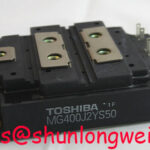
MG400J2YS50 Toshiba 600V 400A Dual IGBT Module
Engineered for high-stress motor control, this dual IGBT module balances an exceptional 1800W power dissipation capability with robust switching characteristics. Featuring a 600V collector-emitter voltage, a 400A current capacity, and a steadfast 2500V AC isolation, it ensures supreme thermal stability. It elegantly simplifies half-bridge design while delivering unyielding endurance. It serves as the durable switching core for heavy-duty industrial drives requiring resilient 600V performance. For 400V-class industrial line systems requiring robust motor control, this 600V/400A module is the optimal choice.
Key Parameter Overview
Decoding the Specs for Enhanced Thermal Reliability
The following table outlines the critical electrical and thermal limits of the MG400J2YS50, offering designers clear boundaries for safe operation.
| Parameter | Symbol | Value | Engineering Implication |
|---|---|---|---|
| Collector-Emitter Voltage | Vces | 600V | Provides sufficient voltage headroom for 220V to 380V AC motor drive buses. |
| Continuous Collector Current | Ic | 400A | Handles sustained high-torque motor loads without premature core saturation. |
| Maximum Power Dissipation | Pc | 1800W | Dictates the absolute maximum thermal energy the module baseplate can expel. |
| Collector-Emitter Saturation | VCE(sat) | 2.70V (Max) | Balances conduction losses effectively during maximum high-current operations. |
| Fall Time | tf | 0.30µs (Max) | Reduces switching crossover overlap, effectively curbing dynamic thermal generation. |
Download the MG400J2YS50 datasheet for detailed specifications and performance curves.
Application Scenarios & Value
Achieving System-Level Benefits in High-Torque Environments
Engineers often face daunting thermal challenges when designing Variable Frequency Drives (VFDs) for commercial conveyor systems. During a heavily loaded motor startup, the initial surge current can exceed nominal values by up to 300%. The MG400J2YS50 resolves this through its massive 400A Ic rating and robust silicon layout, absorbing the surge without pushing the junction temperature into a critical failure state. What is the main advantage of its 1800W power dissipation? It guarantees thermal stability during high-current surge events.
Beyond standard motor drives, the module's 0.30µs tf makes it highly suitable for legacy UPS architectures and active PFC stage topologies where predictable, reliable switching is paramount. Furthermore, the 2500V isolation rating ensures full compliance with strict IEC 61800-3 safety requirements in noisy factory environments. While this model is a proven solution for standard 600V architectures, systems demanding optimized low-loss performance might consider the related CM400DY-12NF for alternative design paths.
Technical Deep Dive
A Closer Look at the 1800W Package and Switching Architecture
The core strength of the MG400J2YS50 lies in its exceptional thermal management capabilities. With a rated power dissipation (Pc) of 1800W, the internal baseplate acts as a massive thermal reservoir. You can think of this 1800W power dissipation as a heavy-duty shock absorber in a commercial truck—it safely disperses massive thermal spikes without transferring destructive stress to the delicate silicon engine inside.
Simultaneously, the high isolation voltage ensures long-term operational integrity. Why is the 2500V isolation critical? It successfully prevents high-voltage electrical faults from destroying sensitive control circuits. The 2500V AC isolation rating acts exactly like a fortified fire wall in a commercial building. It guarantees that high-voltage electrical faults or extreme inductive spikes on the heavy power side cannot breach the barrier and destroy the low-voltage electronics on the gate drive side. Understanding these boundaries is crucial when decoding IGBT datasheets to ensure your final system maintains a robust Safe Operating Area.
Frequently Asked Questions
Engineering Insights on the MG400J2YS50
- How does the 1800W Pc rating directly influence heatsink selection?
The immense 1800W limit means your heatsink and thermal interface material must be rated to maintain the case temperature well below critical levels, often necessitating forced-air or liquid cooling in continuous 400A operations. - What makes the 0.30µs fall time (tf) critical for industrial UPS systems?
A fall time of 0.30µs limits the duration of voltage-current overlap during turn-off, which effectively caps dynamic switching losses and prevents excess heat buildup in continuous switching environments. - Is the 2.70V VCE(sat) acceptable for modern power conversion?
While higher than some newer trench-gate models, the 2.70V saturation voltage is a deliberate trade-off that ensures a highly rugged short-circuit withstand capability and excellent long-term silicon reliability. - Can the 2500V isolation voltage handle IEC 61800-3 environments?
Yes. The 2500V baseline isolation provides a robust safety margin against the severe transient overvoltages commonly encountered in heavy industrial and factory automation power grids. - What is the best way to secure a 600V module against reverse recovery spikes?
Designers should implement localized snubber capacitors across the main DC bus terminals to actively suppress the voltage overshoots generated by the internal free-wheeling diodes during state changes.