

Content last revised on September 22, 2026
Micro Twist Mechanical Stress and Glass Substrate Driver Inspection
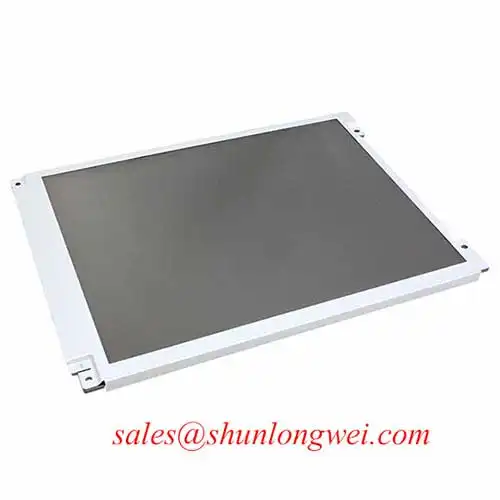
Begin incoming inspection by checking the NEC NL10276BC20-18C TFT LCD display module for glass edge damage, bezel distortion, connector contamination, and visible pressure marks before applying power. The supplied factory information identifies this part as an Industrial Grade LCD/HMI Panel with a TFT-LCD Display Module construction and an Official Factory Spec Verified status. It does not establish the panel voltage, interface pinout, active area, resolution, backlight type, luminance, contrast ratio, viewing angle, or operating temperature range, so those values should be confirmed against the original NEC panel documentation before installation.
| Model | NL10276BC20-18C |
| Manufacturer | NEC |
| Product category | Industrial Grade LCD/HMI Panel |
| Module form | TFT-LCD Display Module |
| Specification status | Official Factory Spec Verified |
For a replacement evaluation, keep the display on a grounded, ESD controlled bench and inspect it before connecting the host controller. A practical incoming test uses three image fields in sequence: red, green, and blue. Each field should be viewed at full screen brightness, followed by a black field and a neutral gray field. This sequence helps separate a persistent pixel defect from a backlight or signal path issue. A small flashlight held at approximately 45 degrees can be useful for dark shadow inspection around the glass edge and bezel. If a shadow moves with the viewing angle while the image data remains stable, the technician should compare the result with the unpowered optical surface and the known good panel rather than assigning a single cause.
Fine horizontal or vertical lines can be associated with a display connection problem, mechanical stress, or a controller signal issue. The correct diagnostic path is to inspect the flexible connection for skew, incomplete insertion, contamination, and uneven locking pressure. Do not press on the glass or attempt to correct an image defect by flexing the module. Such actions can make the original condition impossible to evaluate and may create additional damage.
Cold temperature testing requires particular care. The supplied product information does not confirm operation at −20°C to −30°C, nor does it provide a gray to gray response specification for this model. At sub zero temperatures, liquid crystal response can become slower and moving text may show increased trailing. This should be treated as a system level temperature behavior to be verified, not as a confirmed characteristic of the NEC NL10276BC20-18C. If a CNC operator panel or robot teach pendant must start in a cold enclosure, the system integrator should verify the panel operating range, heater strategy, condensation control, and startup sequence from the original equipment documentation.
A controlled heater strip may be considered where the complete HMI assembly requires warm up before normal display operation. The heater controller, thermal sensor position, enclosure airflow, and condensation protection remain system design responsibilities. Do not apply local heat directly to the glass or flexible cable. During the bench test, record whether a line defect follows the display module, the cable, or the controller by changing only one item at a time.
💡 Bench Tip: Disconnect power before inserting or removing the display cable, and engage the connector lock only after the cable is fully aligned and flush.
Surface Readability Under Ambient Light and Backlight Evaluation
High ambient light testing should begin with the display installed in the same viewing orientation used by the equipment. Record the appearance of white, black, red, green, blue, and neutral gray screens while changing the room illumination. Reflections from the bezel, cover window, and exposed display surface should be evaluated separately because a surface reflection can be mistaken for poor panel contrast.
The supplied factory data does not identify whether this NEC module uses TN, IPS, MVA, or another liquid crystal mode. It also does not verify an 85° viewing angle in four directions, an anti glare coating, an anti reflective coating, or a contrast ratio above 500:1 at 50,000 lux. These values must not be assigned to the NL10276BC20-18C without the model specific datasheet. If the replacement is intended for a CNC operator panel or robot teach pendant, the integrator should compare the original panel documentation with the enclosure window, viewing angle, ambient light, and operator position.
Anti glare and anti reflective treatments have different optical effects. A diffuse anti glare surface can reduce sharp reflections but may slightly soften small characters, while an anti reflective treatment is evaluated by its reflection suppression across the relevant light spectrum and viewing angle. The correct choice depends on the complete cover lens and enclosure design. A replacement panel should therefore be checked with the installed cover window, not only on an open laboratory bench.
Backlight assessment should include uniformity checks on white and gray screens. A bright region near one edge, a darker corner, or a local shadow should be compared with the panel orientation and mechanical mounting condition. The available factory information does not confirm the backlight technology, rated luminance, color temperature, dimming input, or PWM frequency for this model. Do not assume that a controller designed for another display uses the same backlight supply or dimming method. The system integrator should verify the required supply voltage and backlight interface from the original panel documentation.
Where PWM dimming is used in the host equipment, the controller should be evaluated for visible flicker, acoustic behavior, and duty cycle tracking across the intended brightness range. A PWM range such as 200 Hz to 1 kHz is a possible system test window, not an official specification for this NEC display. Any selected setting must be validated with the complete backlight driver, camera based flicker test, and operator viewing conditions.
Chassis Fastener Loading and Optical Mura Prevention
Mechanical installation should begin with a flat mounting surface, clean contact areas, and an inspection of the bezel opening. The supplied factory information does not provide the outer bezel envelope, mounting hole pattern, glass thickness, or approved fastener torque for the NL10276BC20-18C. These dimensions must be measured from the original equipment or confirmed by the NEC mechanical drawing before a replacement is fitted.
Uneven chassis loading can change the appearance of a display even when the electronic signal is correct. Local pressure may produce a bright spot, dark region, color variation, or a nonuniform black field. This is why the panel should be checked both before final fastening and after installation in the enclosure. Fasteners should be tightened progressively in a cross pattern so that the bezel seats evenly. The proposed 0.35 to 0.45 N·m range is not identified as an official specification in the supplied information and must not be treated as a mandatory value for this model. The equipment designer should use the confirmed mechanical drawing and the chassis manufacturer’s fastening requirements.
Optical bonding, cover windows, sealing gaskets, and dust barriers also require a system level review. The available product data does not verify that this display is supplied with optical bonding, a sealed front surface, or a particular moisture protection rating. If the assembly is used in an industrial HMI, the integrator should confirm the enclosure sealing method, pressure distribution, cleaning chemicals, and condensation conditions. Adhesive selection and compression should be validated on the complete assembly because the display supplier’s mechanical limits may differ from the enclosure design.
Signal integrity should be checked after the mechanical installation is complete. The supplied information does not confirm TTL or LVDS operation, transmitter clock limits, data hold time, or cable pin assignment. Before powering the panel, compare the connector keying, cable orientation, signal names, and controller documentation with the original unit. During operation, an oscilloscope may be used to compare the known good signal path with the replacement path when jitter, intermittent lines, or unstable image data is observed. The result should be interpreted alongside supply behavior and grounding rather than attributed to the panel alone.
For a same size or same resolution replacement assessment, engineers can also review NL10276BC16-06 as a separate model reference. It should not be treated as a direct substitute until the active area, connector, mounting geometry, optical characteristics, electrical interface, and controller timing have been verified against the original equipment.
EMI Immunity, Shield Continuity, and Common Mode Noise Control
When the display is installed near a variable frequency motor drive, begin the noise investigation by separating image data faults from conducted power noise. Observe the screen with the motor drive disabled, then repeat the test during controlled motor operation while monitoring the display supply and signal path. Horizontal bands, pixel jitter, or intermittent image loss may indicate a cable, grounding, power, or timing problem. A single symptom does not establish one root cause.
The supplied factory information does not certify the NL10276BC20-18C for a particular EMC standard, industrial noise environment, or immunity level. The display module itself should not be described as independently passing a complete equipment level CISPR or EN 55011 certification. EMC compliance belongs to the complete HMI assembly, including the controller, power supply, cable routing, enclosure, grounding, and external connections.
A shielded FFC or LVDS cable can be evaluated for continuous shield contact around the cable path, connector seating, and chassis bonding. The preferred grounding arrangement depends on the controller and enclosure topology. Designers should minimize high current motor wiring parallel to display signal wiring and verify noise performance with the final cable length, drive switching behavior, and enclosure installed. A common mode ferrite may be considered as a system level suppression component when conducted or radiated noise testing identifies a suitable frequency range. Its impedance, placement, current rating, and thermal behavior must be selected from measured conditions rather than assumed from the display model.
Sunlight testing should use the installed front window and the actual display brightness control. The available data does not confirm stable contrast above 500:1 at 50,000 lux, nor does it confirm a specific anti glare treatment for this NEC module. Check black level visibility, gray scale separation, color shift, and operator readability under the intended lighting. If a cover lens or protective film is added, repeat the test because the optical stack can change reflections and perceived contrast.
Power sequencing deserves the same attention as cable shielding. The original controller documentation should define the display supply order, enable signals, reset behavior, and discharge path. A white screen, residual image after shutdown, or delayed startup may involve sequencing, backlight control, stored charge, or controller initialization. Verify the waveform at the display connector with the correct probe technique and compare it with a known good assembly. Avoid adding an unverified delay or voltage level because the required timing and electrical limits are not provided in the available factory data.
For broader enclosure, grounding, display integration, and harsh environment design references, engineers may consult Industrial Display & HMI Solutions. The final acceptance test should use the original equipment’s mechanical drawing, electrical interface documentation, optical requirements, and complete EMC test configuration.