Content last revised on October 29, 2026
Benchtop Waveform Tuning: Mitigating Stress via Interphase Transformer Current Balancing on PK200FG80
- Isolate the rectifier supply, verify stored energy has discharged, and compare cold terminal measurements with the equipment schematic.
- Match the PK200FG80 terminal arrangement and polarity to the installed busbars before reconnecting power conductors.
- Inspect the heatsink mating surface, mounting alignment, and terminal supports for conditions that could impose mechanical stress.
- Check branch current sensing and semiconductor fuse identification before recording commissioning waveforms.
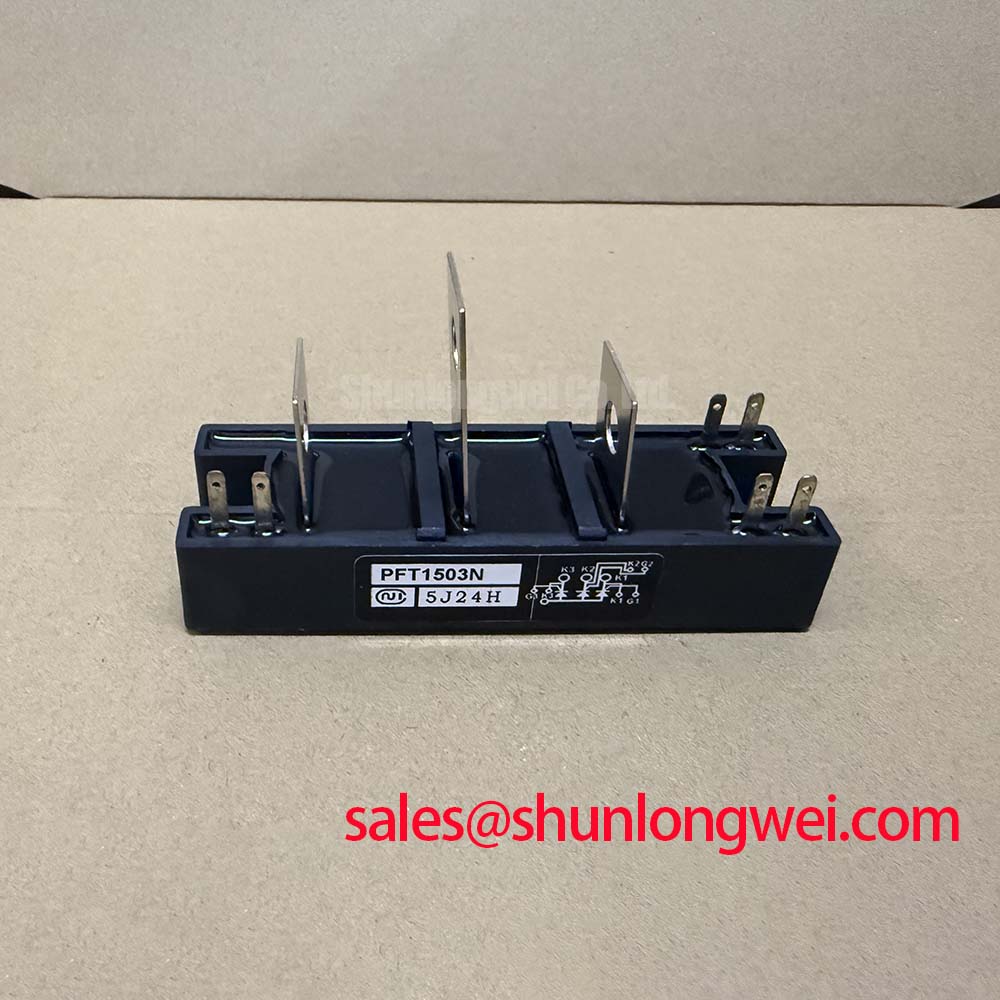
The SanRex (Sansha Electric) PK200FG80 is a Thyristor / Diode Module with an 800 V voltage rating and 200 A current rating in an Isolated Power Module package. Its integration assessment should connect those ratings to the actual rectifier circuit, cooling arrangement, and fault protection rather than treating the current designation as an unrestricted operating allowance.
| Product characteristic | Specification | Parameter identity |
|---|---|---|
| Manufacturer | SanRex (Sansha Electric) | Product identification |
| Model | PK200FG80 | Product identification |
| Rated voltage | 800 V | Official Specification |
| Rated current | 200 A | Official Specification |
| Package | Isolated Power Module | Official Specification |
| Application qualification inputs | Terminal diagram, rating conditions, surge current, I²t, thermal characteristics, and tightening torque | Consult Datasheet |
Design Consideration: Capture individual bridge currents alongside total DC output when evaluating interphase transformer current sharing. In a six-pulse bridge, phase current and commutation waveforms help identify unequal conduction paths. In a twelve-pulse arrangement, transformer phase displacement, bridge connections, and the chosen paralleling circuit determine whether an interphase transformer is required and how it operates.
For kiloampere-level system output, assess each module branch separately; the PK200FG80 rating does not establish the capacity of the assembled converter. Compare current waveforms at equivalent load conditions and inspect sustained imbalance, commutation notches, and unequal conductor heating. These observations can direct checks toward transformer secondary balance, connection resistance, firing synchronization, or magnetic behavior without assigning a single cause prematurely.
Engineering Recommendation: Keep corresponding branch conductor geometry and connection resistance comparable, then verify current sharing and commutation transients under the intended load range.
A high-current green hydrogen electrolyzer DC power rectifier is one potential compatibility assessment, subject to complete bridge and cooling qualification. For sourcing comparisons, PK55GB80 provides another SanRex model reference, not an established substitute: compare circuit configuration, current conditions, surge capability, terminals, and mounting geometry before considering interchangeability.
PK200FG80 Circuit Protection & Reliability: Calibrating Junction-to-Heatsink Heat Dissipation
Design Consideration: Separate junction-to-case thermal resistance from the case-to-heatsink interface when assessing temperature rise. Junction-to-case resistance characterizes the module thermal path; interface performance also depends on surface condition, thermal compound distribution, contact pressure, and heatsink flatness. A heatsink temperature measurement alone does not establish peak junction temperature.
Inspect the mating surfaces for contamination and damage, apply the selected interface material according to its instructions, and tighten the mounting hardware using the module’s specified sequence and torque. Support heavy conductors independently so terminal connections do not twist the housing or disturb contact pressure. Do not infer a copper baseplate construction from the package designation.
For intermittent overloads, assess the manufacturer’s transient thermal impedance information against pulse duration, repetition, and starting temperature. A short surge and a recurring overload impose different thermal histories. Evaluate the thermal recovery interval before allowing repeated events, rather than interpreting a non-repetitive surge rating as a repetitive operating capability.
The SanRex Sansha Electric Power Semiconductor Modules resource is the manufacturer reference for product documentation. The broader converter discussion in The Power of Control offers system context, but IGBT switching behavior and drive prescriptions should not be transferred to this thyristor/diode module. Repeatable thermal measurements support maintenance decisions without establishing a numerical service-life guarantee.
Transient Dynamics & Electrical Design: Semiconductor Protection Fuse Selection for PK200FG80
Design Consideration: Compare the fuse’s total clearing I²t with the semiconductor’s applicable withstand limit under compatible fault conditions. Pre-arcing I²t alone excludes the arcing interval and therefore cannot establish complete protection coordination. The comparison also needs prospective fault current, circuit voltage, initial junction temperature, and the manufacturer’s surge waveform conditions.
Build the coordination record around the actual fuse and module combination. Include fuse voltage suitability, interrupting capability, total clearing characteristics, module surge current limits, and any manufacturer coordination guidance. I²t expresses current-squared time rather than directly specifying dissipated energy; an energy calculation additionally requires the relevant electrical behavior. Neither an I²t comparison nor a current rating guarantees damage-free interruption during a dead short.
During assembly review, inspect terminal spacing, insulating barriers, and conductor movement under fault forces. Required creepage and clearance belong to the equipment insulation assessment, including working voltage and installation conditions; the isolated package designation does not independently establish system compliance. The Shindengen Power Semiconductor Modules & Diodes resource provides additional semiconductor reference material, not PK200FG80-specific approval.
Complete protection validation with coordinated fault assessment and controlled testing appropriate to the equipment, recording interruption behavior and post-test electrical condition before authorizing return to service.