
Content last revised on September 26, 2026
Assembly Integrity and Layout Architecture for High dv/dt Switching
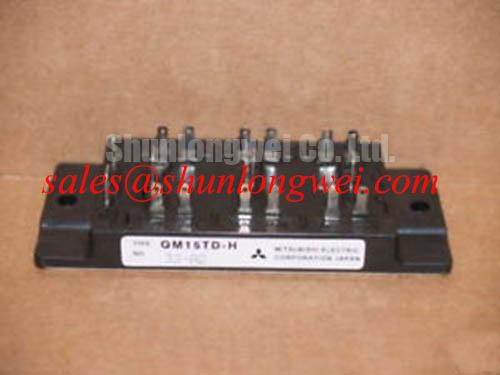
| Manufacturer | Mitsubishi Electric |
| Model | QM15TD-HB |
| Rated voltage | 600.0 V, Official Specification |
| Rated current | 15.0 A, Official Specification |
| Package | Isolated Darlington Module, Official Specification |
Before removing a failed unit, isolate the equipment, record the original wiring, and check the module’s external condition and cold-state terminal impedance against the circuit documentation. The QM15TD-HB is a Mitsubishi Electric isolated Darlington module rated at 600.0 V and 15.0 A according to the supplied factory specification. These ratings identify the component’s nominal electrical class; they do not replace verification of switching conditions, thermal impedance, overload duration, or the complete converter topology.
When evaluating the QM15TD-HB in a commercial string inverter or micro-grid energy-storage converter, first confirm that the replacement follows the original current path and isolation arrangement. A Darlington module may be exposed to rapid collector voltage transitions, base-control disturbances, and shared-return noise from adjacent switching devices. Cross-conduction risk should therefore be assessed at system level rather than inferred from the module’s voltage and current ratings alone.
Design Consideration: keep high-current commutation loops compact, separate control-return routing from power-current paths, and minimize parasitic coupling between switching nodes and the control interface. Base-drive and turn-off bias should be evaluated against the driver and device documentation; the supplied specification does not establish a negative turn-off bias range for the QM15TD-HB.
For bench troubleshooting, inspect solder joints, mounting pressure, busbar alignment, and control wiring before changing the module. With power removed and capacitors discharged, compare terminal-to-terminal readings with a known-good circuit position. An abnormal reading may indicate damage elsewhere in the commutation path, so use an oscilloscope during controlled testing to check turn-on overlap, turn-off overshoot, and control-ground movement. MOV placement can help absorb transient energy, but its voltage rating, energy capability, clamping behavior, and coordination with any snubber must be selected for the complete DC-link system.
Where a different Mitsubishi Electric module is being evaluated, the QM200HA-HK should be treated as a separate candidate requiring dimensional, terminal, electrical, and drive compatibility checks rather than assumed to be a direct substitute.
Benchtop Waveform Tuning and Junction-to-Case Thermal Evaluation
Thermal evaluation should begin with the actual switching waveform, load profile, cooling method, and mounting interface. The QM15TD-HB factory data supplied here confirms a 15.0 A rating, but it does not by itself define allowable pulsed overload duration, transient thermal impedance, ITSM capability, or a safe junction-temperature recovery window. Those values must be taken from the applicable manufacturer documentation for the exact revision and operating condition.
For pulsed tests, engineers can use a multi-RC junction-to-case model when the relevant thermal impedance curves are available. The calculated junction-temperature rise should be combined with case temperature and measured power loss, then checked against the manufacturer’s permitted temperature limits. If those curves are unavailable, avoid assigning a numerical transient thermal limit from generic Darlington-module data. Thermal paste coverage, flatness, clamping uniformity, airflow, and heatsink temperature should be documented during the test.
In bidirectional battery charge and discharge converters, repeated thermal cycling can be influenced by switching loss, current ripple, cooling transients, and enclosure temperature. A design review should correlate infrared or thermocouple measurements with oscilloscope captures and load records. The system integrator should also verify any bootstrap arrangement from the selected driver documentation. Capacitor selection needs to account for base-drive demand, driver quiescent current, leakage, switching frequency, startup conditions, and permitted supply droop; the QM15TD-HB specification supplied here does not define a bootstrap capacitor value.
The QM100HY-2H may appear elsewhere in a rectifier or related power-conversion stage, but its presence does not establish electrical compatibility with the QM15TD-HB. Analyze each stage’s voltage stress, current path, isolation, and control timing independently.
Protection and Insulation Barrier Verification
Isolation must be confirmed from the manufacturer’s insulation documentation and the equipment safety architecture. The supplied QM15TD-HB data identifies an isolated package, but it does not state a reinforced insulation test voltage above 5 kV, a common-mode transient immunity value above 100 kV/µs, or any independent safety certification. Those figures must not be treated as product characteristics without an applicable datasheet or certified test report.
During a replacement assessment, inspect creepage and clearance around the module, contamination on the mounting surface, control-cable shielding, and the relationship between the isolated control circuit and the DC-link reference. A control pulse that appears during a fast switching edge may result from layout coupling, probe-ground error, driver malfunction, or insulation stress. Verify the signal with a properly rated differential probe and compare it with a known-good switching position before changing protection thresholds.
⚠️ Field Alert: disconnect the DC link and verify stored energy has fallen to a safe service condition before touching the module, driver wiring, or measurement probes.
Fluxgate current-sensing principles, including low-drift magnetic measurement behavior, can be reviewed through this Fluxgate Magnetometer Sensor reference. Schottky barrier behavior is also relevant when comparing auxiliary clamp or rectifier paths, but it should not be used to infer the internal construction of this Darlington module; see the Schottky Barrier Physics reference.
Overcurrent Protection and Controlled Turn-Off Assessment
Short-circuit protection should be coordinated with the driver, current sensor, DC-link impedance, and protection controller. The supplied factory parameters do not specify a short-circuit safe-operating-area time below 10 µs, a type-I or type-II detection threshold, or a guaranteed two-stage soft turn-off profile. These values must be obtained from the applicable QM15TD-HB technical documentation or validated through a suitably protected laboratory test.
A practical assessment starts by confirming that the current-sensing path is not saturated and that the protection signal reaches the controller without excessive filtering delay. During a controlled fault test, monitor collector voltage, load current, control-terminal voltage, and the turn-off transition with isolated measurement equipment. A soft turn-off sequence may reduce inductive overvoltage, but its timing and slope are system-dependent; the designer must verify peak voltage against the converter’s DC-link boundary and the module’s documented switching limits.
When MOVs, RC networks, or other absorbers are used, coordinate their clamping level with switching overshoot, repetitive pulse energy, and available thermal dissipation. Do not use a generic MOV part number or ITSM value as a substitute for the module’s official pulse-rating data. Service teams can document findings, waveforms, and mounting conditions in the Field Engineer’s Handbook for repeatable maintenance decisions.