Content last revised on September 10, 2026
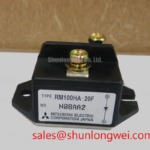
Mitsubishi RM100HA-20F Fast Recovery Diode Module: High-Speed Switching & Power Rectification
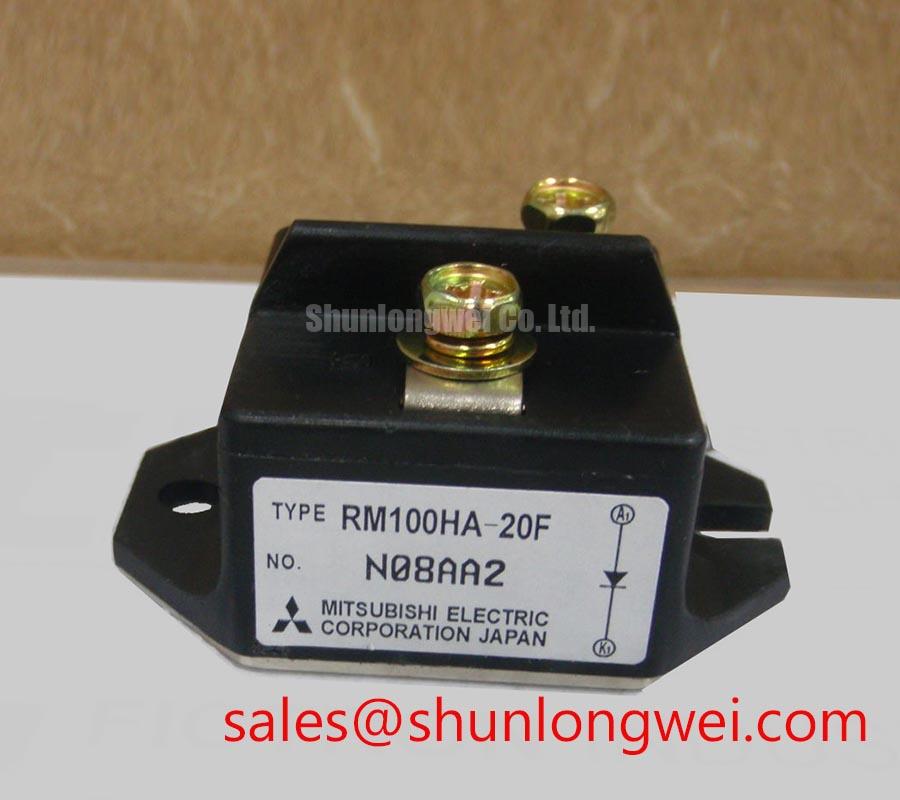
The Mitsubishi RM100HA-20F is an insulated single-element diode module designed for high-frequency freewheeling, snubber clamping, and high-voltage DC rectification. Delivering dependable voltage blocking and fast reverse recovery, it secures low switching loss across medium-power industrial converters.
- Top Specs: 1000V VRRM | 100A IF(DC) | 0.8 µs trr
- Key Benefits: Minimizes turn-off recovery energy; electrically isolated baseplate simplifies mounting.
How does the reverse recovery speed affect switching efficiency? The 0.8 µs recovery time curtails transient reverse recovery current spikes, directly lowering thermal stress on complementary switches.
For 400V to 600V DC-link systems requiring fast freewheeling, this 1000V 100A module provides an optimal balance of recovery speed and voltage margin.
Application Scenarios & Value
Mitigating Switching Stress in High-Frequency Power Conversion
Engineers often face severe switching loss and voltage overshoot when pairing slow standard diodes with fast-switching transistors. In high-power welding equipment and DC motor control stages, the freewheel diode must transition from full forward conduction to high reverse blocking in fractions of a microsecond. The RM100HA-20F delivers a rated forward current of 100A and a peak reverse withstand voltage of 1000V, backed by an optimized 0.8 µs reverse recovery time (trr).
Consider an industrial welding power source operating at multi-kilohertz switching frequencies. During switch turn-off, secondary leakage inductance generates sharp di/dt transients. The soft yet fast reverse recovery characteristic of the RM100HA-20F limits reverse recovery charge (Qrr), which suppresses electromagnetic noise and limits peak dissipation. Thinking of the diode as an electronic check valve, a sluggish valve lets backflow slam shut with severe hydraulic shock, whereas this fast-recovery valve snaps shut smoothly before reverse pressure builds up.
Beyond welders, this diode module functions seamlessly in uninterruptible power supplies (UPS), high-frequency induction heating stages, and active snubber circuits. For installations operating on lower current loops, the related RM50HA-24F offers higher 1200V blocking at 50A, while three-phase AC input rectification can utilize modules such as RM50TC-2H.
Technical Deep Dive
Insulated Baseplate Architecture and Fast Reverse Recovery Dynamics
The electrical and mechanical construction of the Mitsubishi RM100HA-20F centers on high operational reliability in compact power enclosures. The module features an internal direct-copper-bonded (DCB) ceramic substrate that provides 2500V AC galvanic isolation between the active semiconductor element and the mounting baseplate. This insulation eliminates external insulating pads, significantly reducing assembly complexity and contact thermal resistance.
Thermal management relies on a low junction-to-case thermal resistance (Rth(j-c)), enabling rapid heat removal toward the heatsink during continuous 100A conduction. In thermal terms, the DCB structure acts like an express highway for heat flux, preventing localized hot spots from exceeding the maximum junction temperature of 150°C. System integrators referencing an in-depth analysis of power semiconductor modules can leverage this thermal headroom to design smaller forced-air or liquid heatsinks.
What is the primary benefit of its fast recovery silicon? It dramatically reduces reverse recovery charge and power loss during high-speed commutations. When testing power converters in field environments, engineers frequently consult practical guides on how to test an IGBT module with a multimeter and inspect associated freewheeling diodes for forward junction health and reverse leakage integrity.
Key Parameter Overview
Essential Ratings & Engineering Significance
| Parameter | Symbol | Rating / Value | Engineering Significance |
|---|---|---|---|
| Repetitive Peak Reverse Voltage | VRRM | 1000V | Guarantees robust voltage margin across typical 400V–600V DC-link bus topologies. |
| Forward Current (DC) | IF(DC) | 100A | Maintains continuous high-current carrying capability at Tc = 75°C. |
| Reverse Recovery Time | trr | 0.8 µs (Max) | Cuts dynamic turn-off losses and mitigates high di/dt switching noise. |
| Surge Non-Repetitive Forward Current | IFSM | 2000A (60Hz half-cycle) | Protects against downstream short-circuit events and startup inrush currents. |
| Isolation Voltage | Visol | 2500V AC (1 min) | Ensures operator safety and UL compliance without supplemental isolation barriers. |
| Maximum Junction Temperature | Tj | -40°C to +150°C | Provides broad thermal operational range for heavy-duty industrial hardware. |
Frequently Asked Questions
Engineering Queries & Application Nuances
1. Why is the 0.8 µs reverse recovery time critical in inverter and chopper circuits?
A short trr limits the period during which reverse current flows through the diode while reverse voltage builds. This reduces commutation energy dissipation (Erec) and keeps adjacent switching transistors within their thermal boundaries.
2. What circuit function does the 1000V VRRM rating accommodate in industrial designs?
The 1000V breakdown threshold provides ample safety headroom against inductive flyback spikes and line voltage fluctuations in nominal 380V to 480V AC rectified DC buses.
3. Can the RM100HA-20F be mounted directly onto a common chassis heatsink?
Yes. The 2500V AC internal ceramic isolation allows multiple modules to share a common heatsink without requiring individual mica washers or silicone isolation sheets.
4. How does the 2000A surge rating (IFSM) benefit welding and motor drive applications?
Welding arcs and high-inertia motor startups frequently experience momentary peak current pulses. The 2000A IFSM rating ensures the internal silicon die survives transient overload events without degradation.
5. What thermal interface material practices are recommended for mounting?
Apply a uniform layer of high-conductivity thermal grease (approx. 100 µm thickness) across the baseplate and torque the mounting screws evenly to ensure uniform pressure and low contact thermal resistance (Rth(c-f)).
From an engineering perspective, selecting the Mitsubishi RM100HA-20F provides a straightforward, isolated approach to fast freewheeling and rectification. Its 1000V blocking capability, 100A continuous throughput, and fast recovery dynamics deliver predictable power conversion performance across demanding industrial environments.
[