


Content last revised on September 10, 2026
SKiiP 32NAB12T3: Engineering Uncompromising Reliability with Solder-Free Power Modules
Introduction & Highlights
Redefining Thermal Resiliency in Power Conversion
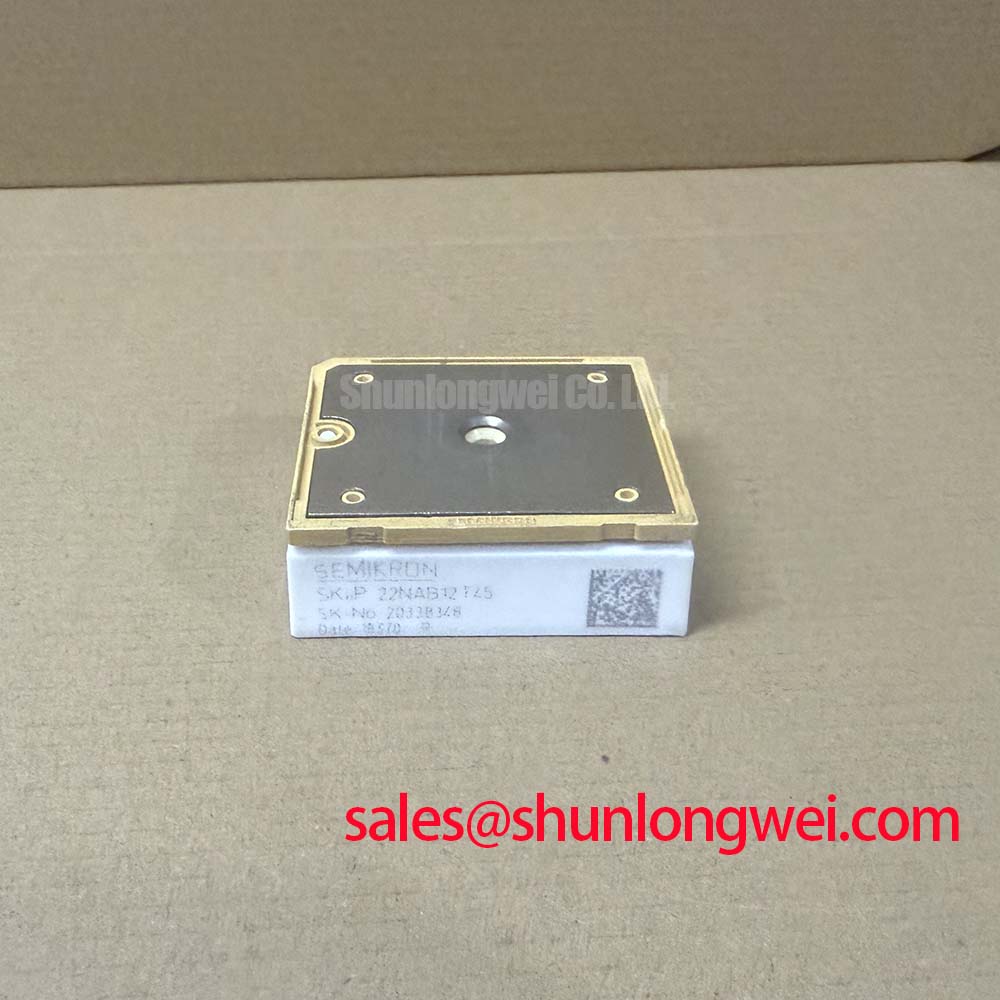
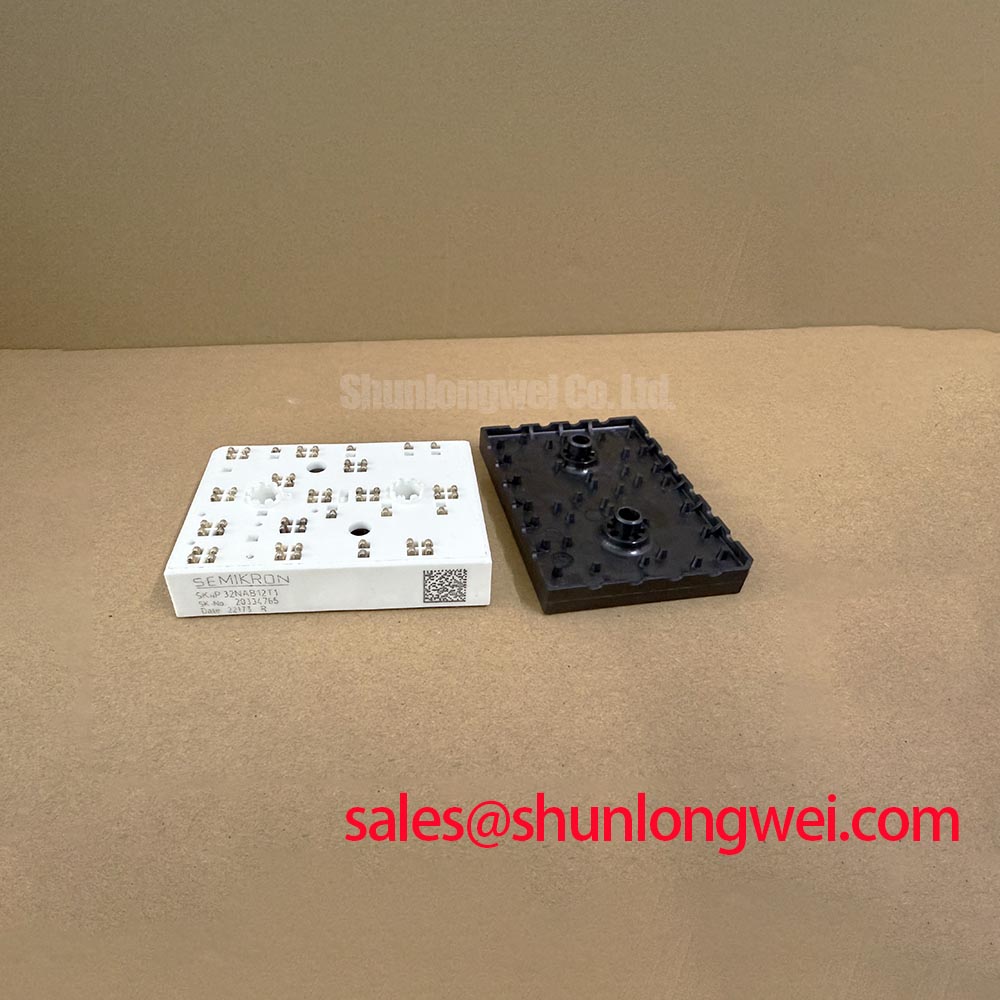
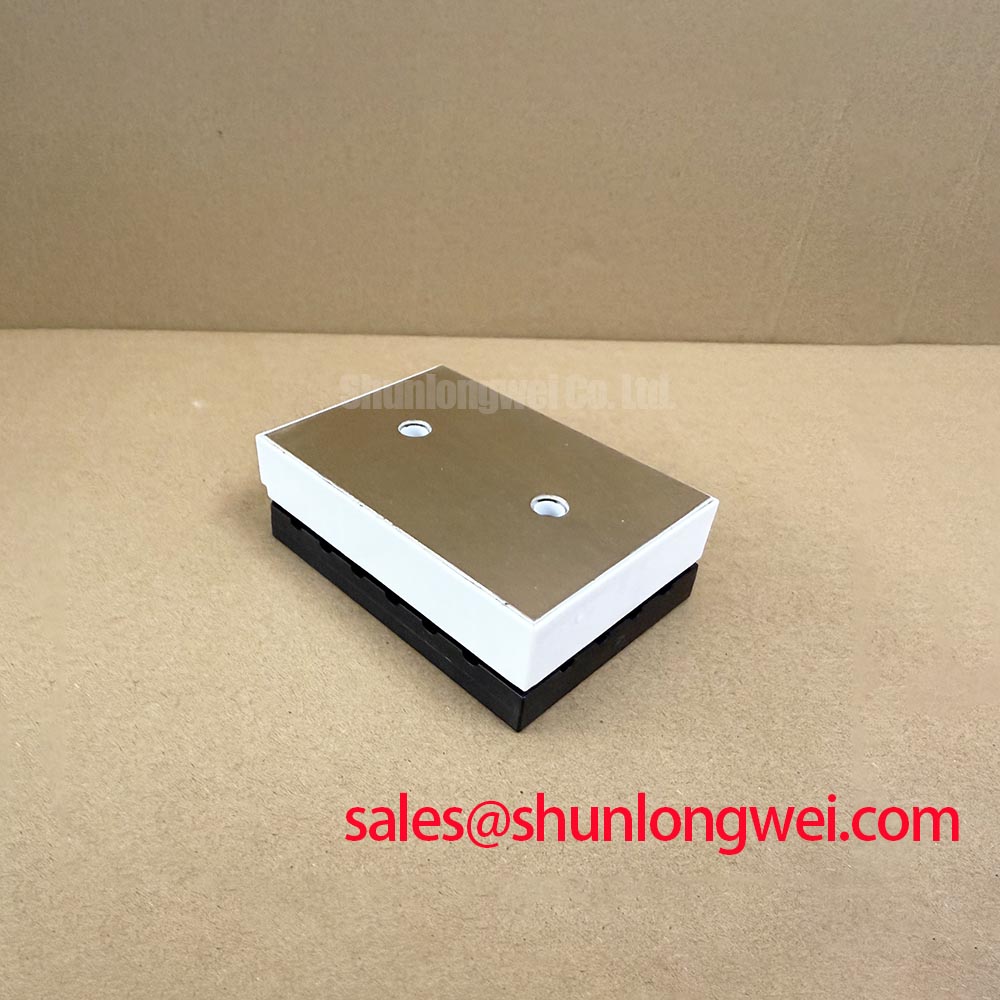
Engineered to maximize motor drive reliability, the SKiiP 32NAB12T3 leverages solder-free spring contact technology within a high-density CIB (Converter-Inverter-Brake) integration. This Semikron (now Danfoss) MiniSKiiP 3 module delivers a robust 1200V and 50A rating, alongside a typical VCE(sat) of 2.5V, offering a streamlined path to highly efficient power stage design. What is the primary benefit of its pressure-contact design? It enhances long-term reliability by eliminating solder fatigue under thermal cycling. By maintaining consistent thermal impedance over its operational lifespan, it directly addresses the thermal degradation concerns that compromise conventional soldered modules. For 15kW to 20kW variable frequency drives prioritizing long-term field reliability, this 1200V CIB module is the optimal choice.
Key Parameter Overview
Highlighting the Core Metrics for High-Density Integration
To empower your system layout and thermal calculations, the fundamental specifications of the SKiiP 32NAB12T3 are categorized below.
| Parameter | Value | Engineering Implication |
|---|---|---|
| Voltage Rating (VCES) | 1200V | Provides ample safety margin for 400V to 480V industrial line voltages. |
| Inverter Current (IC) | 50A (@ Tj=25°C) | Optimized for continuous, high-efficiency motor drive output stages. |
| Brake Chopper (IC) | 25A | Perfectly scaled for dissipating dynamic regenerative braking energy. |
| Rectifier Current (IF) | 35A | Delivers robust AC-DC conversion for three-phase input stages. |
| VCE(sat) Typical | 2.5V | Minimizes static conduction losses during continuous inverter operation. |
| Mounting Torque | 2.5 Nm | Secures the heat sink, PCB, and module together in a single step. |
Download the SKiiP 32NAB12T3 datasheet for detailed specifications and performance curves.
Application Scenarios & Value
Enhancing Durability in Variable Frequency Drives
Engineers designing industrial Variable Frequency Drives (VFDs) consistently face catastrophic failures triggered by PCB solder fatigue, especially in environments subject to extreme temperature fluctuations. The SKiiP 32NAB12T3 systematically mitigates this vulnerability by replacing rigid pins with flexible spring contacts. This specialized contact system mechanically absorbs the thermal expansion mismatch between the FR4 PCB and the aluminum heat sink. This mechanical decoupling ensures that high-current connections remain intact even after tens of thousands of power cycles.
When deploying this module in servo drives or heavy-duty HVAC inverters, the integrated CIB topology drastically reduces the parasitic inductance typically introduced by discrete components, simplifying the thermal management footprint. While this model provides an excellent 50A baseline, for systems requiring an upgraded Trench 4 architecture, the related SKIIP32NAB12T49 is highly capable. Alternatively, for applications pushing higher power boundaries, the SKiiP35NAB12T4V1 scales up the current capacity while seamlessly maintaining the exact same MiniSKiiP 3 footprint.
Technical Deep Dive
A Closer Look at Pressure-Contact Design and Trench 3 Architecture
The inherent reliability of the SKiiP 32NAB12T3 stems from its intersection of advanced packaging and proven silicon architecture. The pressure-contact design is a radical departure from traditional soldered modules. Think of these spring contacts as a heavy-duty automotive suspension system; they dynamically absorb the bumps of thermal expansion and contraction, preventing the connections from cracking under severe thermo-mechanical stress. By distributing the 2.5 Nm mounting pressure evenly across the Direct Bonded Copper (DBC) substrate, it achieves a superior, void-free interface with the heat sink.
At the silicon level, the module utilizes Trench 3 IGBT technology. A critical characteristic of the Trench 3 die is its positive temperature coefficient for VCE(sat). This behaves much like vehicles merging on a highway; as the semiconductor chips heat up and speed up their molecular activity, their internal electrical resistance slightly increases. This naturally forces the current to balance across parallel paths within the die, inherently preventing localized hot spots. This dynamic makes the IGBT's hybrid structure exceptionally rugged under short-circuit anomalies and transient overloads.
FAQ
Resolving Common Engineering Queries
How does the spring contact technology in the SKiiP 32NAB12T3 improve power cycling capability?
By replacing rigid solder joints with flexible silver-plated springs, the module eliminates the primary failure mode of solder fatigue caused by thermal mismatch, drastically extending the module's power cycling lifetime in demanding cyclic loads.
What is the engineering significance of the 50A inverter and 25A chopper ratings?
This asymmetric current scaling is highly deliberate. The 50A inverter handles the primary motor drive output, while the 25A chopper is optimized exclusively for dissipating regenerative braking energy, providing a perfectly balanced thermal ratio for standard industrial hoists and elevators.
Can the integrated temperature sensor be utilized for active thermal protection?
Yes. The integrated temperature sensor is mounted directly on the DBC substrate alongside the power chips. This physical proximity provides highly accurate, real-time junction temperature estimations, enabling the system MCU to execute rapid over-temperature shutdowns before catastrophic failure occurs.
Why is the single-screw assembly critical for high-volume manufacturing?
The single-screw design simultaneously compresses the PCB, the power module, and the heat sink together. This mechanical architecture completely eradicates the need for wave soldering of power pins, cutting down manufacturing time. Ultimately, standardizing on this solder-free architecture provides OEMs with a strategic advantage, ensuring field reliability that outlasts conventional soldered topologies.