

Content last revised on October 16, 2026
Field Diagnostics & Commissioning: Evaluating Post Surge Reverse Voltage Blocking in SKKD100-18 Topologies
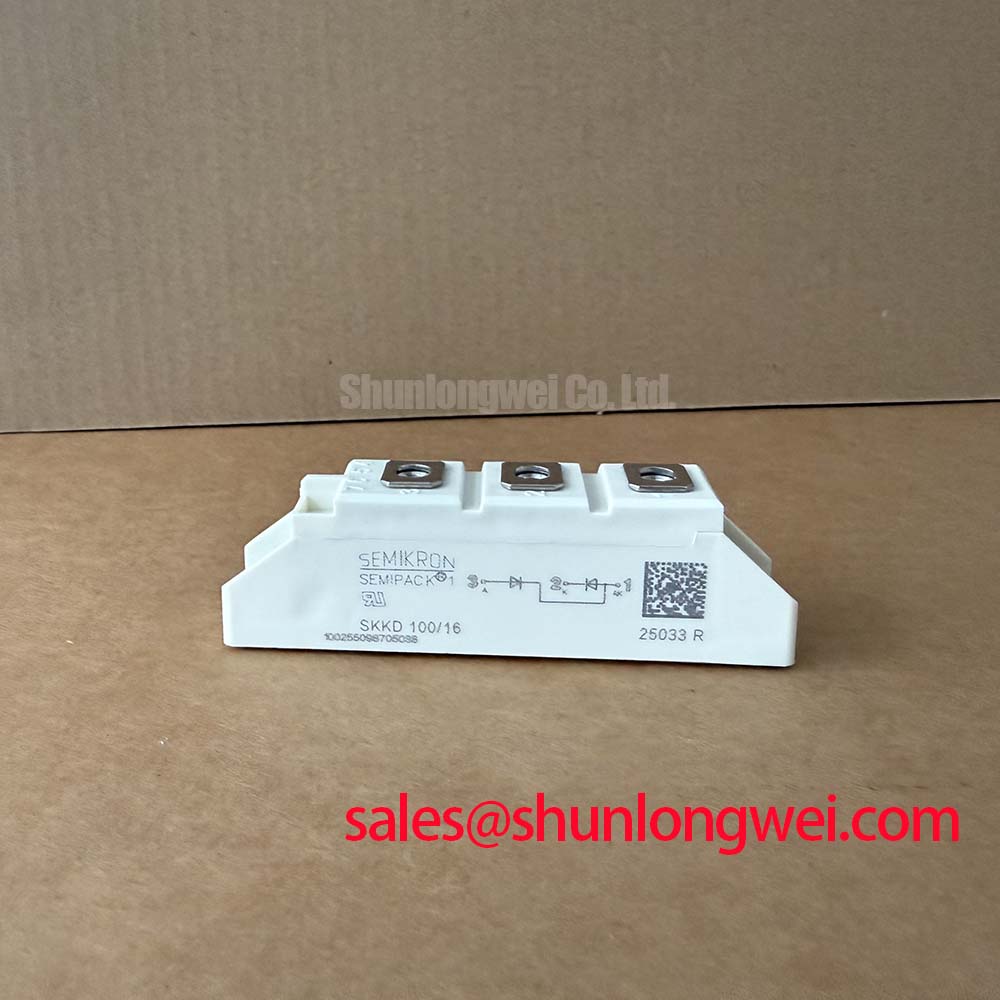
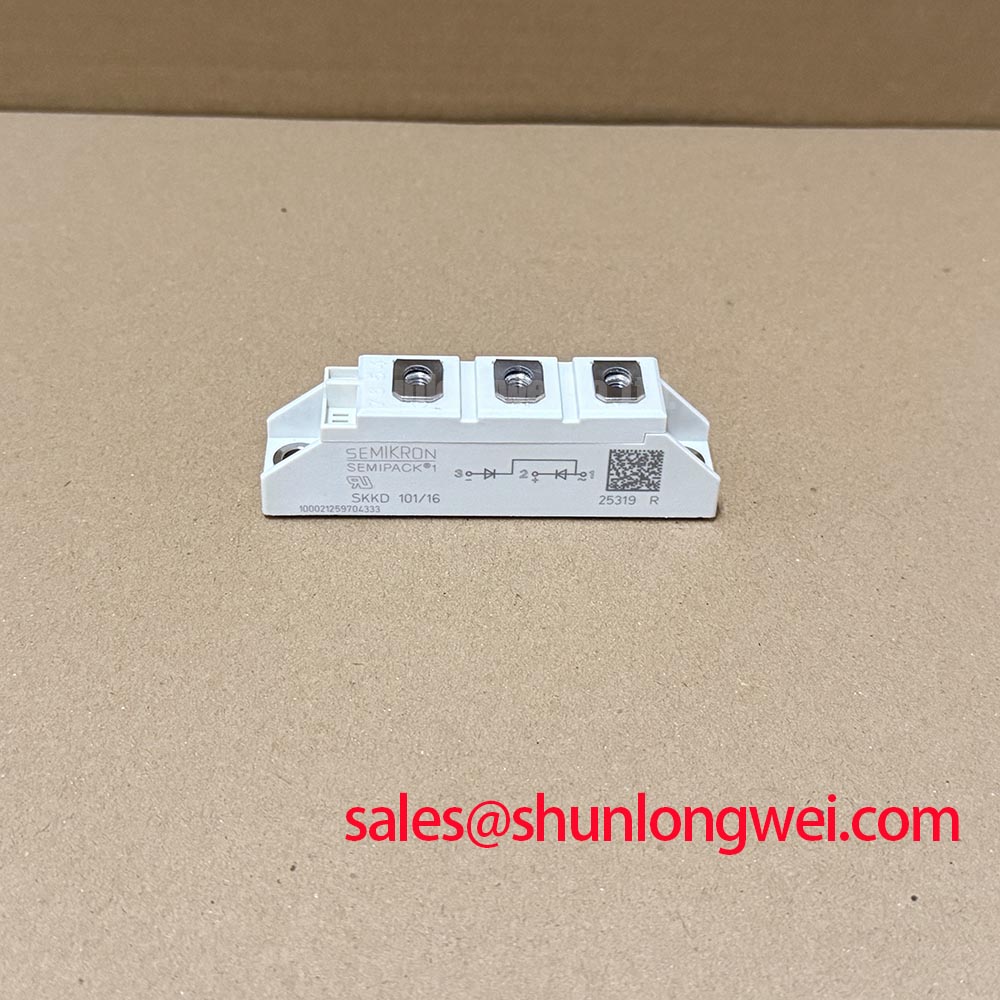
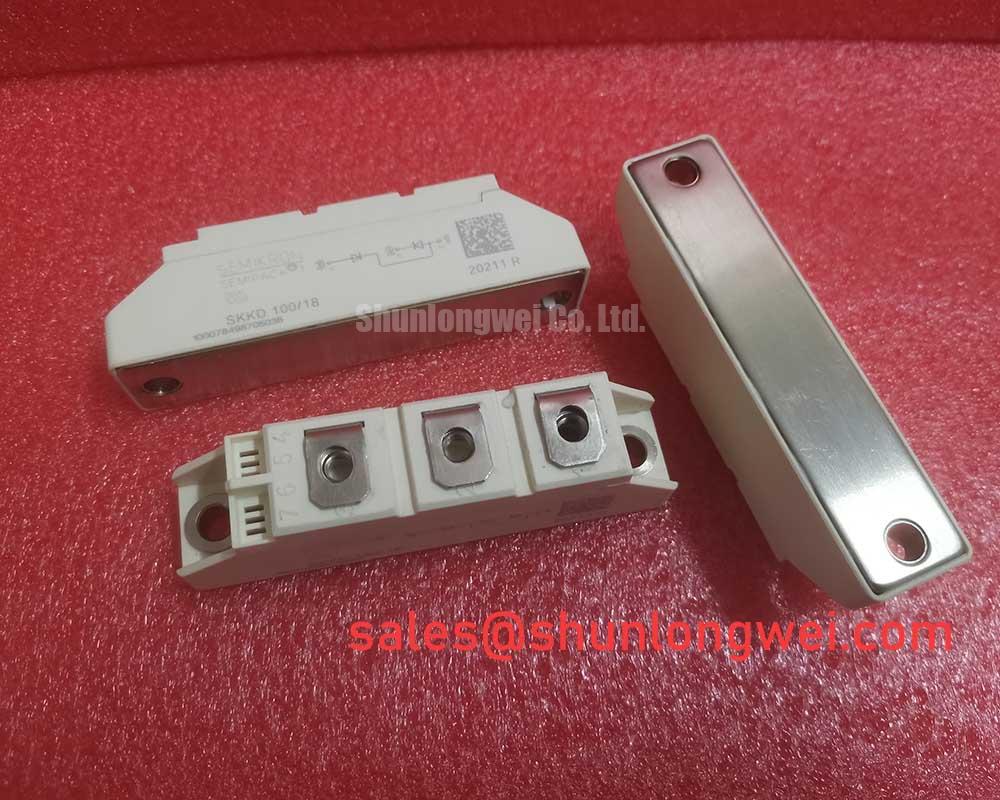
After a soft starter has experienced an upstream surge or abnormal phase event, isolate the cabinet, discharge the power circuit, and inspect the SKKD100-18 connection area before restoring reverse voltage. The official product parameters identify this Semikron Semipack module with an 800.0 V rated voltage and a 1001.0 A rated current. These values define the product identity; they do not replace the system engineer’s assessment of line voltage, switching conditions, fault current, or thermal state.
For a high voltage three phase motor solid state soft starter, the first useful comparison is between the affected phase and the two unaffected phases. Check terminal tightness, discoloration, enclosure contamination, and fuse condition while the assembly remains isolated. A post surge condition can involve the module, semiconductor fuses, snubber network, wiring, or upstream switching equipment, so the test record should identify each phase rather than treating a single measurement as conclusive.
The sinusoidal half cycle surge capability, including the relevant ITSM rating, must be taken from the applicable Semikron technical documentation for the exact configuration. Use that value together with the fuse coordination and I2t information when reviewing a fault event. The fuse must interrupt the available fault energy within the protection scheme intended for the thyristor path; selecting a fuse from current rating alone is not sufficient.
Before reapplying reverse voltage, verify that the module terminals are correctly identified, the phase conductors are seated evenly, and the gate or control wiring has not been disturbed by the event. A controlled commissioning sequence should observe phase balance, leakage behavior, and temperature rise under the actual starter load. The Semikron reference for SEMIPACK Thyristor and Diode Modules provides useful product family context, while the system protection study determines the acceptable operating boundary.
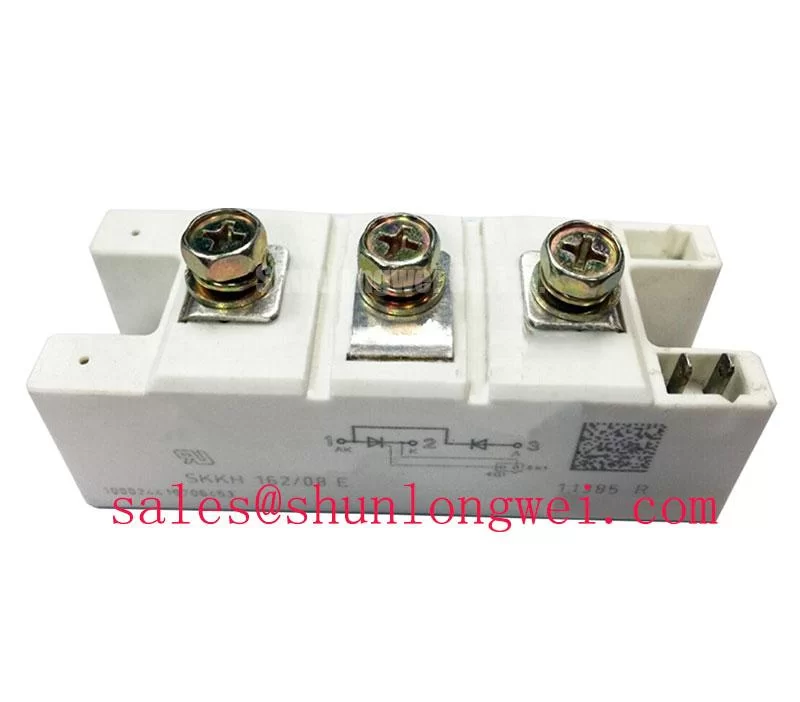
For a neutral replacement comparison, engineers may review SKKH91-18E as a separate Semikron reference device. It should not be treated as an automatic substitute: electrical ratings, circuit topology, gate requirements, mechanical fit, and thermal conditions must match the original installation.
Field Diagnostics & Commissioning: Mechanical Mounting Torque Sequence and Thermal Resistance in SKKD100-18 Topologies
Thermal performance depends on uniform contact between the Semipack baseplate and the heatsink, not on the current rating alone. Remove old thermal compound before inspection, check the heatsink for burrs or contamination, and confirm that the module sits flat without rocking. Thermal resistance from junction to case, Rth(j-c), is a datasheet parameter to use with the installation’s measured case temperature and load profile.
Apply the specified thermal interface material as a thin, continuous layer suitable for the module and heatsink surfaces. The purpose is to fill surface irregularities without creating a thick compliant layer that reduces mechanical stability. Tighten mounting hardware progressively and evenly, using the manufacturer’s specified torque and sequence for the Semipack construction. Do not infer a model specific torque from a different package or from a general fastener chart.
After mounting, inspect the module edges for distortion and confirm that the power terminals remain aligned with the busbar or cable lugs. Terminal hardware should be tightened to its applicable manufacturer specification with calibrated tooling. Record the installation condition, ambient temperature, heatsink airflow, and phase current so later temperature comparisons have a meaningful baseline.
Maintenance Note: Schedule periodic heatsink cleaning and monitor contact temperature so blocked airflow or aged thermal compound is addressed before nuisance trips develop.
High and low temperature environments also require attention to condensation. Allow equipment to reach a stable dry condition before energizing after a cold soak, and inspect enclosure sealing, heater control, and drainage where applicable. These are installation design considerations rather than guaranteed characteristics of the SKKD100-18 itself.
Transient Dynamics & Electrical Design: AC Input Transient Overvoltage Clamping on SKKD100-18
Transient protection should be coordinated around the complete AC input path, including the line impedance, semiconductor fuses, contactors, cable routing, MOV network, and any RC snubber stage. For a soft starter, MOV selection must account for the normal line voltage, temporary overvoltage, surge energy, repetitive duty, and the clamping level seen by the thyristor junction. The final selection is determined by the system protection study and verified during controlled testing.
Keep the surge protection loop physically compact and separate high current conductors from sensitive gate or control wiring. Minimize parasitic loop inductance where turn off or commutation events can create voltage overshoot, then verify peak voltage against the module’s rated boundary with suitable differential probing. Long motor cables can also produce reflected wave behavior and additional stress at the motor terminals; filtering and cable treatment should therefore be assessed at system level rather than assigned to the semiconductor module.
RC snubbers can reduce high frequency voltage transitions, but their capacitance, resistance, pulse energy, and dissipation must be selected for the actual three phase topology. A network that is suitable for one soft starter may introduce excessive reactive current or insufficient damping in another. The Semikron CAL Diode Technology reference offers related semiconductor technology context, while the SKKD100-18 application circuit determines the relevant commutation paths.
During commissioning, capture the line to line voltage, gate command timing, current rise, and transient peaks across the protected path. Review busbar arrangement and conductor separation before increasing load. Practical test references for evolving power conversion systems are available through Future of Power Electronics. Any claim of EMC compliance belongs to the completed equipment and its test configuration, not to the module in isolation.