Content last revised on September 10, 2026
SP14Q005 Hitachi (KOE) 5.7-inch 320x240 FSTN LCD Module Technical Analysis
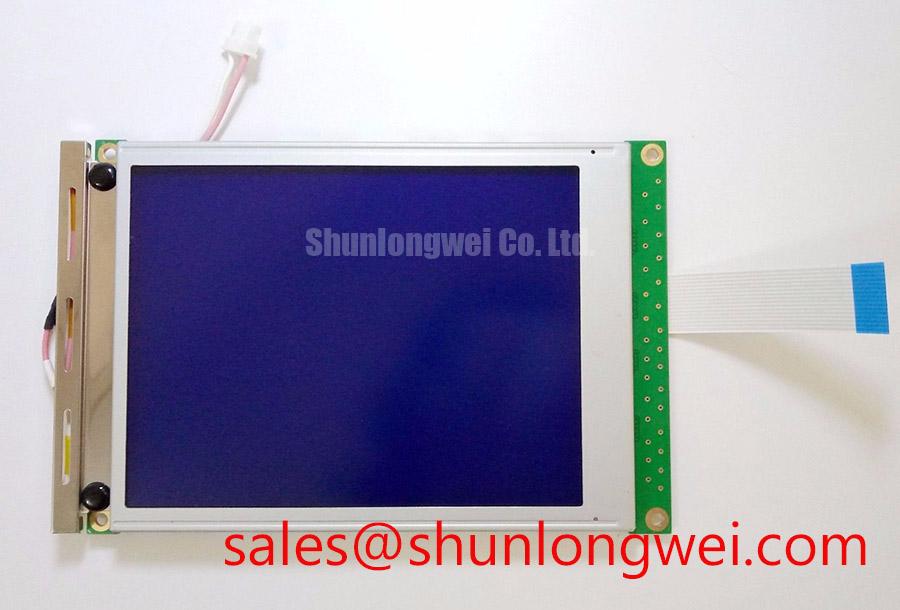
The SP14Q005 is a foundational 5.7-inch monochrome FSTN-LCD display module, originally developed by Hitachi (now supported under the KOE/JDI brand). Designed for high-reliability industrial environments, this 320x240 QVGA resolution panel utilizes transflective technology to ensure readability across varying ambient light conditions. As a legacy-standard component, it provides a stable bridge for maintaining and upgrading industrial human-machine interfaces (HMIs) where durability and consistent optical performance are non-negotiable. For legacy HMI systems requiring monochrome stability and sunlight readability, the SP14Q005 remains a definitive standard for professional replacement and maintenance.
UVP: High-contrast FSTN transflective clarity for long-term industrial HMI reliability.
- Top Specs: 5.7-inch | 320x240 Resolution | Transflective FSTN
- Key Benefits: Superior sunlight readability and proven mechanical longevity in harsh settings.
- Core Question: How does it handle high-glare environments? The transflective polarizer allows the SP14Q005 to use ambient light to enhance contrast, making it effectively sunlight-readable without excessive power draw.
Application Scenarios & Value
Ensuring Operational Continuity in High-Glare Industrial Environments
The SP14Q005 is specifically engineered to solve the "washout" effect common in standard STN displays. In a typical engineering scenario, such as an outdoor industrial pump controller or a CNC lathe workstation located under bright factory skylights, standard emissive displays often fail to provide adequate contrast. The transflective mode of the SP14Q005 acts much like a high-end digital watch face: it utilizes a rear reflector that bounces ambient light back through the liquid crystal layer. This means that as the environment gets brighter, the display contrast naturally maintains its clarity, reducing the burden on the CCFL or LED backlight and extending the component's operational life.
This module is frequently integrated into medical diagnostic equipment and laboratory instruments where monochrome precision is preferred over color to reduce visual fatigue. Its 5.7-inch form factor and 320x240 resolution are optimized for displaying real-time waveforms and data grids. For systems requiring modern color upgrades, the G057VN01 V2 offers a similar physical footprint but with full VGA color capabilities. However, for maintenance of existing 4-bit parallel architectures, the SP14Q005 is the technically correct choice to avoid costly software rewrites. For more information on display technologies, see our engineer's guide to TFT-LCD and industrial displays.
Key Parameter Overview
Functional Specs for Seamless System Integration
| Category | Parameter | Technical Specification |
|---|---|---|
| Optical Performance | Display Type | FSTN (Film-compensated Super-Twisted Nematic) |
| Resolution | 320 x 240 pixels (QVGA) | |
| Polarizer Mode | Transflective / Positive | |
| Mechanical Specs | Screen Size | 5.7-inch Diagonal |
| Active Area | 115.18 x 86.38 mm | |
| Electrical & Interface | Interface Type | 4-bit Parallel Data |
| Supply Voltage | 5.0V (Typical) |
Download the SP14Q005 datasheet for detailed specifications, timing diagrams, and optical performance curves.
Technical Deep Dive
The Engineering Logic of Film-Compensated STN (FSTN)
The "F" in FSTN represents a critical design choice for the SP14Q005. Standard STN displays often suffer from a yellowish or bluish tint due to the inherent birefringence of the liquid crystal molecules. Hitachi engineers integrated a compensation film specifically tuned to neutralize these color shifts, resulting in a true "black on white" (or silver) appearance. This enhances the contrast ratio significantly compared to legacy STN panels.
To use an analogy, if standard STN is like looking through a tinted window, FSTN is like looking through a calibrated lens that removes the haze. From a thermal management perspective, STN technology is sensitive to temperature-induced viscosity changes in the liquid crystal. The SP14Q005 incorporates a design that maintains consistent response times and contrast levels across its industrial operating temperature range, ensuring that data "ghosting" is minimized during rapid value updates in industrial HMI applications. For engineers concerned with environmental resilience, understanding the engineering behind sunlight-readable displays is essential for long-term project success.
Industry Insights & Strategic Advantage
Strategic Maintenance in the Age of "Color-First" Components
While the broader market has shifted toward high-resolution color TFT-LCD panels, the SP14Q005 represents a critical "stability component" in the industrial supply chain. Many legacy systems in the energy and pharmaceutical sectors were qualified based on specific monochrome 4-bit parallel interfaces. Upgrading these systems to color often requires a complete redesign of the main logic board and the software stack, which can be prohibitively expensive and time-consuming under IEC 61800-3 or similar compliance frameworks.
The strategic advantage of the SP14Q005 lies in its electromagnetic compatibility (EMC) profile. Because monochrome displays operate at much lower clock frequencies than high-speed LVDS or MIPI color panels, they generate significantly less EMI. This makes the SP14Q005 an ideal candidate for "keep-it-simple" designs where the primary goal is rugged data visualization without the overhead of complex shielding or high-power graphics processing. As industrial automation moves toward Industry 4.0, maintaining a stock of these reliable QVGA modules is a common strategy for minimizing downtime in critical infrastructure.
FAQ
How does the FSTN technology in the SP14Q005 specifically impact the viewing angle?
FSTN (Film-compensated STN) provides a significantly wider viewing angle compared to standard STN. The compensation film reduces the interference of light as it passes through the LC layer at an angle, ensuring that operators can read the display clearly even if they are not positioned directly in front of the console.
What are the primary considerations for replacing a CCFL-backlit SP14Q005 with a modern LED-backlit revision?
The primary challenge is the inverter. Original SP14Q005 modules often utilized high-voltage CCFL backlights requiring an external inverter. When sourcing modern replacements, engineers must verify if the backlight is LED-based, which requires a constant-current DC driver instead of an AC inverter. Always consult the specific revision datasheet to ensure electrical compatibility with your existing power rail.
As a specialized distributor of industrial display components, we provide high-quality SP14Q005 modules to support your long-term maintenance and production needs. Our technical team is available to verify technical specifications and provide documentation to support your engineering assessment. For pricing and availability, please contact our procurement desk.