


Content last revised on September 10, 2026
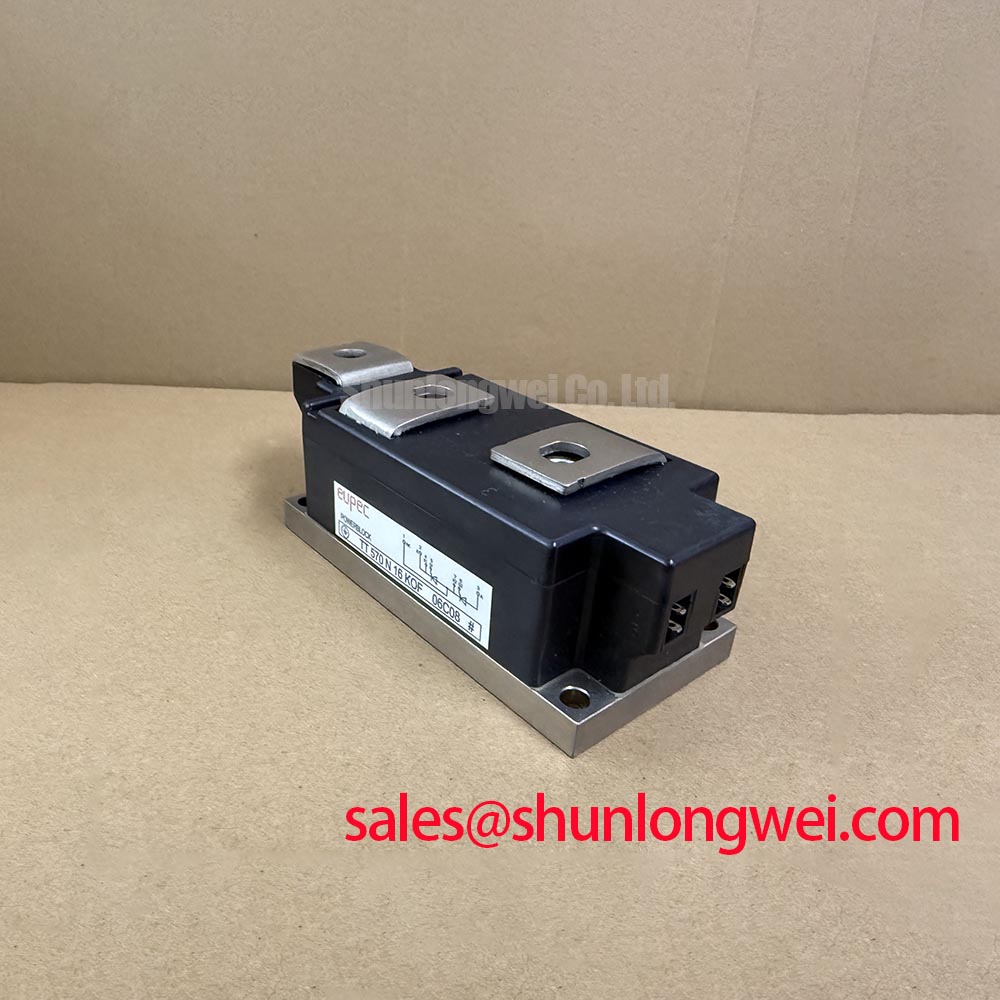
Engineering Analysis of the TT570N16KOF Phase Control Thyristor Module
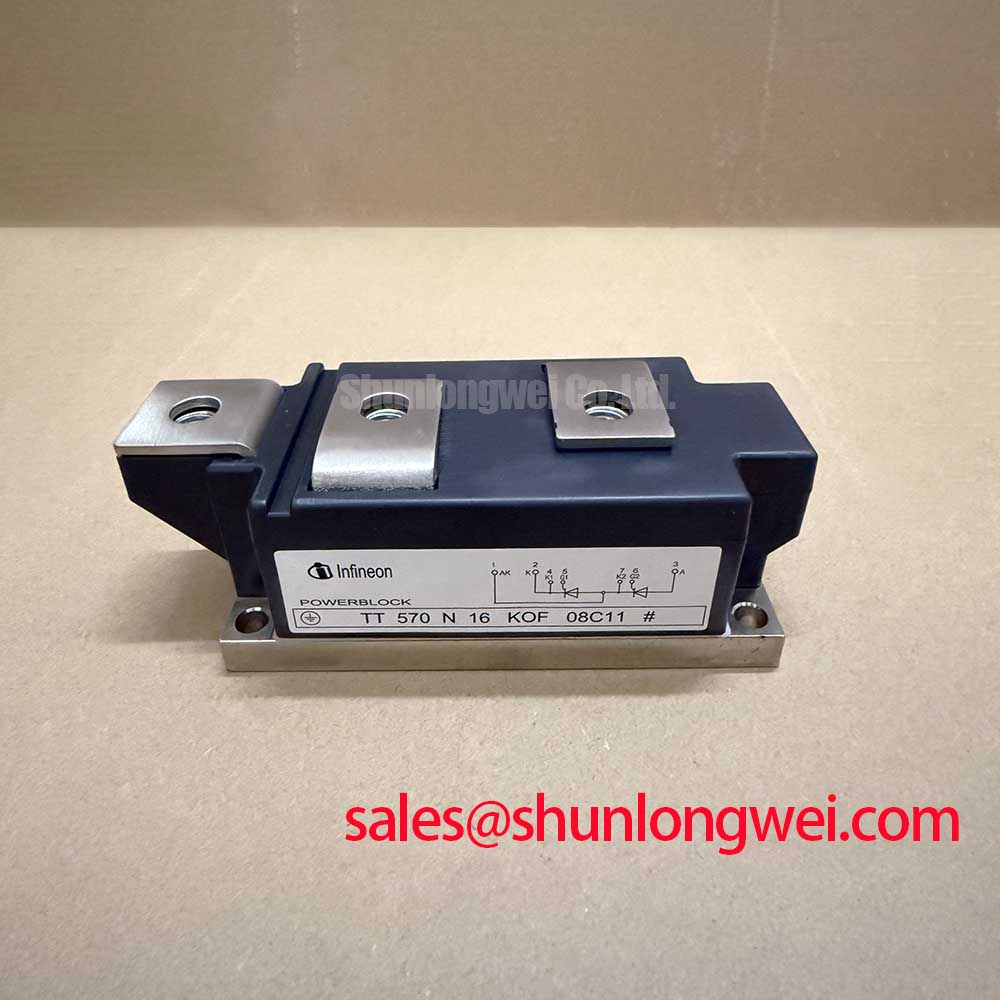
Engineered with robust pressure contact technology, this thyristor module delivers exceptional thermal cycling stability for high-stress industrial switching applications. For megawatt-class soft starters demanding superior surge handling, the TT570N16KOF serves as the optimal power control solution.
- 1600V | 570A | Rth(j-c) 0.052 K/W
- Eliminates solder fatigue.
- Maximizes operational lifespan.
Engineers frequently combat thermal degradation during heavy motor startups; this power semiconductor withstands extreme thermal cycling to prevent catastrophic phase failures, ensuring continuous line operation in demanding environments.
Key Parameter Overview
Functional Grouping for System-Level Evaluation
Proper integration requires a thorough understanding of the electrical and thermal boundaries. The following functional grouping highlights the core operational limits of the device.
| Functional Group | Parameter | Value | Engineering Significance |
|---|---|---|---|
| Voltage Ratings | Repetitive peak reverse voltage (1600V) | 1600 V | Provides adequate voltage margin for 400V to 690V AC industrial line rectifications. |
| On-state voltage (max) | 1.35 V | Minimizes static conduction losses during continuous high-current operation. | |
| Current Capabilities | Average on-state current (570A) | 570 A (@ Tc=85°C) | Determines the continuous baseline load the module can sustain without thermal runaway. |
| Surge current rating | 21,000 A (10ms) | Crucial for surviving transient overload conditions, such as direct grid shorts. | |
| Thermal Characteristics | Thermal resistance, junction to case | 0.052 K/W | Dictates the efficiency of heat transfer to the baseplate and heatsink assembly. |
Download the TT570N16KOF datasheet for detailed specifications and performance curves.
Application Scenarios & Value
Mastering High-Stress Motor Control and Rectification
What is the primary benefit of its pressure-contact design? Enhanced long-term reliability by eliminating solder fatigue.
In the realm of heavy industrial infrastructure, designing reliable motor soft starters presents significant thermal challenges. During the initial startup phase of a megawatt-class induction motor, the current can spike to several times the nominal rating. The TT570N16KOF addresses this directly through its massive 21,000A surge current rating. This allows the system to absorb severe inrush currents without degrading the semiconductor junction. By precisely regulating the firing angle of the thyristors, the module enables a controlled, gradual ramp-up of voltage, reducing mechanical stress on drivetrains and mitigating voltage dips on the supply grid.
Furthermore, this component excels in high-power rectifier bridges and crowbar circuits. The 1600V blocking voltage provides a robust safety margin against line transients common in industrial facility power grids. While this unit manages a substantial 570A for heavy industrial loads, systems requiring lighter phase control can utilize the TT162N16KOF for scaled-down 160A applications, allowing designers to match the exact semiconductor size to the load requirement without over-engineering.
Technical Deep Dive
The Physics of Pressure Contact Reliability
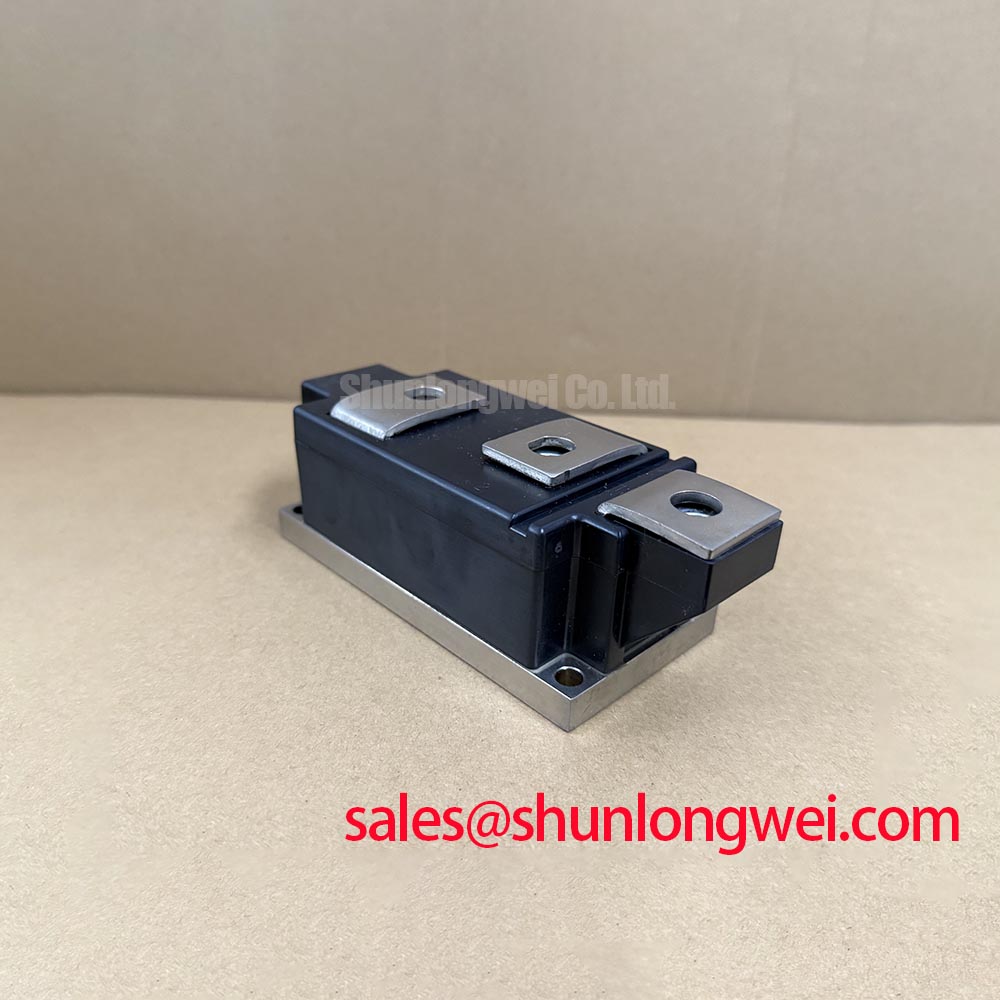
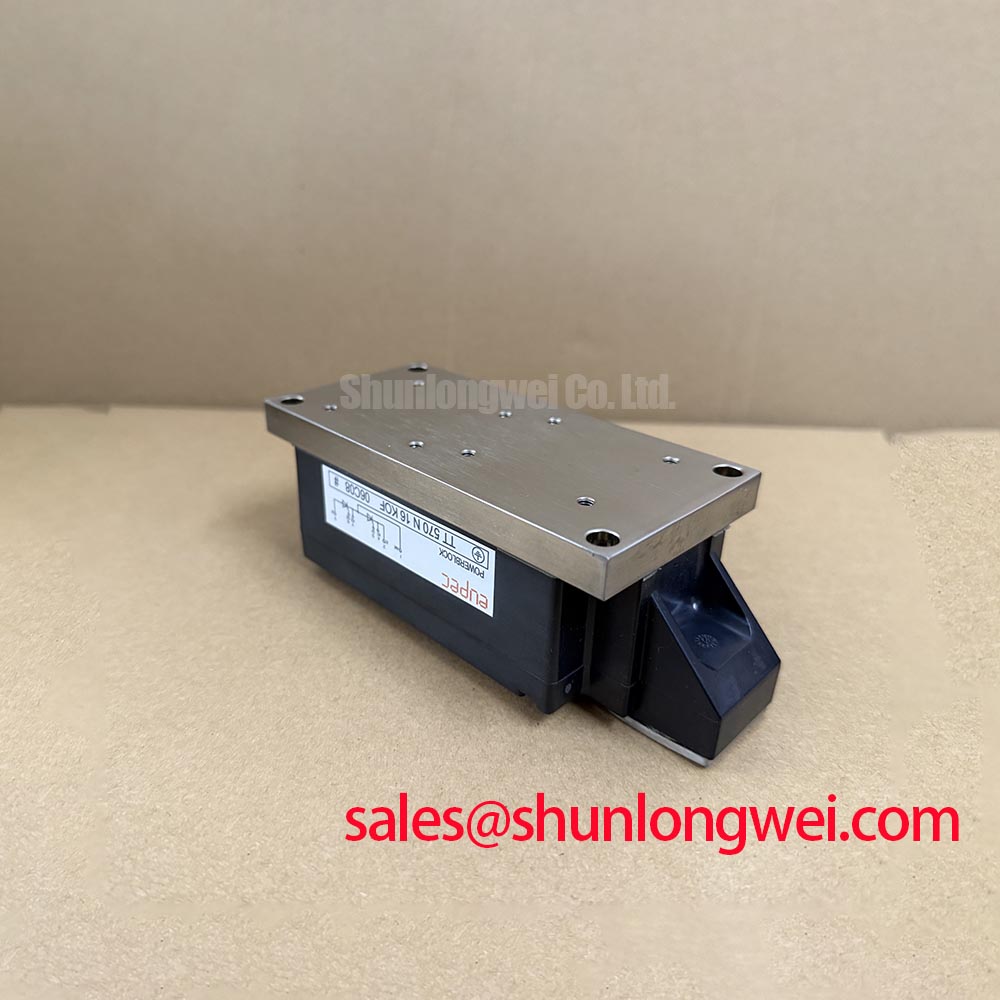
The fundamental differentiator of the TT570N16KOF lies in its mechanical construction. Unlike standard modules that rely on soldered joints between the silicon chip, the isolation substrate, and the baseplate, this device utilizes pressure contact technology. This functions like a high-tension suspension bridge, utilizing clamped mechanical force rather than rigid metallic bonds to absorb severe thermal expansion without material fatigue or cracking. This structural approach prevents the gradual degradation of thermal interfaces, which is the primary failure mode in modules subjected to frequent, aggressive power cycling.
Thermally, the internal architecture is highly optimized. The extremely low 0.052 K/W thermal resistance acts like a high-volume spillway on a hydroelectric dam, rapidly evacuating excess heat away from the silicon junction during peak overload events directly into the cooling infrastructure. Implementing highly effective Thermal Management at the system level is imperative; mating this precise semiconductor package to an adequately sized heatsink ensures the internal junction remains well below its 125°C absolute maximum limit, thereby securing the promised operational lifespan in harsh environments.
Frequently Asked Questions
Resolving Common Integration Challenges
How does the 21,000A surge rating influence system protection design?
This extremely high I²t capability allows engineers to coordinate protective fuses more effectively. It ensures that fast-acting semiconductor fuses will clear a hard short-circuit fault on the load side well before the thyristor wafer sustains irreversible thermal damage.
Why is the Rth(j-c) of 0.052 K/W critical for continuous operation?
A lower thermal resistance implies less temperature drop between the internal junction and the outer case. At a continuous load of 570A, the module generates substantial conduction losses; this low resistance ensures heat dissipates rapidly, allowing the use of more compact, cost-effective heatsinks while maintaining safe silicon temperatures.
Can this module be deployed in medium-voltage crowbar circuits?
Yes, the 1600V blocking capability makes it highly suitable for active crowbar protection in wind turbine converters or heavy drive systems, rapidly shorting the line to protect sensitive downstream DC-link capacitors during severe grid overvoltage events.
Evaluate your system's phase control requirements today and source the appropriate power semiconductor to ensure uninterrupted, highly efficient industrial operations.