

Content last revised on September 10, 2026
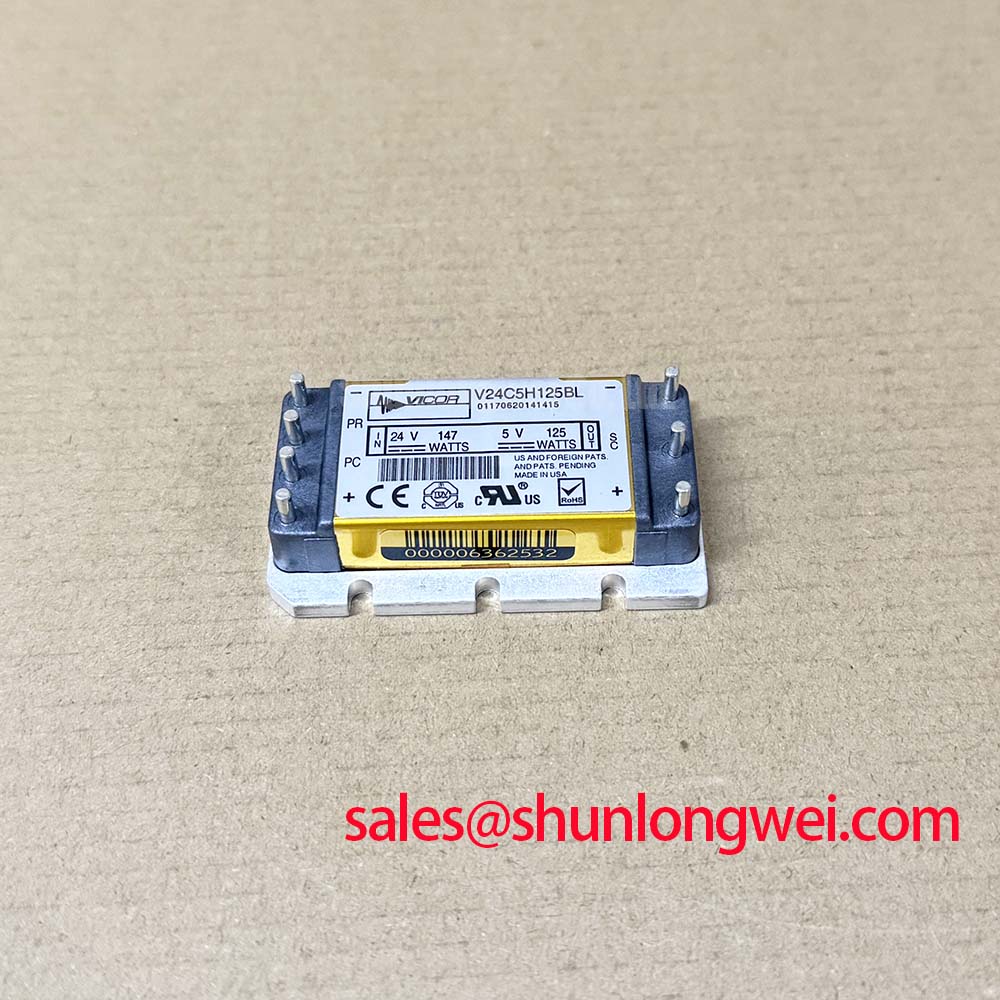
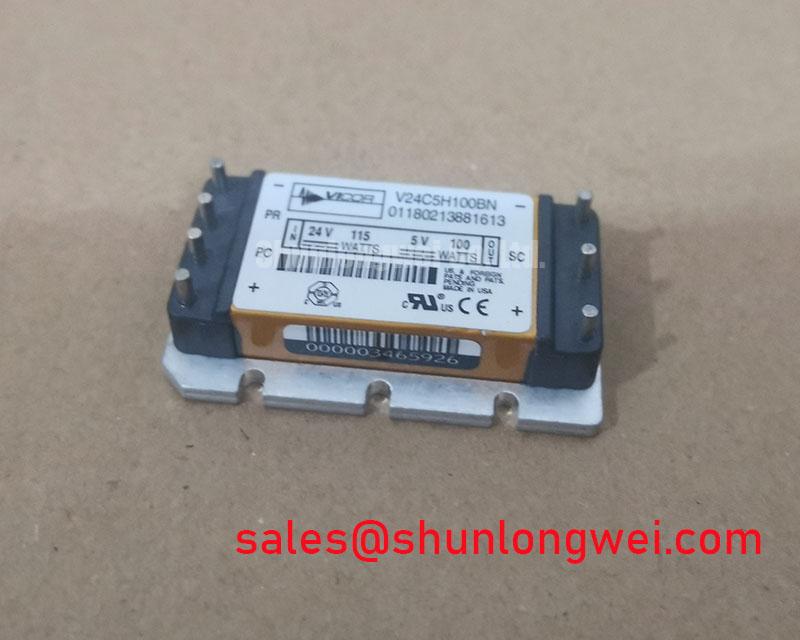
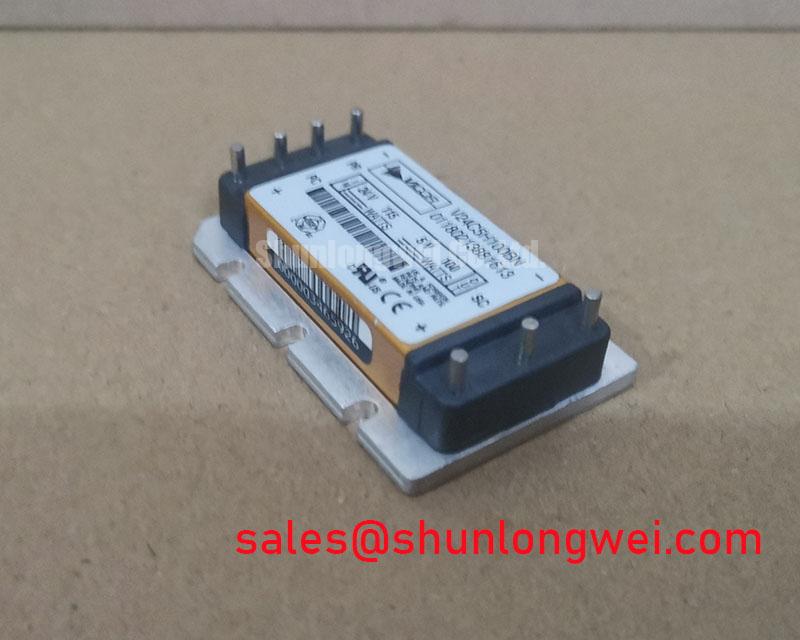
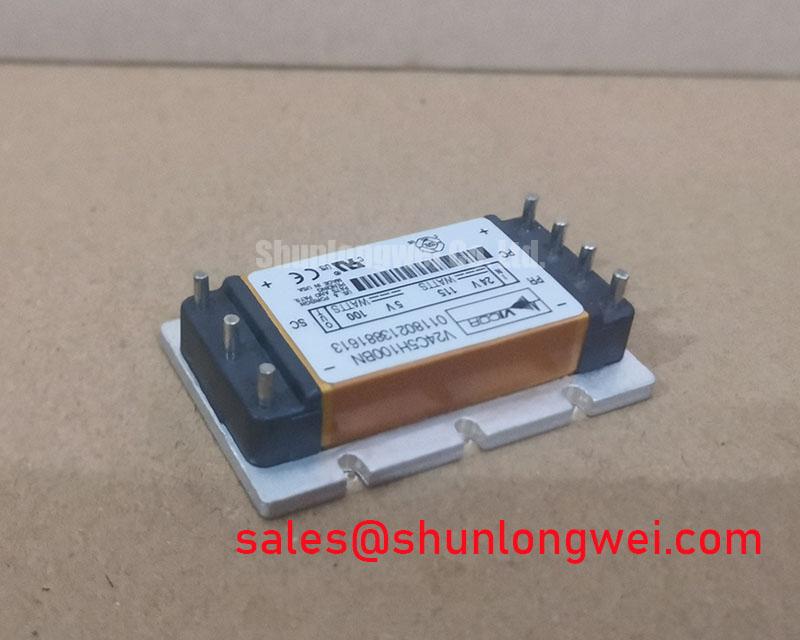
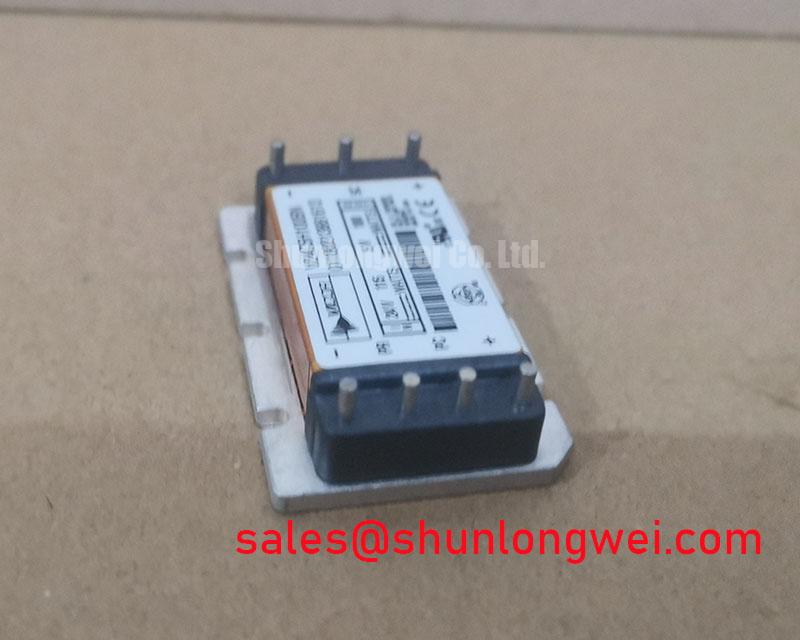
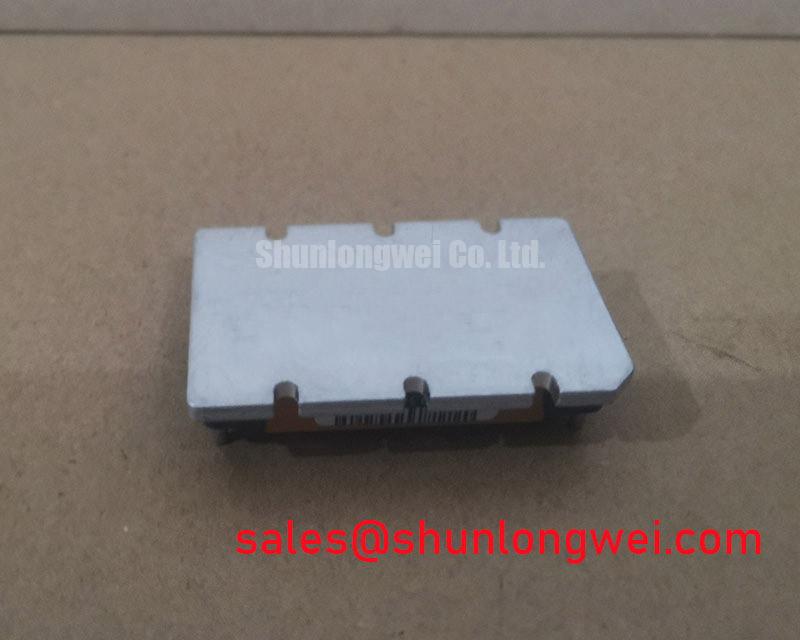
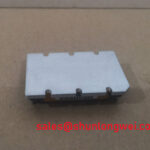
V24C5H100BN: 100W 5V DC-DC Converter Module for High-Efficiency Power Systems
The Vicor V24C5H100BN is an isolated DC-DC converter engineered to deliver exceptional power density and design flexibility, primarily by leveraging a high-efficiency topology that minimizes thermal challenges in space-constrained applications. It provides a robust, regulated 5V output at up to 100W from a wide 18-36VDC input, making it a reliable power solution for demanding industrial, communications, and defense systems. This module is not merely a power converter; it is a foundational component for building compact, cool-running, and reliable electronic equipment. For space-constrained industrial control systems requiring a reliable and efficient 100W 5V rail, the V24C5H100BN is the optimal choice.
Technical Deep Dive
Inside the Zero-Current Switching Topology: A Path to Higher Efficiency and Power Density
At the core of the V24C5H100BN's performance is its use of a high-frequency Zero-Current Switching (ZCS) topology. Unlike conventional "hard-switching" converters that force power transistors to turn on and off while significant current is flowing—generating substantial heat and electromagnetic interference (EMI)—the ZCS technique intelligently times the switching events to occur at the precise moment the current across the transistor is zero. What is the primary benefit of its zero-current switching topology? Significantly reduced switching losses and improved efficiency.
This can be compared to pushing a swinging door. A hard-switching converter is like trying to force the door shut while it's moving at full speed; it requires a lot of energy and creates a loud slam (representing wasted energy as heat and noise). In contrast, ZCS is like giving the door a gentle push just as it momentarily stops at the peak of its swing. This requires minimal effort and is virtually silent, preserving energy and ensuring smooth operation. This fundamental efficiency advantage allows the V24C5H100BN to pack 100 watts of power into a compact Maxi brick package, a feat that would require much larger thermal management hardware in a less efficient design.
Key Parameter Overview
Decoding the Electrical and Thermal Specifications for System Design
The specifications of the V24C5H100BN are tailored for creating robust and adaptable power systems. The following table highlights key performance metrics grouped by function, allowing for a clear assessment of its capabilities in a system context.
| Parameter Category | Specification | Value | Engineering Significance |
|---|---|---|---|
| Input Specifications | Nominal Input Voltage | 24V DC | Compatible with standard industrial and telecom 24V bus architectures. |
| Input Specifications | Input Voltage Range | 18 – 36V DC | Ensures stable operation during input line sags and swells, enhancing system reliability. |
| Output Specifications | Output Voltage | 5V DC | Provides a common logic-level voltage for digital and analog circuits. |
| Output Specifications | Output Power | 100W | Sufficient power for a wide range of control boards, sensors, and actuators. |
| Control & Performance | Efficiency | Up to 84% | Minimizes waste heat, reducing heatsink size and operating temperature. |
| Control & Performance | Output Voltage Trim Range | 10% to 110% | Offers exceptional flexibility to compensate for voltage drops or meet custom rail requirements. |
| Protection & Isolation | Isolation Voltage | 3000 Vrms (Input to Output) | Critical for safety and noise immunity, meeting standards like EN 60950-1. |
| Thermal & Mechanical | Case Operating Temperature | -40°C to 100°C | Wide operating range suitable for harsh industrial environments. |
Download the V24C5H100BN datasheet for detailed specifications and performance curves.
Application Scenarios & Value
Leveraging High Efficiency in Distributed Power Architectures
The V24C5H100BN is an ideal component for implementing robust Distributed Power Architectures (DPA) in complex systems. In applications like Automated Test Equipment (ATE) or large-scale industrial control systems, a central power supply delivers a higher, semi-regulated voltage (e.g., 24VDC) throughout the chassis. At the point of use, localized DC-DC converters like the V24C5H100BN efficiently step this down to the required voltage, such as 5V for sensitive analog-to-digital converter cards or logic arrays.
Consider the engineering challenge within a densely packed 19-inch rack for an ATE system. Multiple instrument cards require clean, stable 5V power, but the confined space makes thermal management a primary concern. The V24C5H100BN directly addresses this challenge. Its high efficiency minimizes the heat dissipated into the enclosure, preventing thermal hotspots and improving the reliability of adjacent components. Furthermore, its wide output trim capability allows engineers to precisely set the voltage at the point of load, compensating for any voltage drop along the power traces and ensuring the highest measurement accuracy for the test instruments. This combination of thermal performance and precision makes it a strategic choice for high-density, performance-critical applications.
Frequently Asked Questions
Technical Clarifications for the V24C5H100BN Module
How does the 10% to 110% output trim range on the V24C5H100BN benefit a design?
This wide adjustment range provides significant design flexibility. Engineers can use a single part number for applications requiring slightly different voltages (e.g., 4.5V to 5.5V), simplifying inventory management. More critically, it allows for active compensation of voltage drops over long cable runs or complex PCB traces, ensuring the precise required voltage is delivered directly at the load, which is essential for sensitive analog and digital circuits.
Can the V24C5H100BN modules be connected in parallel for higher power output?
Yes, the datasheet confirms that these modules can be paralleled for increased power or redundancy. The architecture allows for direct paralleling with forced current sharing. This enables scalable power solutions where a design can be easily adapted for higher current requirements without needing to be completely re-engineered around a different, larger converter.
To evaluate how the V24C5H100BN can enhance your next power system design, contact our technical team for a detailed consultation on integrating this high-density converter into your application.