

Content last revised on March 17, 2026
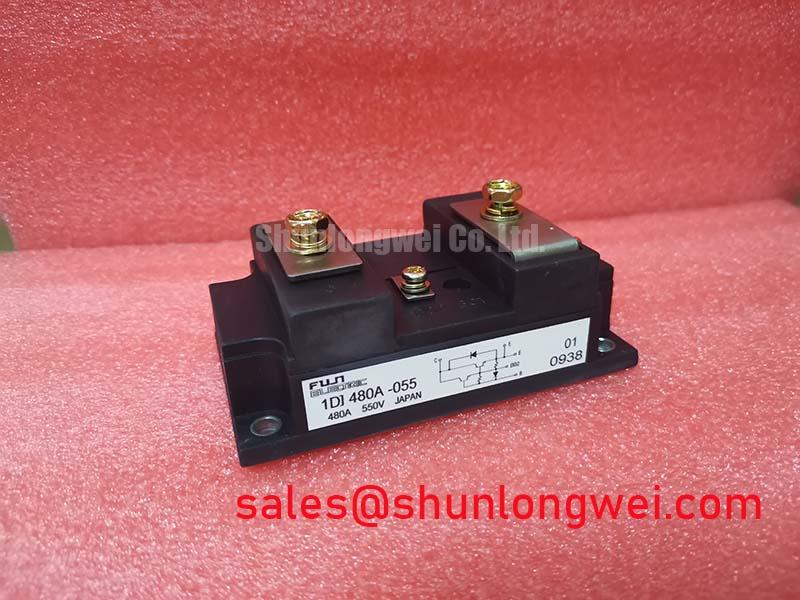
Fuji Electric 1DI480A-055 | The Proven Workhorse for High-Current Power Switching
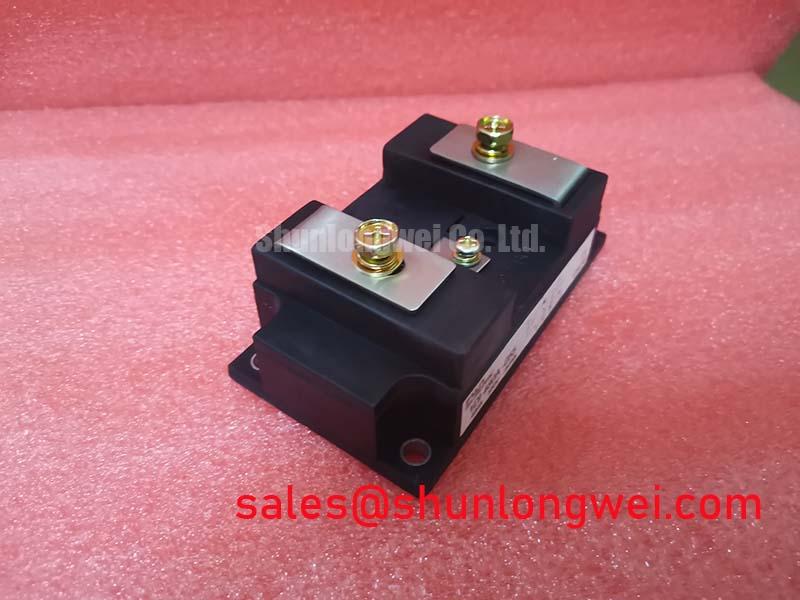
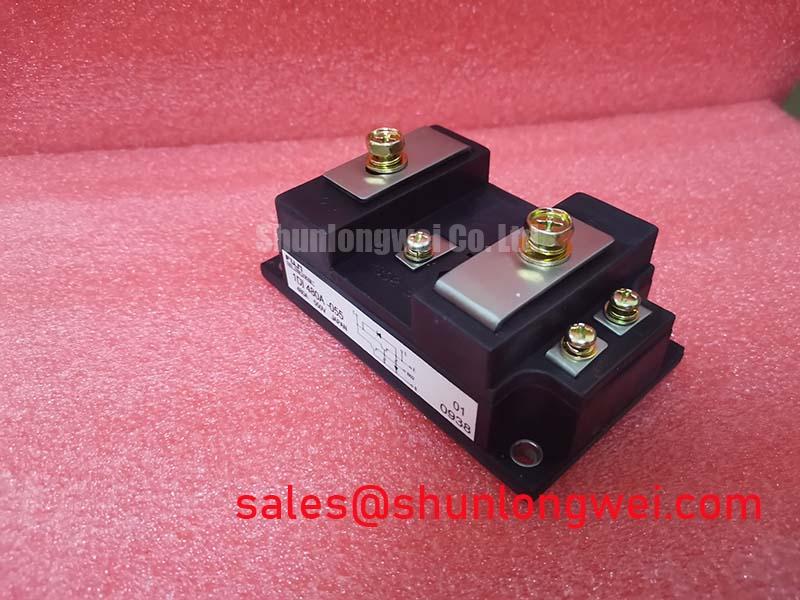
The Fuji Electric 1DI480A-055 is a high-power Darlington Transistor Module engineered for robustness and reliability in demanding industrial applications. While modern power electronics often focus on IGBTs, this module represents a class of components prized for its rugged construction and straightforward control, making it an indispensable solution for high-current, low-to-medium frequency systems like DC motor choppers and industrial drives.
Key Performance Specifications at a Glance
Engineers value clear, accessible data. The table below outlines the core electrical and thermal characteristics of the 1DI480A-055 module. For a comprehensive breakdown of all parameters, you can download the official datasheet.
| Parameter | Value |
|---|---|
| Collector-Emitter Voltage (VCES) | 550V |
| Collector Current (IC) | 480A |
| Collector Power Dissipation (PC) | 2080W |
| Collector-Emitter Saturation Voltage (VCE(sat)) | 2.5V (Max) |
| DC Current Gain (hFE) | 75 (Min) |
| Operating Junction Temperature (Tj) | -40 to +150°C |
Technical Deep Dive: The Darlington Advantage
At the heart of the 1DI480A-055 is a Darlington pair configuration. This isn't a modern IGBT module; it's a powerful Bipolar Junction Transistor (BJT) arrangement. Understanding this distinction is key to leveraging its strengths.
- High Current Gain (hFE): The Darlington structure connects two BJTs in cascade, multiplying their individual gains. This results in a very high overall current gain, allowing the massive 480A collector current to be controlled by a relatively small base current. This simplifies the drive circuitry compared to a single, high-power BJT.
- Inherent Ruggedness: BJTs, particularly in these large die formats, are known for their ability to withstand significant electrical stress. The 1DI480A-055 has a wide Safe Operating Area (SOA), making it forgiving in applications with potential overloads or transient conditions, a common pain point in heavy industrial settings.
- Conduction Loss Consideration: The primary trade-off of the Darlington configuration is a higher Collector-Emitter Saturation Voltage (VCE(sat)) compared to a modern IGBT. This is due to the voltage drop across two junctions. While this results in higher conduction losses, for low-frequency applications where switching losses are minimal, this can be an acceptable and cost-effective design choice