
Content last revised on February 10, 2026
Fuji Electric 1MBI300F-120 IGBT Module: A Datasheet-Driven Analysis for High-Efficiency Power Conversion
Engineered for Reduced Losses in High-Power Systems
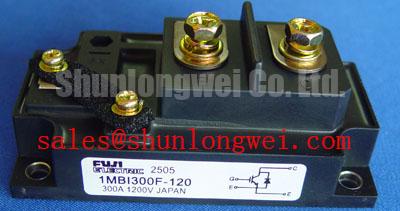
The Fuji Electric 1MBI300F-120 is a high-performance single IGBT module designed to deliver superior efficiency in demanding power conversion applications. This F-Series module is defined by its core specifications: 1200V | 300A | VCE(sat) of 2.5V (typ). Its primary engineering benefit is the significant reduction of conduction losses, which simplifies thermal management and enhances overall system reliability. For engineers designing medium-power industrial systems, the 1MBI300F-120 directly addresses the critical need for minimizing energy waste and improving power density. For industrial drives and power supplies where thermal budget and efficiency are primary constraints, this 1200V module provides a robust and performance-optimized solution.
Application Scenarios & Value
Maximizing System Efficiency in Medium-Power Industrial Inverters
The 1MBI300F-120 is engineered for core power conversion tasks within industrial systems such as Variable Frequency Drives (VFDs), AC/DC servo drive amplifiers, and Uninterruptible Power Supplies (UPS). In these applications, a key engineering challenge is managing the heat generated during operation to ensure long-term reliability. The module's low collector-emitter saturation voltage, VCE(sat), of 2.5V at a 300A current is a decisive factor. This parameter acts like electrical friction; a lower value means less power is wasted as heat when the switch is on. In a 150kW motor drive, this directly translates to lower heatsink temperatures and reduced cooling requirements, enabling more compact and cost-effective system designs. This focus on minimizing thermal load is a cornerstone of modern power electronics design. For systems requiring higher current handling capabilities, the related 1MBI400N-120 offers a 400A rating within a similar voltage class.
Key Parameter Overview
Electrical Characteristics Defining Low-Loss Performance
The performance of the 1MBI300F-120 is defined by a set of meticulously engineered electrical characteristics. The following table highlights the key specifications derived directly from the official Fuji Electric datasheet, with an emphasis on parameters crucial for efficiency and reliability calculations.
| Parameter | Symbol | Condition | Value |
|---|---|---|---|
| Collector-Emitter Voltage | Vces | - | 1200V |
| Gate-Emitter Voltage | VGES | - | ±20V |
| Continuous Collector Current | Ic | Tc = 80°C | 300A |
| 1ms Collector Current Pulse | Icp | - | 600A |
| Collector Power Dissipation | Pc | Tc = 25°C | 1560W |
| Collector-Emitter Saturation Voltage | VCE(sat) | Ic = 300A, Tj = 125°C | 2.5V (Typ.) / 3.2V (Max.) |
| Thermal Resistance (Junction to Case) | Rth(j-c) | IGBT | 0.08 °C/W |
| Operating Junction Temperature | Tj | - | +150°C |
Download the 1MBI300F-120 datasheet for detailed specifications and performance curves.
Technical Deep Dive
Analyzing the Impact of VCE(sat) on Conduction Loss and Thermal Design
The standout feature of the 1MBI300F-120 is its low VCE(sat), a direct result of Fuji Electric's F-Series silicon technology. This parameter is the voltage drop across the collector and emitter terminals when the IGBT is fully turned on. Its importance cannot be overstated, as it is a primary component of conduction losses, calculated by the formula P_cond = VCE(sat) × Ic. A lower VCE(sat) directly reduces the amount of energy converted into waste heat. Think of it as a water valve: a valve with less internal obstruction allows more water to pass through with less pressure drop. Similarly, a low VCE(sat) allows current to flow with minimal voltage drop, maximizing the power delivered to the load and simplifying the entire Thermal Management strategy of the system. This efficiency gain is crucial for achieving higher power density and improving the operational lifespan of the end equipment.
Frequently Asked Questions
Engineering Inquiries on the 1MBI300F-120's In-System Performance
What is the primary benefit of the 1MBI300F-120's low VCE(sat) of 2.5V?
The primary benefit is a significant reduction in conduction power loss. This leads to lower operating temperatures, which in turn allows for smaller heatsinks, increases system reliability, and improves overall energy efficiency, a critical factor in applications like Variable Frequency Drive (VFD) systems.
How does the single IGBT configuration of the 1MBI300F-120 influence circuit design?
A single-pack or "1-in-1" configuration provides maximum flexibility for designers creating custom inverter topologies. It allows for independent control and layout of each switch in a bridge circuit (e.g., half-bridge, H-bridge), enabling optimization of the busbar layout to minimize stray inductance, which is crucial for high-speed switching performance.
Is the 1MBI300F-120 suitable for high-frequency switching applications?
Yes, as an F-Series module, it is designed for high-speed switching. The datasheet specifies low turn-on (Eon) and turn-off (Eoff) losses, making it suitable for applications operating with higher PWM frequencies. This capability allows for smaller magnetic components and improved output waveform quality in motor drives and power supplies.
For further design considerations, including gate drive requirements and thermal interfacing, consulting the official datasheet and application notes is recommended. For more foundational knowledge on IGBT selection, explore our guide on decoding IGBT datasheets.