

Content last revised on September 10, 2026
AT070TN82 V.1: A Robust 7.0-inch WVGA Display for Demanding Environments
Engineering a Reliable HMI for Wide-Temperature Operation
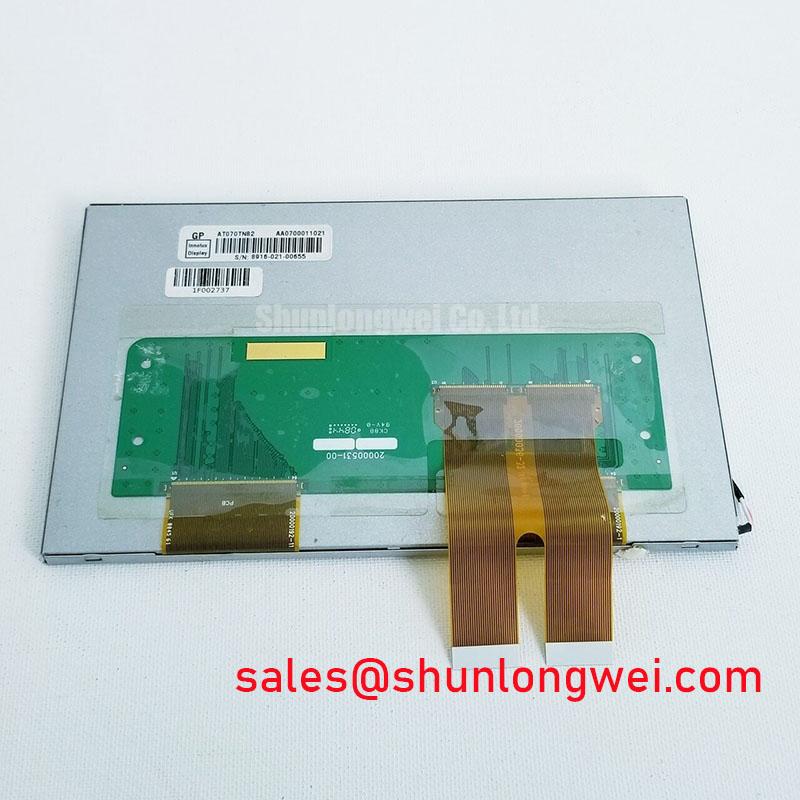
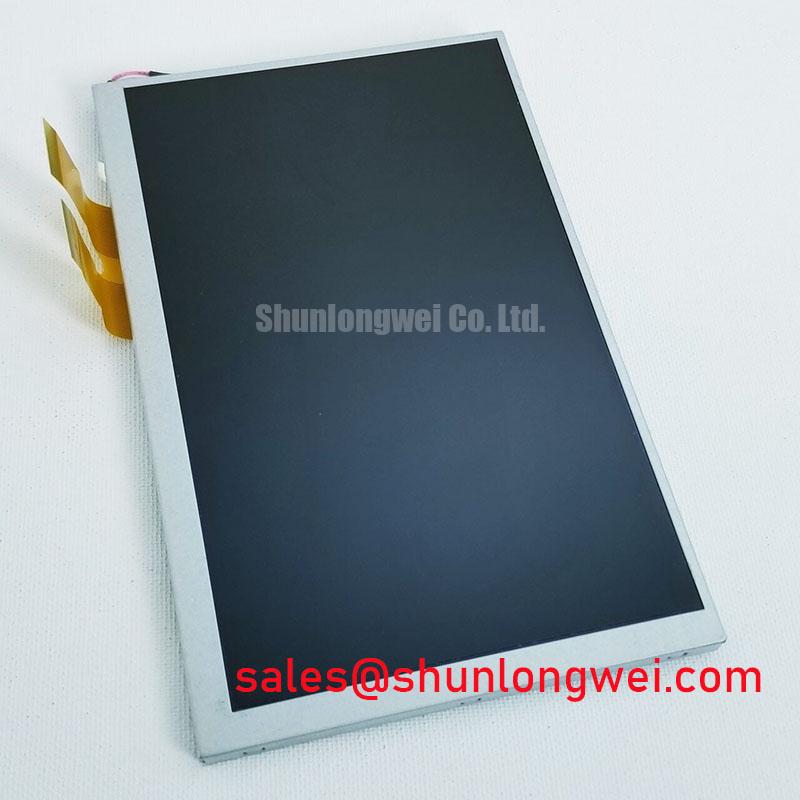
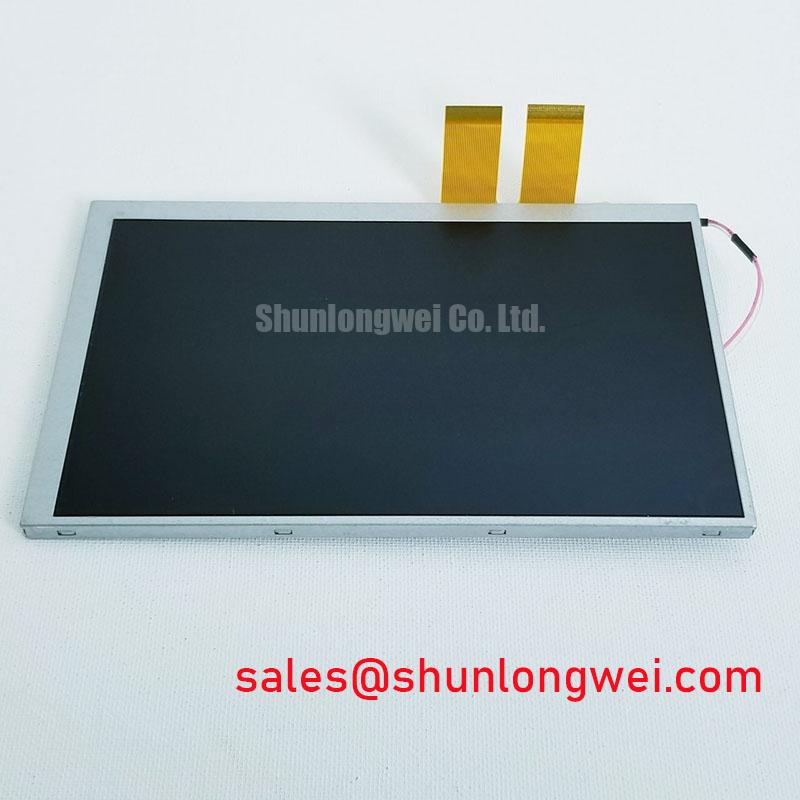
The Innolux AT070TN82 V.1 is a 7.0-inch a-Si TFT LCD module engineered for operational resilience in applications where temperature fluctuation is a critical design constraint. It delivers a practical balance of performance, low power consumption, and a standard interface, making it a strong candidate for industrial and automotive systems. With core specifications of 800x480 WVGA | -20°C to +70°C Operating Temperature | 1.6W Typical Power Consumption, this display provides two key engineering benefits: exceptional environmental tolerance and simplified system integration. Its standard 18-bit parallel RGB interface facilitates direct connection to a wide range of embedded processors, reducing hardware complexity. For systems requiring a durable WVGA display in unconditioned environments, the AT070TN82 V.1's wide temperature range offers a reliable, low-power solution.
Key Parameter Overview
Decoding the Specifications for Environmental Resilience and System Integration
The technical specifications of the AT070TN82 V.1 are tailored for performance in embedded systems that must operate reliably outside of climate-controlled settings. The parameters below highlight its suitability for power-conscious and environmentally challenging applications.
| Core Display Characteristics | |
|---|---|
| Screen Size | 7.0 inch |
| Resolution | 800(RGB) x 480 [WVGA] |
| Panel Technology | a-Si TFT-LCD, TN, Normally White |
| Active Area | 152.4(W) x 91.44(H) mm |
| Surface Treatment | Anti-glare |
| Optical & Electrical Performance | |
| Brightness | 250 cd/m² (Typ.) |
| Contrast Ratio | 500:1 (Typ.) |
| Viewing Angle | 70/70/50/70 (L/R/U/D) |
| Interface Type | Parallel RGB (1ch, 6/8-bit), 50 pins FPC |
| Power Consumption | 1.61W (Typ., Panel + Backlight) |
| Backlight | WLED, 20K hours, without LED driver |
| Environmental & Mechanical Specifications | |
| Operating Temperature | -20 ~ 70 °C |
| Storage Temperature | -30 ~ 80 °C |
| Outline Dimensions | 165(W) x 104(H) x 5.8(D) mm |
Download the AT070TN82 V.1 datasheet for detailed specifications and performance curves.
Application Scenarios & Value
System-Level Benefits in Unconditioned Operational Environments
The AT070TN82 V.1 is engineered for applications where environmental conditions are a primary design challenge. What is the key benefit of the AT070TN82 V.1's wide temperature range? It ensures operational reliability in harsh, unconditioned environments. Consider the design of a Human-Machine Interface (HMI) for a logistics vehicle operating in a warehouse that lacks climate control. Such a system must function flawlessly in freezing winter temperatures and summer heat. The AT070TN82 V.1's -20°C to +70°C operating range directly addresses this by eliminating the need for ancillary heating or cooling components for the display. This not only reduces the bill of materials (BOM) and power budget but also removes potential points of failure, leading to a more robust and reliable end product. This focus on durability over a wide thermal spectrum is a critical factor when evaluating the total cost of ownership, a concept further explored in the context of industrial vs. consumer displays.
While the AT070TN82 V.1's parallel interface is ideal for direct microcontroller connections, systems utilizing FPGAs or dedicated display controllers may also consider the G070ACE-L01 from a manufacturer like AUO, which features an LVDS interface and an even broader temperature range.
Technical Deep Dive
Analyzing the Impact of Wide Temperature Operation on System Reliability
A display's specified operating temperature is more than just a survival rating; it's a guarantee of functional performance. The AT070TN82 V.1's ability to operate down to -20°C is critical for applications with cold-start requirements, ensuring the liquid crystal response time remains adequate for a usable interface without image ghosting. The upper limit of +70°C provides a necessary thermal margin for systems exposed to direct sunlight or housed in enclosures with limited airflow. The engineering behind this wide range can be compared to an all-season automotive tire, which is formulated to maintain its mechanical properties—flexibility and grip—across a vast temperature scale, unlike a standard tire that can become brittle or overly soft. Similarly, this display maintains its optical and electrical integrity, providing consistent performance where consumer-grade panels would fail.
Frequently Asked Questions
Engineering Inquiries on Performance and Integration
How does the AT070TN82 V.1's -20°C operating temperature affect its performance?
The module is designed to function at -20°C, but like all LCDs, the liquid crystal response time will be slower than at room temperature (25°C). However, it is specified to remain within a functional range for typical HMI applications, ensuring readability and avoiding permanent damage that can occur when operating a standard display below its rated temperature.
What is the significance of the Anti-Glare (AG) surface treatment for HMI applications?
How does the anti-glare surface improve usability? It reduces reflections for clear viewing in bright ambient light. The AG surface diffuses incident light, such as overhead factory lighting or indirect sunlight, preventing specular (mirror-like) reflections that can obscure the screen's content. This is crucial for operator safety and efficiency, as it ensures critical data is always readable.
With a typical total power consumption of ~1.6W, what type of applications is the AT070TN82 V.1 best suited for?
Its low power budget makes it an excellent choice for portable diagnostic equipment, battery-powered data loggers, and other mobile devices where extending battery life is a key design goal. In fixed installations, the low power consumption contributes to reduced thermal load, simplifying enclosure design and improving overall system energy efficiency.
For a complete technical evaluation of the AT070TN82 V.1, including detailed interface timing and optical characteristics, please refer to the official datasheet. Our team is available to support your specific integration and design-in questions.