Content last revised on September 10, 2026
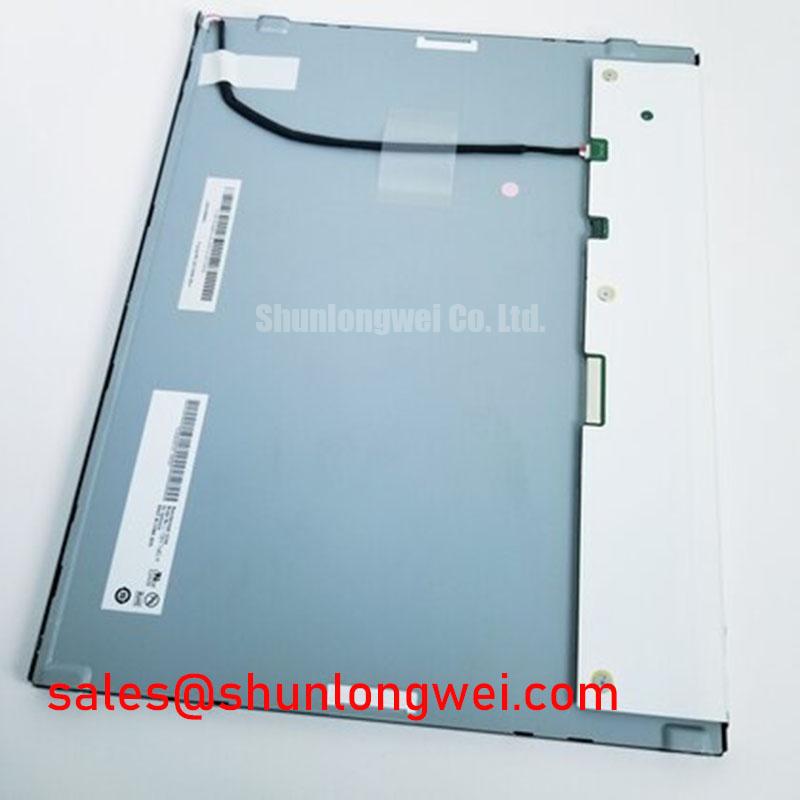
B150XG07 V1 AUO 15.0-inch 1024x768 XGA TFT-LCD Module Engineering Overview
The B150XG07 V1, manufactured by AU Optronics (AUO), represents a specialized 15.0-inch diagonal a-Si TFT-LCD solution designed specifically for high-reliability industrial and commercial applications. As a legacy-standard XGA (1024x768) display, it provides an essential lifecycle support path for systems that prioritize the 4:3 aspect ratio and stable CCFL (Cold Cathode Fluorescent Lamp) backlighting. Engineering teams often select this module for its consistent optical performance and LVDS (1 ch, 6-bit) interface compatibility, ensuring seamless integration into existing HMI (Human-Machine Interface) architectures without requiring extensive redesigns of the signal processing chain.
For industrial systems prioritizing long-term mechanical stability in 4:3 form factors, the B150XG07 V1 stands as a reliable technical baseline. What is the primary benefit of its 6-bit signal architecture? It simplifies data throughput while maintaining a sufficient color palette of 262,144 colors for industrial GUI requirements. This module is particularly effective for medical monitoring and legacy industrial automation where layout stability is more critical than high-density pixel counts.
Key Parameter Overview
Decoding the Specs for Enhanced Thermal Reliability
The following technical data provides the baseline for engineering evaluation of the B150XG07 V1. These parameters reflect the standard performance characteristics as specified by the manufacturer for the V1 revision.
| Technical Specification | Parameter Value | Engineering Significance |
|---|---|---|
| Screen Size (Diagonal) | 15.0 inch | Standard footprint for industrial HMI enclosures. |
| Active Resolution | 1024x768 (XGA) | Optimal for 4:3 legacy software visualization. |
| Luminance (Brightness) | 350 cd/m² | Adequate for indoor and well-lit factory environments. |
| Contrast Ratio | 550:1 | Defines the "depth" of black levels for better readability. |
| Signal Interface | LVDS (1 ch, 6-bit) | Low-noise, high-speed differential signaling. |
| Backlight Type | 2 pcs CCFL | Proven thermal profile for specific enclosure designs. |
| Response Time (Tr+Td) | 8/17 ms | Sufficient for standard UI transitions and monitoring. |
| Operating Temperature | 0 to +50 °C | Standard range for climate-controlled industrial zones. |
Application Scenarios & Value
Achieving System-Level Benefits in High-Stability Environments
The B150XG07 V1 is frequently deployed in environments where consistency over time outweighs the need for the latest consumer-grade features. Engineers often face challenges when maintaining hardware for critical infrastructure that was originally designed around the 4:3 aspect ratio. By utilizing the 1024x768 resolution of the B150XG07 V1, designers can avoid the software scaling artifacts and "stretched" UI elements common when retrofitting wide-screen panels into legacy systems.
- Medical Diagnostic Displays: Used in bedside monitors and laboratory equipment where the 350 cd/m² brightness ensures clarity for medical staff without excessive power consumption or heat generation.
- Factory Automation (HMI): The LVDS interface provides robust electromagnetic interference (EMI) resistance, which is critical in proximity to high-power motor drives or IGBT-based inverters.
- Public Information Kiosks: The TN (Twisted Nematic) mode and 550:1 contrast ratio provide a cost-effective solution for transactional interfaces that do not require ultra-wide viewing angles.
In systems requiring higher brightness or a transition to modern LED backlighting, the related G150XG03 V2 offers a similar 15-inch form factor with updated backlight technology. For engineers looking into broader system design considerations, understanding the engineering behind TFT-LCD technology is essential for predicting long-term reliability.
Technical Deep Dive
A Closer Look at Backlight and Interface Engineering
The B150XG07 V1 utilizes a 2-lamp CCFL backlight system. While LED has become the market standard, the thermal dissipation characteristics of CCFL are well-documented in legacy industrial enclosures. The heat generated by CCFL lamps is distributed differently than LED arrays, which can be a decisive factor when replacing panels in airtight or explosion-proof housings where the original thermal management system was calibrated for CCFL's specific infrared output.
The LVDS (Low Voltage Differential Signaling) interface on this module uses 1 channel with a 20-pin connector. Think of LVDS as a high-speed data highway; instead of using high-voltage pulses that create electrical noise, it uses small voltage differences between pairs of wires. This is analogous to a balanced audio cable, where noise picked up along the way is cancelled out at the destination, ensuring the 1024x768 image remains crisp even in electrically noisy factory environments near Variable Frequency Drives (VFD).
Furthermore, the TN pixel structure of the B150XG07 V1 offers a predictable response time of 25ms (combined). In the context of industrial monitoring, this ensures that real-time data trends and alarms are displayed without significant ghosting, a critical requirement for IEC 61800-3 compliant systems. For a more detailed comparison of display technologies, engineers may refer to the TN vs IPS industrial selection guide.
Frequently Asked Questions
How does the CCFL backlight in the B150XG07 V1 affect the choice of an inverter?
Unlike modern LED-backlit panels that require a DC-to-DC constant current driver, the B150XG07 V1 requires a high-voltage AC inverter to strike and maintain the CCFL arc. Engineers must ensure the inverter's output frequency and voltage match the AUO specifications to prevent flickering or premature lamp failure.
Can the B150XG07 V1 be used in outdoor sunlight environments?
With a brightness of 350 cd/m², this module is rated for indoor or semi-outdoor applications. In direct sunlight, the display may suffer from washout. For outdoor applications, a high-brightness panel or a sunlight-readable HMI solution would be more appropriate.
What is the impact of the 6-bit color depth on GUI design?
The 6-bit depth supports 262K colors. For industrial control panels, this is typically sufficient. However, if your application requires smooth gradients or high-fidelity photographic imaging, you might notice "banding" compared to 8-bit or 10-bit panels. Most industrial software is optimized for this color range to reduce memory overhead.
Is the B150XG07 V1 drop-in compatible with other 15-inch AUO models?
While the active area and resolution are standard, mechanical mounting points and connector pinouts can vary between versions (e.g., V0 vs V1). Always verify the 20-pin LVDS pinout mapping against your controller board to prevent electrical damage during installation.
From a strategic procurement perspective, maintaining a supply of B150XG07 V1 modules is vital for extending the service life of high-value industrial assets. As the industry moves toward wider aspect ratios, the availability of 15-inch 4:3 panels becomes a critical factor in Total Cost of Ownership (TCO) for automated production lines. Partnering with a distributor that understands these technical nuances ensures that your maintenance and repair operations remain robust against component obsolescence.