
Content last revised on October 25, 2026
Field Diagnostics and Commissioning for DC Link Voltage Doubling in Long Lead Topologies
- Isolate the power stage and record cold-state resistance or diode readings between the main terminals before any DC link connection.
- Check the module mounting surface, thermal interface, busbar seating, and fastener alignment for even mechanical contact.
- Confirm gate drive isolation, connector polarity, and discharge conditions before connecting the control board.
- Compare the installed electrical ratings with the required 1200 V voltage class and 300 A current class.
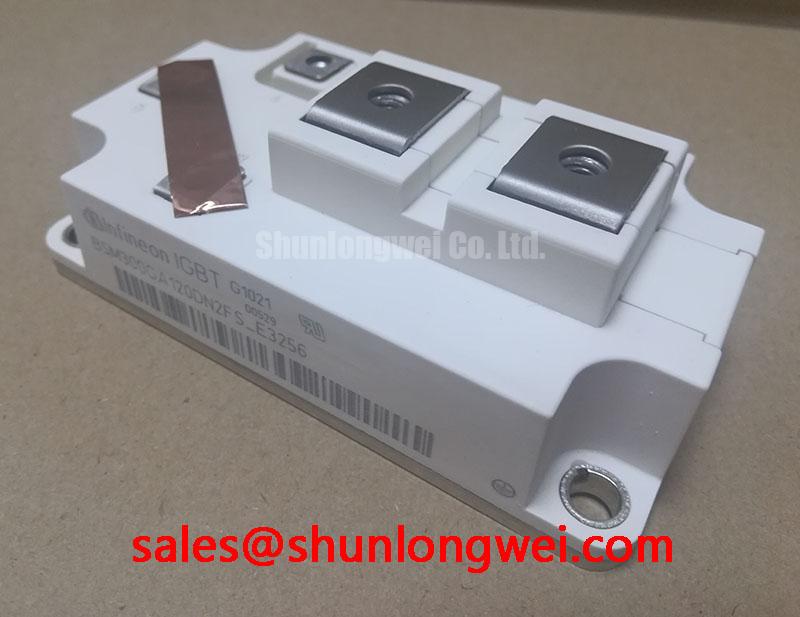
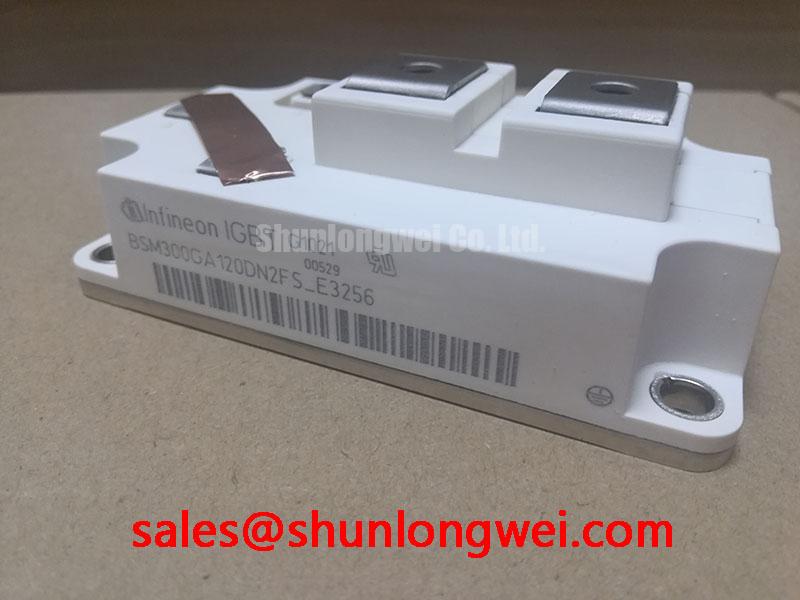
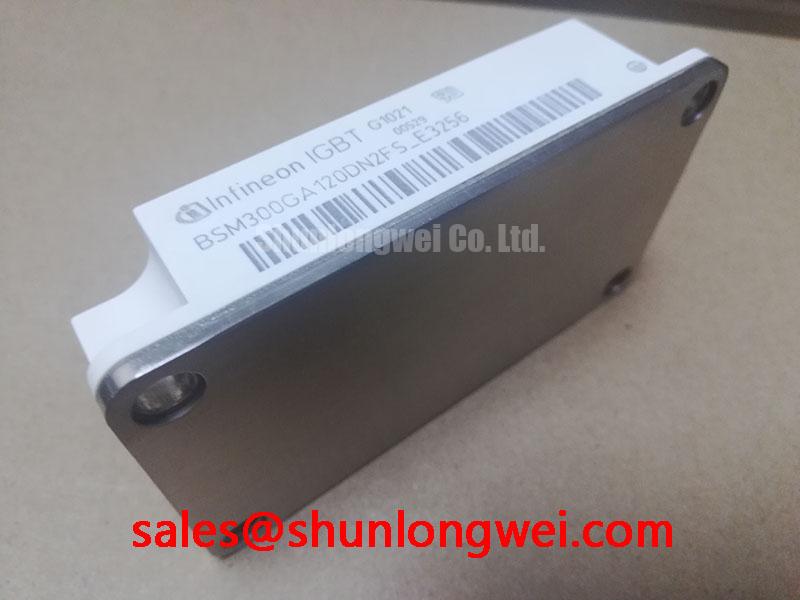
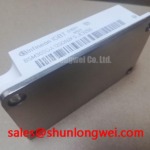
The Infineon BSM300GA120DN2FS is an IGBT module specified at 1200.0 V and 300.0 A, with a Module package classification. In a repair bay, these values establish the first replacement screening boundary; they do not replace switching waveform checks, thermal verification, or gate drive validation.
| Parameter | Official specification |
|---|---|
| Manufacturer | Infineon |
| Part number | BSM300GA120DN2FS |
| Voltage rating | 1200.0 V |
| Current rating | 300.0 A |
| Package | Module |
Voltage spikes approaching twice the applied switching-voltage step can develop when a fast switching bridge drives a long cable or motor lead with a substantial impedance discontinuity. The field symptom is often a repeatable overshoot at the remote load or motor terminals rather than a simple failure of the IGBT module itself. Treat the cable, termination, busbar, and measurement probe as one transmission path during commissioning.
For an industrial inverter welder or medium frequency induction heating supply, begin by comparing the switching node waveform at the module terminals with the waveform at the far end of the power connection. Use a properly compensated high voltage differential probe and keep the probe loop physically short. A large difference between the local and remote waveform points toward cable propagation, termination, or common mode measurement effects that require system level correction.
Design Consideration: Output dv/dt filters, motor chokes, and damping networks should be selected from the actual cable length, load impedance, switching frequency, current profile, and allowable terminal voltage. The correct filter is determined by the complete installation, not by the module current rating alone. Designers should verify peak voltage at both ends of the cable while recording the switching command, collector emitter voltage, and phase current on the same time base.
Physical routing also matters. Keep the high current outgoing and return paths close together to reduce loop area, separate control wiring from switching conductors, and avoid routing a gate drive reference beside a high dv/dt collector path. Clearance and creepage must be assessed against the working voltage, pollution environment, insulation system, and applicable equipment standard. The Infineon IGBT Modules and Discretes Official Portfolio provides the manufacturer’s broader product context for voltage class and module application review.
Turn Off Protection and Reliability During Inductive Switching
Turn off protection must limit the combined effect of stray inductance and current fall rate before the collector emitter voltage exceeds the system switching margin. In practical terms, the transient component rises with both commutation current and parasitic inductance, so the protection review should focus on the physical commutation loop rather than treating the nominal module voltage as the complete transient limit.
Use a compact DC link arrangement with positive and negative current paths closely coupled across the switching cell. A symmetrical planar busbar can reduce unequal current sharing and lower the inductive voltage generated during turn off. The target inductance is system determined; it should be established through layout extraction and switching measurement, then checked against the measured voltage peak under the highest intended current and temperature conditions.
Snubber selection follows the same principle. A capacitor can absorb part of the high frequency transient current, while its associated resistance controls ringing energy. Oversizing the capacitor can increase switching loss and alter gate drive behavior, so the value should be selected from measured ringing frequency, allowable loss, pulse energy, and thermal conditions. Validate the result at the operating DC link voltage rather than relying on a low voltage bench test alone.
Desaturation protection should recognize a sustained rise in VCE above the expected conduction voltage during an abnormal conduction event and transfer the gate command into a controlled soft turn off. A two stage response is commonly evaluated as a Design Consideration: first reduce the gate drive current to limit di/dt, then complete turn off with controlled energy dissipation. The detector blanking interval, propagation delay, gate discharge path, and fault latch behavior must be coordinated with the actual short circuit withstand capability stated in the applicable device documentation.
The driver supply and isolation channel also require a transient review. Gate loop inductance, Miller current, driver output impedance, and common mode transient immunity can interact during a fast collector voltage transition. When comparing parallel module arrangements, consult the Infineon IGBT Paralleling Application Note for manufacturer guidance on current balance and dynamic behavior.
Cold Bench Screening and Thermal Electrical Commissioning
Cold unpowered screening provides a useful gate before DC energization. With the module isolated and discharged, use the digital multimeter diode function to compare the main terminals and the antiparallel diode path in the polarity indicated by the circuit topology. The reading is a comparative screening result, not a substitute for a datasheet forward voltage test at a defined current.
Record the instrument, polarity, ambient condition, and lead arrangement with the result. A reading that differs materially from a known good reference may justify a second measurement with reversed leads, followed by insulation and gate leakage checks. Do not infer a specific internal failure from one meter value; contamination, parallel circuit paths, an incompletely discharged DC link, and test lead contact can all influence a cold measurement.
Gate to emitter leakage should be checked with the control terminals isolated from the driver board. Keep the test voltage within the approved test method for the device and avoid applying an uncontrolled insulation tester directly to a gate terminal. The purpose is to identify an abnormal conductive path before the gate oxide and driver circuitry are exposed to operating energy.
Thermal installation is equally important for a 300 A class module. The baseplate and heatsink should be clean, flat within the assembly specification, and free from particles that can create local contact pressure. Apply the selected thermal interface material consistently and tighten fasteners in a cross pattern so the module does not tilt during compression. If a pressure controlled mounting system is used, calibrate the spring or load washer against the manufacturer’s mechanical instructions rather than estimating pressure from bolt torque alone.
💡 Bench Tip: Keep the module in an ESD controlled area, short the appropriate control terminals only through the approved handling method, and compare every cold measurement with a documented known good reference before applying DC power.
After installation, monitor case or heatsink temperature together with phase current and switching duty. A temperature imbalance between parallel paths can indicate unequal gate timing, busbar asymmetry, thermal contact variation, or current sharing issues. The appropriate corrective action depends on the complete assembly, so inspect the electrical and mechanical paths together.
Commutation Turn Off Spikes and Reverse Recovery Control
Reverse recovery of the antiparallel freewheeling diode can create a current pulse when the opposite IGBT turns on. The resulting di/dt interacts with commutation loop inductance and may produce voltage overshoot, ringing, and increased electromagnetic emissions. The relevant observation is the relationship between diode current, collector emitter voltage, gate voltage, and the turn on command.
Use a current probe with suitable bandwidth and position it so the measured conductor represents the commutation path rather than an unrelated return route. Compare the reverse recovery current peak and ringing with the gate voltage transition. If the current spike changes substantially when the turn on gate resistance is adjusted, the driver and commutation network are participating in the transient. Any gate resistance change remains a Typical Starting Point for bench tuning and must be checked against switching loss, junction temperature, dead time, and fault response.
An RC snubber may damp high frequency ringing when it is placed across the correct switching nodes with a short connection. Its resistor must tolerate repetitive pulse energy, while its capacitor must maintain the intended behavior across temperature and voltage. Select the network from measured ringing and loss data, then confirm that the snubber does not create unacceptable turn on or turn off dissipation.
For systems using several modules, current sharing requires matched physical paths, similar gate loop impedance, and controlled timing. The BSM75GP120 can be reviewed as a separate same family reference, but electrical, mechanical, thermal, and drive compatibility must be established independently before any substitution decision.
Gate drive architecture deserves a final inspection when commutation noise appears on the control signal. Use a short, well referenced gate loop, maintain separation from the collector switching path, and verify isolation behavior during the fastest measured voltage transition. Engineers evaluating negative off bias techniques can consult Evolution of Negative Off Bias Gate Drive Circuits as an application reference, while the actual gate voltage limits and protection settings remain governed by the selected driver and device documentation.