Content last revised on September 10, 2026
BSM50GB120DLC: Engineering Insights into a 1200V Dual IGBT Module
An Engineering-Centric Overview
Optimized for Thermal Performance and System Reliability
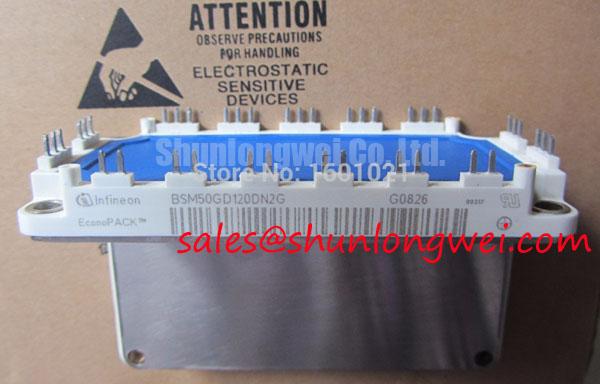
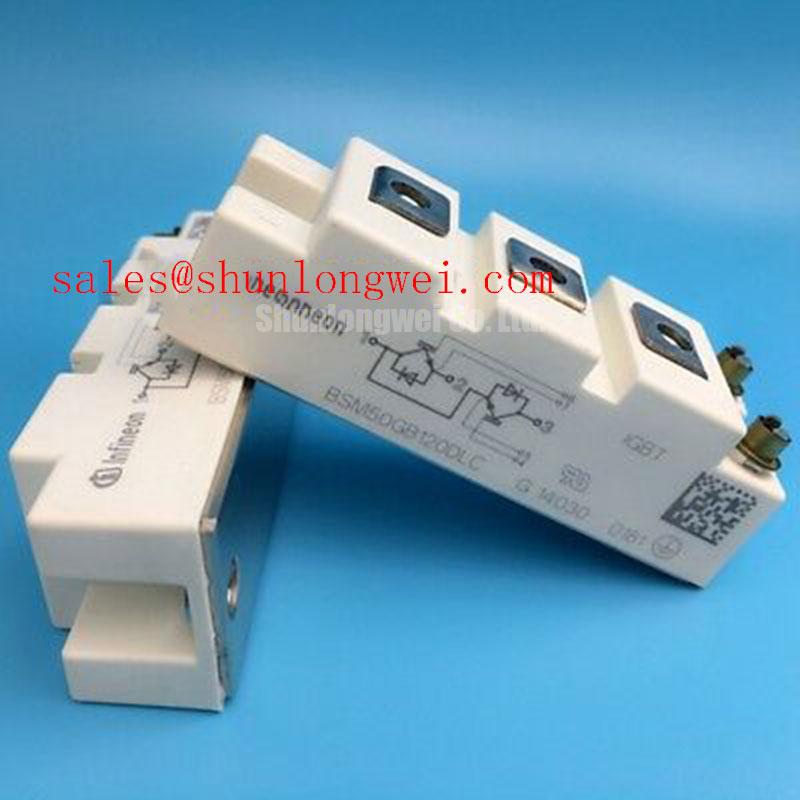
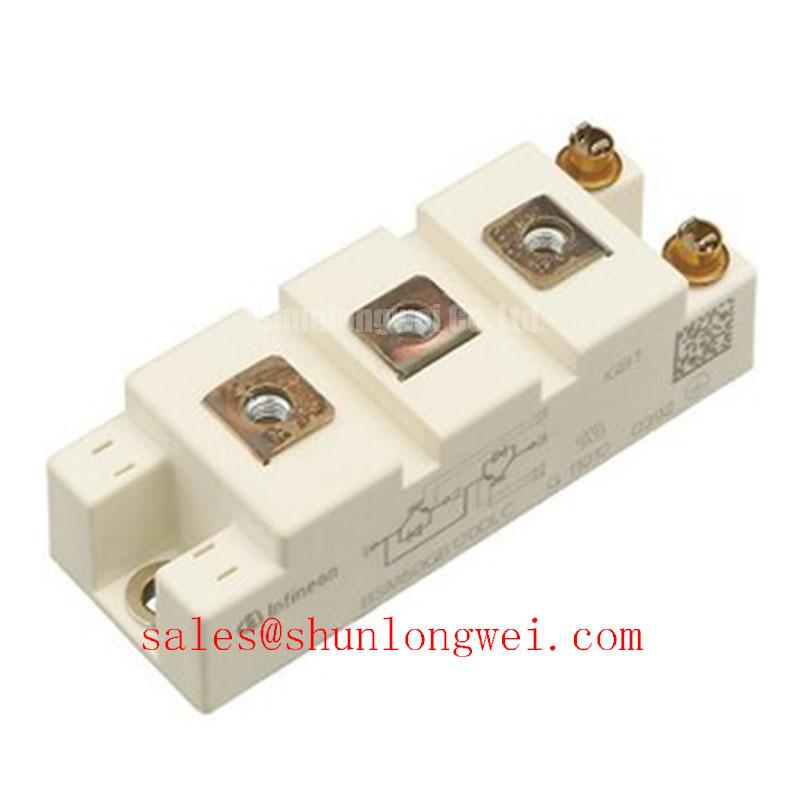
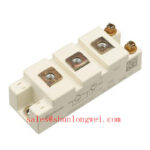
The BSM50GB120DLC from Infineon is a dual IGBT module designed to deliver a robust balance of efficiency, thermal stability, and reliability for demanding power conversion applications. Its core specifications are rated at 1200V and 50A (nominal collector current), with a total power dissipation of 460W (at T_case = 25°C). Key engineering benefits include superior thermal management enabled by low thermal resistance and an integrated NTC thermistor for precise temperature monitoring. This module directly addresses the need for creating compact, yet powerful, industrial systems by ensuring efficient heat extraction and offering a dependable building block for inverter designs. For applications demanding higher power handling within a similar architecture, the BSM75GB120DLC offers an increased current rating. Best fit for industrial motor drives and UPS systems up to 25 kW, this module provides a foundation for designs where thermal headroom and long-term reliability are critical decision factors.
Key Parameter Overview
Decoding the Specs for Enhanced Thermal Reliability
The technical specifications of the BSM50GB120DLC are foundational to its performance in high-stress industrial environments. The following parameters are particularly decisive for design engineers focused on efficiency and thermal stability.
| Parameter | Value | Engineering Implication |
| Collector-Emitter Voltage (V_CES) | 1200 V | Provides a safe operating margin for 400V/480V AC-line-fed inverters, handling voltage spikes effectively. |
| Continuous DC Collector Current (I_C) @ T_case=80°C | 50 A | Defines the module's capacity for steady-state operation, suitable for motors in the 15-25 kW range. |
| Collector-Emitter Saturation Voltage (V_CEsat) @ I_C=50A, T_j=125°C | Typ. 2.2 V | A critical factor for conduction losses. This value represents a balanced trade-off, ensuring moderate heat generation during on-state. |
| Thermal Resistance, Junction-to-Case (R_thJC) per IGBT | Max. 0.27 K/W | Indicates highly efficient heat transfer from the silicon die to the heatsink, enabling higher power density or smaller cooling solutions. |
| NTC Thermistor | Integrated | Simplifies implementation of over-temperature protection, a crucial element for enhancing system safety and longevity. |
Download the BSM50GB120DLC datasheet for detailed specifications and performance curves.
Application Scenarios & Value
Achieving System-Level Benefits in Industrial Motor Drives
The BSM50GB120DLC is engineered to excel in applications where power density and operational uptime are non-negotiable. Its primary value is demonstrated in systems like industrial Variable Frequency Drives (VFDs) and servo drives.
High-Fidelity Engineering Scenario: Consider a compact VFD designed to control a 20 kW induction motor. During operation, especially under fluctuating loads, managing the IGBT junction temperature is paramount to prevent performance degradation and failure. The BSM50GB120DLC's maximum Thermal Resistance of 0.27 K/W per IGBT ensures that the heat generated from switching and conduction losses is efficiently channeled away from the semiconductor junction to the heatsink. This superior thermal performance allows the design engineer to either utilize a more compact, cost-effective heatsink or push the system to operate at a higher duty cycle without exceeding the maximum junction temperature of 150°C. Furthermore, the integrated NTC thermistor provides the control system with real-time feedback, enabling precise thermal throttling or emergency shutdown, a critical feature for building a truly robust and reliable drive. What is the primary benefit of its integrated NTC thermistor? It enables direct, real-time temperature monitoring for crucial system protection.
This module's capabilities also extend to Uninterruptible Power Supplies (UPS) and solar power inverters, where its 1200V rating provides the necessary safety margin and its efficiency contributes to lower overall system operating costs. For those building such systems, understanding how to interpret datasheet parameters is a crucial skill.
Frequently Asked Questions (FAQ)
How does the R_thJC of 0.27 K/W on the BSM50GB120DLC directly impact heatsink selection and system power density?
A lower thermal resistance value signifies more effective heat transfer from the IGBT junction to the case. For a design engineer, this means that for a given amount of power loss (heat), the junction temperature will remain lower. This allows for the selection of a smaller, lighter, and potentially less expensive heatsink to maintain a safe operating temperature. Consequently, it enables a more compact overall system design, increasing power density (more power in less space).
What is the specific function of the integrated NTC thermistor and why is it critical for reliability?
The Negative Temperature Coefficient (NTC) thermistor is a sensor whose resistance decreases as temperature increases. Its integration directly on the module's baseplate allows the system's control unit to accurately monitor the module's operating temperature in real-time. This is critical for implementing over-temperature protection. If the module approaches its thermal limit due to overload, insufficient cooling, or high ambient temperatures, the controller can take corrective action—such as reducing the switching frequency, limiting the current, or initiating a safe shutdown—thereby preventing catastrophic failure and significantly enhancing the long-term reliability of the entire power system.
Is this 1200V, 50A IGBT module suitable for high-frequency switching applications?
The BSM50GB120DLC is optimized for a balance between conduction losses (V_CEsat) and switching losses (E_on/E_off). While it performs exceptionally well in typical motor control frequencies (e.g., 4-16 kHz), its suitability for "high-frequency" applications (typically >20 kHz) depends on the specific design's thermal management capabilities. At higher frequencies, switching losses become dominant and generate more heat. The module's excellent thermal performance helps manage this heat, but engineers must consult the datasheet's switching energy curves to calculate total losses and ensure the junction temperature remains within the Safe Operating Area (SOA) for their specific operating conditions.
Technical Deep Dive
A Closer Look at Thermal Design and Its Impact on Longevity
A key differentiator of the BSM50GB120DLC lies in its thermal architecture. The module's specified maximum thermal resistance (R_thJC) of 0.27 K/W is not just a number; it is a direct reflection of the component's ability to survive and perform under real-world thermal stress. Think of thermal resistance as the bottleneck in a pipe; a lower R_thJC is like a wider pipe, allowing heat (the "flow") to escape the silicon die with minimal obstruction. This efficiency is critical in preventing the junction temperature from reaching unsafe levels.
What is the direct result of this efficient thermal path? Enhanced power cycling capability. In applications like servo drives, the module is subjected to rapid and frequent changes in load, causing temperature swings at the chip level. An efficient thermal path minimizes the peak temperature reached during these cycles. By keeping the temperature delta (ΔT) smaller, the design mitigates the primary driver of material fatigue—the differential expansion and contraction of materials like solder layers and wire bonds. This translates directly to a longer operational lifetime and a more reliable end-product, reducing the total cost of ownership. The combination of low thermal resistance and the monitoring capability of the NTC thermistor gives engineers the tools to build systems that are not only powerful but also predictably durable.
From a strategic standpoint, investing in a module with superior thermal characteristics like the BSM50GB120DLC allows for the development of a scalable platform. A design that is thermally well-managed can be more easily adapted for higher power models or upgraded for future performance requirements without a complete redesign of the cooling system, providing a significant competitive advantage in a fast-evolving market.