Content last revised on September 10, 2026
Strategic Integration of the CM100MX-12A: Solving Space Constraints in Mid-Power Industrial Drives
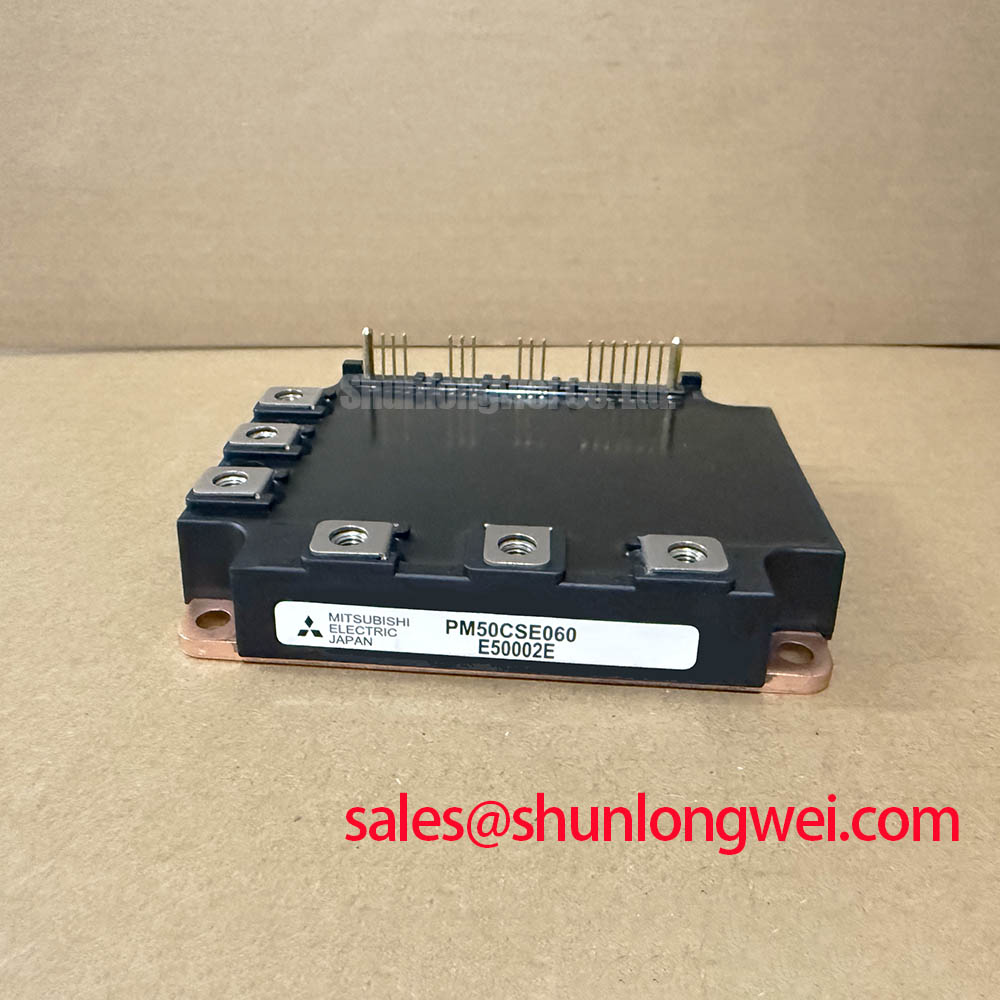
Design engineers frequently grapple with the paradox of increasing power density while reducing PCB real estate in 400V class motor control systems. The challenge is not just switching efficiency, but the mechanical complexity of mounting separate converter, inverter, and brake stages. How can a system maintain thermal integrity while shrinking the footprint? The Mitsubishi CM100MX-12A addresses this directly through its highly integrated CIB (Converter-Inverter-Brake) architecture. By consolidating a three-phase diode bridge, a seven-switch IGBT inverter, and an onboard NTC thermistor into a single NX-series package, it eliminates the parasitic inductance and assembly overhead associated with discrete designs.
Integrated CIB Architecture | 600V | 100A | NX-Series Solder Pin Module
- Footprint Optimization: Reduces total system size by integrating 13 power semiconductor chips into one low-profile housing.
- Enhanced Switching Precision: Utilizes 5th Generation CSTBT™ technology to minimize carrier concentration fluctuations and lower conduction losses.
For engineers prioritizing system-level reliability in compact frequency converters, this 600V 100A module provides the precise balance of thermal headroom and mechanical simplicity. What is the primary benefit of its integrated CIB design? It significantly reduces parasitic inductance by shortening interconnects between the converter and inverter stages. For 400V-class industrial drives where PCB space is at a premium, the CM100MX-12A is the optimal choice to ensure both power density and long-term thermal stability.
Frequently Asked Questions
Engineering Insights for High-Density Power Design
How does the integrated NTC thermistor in the CM100MX-12A impact the overall gate drive and protection logic?
The onboard NTC thermistor provides real-time monitoring of the module’s baseplate temperature, allowing the controller to implement dynamic thermal derating. This is critical for preventing catastrophic failure during transient overloads. By having the sensor in close proximity to the IGBT chips, the thermal lag is significantly lower than external sensors, enabling a more aggressive yet safe power envelope. Understanding IGBT failure analysis is essential for calibrating these protection thresholds.
What are the specific advantages of the 5th Gen CSTBT™ structure over standard trench gate designs for 600V applications?
The CSTBT™ (Carrier Stored Trench-gate Bipolar Transistor) technology utilizes a unique "plug" layer that traps carriers near the emitter. Think of it like a reservoir that ensures a high concentration of charge is always ready for conduction, similar to how a pressurized water system provides instant flow compared to a gravity-fed one. This results in a significantly lower VCE(sat)—typically around 1.7V at rated current—without compromising switching speed or ruggedness.
Does the CM100MX-12A support parallel operation for higher current requirements?
While the CM100MX-12A is optimized for standalone CIB applications up to 100A, its VCE(sat) possesses a positive temperature coefficient at higher current densities. This characteristic naturally encourages current sharing. However, for systems requiring significantly higher current handling, the related CM200DY-24H offers a different configuration better suited for high-power paralleling. Engineers should consult the guide on mastering IGBT paralleling for detailed layout strategies.
Key Parameter Overview
Decoding the Specs for Enhanced Thermal Reliability
| Symbol | Parameter Description | Official Rating (Maximum) |
|---|---|---|
| VCES | Collector-Emitter Voltage (G-E Short) | 600V |
| IC | Continuous Collector Current (Tc = 78°C) | 100A |
| VCE(sat) | Collector-Emitter Saturation Voltage (Inverter) | 1.7V (Typ.) |
| Ptot | Maximum Power Dissipation (Per IGBT) | 350W |
| Tj | Operating Junction Temperature Range | -40 to +150°C |
| Visol | Isolation Voltage (60Hz, AC 1 min) | 2500V |
Download the CM100MX-12A datasheet for detailed specifications and performance curves.
Technical Deep Dive
A Closer Look at the CSTBT™ Technology and CIB Integration
The CM100MX-12A belongs to the NX-series, which is defined by its low-profile package and optimized internal layout. The core innovation lies in the 5th Generation CSTBT™ chip. In conventional IGBTs, there is often a trade-off between switching losses and conduction losses. The CSTBT™ breaks this bottleneck by utilizing a carrier-storage layer that optimizes the electric field distribution. To use a mechanical analogy: if a standard IGBT is a manual transmission where shifting requires a pause in power, the CSTBT™ is a dual-clutch transmission that pre-selects the next state, ensuring smoother transitions and lower energy waste during the switch.
Furthermore, the CIB (Converter-Inverter-Brake) configuration is a masterclass in thermal management. By housing the Diode Bridge, IGBT Inverter, and Brake Chopper in one module, the designer can utilize a single high-performance heatsink. This concentration of heat sources requires a deep understanding of why Rth matters. The module’s internal ceramic insulation provides low thermal resistance to the baseplate, ensuring that even under high-frequency Variable Frequency Drive (VFD) operation, the junction temperature remains well within the safe operating area (SOA).
Application Scenarios & Value
Achieving System-Level Benefits in High-Frequency Power Conversion
The CM100MX-12A is the linchpin for mid-range industrial automation equipment. In a typical Variable Frequency Drive (VFD), the module handles the entire power conversion chain. The integrated diode bridge rectifies the AC line input, while the inverter stage generates the pulse-width modulated (PWM) signal to drive the motor. The dedicated brake switch allows for controlled deceleration of high-inertia loads, a common requirement in industrial conveyor systems.
Key application areas include:
- Servo Drives: High-speed switching capability ensures precise torque control and minimal acoustic noise.
- Uninterruptible Power Supplies (UPS): The low VCE(sat) contributes to the high efficiency required for green data center standards.
- Medical Imaging: Reliable power switching for gradient coils in MRI machines where thermal consistency is paramount.
For systems requiring different voltage classes, such as 1200V requirements for 690V lines, engineers might evaluate the CM100DY-24H or the PM100CSD120 for integrated power management features.
From a strategic perspective, adopting the CM100MX-12A allows OEMs to transition toward modular design philosophies, significantly shortening the "time-to-market" for new motor control platforms. As industrial standards move toward IEC 61800-3 compliance, the reduced EMI profile of the integrated NX-series package becomes a decisive factor in passing electromagnetic compatibility tests without excessive external filtering.